一个中国原则

Search documents
中国驻日本大使发文
证券时报· 2025-11-30 01:29
Core Viewpoint - The article emphasizes the importance of adhering to the One China principle and maintaining the post-war international order, particularly in the context of Taiwan's status and Japan's recent provocative statements [2][3]. Summary by Sections Historical Context - The article recalls the 80th anniversary of China's victory in the War of Resistance against Japan, highlighting the return of Taiwan to China as a historical justice recognized by international legal documents [2]. Political Commitments - Japan's government is reminded of its commitments under the 1972 Sino-Japanese Joint Statement, which acknowledges the People's Republic of China as the sole legitimate government of China and respects China's stance on Taiwan [2]. Taiwan Issue - The Taiwan issue is framed as an internal matter for China, with the One China principle being a widely accepted international consensus confirmed by UN General Assembly Resolution 2758 [3]. China's Stance - The article asserts that any attempts to interfere in China's internal affairs or threaten its sovereignty will be met with strong resistance, emphasizing China's determination to defend its territorial integrity [3]. Call for Japan's Compliance - Japan is urged to adhere to its long-standing political commitments, cease actions that undermine the post-war international order, and retract its erroneous statements regarding Taiwan [3].

中国驻日本大使发文
中国能源报· 2025-11-30 01:12
Core Viewpoint - The article emphasizes the historical significance of Taiwan's return to China after World War II and condemns Japan's current leadership for provocative statements regarding Taiwan, which undermine international law and the political foundation of Sino-Japanese relations [1][2][3]. Group 1: Historical Context - Taiwan has been an inseparable part of China's territory since ancient times, and Japan is obligated to adhere to the One China principle as part of its political commitments and international legal obligations [2]. - The 1972 Sino-Japanese Joint Statement recognized the People's Republic of China as the sole legitimate government of China and affirmed Japan's understanding of Taiwan as part of China [2]. - The 1978 Treaty of Peace and Friendship between China and Japan established the legal norms for Sino-Japanese relations, reiterating the importance of the principles outlined in the Joint Statement [2]. Group 2: Current Political Situation - The Taiwan issue is an internal matter for China, and the One China principle is a widely accepted international consensus confirmed by UN General Assembly Resolution 2758 [3]. - Any foreign interference in China's internal affairs, particularly regarding Taiwan, is intolerable, and threats of military action are unacceptable [3]. - The current Chinese government and people are resolute in defending national sovereignty and territorial integrity, and any attempts to separate Taiwan from China will face strong resistance [3]. Group 3: Sino-Japanese Relations - The stability and development of Sino-Japanese relations depend on a solid political foundation, and Japan's current leadership is seen as misjudging the situation and acting against the prevailing trends [3]. - Japan is urged to adhere to its long-standing political commitments, cease actions that undermine the post-war international order, and retract erroneous statements regarding Taiwan [3].
中国驻日本大使发声
财联社· 2025-11-30 00:58
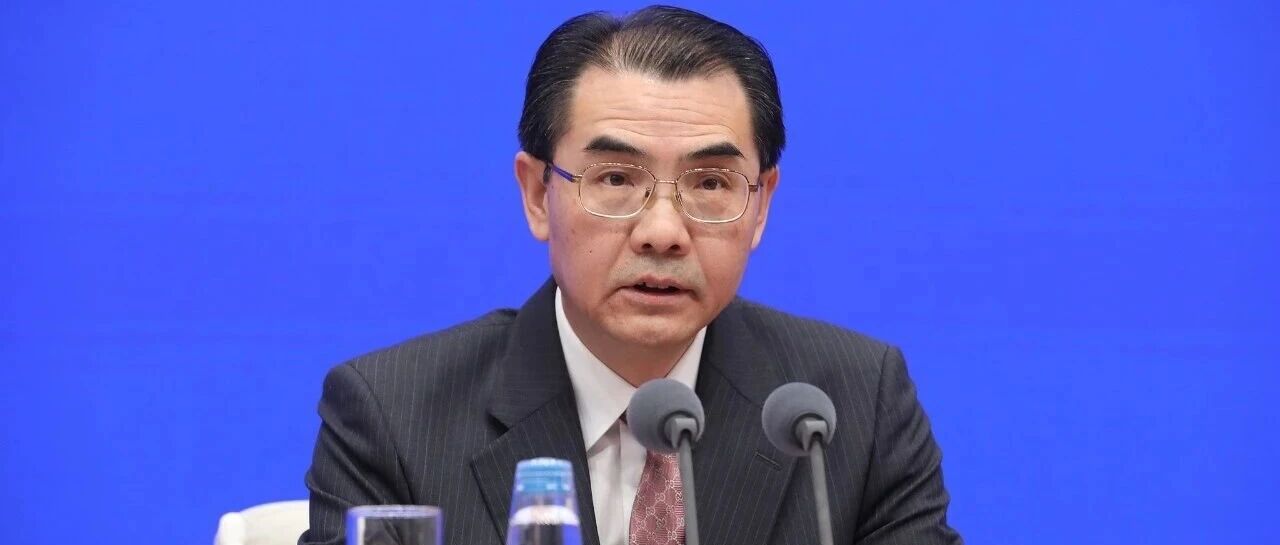
《人民日报》11月30日 刊发 中国驻日本大使 吴江浩署名文章《 坚决维护一个中国原则和战后国际秩序 》。 台湾问题是中国内政, 一个中国原则是得到联合国大会第2758号决议权威确认的国际普遍共识。以何种方式解决台湾问题、实现国家统 一,是中国人自己的事,不容他人置喙。没有任何国家会容忍他国领导人粗暴干涉本国内政,没有任何国家会容忍他国领导人对本国发出 武力威胁。今天的中国早已不是当年的中国,中国政府和人民捍卫国家主权和领土完整的决心和能力坚如磐石、不可阻挡。妄图走历史的 回头路,武力介入台海,将台湾从中国分裂出去,必将遭到迎头痛击。 中日关系的稳定发展,只能建立在牢固的政治基础之上。日本现职领导人单方面发起的破坏性行为,误判形势、悖逆潮流、撞上南墙。日 方当前唯一正确做法,就是恪守自身数十年来反复作出的政治承诺,停止破坏战后国际秩序,立即撤回错误荒谬言论,以实际行动彻底认 错纠错。任何诡辩狡辩的言辞,都是自欺欺人。任何蒙混过关的企图,都不可能得逞。任何错上加错的举动,只会遭致更加严重的后果。 以下为全文: 80年前,中国人民抗日战争取得伟大胜利,日本签署投降书,正式接受《开罗宣言》《波茨坦公告》等规定台湾归 ...
日本民众举行集会反对高市早苗错误言论 多国人士呼吁警惕日本军国主义死灰复燃
Yang Guang Wang· 2025-11-30 00:37
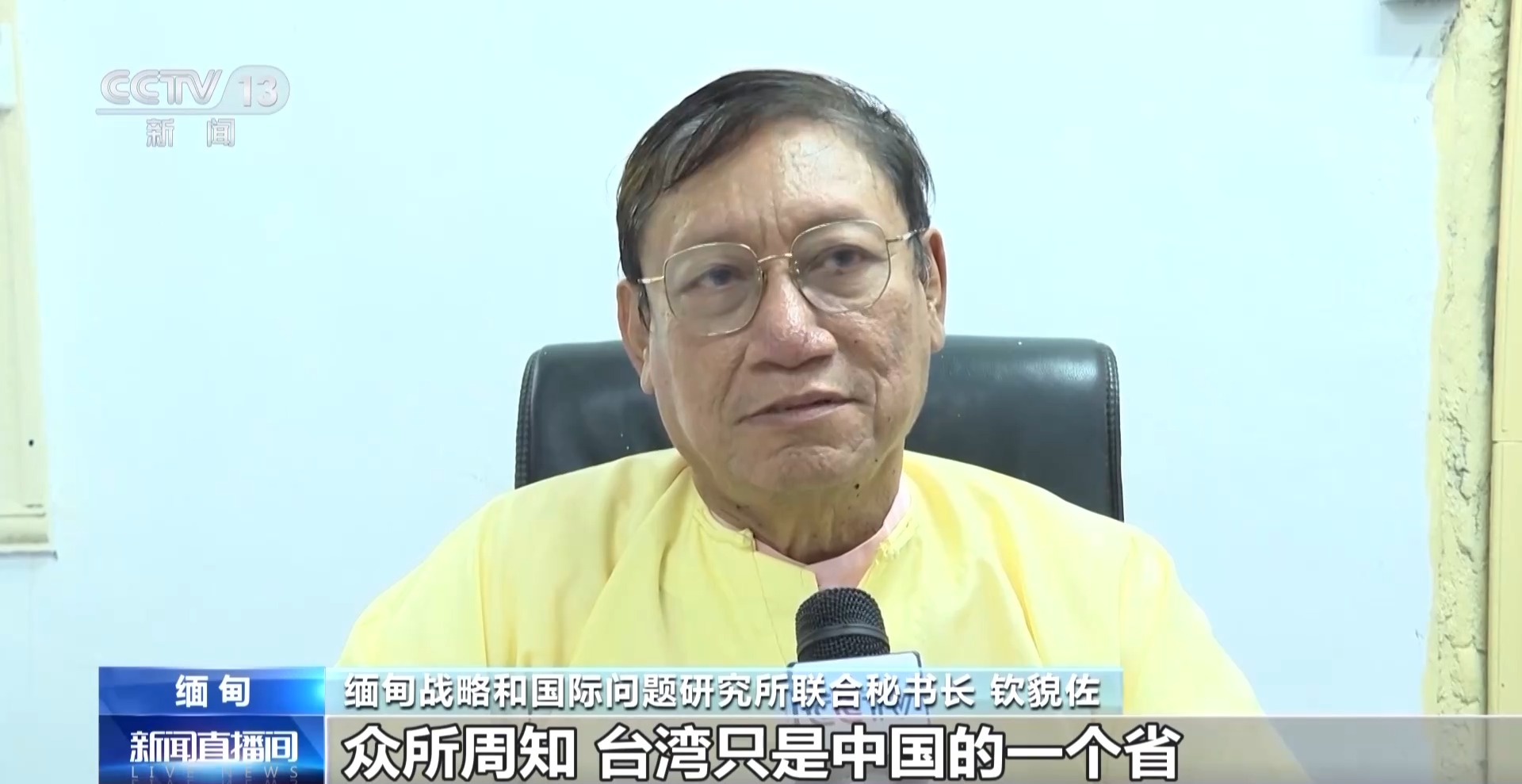
Group 1 - Protests have erupted across Japan in response to Prime Minister Kishi Nobuo's recent remarks regarding Taiwan, with demonstrators demanding a retraction of his statements [1] - Protesters express that Kishi's comments represent a declaration of Japan's intent to revive militarism and imperialism, reflecting on Japan's historical aggression towards China and Asia [1] - International figures emphasize that the Taiwan issue is an internal matter for China, and Kishi's statements indicate a lack of remorse for Japan's historical fascist crimes, urging vigilance against the resurgence of Japanese militarism [1][2] Group 2 - The Chairman of the Iraq-China Friendship Association, Haider Rubai, asserts that Japan's comments on Taiwan are baseless, reiterating that Taiwan is an inseparable part of China and opposing any foreign interference in China's internal affairs [2]
坚决维护一个中国原则和战后国际秩序(大使随笔)
Ren Min Ri Bao· 2025-11-29 22:11
Core Points - The article emphasizes the historical significance of Taiwan's return to China after World War II, highlighting Japan's failure to acknowledge this and its provocative statements regarding Taiwan [1][2] - It asserts that Taiwan has always been an inseparable part of China and that Japan must adhere to the One China principle as a political commitment and international legal obligation [1][2] - The article stresses that the resolution of the Taiwan issue is an internal matter for China, and any foreign interference or military threats are unacceptable [2] Summary by Sections Historical Context - The article recalls the 80th anniversary of the victory in the Chinese People's War of Resistance against Japanese Aggression, marking Taiwan's return to China as a fulfillment of historical justice [1] - It references international legal documents such as the Cairo Declaration and the Potsdam Proclamation that affirm Taiwan's status [1] Political Commitments - Japan's government, through the 1972 Sino-Japanese Joint Communiqué, recognized the People's Republic of China as the sole legitimate government of China and acknowledged Taiwan as part of China [1] - The 1978 Treaty of Peace and Friendship between China and Japan reiterated the importance of adhering to the principles established in the Joint Communiqué [1] Current Relations - The article criticizes the current Japanese leadership for making provocative statements and failing to recognize historical commitments, which undermines the political foundation of Sino-Japanese relations [2] - It calls for Japan to retract its erroneous statements and adhere to its long-standing political commitments to maintain stability in bilateral relations [2]
多国人士表示应警惕日本军国主义死灰复燃
Yang Shi Xin Wen Ke Hu Duan· 2025-11-29 08:31
Group 1 - The recent comments made by Japanese Prime Minister Sanae Takaichi regarding Taiwan have been criticized by multiple international figures, emphasizing that the Taiwan issue is purely an internal matter of China [1][5][7] - There is a growing concern that Japan's political figures show no remorse for historical fascist crimes, indicating a potential resurgence of militarism in Japan [1][3] - Various international representatives reaffirmed their commitment to the One China principle, rejecting any form of interference in China's internal affairs regarding Taiwan [5][7] Group 2 - The statements made by Japan regarding Taiwan are deemed baseless and unacceptable, with calls for Japan to reflect on its historical mistakes and avoid repeating militaristic ambitions [3][7] - The importance of the UN General Assembly Resolution 2758, which asserts that there is only one China and Taiwan is an inseparable part of it, was reiterated by several international leaders [7]
视频丨专家:所谓“旧金山和约”非法无效 高市再次冲击中日政治基础
Yang Shi Xin Wen Ke Hu Duan· 2025-11-29 06:14
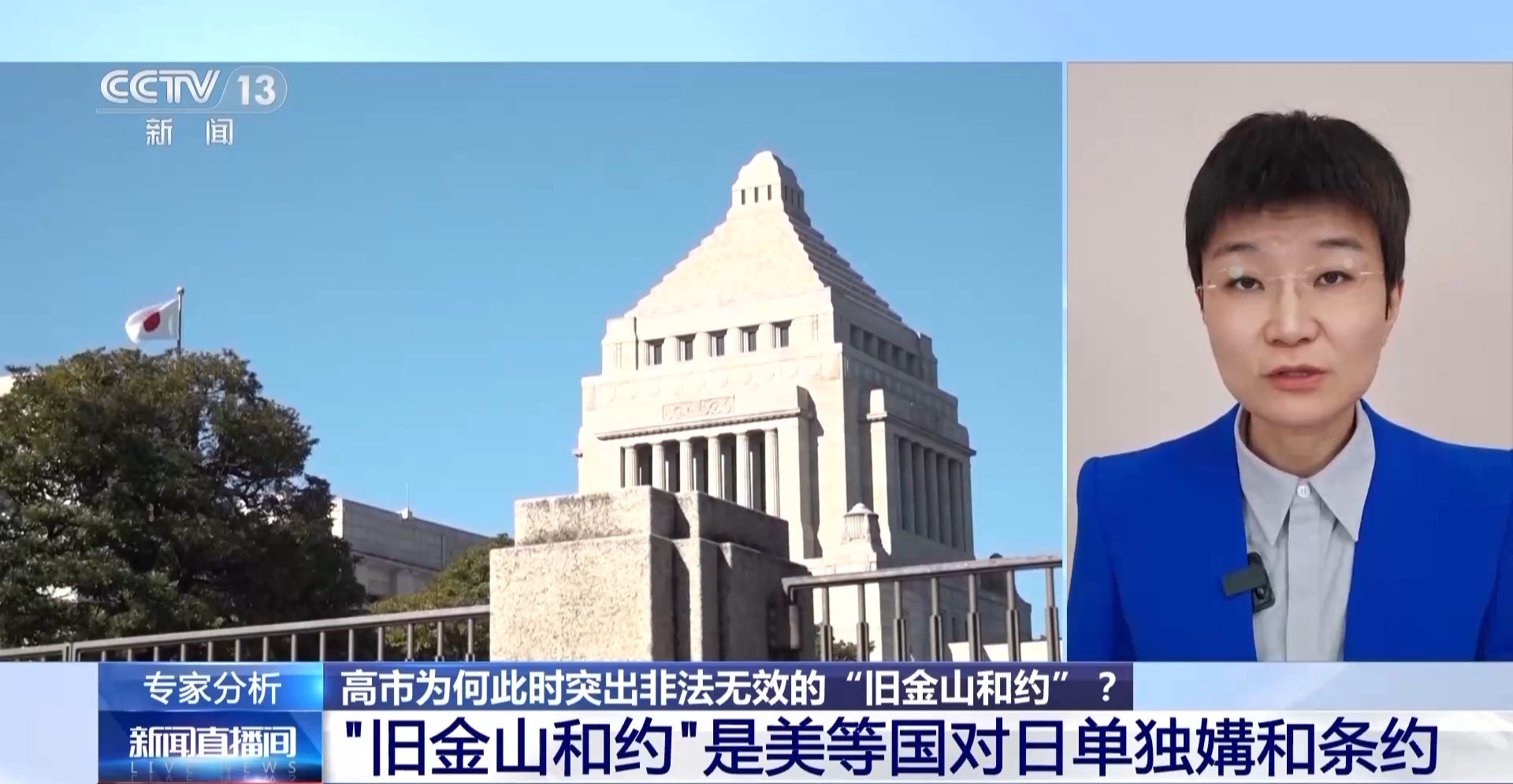
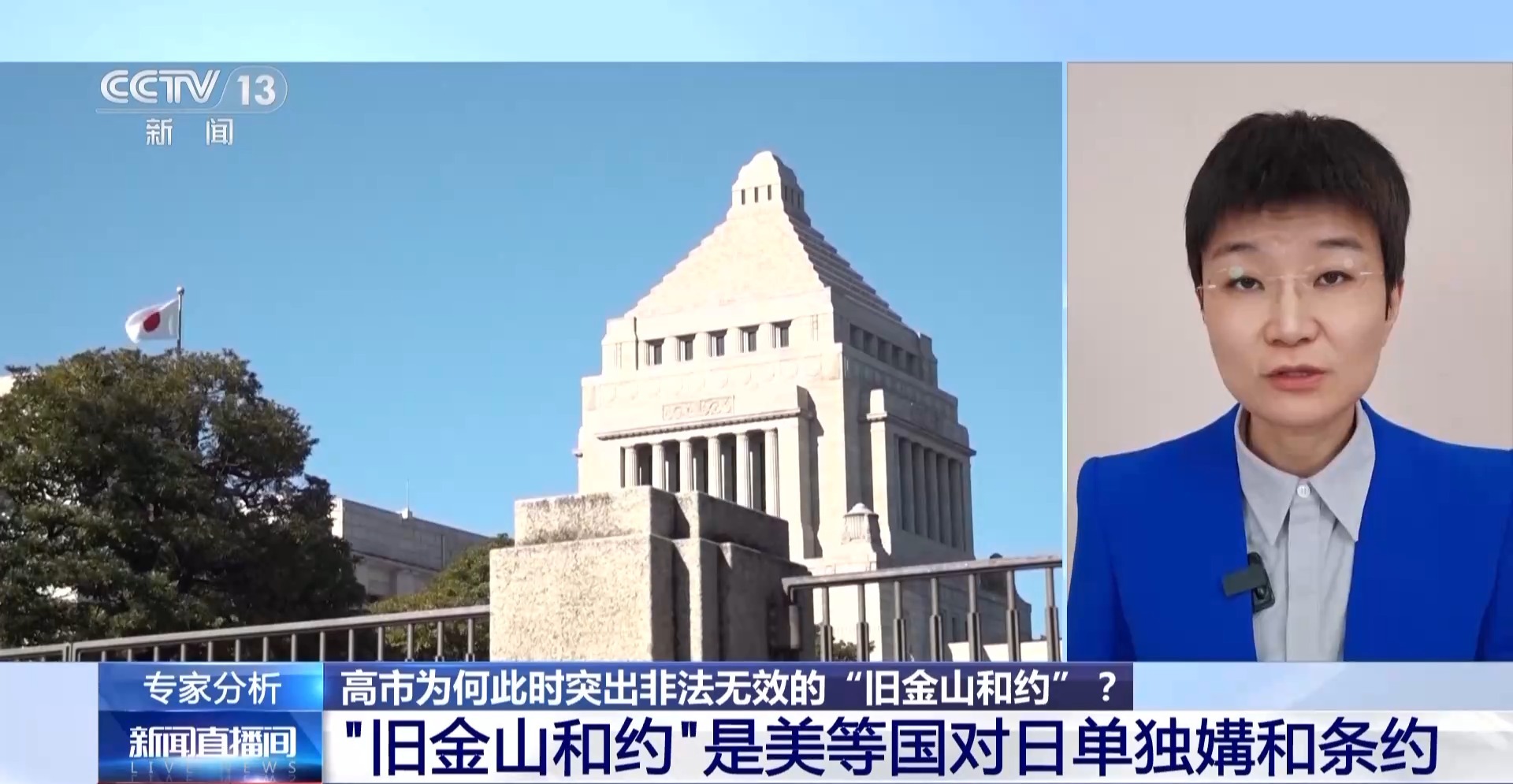
Core Viewpoint - Japanese Prime Minister Fumio Kishida's remarks regarding Taiwan have drawn strong backlash from China, highlighting ongoing tensions between Japan and China over historical agreements and territorial claims [1][3]. Group 1: Japan's Position - Fumio Kishida stated that Japan, under the San Francisco Peace Treaty, has relinquished all rights and does not hold a position on Taiwan's legal status [1]. - Kishida's comments have been criticized for ignoring the Cairo Declaration and the Potsdam Proclamation, which affirm China's sovereignty over Taiwan [3][7]. Group 2: China's Response - Chinese Foreign Ministry spokesperson Guo Jia Kun emphasized that Taiwan's return to China is a significant outcome of World War II and has been resolved since 1945 [3]. - Guo criticized Kishida for highlighting the San Francisco Peace Treaty while neglecting its illegitimacy and the implications of the Cairo Declaration and Potsdam Proclamation [3][7]. Group 3: Historical Context - The San Francisco Peace Treaty was signed under specific historical circumstances, excluding major WWII parties like China and the Soviet Union, which raises questions about its validity [5]. - The treaty is viewed as invalid because it contradicts previous agreements that confirmed China's sovereignty over Taiwan, thus challenging the post-war international order [7].
“突尼斯始终坚持一个中国原则”
人民网-国际频道 原创稿· 2025-11-29 03:52
穆罕默德·斯马维表示,互不干涉内政和相互尊重主权原则是中国始终坚持和强调的原则。也正是 因为这个原因,中国积极致力于推进建设更加公正合理的国际秩序。虽然有一些强权国家抛弃了这个原 则,但各国主权平等是联合国宪章宗旨和原则,其重要性不容削弱。 穆罕默德·斯马维强调:"突尼斯始终坚持一个中国原则。突尼斯自身历史上就曾遭受过不公正对 待。突尼斯也曾经被分裂,但随着地缘政治条件变化最终实现统一。中国现在还没有完全统一,但总有 一天将实现完全统一。" 穆罕默德·斯马维表示,突中合作互利共赢。中方甚至在很多项目上没有获利。比如中方在斯法克 斯建设的援突综合医院以及援突尼斯外交培训学院等。这些建筑不可能凭空产生。"我们在完全保有主 权的前提下,在同中国合作中获得了众多实惠。" 人民网迪拜11月28日电 (记者管克江)突尼斯主流媒体《新闻报》近日刊发了对突尼斯前驻华大 使穆罕默德·斯马维的专访。穆罕默德·斯马维在接受采访时表示,随着中国日益成为国际舞台的重要力 量,突尼斯不断加强同中国在互不干涉内政、互利互补和战略性开放基础上的关系。突尼斯始终坚持一 个中国原则,并相信中国必将完全统一。 穆罕默德·斯马维指出,新时代中国取得 ...
专家:所谓“旧金山和约”非法无效 高市再次冲击中日政治基础
Yang Shi Xin Wen Ke Hu Duan· 2025-11-29 02:18
Core Viewpoint - Japanese Prime Minister Fumio Kishida's remarks regarding Taiwan have drawn strong backlash from China, emphasizing that Taiwan's status was resolved post-World War II and challenging the legitimacy of the San Francisco Peace Treaty [1][3][5] Group 1: Historical Context - The San Francisco Peace Treaty was signed under specific historical circumstances, notably during the Cold War and the Korean War, excluding major WWII parties like China and the Soviet Union from negotiations [3] - The treaty is viewed as invalid because it contradicts earlier agreements such as the Cairo Declaration and the Potsdam Proclamation, which affirmed China's sovereignty over Taiwan [5] Group 2: Political Implications - Kishida's focus on the San Francisco Peace Treaty undermines the political foundation established by four key documents that govern Sino-Japanese relations, indicating a disregard for international law and post-war agreements [1][5] - The repeated mention of the San Francisco Peace Treaty by Kishida is seen as a direct challenge to the established consensus between China and Japan regarding Taiwan, further straining diplomatic relations [3][5]
王毅同法国总统外事顾问通电话:中法应当在涉及对方核心利益问题上坚定相互支持
Bei Jing Qing Nian Bao· 2025-11-28 16:10
11月27日,中共中央政治局委员、中央外办主任王毅应约同法国总统外事顾问博纳通电话。 王毅表示,当前国际形势变乱交织,新问题、新挑战层出不穷,中法双方有必要保持经常对话,加强战 略协调。两国元首的战略引领至关重要。双方应深化全方位互利合作,推动中法全面战略伙伴关系迈上 新台阶,为维护多边主义、改革完善全球治理注入新动力,展现中法两国作为联合国安理会常任理事国 的责任担当。希望法方推动欧盟奉行积极理性对华政策,坚持伙伴关系基本定位,通过对话协商妥处经 贸分歧,推动中欧关系沿着正确轨道健康发展。 王毅阐明中方在台湾问题上的立场,强调日本现职领导人发表涉台挑衅言论,公然开历史倒车,侵害中 国主权和领土完整。中法作为安理会常任理事国和全面战略伙伴, 应当共同维护二战胜利成果,在涉 及对方核心利益问题上坚定相互支持。希望法方继续坚定恪守一个中国原则。 博纳表示,马克龙总统期待很快访问中国,巩固深化两国元首的友谊,并就推进法中、欧中关系以及共 同应对全球性危机进行深入战略沟通。相信此访将引领两国关系高质量发展,并为世界和平稳定作出新 贡献。法方坚持独立自主外交传统,坚定不移奉行一个中国政策,理解中方在台湾问题上的正当立场 ...