
知识产权

Search documents
从2025世界制造业大会透视人工智能发展成果
Zheng Quan Ri Bao· 2025-09-24 16:34
Core Insights - Traditional manufacturing, constrained by human limitations and rigid processes, is undergoing a transformative change driven by artificial intelligence (AI) technology [1] - The 2025 World Manufacturing Conference showcased the integration of AI in manufacturing, highlighting significant technological breakthroughs and the restructuring of manufacturing systems [2] - The conference emphasized the importance of intellectual property in the digital transformation of manufacturing, advocating for the deep integration of AI and high-value intellectual property [4] Group 1: AI Integration in Manufacturing - AI technologies are being utilized to enhance precision in manufacturing, such as AI industrial endoscopes detecting 0.01 mm cracks in aircraft engines and AI acoustic imaging systems locating gas leaks [2] - The introduction of AI voiceprint quality inspection solutions has reduced false detection rates from 5% to below 1%, cutting costs by 50% in the electric motor quality inspection process [2] Group 2: Predictive Maintenance and Smart Systems - Anhui Rongzhi Rixin Technology Co., Ltd. presented its predictive maintenance AI model, PHMGPT, which autonomously analyzes abnormal data, diagnoses issues, generates maintenance work orders, and integrates with ERP systems for inventory management [3] Group 3: Intellectual Property and Digital Transformation - The conference featured discussions on the integration of intellectual property with AI, aiming to facilitate the digital transformation of manufacturing through high-value patents and core copyrights [4] - The "intelligent quality inspection machine for glass," developed from a patent at the University of Science and Technology of China, addresses traditional inefficiencies in glass quality inspection [4] - Experts highlighted that AI-driven intelligent systems will become crucial assets for companies, gradually replacing traditional decision-making processes [4]
东盟秘书长:东盟10年专利申请量增七成
Xin Hua She· 2025-09-24 15:31
Core Insights - ASEAN countries have seen a 70% increase in patent applications over the past decade, indicating rapid growth in the field of intellectual property within the region [1] - The rise in patent applications is attributed to significant improvements in innovation capabilities among ASEAN member states [1] - Three ASEAN member countries have entered the ranks of the world's leading innovative nations [1] - Industrial design patent applications in ASEAN have increased by 80% in the last ten years, while trademark applications have risen by over 10% [1] - Currently, there are more than 50 unicorn companies in the ASEAN region [1]
【环球财经】东盟秘书长:东盟10年专利申请量增七成
Xin Hua She· 2025-09-24 14:23
Core Insights - ASEAN countries have seen a 70% increase in patent applications over the past decade, indicating rapid growth in intellectual property within the region [1] - The rise in patent applications is attributed to significant improvements in innovation capabilities among ASEAN member states [1] - ASEAN is focusing on intellectual property as a strategic support for economic growth, innovation, and regional integration, aiming for a transition to a high-value, innovation-driven economy by 2045 [1] Summary by Categories Intellectual Property Growth - Patent applications in ASEAN have increased by 70% in the last ten years [1] - Industrial design patent applications have risen by 80%, while trademark applications have increased by over 10% [1] - There are currently over 50 unicorn companies in the ASEAN region [1] Innovation and Economic Strategy - Three ASEAN member countries have entered the ranks of the world's leading innovative nations [1] - ASEAN is leveraging intellectual property as a catalyst for innovation, inclusivity, and sustainable growth [1] - The region aims to build a resilient, innovative, and people-centered organization by 2045 [1]
中欧知识产权工作组第二十八次会议召开
Shang Wu Bu Wang Zhan· 2025-09-23 08:14
双方充分肯定工作组机制在加强交流、解决关注、深化合作方面的积极作用,同意继续深化沟通合作, 为促进中欧经贸关系发展作出更大贡献。 2025年9月16-17日,中欧知识产权工作组第二十八次会议在比利时布鲁塞尔召开。商务部条法司副司长 李明和欧盟委员会贸易总司知识产权处主任Agata GERBA共同主持会议,来自商务部、全国人大常委 会法工委、最高人民检察院、海关总署、市场监管总局、国家版权局、我驻欧盟使团等单位的代表,以 及欧盟委员会贸易总司、通讯总司、发展总司、税收和海关同盟总司及欧盟驻华代表团代表参加了会 议。 双方就各自知识产权立法、执法和司法最新进展进行了交流,并就经贸相关知识产权重点问题交换了意 见。会议期间,双方举行了政府与产业间圆桌会议,机电商会、奇瑞汽车、OPPO公司、雅迪集团、泡 泡玛特以及欧盟知识产权中小企业服务处、巴斯夫公司、瑞典工业联合会等产业界代表,就各自在贸易 投资中遇到的具体知识产权问题与双方政府部门进行了沟通和交流。 ...
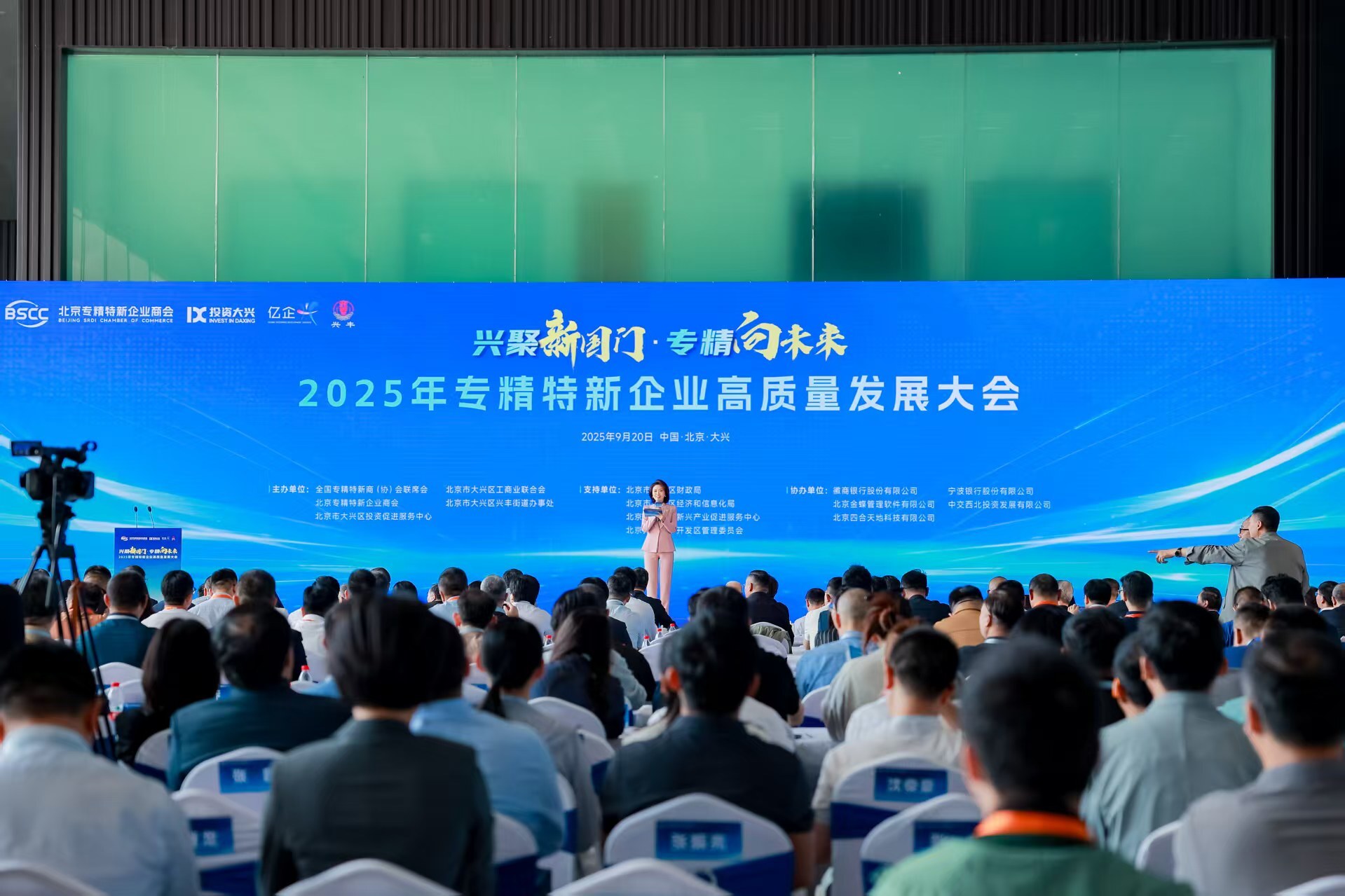
2025年专精特新高质量发展大会在京举办
Zhong Guo Jing Ji Wang· 2025-09-23 03:34
Core Insights - The 2025 Specialized and Innovative Enterprises High-Quality Development Conference was held in Beijing, focusing on promoting collaboration among enterprises of various sizes and regions to foster "invisible champions" in niche markets and support China's modernization efforts [2] Group 1: Conference Highlights - The Beijing Specialized and Innovative Enterprises Chamber of Commerce aims to facilitate resource sharing, infrastructure development, and capability assurance to enhance enterprise growth [2] - The importance of technology and innovation was emphasized by Zhao Xuegang, Deputy Director of the Beijing Civil Affairs Bureau, who encouraged enterprises to take the lead in innovation [2] - Yang Jingguo, Vice Chairman of the Beijing Federation of Industry and Commerce, reported that the number of specialized and innovative enterprises in Beijing, along with their revenue and market capitalization, has surpassed 10,000, with over 1,000 national "little giant" enterprises [2] Group 2: Intellectual Property and Youth Initiatives - Meng Bo, Director of the Beijing Intellectual Property Bureau, highlighted that the city leads the nation in high-value invention patents, with over 370,000 patents and a per capita rate of 171.8 patents [2] - The conference also saw the unveiling of the "Beijing Specialized and Innovative Enterprises Chamber of Commerce Youth Working Committee" by former officials from the Ministry of Industry and Information Technology and the National Intellectual Property Administration [3] - A five-year plan called "Inheritance of the Flame" was announced to systematically cultivate young entrepreneurs in specialized and innovative fields [4]

普莱柯跌2.04%,成交额1528.26万元,主力资金净流入18.87万元
Xin Lang Cai Jing· 2025-09-23 02:24
Core Viewpoint - The stock price of Pulaike has experienced fluctuations, with a year-to-date increase of 8.94% but a recent decline over various trading periods, indicating potential volatility in the market [2]. Company Overview - Pulaike Bioengineering Co., Ltd. is located in Luoyang, Henan Province, established on June 22, 2002, and listed on May 18, 2015. The company primarily engages in the research, production, and sales of veterinary biological products, chemical drugs, and traditional veterinary medicine [2]. - The revenue composition of Pulaike includes: poultry vaccines and antibodies (41.19%), pig vaccines (32.25%), chemical drugs (21.37%), functional health products (1.79%), pet vaccines (1.38%), and other income sources [2]. Financial Performance - For the first half of 2025, Pulaike achieved operating revenue of 559 million yuan, representing a year-on-year growth of 15.79%. The net profit attributable to the parent company was 116 million yuan, reflecting a significant increase of 57.12% [2]. - Since its A-share listing, Pulaike has distributed a total of 1.057 billion yuan in dividends, with 500 million yuan distributed over the past three years [3]. Shareholder Information - As of June 30, 2025, Pulaike had 18,000 shareholders, an increase of 4.27% from the previous period. The average circulating shares per person decreased by 4.09% to 19,234 shares [2]. - Among the top ten circulating shareholders, the Guotai Zhongzheng Livestock Breeding ETF ranks as the seventh largest, holding 3.4499 million shares, an increase of 141,400 shares from the previous period [3].

出版传媒跌2.02%,成交额413.95万元
Xin Lang Cai Jing· 2025-09-23 01:48
Core Viewpoint - The stock of Northern United Publishing and Media Co., Ltd. has experienced fluctuations, with a year-to-date increase of 9.50% but a recent decline in the last five days by 7.10% [1] Company Overview - Northern United Publishing and Media Co., Ltd. was established on August 29, 2006, and listed on December 21, 2007. The company is located in Shenyang, Liaoning Province [1] - The main business activities include the publication, distribution, and printing of educational materials, general books, and related supplies [1] - Revenue composition: Educational materials 39.60%, paper and printing supplies 37.19%, general books 30.73%, and others 4.13% [1] Financial Performance - For the first half of 2025, the company reported operating revenue of 999.2 million yuan, a year-on-year decrease of 5.21%. However, the net profit attributable to shareholders increased by 221.08% to 43.42 million yuan [1] - Cumulative cash dividends since the A-share listing amount to 494 million yuan, with 90.35 million yuan distributed over the past three years [2] Shareholder Information - As of June 30, 2025, the number of shareholders is 22,800, a decrease of 5.40% from the previous period, with an average of 24,148 circulating shares per person, an increase of 5.71% [1] - Notable institutional shareholders include CITIC Prudential Multi-Strategy Mixed Fund and Dachen CSI 360 Internet + Index Fund, both of which are new entrants among the top ten circulating shareholders [2]

精准服务+知产护航 ——塔城市市场监督管理局开展知识产权服务万里行活动
Zhong Guo Shi Pin Wang· 2025-09-22 10:45
Core Viewpoint - The article emphasizes the implementation of the national intellectual property strategy and the launch of the "Knowledge Property Service Journey" initiative in Tashkent City, aimed at enhancing the integration of intellectual property services with regional economic needs and industry demands [1][2]. Group 1: Key Initiatives - The initiative focuses on addressing the pain points of enterprise innovation, particularly in high-value patent cultivation, patent-intensive product registration, and intellectual property pledge financing [2]. - Customized services, targeted connections, and systematic empowerment are employed to assist enterprises in the entire chain of intellectual property creation, protection, utilization, management, and service [1][2]. - The establishment of the first trademark brand guidance station in Tashkent City aims to enhance the quality and quantity of market entities in the trademark brand sector [2]. Group 2: Collaboration and Support - Collaboration with financial institutions like China Bank and Agricultural Bank is aimed at providing one-on-one services to enterprises, facilitating the development of intellectual property pledge financing products [2]. - The article reports that Tashkent City has 2,104 effective registered trademarks, 376 effective patents, 55 effective invention patents, and 6 high-value patents, with 3 enterprises reaching an intention for intellectual property pledge financing [2]. - The market supervision department of Tashkent City will continue to optimize service quality and efficiency to enhance enterprise innovation capabilities and market competitiveness [2].
拓尔思跌2.03%,成交额6.40亿元,主力资金净流出8656.62万元
Xin Lang Zheng Quan· 2025-09-22 06:12
Company Overview - Tuolsi Information Technology Co., Ltd. is located in Haidian District, Beijing, and was established on February 18, 1993, with its listing date on June 15, 2011 [2] - The company specializes in artificial intelligence products and services, big data products and services, and data security products and services [2] - The revenue composition includes 44.49% from AI software products and services, 33.73% from big data software products and services, 11.07% from security products, and 10.70% from system integration and others [2] Financial Performance - For the first half of 2025, Tuolsi achieved operating revenue of 245 million yuan, a year-on-year decrease of 38.36%, and a net profit attributable to shareholders of -73.63 million yuan, a year-on-year decrease of 223.11% [2] - Since its A-share listing, the company has distributed a total of 325 million yuan in dividends, with 55.67 million yuan distributed in the last three years [3] Stock Market Activity - On September 22, Tuolsi's stock price fell by 2.03%, closing at 21.24 yuan per share, with a trading volume of 640 million yuan and a turnover rate of 3.39%, resulting in a total market capitalization of 18.556 billion yuan [1] - Year-to-date, Tuolsi's stock price has increased by 1.43%, but it has decreased by 2.03% in the last five trading days and by 21.36% in the last 20 days [1] - The company has appeared on the "Dragon and Tiger List" twice this year, with the most recent appearance on February 5, where it recorded a net buy of -30.27 million yuan [1] Shareholder Information - As of June 30, 2025, Tuolsi had 120,000 shareholders, a decrease of 5.83% from the previous period, with an average of 7,275 circulating shares per shareholder, an increase of 16.66% [2] - The top ten circulating shareholders include Hong Kong Central Clearing Limited as the third-largest shareholder, holding 6.3563 million shares, a decrease of 1.5779 million shares from the previous period [3]
