新型电力系统

Search documents
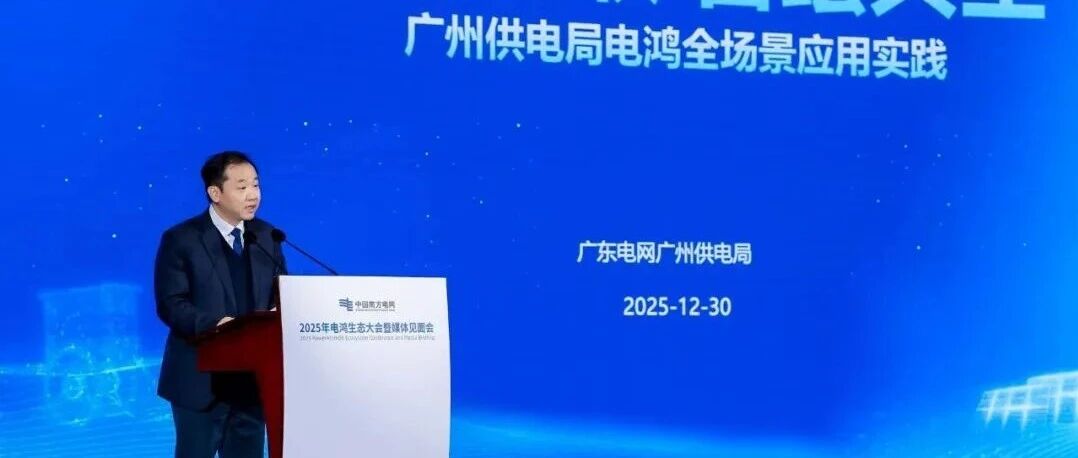
刘智勇:广州电鸿全场景应用 赋能新型电力系统建设
中国能源报· 2025-12-31 07:36
Core Viewpoint - The article discusses the "Electric Hong Ecosystem" and its role in shaping the future of power IoT, emphasizing the need for a unified IoT operating system to address challenges in the power industry and enhance the new power system's capabilities [2][4]. Group 1: Key Developments in the Electric Hong Ecosystem - The Electric Hong Ecosystem aims to create a collaborative digital energy blueprint, with participation from over 400 representatives from various sectors [2]. - Guangzhou, as a national central city, serves as an ideal testing ground for the new power system due to its high load density and diverse scenarios [4]. Group 2: Innovations in Core Operations - The Electric Hong system has improved the efficiency of dynamic maintenance for over 55,000 power distribution areas by 90%, achieving a data accuracy rate of 98% [5]. - In the transmission sector, the system has enhanced smart inspection efficiency by over 50% and increased the timely identification rate of external hazards by 70% [5]. Group 3: Collaboration and Data Sharing - The implementation of the Electric Hong system has transformed monitoring operations into a "transparent factory," increasing operational efficiency by over 80% through real-time data sharing with manufacturers [6]. Group 4: Enhancements in Service Delivery - A new power IoT architecture has been established to address issues with traditional charging stations, resulting in a 10% increase in the comprehensive utilization rate of clean energy [7]. - The Electric Hong system has facilitated real-time carbon emission calculations for electricity consumption, generating 5,743 carbon rating reports and saving companies over 5 million yuan in financing costs [7]. Group 5: Expanding the Energy Service Ecosystem - The Electric Hong system has reduced the commissioning time for micro-energy networks from 90 days to 30 days, improving interaction efficiency with the grid [8]. - The system has supported the successful power supply for major events, ensuring zero power interruptions during the 15th National Games [8]. Group 6: Future Outlook - The Guangzhou Power Supply Bureau plans to continue enhancing the Electric Hong ecosystem by focusing on core operations, collaboration, service delivery, and expanding the energy service ecosystem [8].

丁晓兵:电鸿生态助力新型电力系统发展
中国能源报· 2025-12-31 07:06
Core Viewpoint - The development of a new power system is essential for implementing the national energy security strategy and driving the energy revolution, with a focus on digitalization as a key requirement for sustainability and efficiency in operations [4][5]. Group 1: New Power System Development - The new power system is driven by structural changes on the source side, primarily through renewable energy, which is becoming the main force in the energy landscape [4]. - The distribution network is evolving from a traditional radial structure to an active network, with distributed renewable energy sources increasingly integrated, leading to a significant rise in installed capacity [4][5]. - The demand for a unified power IoT foundation is growing due to the emergence of innovative applications like virtual power plants and vehicle-grid interactions, necessitating real-time coordination of distributed resources and user-side devices [4][5]. Group 2: Digitalization and Software-Defined Power - A deeper level of digitalization is deemed an inevitable choice for the new power system, with efficient operation of numerous smart terminals and the management of a "digital grid" being crucial for sustainable operation [5]. - The traditional expansion model of equipment has reached its limits, and a digital paradigm revolution, termed "software-defined power," is proposed as a solution [5][6]. - The Ministry of Industry and Information Technology is advancing the construction of a national-level open-source technology system to support the architectural innovation and large-scale application of software-defined power [5][6]. Group 3: The Concept of "Dianhong" - "Dianhong" represents an interconnected, open, and shared power industrial IoT system tailored for the new power system and energy framework, built on open-source foundations [6]. - It aims to support a diverse range of power industry applications through a rich middleware system, ensuring safety and autonomy in operations [6][7]. - The development path includes three phases: establishing a unified device core system, overcoming core technology bottlenecks, and integrating artificial intelligence for broader industry application [7]. Group 4: Future Outlook - Future efforts will focus on deeper standardization to facilitate digitalization in the energy sector, promoting standardized access and communication protocols for power terminals [8]. - Enhanced coordination across multiple links will support the modernization of the power industrial system, enabling data integration and analysis across devices and platforms [8]. - The goal is to expand the reach of power infrastructure into various industries and households, fostering new models and business formats for green and low-carbon energy services [8].

国网山东电科院两项科技成果鉴定为国际领先水平
Zhong Guo Neng Yuan Wang· 2025-12-31 06:35
Core Viewpoint - The two technological projects led by State Grid Shandong Electric Power Research Institute have passed technical appraisal, demonstrating significant economic and social benefits in the application of advanced power distribution technologies [1][2]. Group 1: Project Achievements - The project "High Reliability and High Capacity Distributed Photovoltaic Charging Resource Flexible Distribution Technology and Application" addresses challenges related to the integration of massive distributed photovoltaic resources into the distribution network, focusing on flexible networking, control, and support [2]. - The project "Built-in Sensor for Partial Discharge in Large Oil-filled Equipment and Active Fault Defense Technology and Application" targets early detection of discharge defects in large oil-filled equipment, enhancing the ability to prevent discharge-related failures [2]. Group 2: Technical Details - The flexible distribution technology project has developed a series of core equipment for flexible networking, solving key issues such as the coordinated operation of AC and DC flexible distribution networks, harmonic tracing, and fault handling [2]. - The active fault defense technology project employs high-sensitivity built-in discharge sensors and precise discharge location techniques to improve the explosion-proof capabilities of transformers and other large oil-filled equipment [2]. Group 3: Application and Impact - Both projects have been fully applied in the Shandong power grid for flexible management of distributed resources and have been promoted in other provincial power grids, yielding notable economic and social benefits [1][2]. - The appraisal committee, led by an academician from the Chinese Academy of Engineering, recognized both projects as reaching international leading levels after thorough evaluation [1].

王昊:共筑能源底座 共启智联新篇
中国能源报· 2025-12-31 06:35
Core Viewpoint - The article discusses the establishment and development of the Open Source Electric Hong Community, aiming to create a collaborative ecosystem for the digitalization of the energy sector, particularly focusing on the new power system and energy system integration [2][4]. Group 1: Community Structure and Development - The Open Source Electric Hong Community is the first industry application-level open-source community under the Open Atom Open Source Foundation, focusing on solving industry application problems and creating business value [4]. - The community has established a diverse governance structure, with 11 organizations currently involved, which enhances its capability to address pain points in the power industry [4][5]. - The community has completed the first batch of approximately 100,000 lines of open-source code, laying a foundation for its future operational norms and long-term development [4][5]. Group 2: Vision and Mission - The community aims to leverage the open-source model to gather industry strength, accelerate the iteration of Electric Hong technology, deepen applications, and promote ecological prosperity [5][6]. - It has planned operations around eight aspects, including brand applications and version ecology, to continuously deliver core value from five areas: open-source, energy industry, ecological partners, industrial development, and national strategy [5][6]. Group 3: Industry Leadership and Ecosystem Building - The community aspires to be a pioneer in exploring open-source models within the energy vertical, particularly in traditional sectors like electricity, which face significant challenges [6]. - It aims to lead the iteration of new power system technologies and deepen applications by building a unified technical foundation and breaking down data barriers across various segments of the energy supply chain [6][7]. - The community seeks to create a collaborative ecosystem that includes various stakeholders, ensuring that each participant can find their value within a complete value closed-loop system [6][7]. Group 4: Industrial Upgrading and National Contribution - The community aims to drive industrial chain upgrades and cultivate new business models, shifting the focus from traditional hardware manufacturing to software and data services [7]. - It intends to establish new industry standards that emphasize architectural unity, community contribution, and scenario innovation, promoting high-quality industrial development [7]. - The community also envisions becoming a foundational builder for the national energy industry's Internet of Things, facilitating the sharing of core technologies across industries [7].

吴小辰:持续做大做强电鸿生态 筑牢能源强国数字根基
中国能源报· 2025-12-31 05:04
Core Viewpoint - The article emphasizes the importance of the open-source "Dianhong" IoT operating system in enhancing energy security, promoting green development, driving innovation, improving energy services, and increasing international influence in the context of China's energy transformation and digitalization efforts [2][4][6][7]. Group 1: Energy Security - The open-source "Dianhong" system aims to enhance energy security by achieving deeper standardization and self-control, addressing the challenges of interconnectivity and data integration among vast power equipment [5][6]. - It is designed to build a comprehensive, self-sufficient immune system for critical energy infrastructure, significantly improving the management of large-scale, distributed, real-time power systems [5][6]. Group 2: Green Development - The system is expected to foster new business models and practices, such as energy substitution and energy conservation, which will drive the transformation of industries like manufacturing, smart transportation, and smart homes towards greener practices [6][7]. - The goal is to achieve a significant increase in the share of non-fossil energy in power generation, targeting around 50% by 2030 [4]. Group 3: Innovation Strategy - "Dianhong" focuses on core technology breakthroughs, promoting advancements in integrated sensing, computing, and control technologies, as well as new communication and measurement technologies [6][7]. - The initiative aims to enhance the level of technological and industrial innovation, contributing to the development of new digital energy technologies and infrastructure [6][7]. Group 4: Energy Services - The system will facilitate extensive data sharing and multi-party collaboration, connecting various segments of the energy supply chain to enhance energy service offerings [6][7]. - It aims to meet diverse and high-quality energy needs of the public by expanding energy service supply through innovative collaborative scenarios [6][7]. Group 5: International Influence - The integration of "Dianhong" with technologies like AI and digital twins is expected to provide comprehensive solutions for the challenges of clean, low-carbon, and economically efficient energy systems [7]. - The initiative positions China to contribute solutions for global energy transitions, enhancing its international influence in the energy sector [7][8].

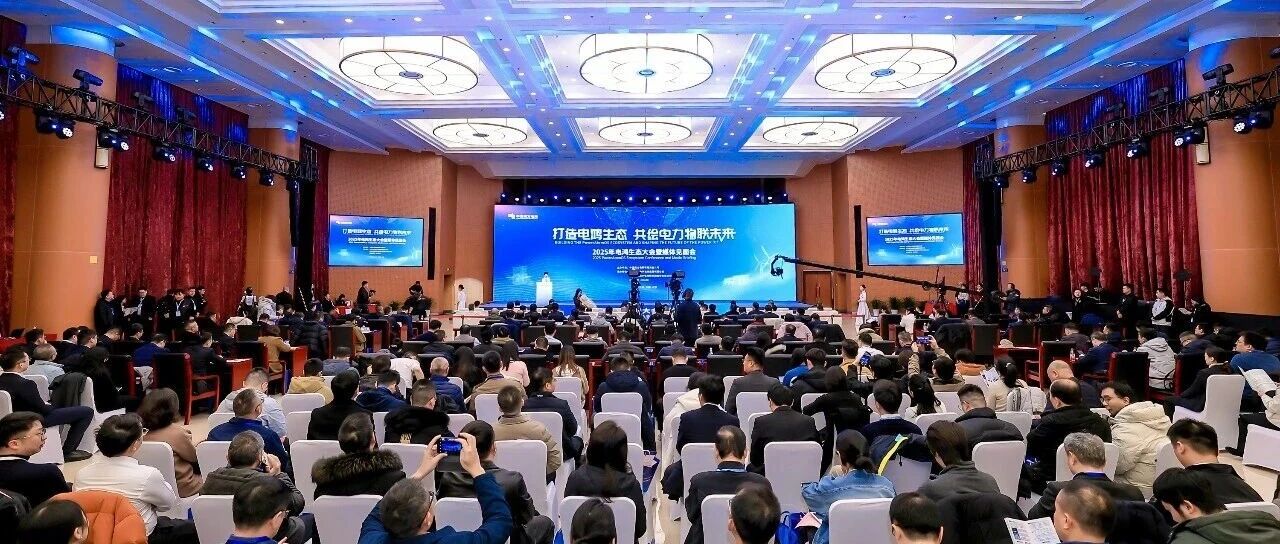
共建电鸿生态 夯实能源数字化基础——2025年电鸿生态大会暨媒体见面会在京举行
中国能源报· 2025-12-31 04:33
Core Viewpoint - The integration of energy and digital revolutions is crucial for establishing a new power system, with a focus on digitalization and intelligence as key drivers for innovation and industry collaboration in the energy sector [2][4]. Group 1: Event Overview - The 2025 Electric Hong Ecosystem Conference was held in Beijing, focusing on building a unified power IoT foundation to support the new power system [2]. - The conference gathered nearly 400 representatives from government, industry organizations, energy companies, universities, and innovation partners to discuss energy digitalization and intelligent transformation [2]. Group 2: Challenges and Solutions - The transition from traditional centralized power systems to complex, collaborative systems requires addressing challenges such as heterogeneous terminal access, rapid business scenario iterations, and cybersecurity risks [4]. - The "Electric Hong" open-source IoT operating system aims to standardize underlying technology and resolve issues related to protocol unification and data connectivity, thereby enhancing the safety and flexibility of the energy system [4][5]. Group 3: Technological Advancements - The Electric Hong initiative emphasizes a digital paradigm shift centered on "software-defined power," which is essential for supporting the operation of the new power system [5]. - The initiative has led to the establishment of the Open Atom Electric Hong Open Source Community, marking a strategic transition from enterprise-level products to an industry-level collaborative platform [7]. Group 4: Ecosystem Development - The Electric Hong ecosystem has attracted over 560 partners and adapted nearly 1,900 terminal devices, covering mainstream power chip systems, indicating a growing collaborative industry ecosystem [8]. - The ecosystem's collaborative effects are becoming evident, with partnerships enhancing the influence and reach of Electric Hong [10]. Group 5: Practical Applications - Electric Hong is being validated through large-scale applications in key areas such as grid operation and energy services, demonstrating its value as a unified digital foundation [11]. - In Guangzhou, the implementation of Electric Hong has led to significant improvements in distribution network management, achieving a 98% accuracy rate in automatic maintenance of over 5.5 million meters [12]. Group 6: Future Prospects - The future vision for Electric Hong includes integrating capabilities such as sensing terminals, power IoT, digital twins, and artificial intelligence to provide comprehensive solutions for the energy sector [13]. - The initiative is positioned to contribute to global energy digital transformation, offering a replicable Chinese model for balancing clean, low-carbon energy with economic efficiency [13].
【行业分析】中国高压开关柜行业政策汇总、发展现状及投资前景预测报告——智研咨询发布
Sou Hu Cai Jing· 2025-12-31 03:12
Core Insights - The high-voltage switchgear market is experiencing steady growth due to the ongoing development of the power industry and the advancement of smart grid construction, driven by traditional grid upgrades and the integration of renewable energy sources [2][10] - The market size of China's high-voltage switchgear industry is projected to grow from 44.519 billion yuan in 2016 to 107.896 billion yuan in 2024, with a compound annual growth rate (CAGR) of 11.7% [2] - The release of the IEC TS 62271-5:2024 technical specification in May 2024 sets universal technical requirements for DC switchgear and control devices for systems with rated DC voltages of 100kV and above, indicating a significant regulatory development in the industry [2] Industry Overview - High-voltage switchgear is a type of electrical equipment used for the distribution and control of electrical energy, categorized by voltage levels into high, medium, and low voltage switchgear [4] - The high-voltage switchgear market is crucial for ensuring the safe and efficient operation of power distribution systems, allowing for the quick isolation of faults and maintaining the integrity of the grid [4][6] Market Dynamics - Investment in power generation and grid infrastructure in China has significantly increased, with power construction investment rising from 270 billion yuan in 2017 to 1,168.7 billion yuan in 2024, reflecting a CAGR of 23.28% [10] - The investment in grid construction has also seen growth, increasing from 531.5 billion yuan in 2017 to 608.3 billion yuan in 2024, with a CAGR of 1.95% [10] Industry Chain - The upstream of the high-voltage switchgear industry includes electronic components, metal materials, and other materials, while the midstream involves the manufacturing of high-voltage switchgear [12] - The downstream applications encompass various sectors such as power plants, substations, petrochemicals, metallurgy, textiles, and residential buildings [12] Material Significance - Copper is an essential material in high-voltage switchgear due to its excellent conductivity, which enhances circuit efficiency and stability, and its durability, which reduces failure rates and maintenance costs [15] - The production of copper in China is expected to grow from 18.617 million tons in 2017 to 23.503 million tons in 2024, with a CAGR of 3.39% [15]
山东:54座储能电站参与电力现货交易 总容量达689.9万千瓦
Zhong Guo Dian Li Bao· 2025-12-31 01:36
Group 1 - The core point of the articles highlights the significant growth of new energy and energy storage capacity in Shandong, with the total installed capacity of new energy reaching 10.045 million kilowatts, marking a historic milestone [1] - During the 14th Five-Year Plan period, Shandong's new energy capacity is expected to grow at an annual rate of 25%, reaching a total installed capacity of 125 million kilowatts, which will account for 50% of the total installed capacity [1] - The State Grid Shandong Electric Power Company has completed 271 independent energy storage connection studies, totaling 44.79 million kilowatts, and has reduced the number of connection steps by 50% and response time by 30% [1] Group 2 - Shandong has established the first market-oriented profit mechanism for energy storage in the country, addressing the cost recovery challenges for storage projects [1] - A total of 54 energy storage stations in Shandong are currently participating in the electricity spot market, with a total capacity of 6.899 million kilowatts [1] - The Shandong Electric Power Company has built a national grid battery storage technology laboratory to focus on technological innovation related to new energy storage and new power system construction [2] - The company is promoting distributed energy storage in areas with dense distributed photovoltaics and has developed a "cloud storage" control platform to enhance grid regulation [2] - A customized "charging and discharging strategy" has been developed for energy storage stations based on different scenarios such as power supply assurance and consumption promotion [2]
国电南自(600268):电力自动化业务乘风而起,产品赋能聚焦新型能源体系
Guotou Securities· 2025-12-30 14:35
Investment Rating - The report assigns a "Buy-A" investment rating to the company with a target price of 12.89 CNY, while the current stock price is 10.58 CNY [5]. Core Insights - The company, Guodian Nanzi, has experienced rapid growth in net profit for two consecutive years, driven by its focus on power automation products and expansion into new business areas [2][4]. - The company is well-positioned to benefit from the construction of a new power system in China, with significant investments in power grid and power plant automation expected to drive revenue growth [3][9]. - The company has a diverse industrial system, including power grid automation, power plant automation, rail transit automation, information and safety technology, and power electronics [2][24]. Summary by Sections 1. Company Overview - Guodian Nanzi, established in 1940, is a pioneer in power automation and was the first high-tech company listed on the Shanghai Stock Exchange in 1999 [2][14]. - The company is controlled by the State-owned Assets Supervision and Administration Commission through Huadian Group, which holds a 49.2% stake [2][15]. 2. Business Performance - The company's revenue from power grid automation reached 3.826 billion CNY in 2024, accounting for 42.37% of total revenue, while the power plant and industrial automation segment generated 1.516 billion CNY, representing 16.79% of total revenue [2][24]. - The company has achieved a five-year compound annual growth rate (CAGR) of 15.74% in revenue and 49.89% in net profit [2][27]. 3. Market Opportunities - The demand for power automation products is expected to rise due to the ongoing transformation of the power supply and demand landscape in China, with significant investments in power grid and power plant projects [3][35]. - The company is actively developing solutions for virtual power plants and grid-type energy storage, which are anticipated to create new growth opportunities [4][24]. 4. Financial Projections - The report forecasts net profits of 378 million CNY, 437 million CNY, and 513 million CNY for 2025, 2026, and 2027, respectively, with growth rates of 10.90%, 15.60%, and 17.44% [9][10]. - The company is expected to maintain a stable gross margin of around 23% in the coming years, with potential for improvement as new high-margin products are launched [30][28].

《电力中长期市场基本规则》解读之二︱新型电力系统下的电力中长期市场重构“组合拳”
国家能源局· 2025-12-30 07:54
近日 ,国家发展改革委、国家能源局印发《电力中长期市场基本规则》,废止《电力中长期交易基本规则》(发改能源规 〔 2020 〕 889 号) 和 《电力中长期交易基本规则 —— 绿色电力交易专章》(发改能源〔 2 024 〕 1123 号)。《电 力中长期交易基本规则》是我国电力市场化改革的关键里程碑。在其推动下,市场规模实现跨越式增长,市场体系得以初 步构建,规则框架基本统一,有效提升了交易规范性与透明度,为全国统一电力市场 建设奠定了坚实基础。随着 双碳 目 标的深入推进 和 电力体制改革的不断深化 , 以高 比例新能源为主体的新型电力系统加速构建, 电力市场 基础 规则体系 建设迎来了新要求、新挑战。 在此背景下,《电力中长期市场基本规则》审时而生。 此次修订 并非一次常规的条款修补,而是立足 新型电力系统建设 全局的 " 系统性重构 " ,是涵盖主体范围、市场协同、交易机制、绿电消纳等各方面系统性提升的 " 组合拳 " ,标志着 我国电力市场化改革迈入适应能源结构转型的新阶段。面对市场运行与发展的挑战,《电力中长期市场基本规则》主要进 行了以下四个维度的优化提升。 一、契合新型电力系统:明确新型经营主 ...