台独

Search documents
德国外长访华行程推迟,德方表示遗憾
Huan Qiu Shi Bao· 2025-10-24 22:52
Group 1 - German Foreign Minister Baerbock's planned visit to China has been postponed due to insufficient meetings arranged in China, which highlights the importance of China in trade and international affairs [1] - The visit was originally scheduled to start on the 26th and was intended to address export control issues related to rare earths and semiconductors, emphasizing the need for stable and reliable global trade relations [1] - Baerbock expressed that Germany aims to maintain close economic ties with China, stating that "decoupling" is not the correct strategy [1] Group 2 - Baerbock reiterated Germany's commitment to the One China policy while emphasizing that Germany will decide its policy implementation independently and does not support the use of force to change the status quo in the Taiwan Strait [2] - China's Foreign Ministry responded by stating that the greatest threat to peace in the Taiwan Strait is "Taiwan independence" and external forces supporting it, urging Germany to uphold the One China principle [2] - A commentary from German media suggested that Baerbock should adopt a more curious and learning-oriented approach towards China, rather than a punitive one, which could benefit Germany's export sector [2]
国台办:强烈谴责民进党当局滥用司法迫害岛内爱国统一力量
Yang Shi Wang· 2025-10-24 15:35
Core Viewpoint - The article discusses the recent sentencing of a retired Taiwanese military general, Gao An, to 7 years and 6 months in prison by the Democratic Progressive Party (DPP) authorities, which is viewed as an abuse of judicial power and a suppression of pro-unification forces in Taiwan [1] Group 1 - The DPP is accused of using judicial measures to suppress political dissent and persecute individuals advocating for unification with mainland China [1] - The actions of the DPP are characterized as being driven by the party's self-interest and the nature of "Taiwan independence" [1] - There is a call for Taiwanese society to recognize the true nature of the case and to unite against the abuse of power by the DPP [1] Group 2 - A warning is issued to relevant institutions and individuals in Taiwan, indicating that those who align with "Taiwan independence" and act against the will of the people will face historical reckoning and legal consequences [1]
外交部:维护台海和平稳定就必须坚持一个中国原则,必须明确反对“台独”
Xin Hua She· 2025-10-24 10:46
Core Viewpoint - The primary threat to peace and stability in the Taiwan Strait is the "Taiwan independence" separatist actions and the support from external forces, emphasizing the necessity to uphold the One China principle and explicitly oppose "Taiwan independence" [1][2] Group 1 - The Chinese government asserts that there is only one China, and Taiwan is part of it, with the People's Republic of China being the sole legitimate government representing all of China [1] - The spokesperson highlighted that merely stating the maintenance of the status quo in the Taiwan Strait without opposing "Taiwan independence" effectively condones such activities, which could severely impact peace and stability in the region [1] - The Chinese side urges Germany to strictly adhere to the One China principle and clearly oppose any "Taiwan independence" separatist actions [2]
国台办:希望两岸同胞积极提供台军“心战大队”核心骨干违法犯罪线索
Xin Hua Wang· 2025-10-22 08:41
她指出,民进党当局操纵"心战大队"抹黑攻击大陆,宣扬"台独"谬论,煽动分裂国家,事实清楚、证据 确凿。公安机关对台湾军方"心理作战大队"18名涉嫌违法犯罪的核心骨干发布悬赏通告,是落实《关于 依法惩治"台独"顽固分子分裂国家、煽动分裂国家犯罪的意见》的具体行动,是维护两岸同胞共同利益 和中华民族根本利益的正义之举。 新华社北京10月22日电(记者尚昊、王承昊)厦门市公安局日前发布悬赏通告,征集18名台湾军方"心 战大队"核心骨干违法犯罪线索。国务院台办发言人朱凤莲22日在例行新闻发布会上表示,台湾是中国 的一部分。凡危害国家主权、安全、发展利益者,都难逃国家法律的制裁。希望两岸同胞积极提供相关 违法犯罪线索,坚决反对任何形式的"台独"分裂行径,坚定维护国家统一,坚定维护台海和平稳定和自 身安全福祉。 针对台对外交往部门相关报告,朱凤莲答问时指出,世界上只有一个中国,台湾是中国的一部分。民进 党当局顽固坚持"台独"分裂立场,不断勾连外部势力谋"独"挑衅,是导致台海局势紧张动荡的根源所 在。民进党当局打着"民主""经贸""科技"等幌子,干着"倚外谋独"的勾当,其所谓"大陆威胁""民主对抗 威权"虚假叙事完全是颠倒 ...
国台办:凡危害国家主权、安全、发展利益者都难逃法律制裁
Yang Shi Xin Wen Ke Hu Duan· 2025-10-22 03:18
10月22日,国务院台办举行例行新闻发布会。有记者提问:厦门市公安局日前发布悬赏通告,征集18名 台湾军方"心战大队"核心骨干违法犯罪线索。对此,台陆委会称,大陆通过"滥捕、滥诉恐吓台湾民 众","形塑长臂管辖假象"。对此有何评论? 发言人朱凤莲表示,民进党当局操纵"心战大队"抹黑攻击大陆,宣扬"台独"谬论,煽动分裂国家,事实 清楚、证据确凿。公安机关对台湾军方心理作战大队18名涉嫌违法犯罪的核心骨干发布悬赏通告,是落 实《关于依法惩治"台独"顽固分子分裂国家、煽动分裂国家犯罪的意见》的具体行动,是维护两岸同胞 共同利益和中华民族根本利益的正义之举。 朱凤莲指出,台湾是中国的一部分。凡危害国家主权、安全、发展利益者,都难逃国家法律的制裁。希 望两岸同胞积极提供相关违法犯罪线索,坚决反对任何形式的"台独"分裂行径,坚定维护国家统一,坚 定维护台海和平稳定和自身安全福祉。(总台央视记者 黄达 朱若梦) 责编:陈菲扬、卢思宇 ...
“不能忘,常思量”——歌声中的台湾光复印记
Xin Hua Wang· 2025-10-21 05:47
Core Viewpoint - The article discusses the significance of October 25 as Taiwan's Restoration Day, marking the end of Japanese colonial rule and the return of Taiwan to China, celebrated through various songs and cultural activities, but facing challenges in recent years due to political changes [1][2][3][4]. Group 1: Historical Significance - October 25, 1945, marks the day Taiwan was restored to China after 50 years of Japanese colonial rule, celebrated by the Taiwanese people with joy and festivities [1]. - The day was officially designated as "Taiwan Restoration Day" the following year, with the creation of the "Taiwan Restoration Memorial Song" reflecting the joy of the people [2]. Group 2: Cultural Impact - The "Taiwan Restoration Memorial Song" has been a significant cultural piece, included in school music curricula, and has become a symbol of collective memory for generations [2]. - Various other songs related to Taiwan's restoration have also been created and sung, contributing to the cultural heritage of the island [2]. Group 3: Political Context - The celebration of Taiwan Restoration Day has faced political challenges, particularly during the administrations of Lee Teng-hui and Chen Shui-bian, who downplayed its significance and changed the holiday to "End of War Memorial Day" [2][4]. - The Democratic Progressive Party's (DPP) governance has led to a decline in the observance of this day, with related activities being canceled and the song fading from public memory [3][4]. Group 4: Recent Developments - In May of this year, the Legislative Yuan passed a proposal to restore October 25 as a public holiday, indicating a resurgence of interest in commemorating Taiwan's restoration [4]. - Despite the DPP's attempts to diminish the historical significance of the day, there remains a strong sentiment among certain groups in Taiwan to remember and celebrate this important historical event [4].
郑丽文披挂上阵,赖清德铤而走险几率大增
经济观察报· 2025-10-20 11:56
Core Viewpoint - The article discusses the potential political strategies of Lai Ching-te and the implications of the recent election of Zheng Liwen as the new chairperson of the Kuomintang (KMT), emphasizing the challenges and risks involved in the upcoming elections [4][5][6]. Group 1: Political Landscape - Zheng Liwen's election as KMT chairperson with over half of the votes signifies a shift in the party's approach towards cross-strait relations, aiming to clarify the "One China" principle and counter "Taiwan independence" sentiments [4][5]. - The article suggests that if the KMT performs well in the 2026 local elections, it could increase the likelihood of Lai Ching-te taking risky actions in the 2028 presidential election [4][6]. Group 2: Strategies and Risks - Zheng Liwen's strategy involves a two-pronged approach with her and Lu Xiuyan alternating in leadership roles, which poses a significant challenge to Lai Ching-te [6]. - The article speculates that Lai Ching-te might resort to extreme measures, such as declaring martial law, to secure electoral victory, although this is deemed unlikely due to the potential repercussions from mainland China [7][8]. - Lai's possible risky actions could include creating a self-inflicted crisis to garner sympathy from voters or targeting political opponents through legal means [8].

刚刚当选国民党新主席的郑丽文,是什么来头
首席商业评论· 2025-10-20 09:28
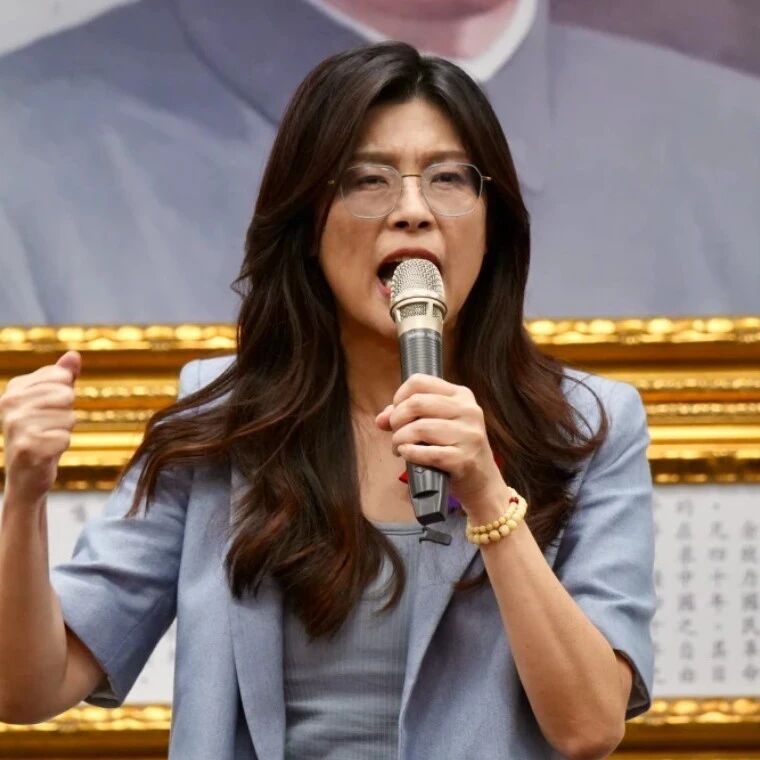
以下文章来源于首席侧写师 ,作者阳明山人 首席侧写师 . 观人,鉴历史,知天地。 2025年10月18日,中国国民党主席选举落下帷幕,郑丽文以显著优势胜出,成为该党历史上第二位女 性主席,更是首位从民进党阵营转投国民党后执掌党权的"跨党派"掌舵人。这位出身眷村、曾放弃模特 生涯的法学硕士,用三十年政坛沉浮书写了独特的人生轨迹。 图源:网络 初入政坛的郑丽文,具有强烈的反抗"黑金政治"的倾向。上世纪90年代,国民党内部腐败滋生,出于 对这种"黑金政治"现象的厌恶,郑丽文选择了看上去"更有希望"的民进党,并一路顺风顺水。1999年 郑丽文出任民进党"国大"党团副总召集人,更凭借政论节目"火线双娇"成为家喻户晓的"绿营名嘴", 引得当时的党内大佬们纷纷费心拉拢。但这份顺遂在2002年戛然而止——因在节目中批评当局政要, 触碰到党内某些人核心利益,她遭到党内高层打压。在"恶劣的党派作风使我无法忍受"的愤懑之下,郑 丽文毅然决定退出民进党,开启了人生的第一次重大转向。 离开政坛的日子里,郑丽文并未沉寂。她一边主持节目维持公众影响力,一边赴英国剑桥大学攻读国际 关系学,开始重新审视两岸关系与台湾政坛生态。2004年,她主 ...
台海观澜 | 郑丽文披挂上阵,赖清德铤而走险几率大增
Jing Ji Guan Cha Wang· 2025-10-20 05:55
Group 1 - The core viewpoint of the article is that Zheng Liwen's election as the new chairperson of the Kuomintang (KMT) could significantly impact the political landscape in Taiwan, particularly regarding the 2028 elections [2] - Zheng Liwen's clear stance on the "One China" principle and the "1992 Consensus" marks a significant shift in the KMT's approach, potentially undermining the "Taiwan independence" movement [3] - The strategy of Zheng Liwen and Lu Xiuyan alternating in leadership roles presents a unique challenge to Lai Qingde, increasing pressure on him as they prepare for the upcoming elections [4][5] Group 2 - Zheng Liwen's concerns about Lai Qingde's potential risky actions, such as declaring martial law, highlight the tense political environment and the possible escalation of conflicts [6][7] - Lai Qingde may resort to desperate measures, including creating incidents to garner sympathy or targeting opponents through political maneuvers, indicating a volatile political strategy [8][9]
怒其不争,张亚中的呐喊或成绝响
经济观察报· 2025-10-15 10:11
Core Viewpoint - The article discusses the differing political stances of the Kuomintang (KMT) leadership in relation to various elections, highlighting the emphasis on the concept of "China" during the party chair election, while downplaying it in the context of the Taiwan election, focusing instead on opposing "Taiwan independence" [5][8]. Group 1: Party Chair Election - The KMT will hold its party chair election on October 18, with candidates emphasizing the concept of "China" [5][9]. - Candidate Zhang Yazhong expressed a sense of despair during the debate, indicating that the KMT has not truly governed Taiwan since Chiang Ching-kuo, and criticized previous leaders for their roles in promoting "Taiwan independence" [6][7]. - Zhang also lamented the loss of the party's spirit and the abandonment of Sun Yat-sen's ideology, criticizing the educational curriculum changes that have marginalized Chinese history [8]. Group 2: Candidate Dynamics - The current KMT membership demographics show that over 65% are aged 60 and above, which influences candidates to emphasize Chinese identity [9]. - If candidate Hao Longbin wins, there may be a shift of the KMT towards the Democratic Progressive Party (DPP), as indicated by his more conciliatory language towards the DPP [10]. - Conversely, if candidate Zheng Liwen wins, collaboration with the People's Party may become smoother, potentially leading to joint candidates in future elections [11]. Group 3: Policy and Strategy - Hao Longbin's recent crisis management efforts included announcing five major policies regarding cross-strait relations, aiming to gain the support of older KMT members [12]. - Zhang Yazhong criticized Hao's policies, suggesting a significant gap in their understanding of cross-strait issues [12][13]. - The contrasting styles of Zhang and Zhao Shaokang highlight the differences between a scholar's approach and a politician's pragmatism [14].