
国际化

Search documents
创多项纪录!中国太保发行史上最大规模港元零票息可转债
Shang Hai Zheng Quan Bao· 2025-09-11 05:53
Core Viewpoint - China Pacific Insurance (CPIC) successfully issued HKD 15.556 billion convertible bonds with zero coupon, reflecting strong market confidence in the company's fundamentals and long-term development prospects [2] Group 1: Financing Details - The issuance achieved a subscription rate of over 70% from long-term investors, with a conversion premium rate of 25% [2] - This marks several records for CPIC: the first offshore convertible bond issued by a state-owned financial enterprise listed both domestically and internationally, the largest zero-coupon convertible bond in HKD history, the first negative yield HKD convertible bond in nearly 20 years, and the largest overseas refinancing project in the Asia-Pacific financial sector since 2025 [2] Group 2: Use of Proceeds - The funds raised will primarily support the insurance core business and the company's three strategic developments: "Great Health and Wellness," "Artificial Intelligence+," and "Internationalization" [2] - The fundraising effort demonstrates CPIC's commitment to focusing on its core responsibilities and strategic priorities, emphasizing value creation and long-term growth in the new development phase of the insurance industry [2]


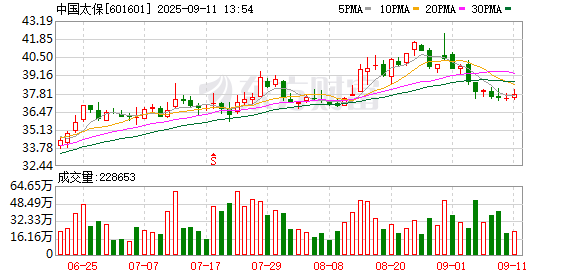
中国太保公告 拟发行155.56亿港元零息可转债
Zhong Guo Zheng Quan Bao· 2025-09-11 05:02
Core Viewpoint - China Pacific Insurance (China Taibao) plans to issue zero-coupon convertible bonds totaling HKD 15.556 billion, maturing in 2030, to support its business development and capital structure needs [2][6]. Group 1: Bond Issuance Details - The initial conversion price for the bonds is set at HKD 39.04 per share, representing a premium of approximately 21.24% over the closing price of HKD 32.20 on September 10 [6]. - If fully converted at the initial conversion price, the bonds could convert into approximately 398.46 million shares, accounting for about 14.36% of the existing H-shares and 4.14% of the total issued share capital as of the announcement date [6][7]. - The net proceeds from the bond issuance will be used to support the insurance core business, implement three major strategies ("Great Health, AI+, Internationalization"), and supplement working capital [2][6]. Group 2: Regulatory and Market Considerations - The company has obtained the necessary approval from the National Development and Reform Commission for the bond issuance and will apply for listing on the Hong Kong Stock Exchange [7]. - Following the completion of the bond issuance, the company will also file with the China Securities Regulatory Commission and seek approval from the financial regulatory authority for any subsequent capital increase related to the conversion of shares [7]. Group 3: Industry Context - The issuance of zero-coupon convertible bonds is becoming a trend among insurance companies, as seen with China Ping An's recent announcement to issue HKD 11.765 billion in similar bonds [9]. - Industry experts highlight that zero-coupon bonds offer lower financing costs and flexible terms, making them suitable for insurance companies' capital replenishment needs [9].
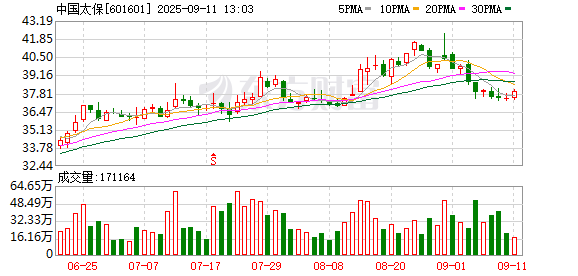
中信证券:医药板块上涨主升浪有望中长期持续
Xin Lang Cai Jing· 2025-09-11 00:26
Core Viewpoint - The pharmaceutical market in A-shares and Hong Kong is expected to see a significant recovery in the first half of 2025, driven by substantial optimization in medical insurance policies, strong recovery in hospital internal demand, and returns from innovation [1] Summary by Categories Market Performance - The performance improvement in the pharmaceutical sector during the first half of the year has not been fully reflected in valuations, despite the overall sector rising to 72% of its 5-year valuation percentile [1] Future Outlook - Given the major changes from the industrial support side to insurance payment side, the upward trend in the A-share and Hong Kong pharmaceutical sectors is far from over, with the main upward wave expected to continue in the medium to long term [1] Investment Strategy - The company recommends focusing on three areas for investment in the second half of the year: innovation-driven growth, internationalization combined with self-sufficiency, and reforms in out-of-hospital marketing models, particularly emphasizing leading companies with strong domestic demand certainty [1]

中国太保拟发行155.56亿港元零息可转换债券
Ge Long Hui· 2025-09-11 00:19
Core Viewpoint - China Pacific Insurance (02601.HK) has announced a subscription agreement for the issuance of HKD 15.556 billion zero-coupon convertible bonds due in 2030, which will be convertible into H-shares at an initial conversion price of HKD 39.04 per share [1] Group 1 - The total principal amount of the bonds to be issued is HKD 15.556 billion, which can be converted into approximately 398 million shares, representing about 14.36% of the existing issued H-shares and 4.14% of the total issued share capital as of the announcement date [1] - The company plans to use the net proceeds from the bond issuance to support its core insurance business, implement three major strategies: "Great Health, AI+, and Internationalization," and supplement working capital for general corporate purposes [1]
中国太保:拟发行155.56亿港元零息H股可转换债券
Zheng Quan Shi Bao Wang· 2025-09-11 00:11
Core Viewpoint - China Pacific Insurance (601601) announced the issuance of zero-coupon convertible bonds totaling HKD 15.556 billion, maturing in 2030, with an initial conversion price of HKD 39.04 per H-share [1] Group 1 - The company signed a subscription agreement on September 10, 2023, after trading hours [1] - The net proceeds from the bond issuance will be used to support the insurance core business and the implementation of three major strategies: "Great Health and Elderly Care," "Artificial Intelligence +," and "Internationalization" [1] - The funds will also be allocated for general corporate purposes, including replenishing working capital [1]
中国太保(02601.HK)拟发行155.56亿港元零息可转换债券
Ge Long Hui· 2025-09-11 00:01
拟由公司发行的债券本金总额为155.56亿港元,可于条款及条件所载情形下转换为H股。初始转换价为 每股H股39.04港元(可予调整)。假设债券按每股H股39.04港元的初始转换价悉数转换且不再发行其他股 份,则债券将可转换为约3.98亿股转换股份,约占公司于本公告日期现有已发行H股数目的14.36%及现 有已发行股本的4.14%。 格隆汇9月11日丨中国太保(02601.HK)发布公告,2025年9月10日,公司与经办人签署认购协议。根据认 购协议,(其中包括)公司已同意向经办人发行或根据经办人指示发行,且经办人已单独(而非共同)同意 认购并支付或促使认购人认购并支付债券(即155.56亿港元于2030年到期的零息可转换债券),惟须受认 购协议所载若干条件规限。经办人已开展入标定价,关于债券的条款(包括但不限于本金金额和初始转 换价)已在入标定价后确定。 待债券发行完成后,公司拟将发行债券所得款项净额用于(i)支持保险主业;(ii)支持"大康养、人工智能 +、国际化"三大战略实施;及(iii)补充营运资金等一般企业用途。 ...
中国太平洋保险(集团)股份有限公司第十届董事会第十七次会议决议公告
Shang Hai Zheng Quan Bao· 2025-09-10 19:25
Core Viewpoint - China Pacific Insurance (Group) Co., Ltd. has proposed to issue H-share convertible bonds and list them on the Hong Kong Stock Exchange, aiming to support its core insurance business and strategic initiatives [2][6]. Group 1: Board Meeting and Resolutions - The 17th meeting of the 10th Board of Directors was held on September 10, 2025, with all 13 attending directors agreeing to waive the notice period [1]. - The board unanimously approved the proposal for issuing H-share convertible bonds [3]. Group 2: Convertible Bonds Issuance - The company plans to issue convertible bonds exclusively to professional investors, in compliance with relevant regulations, and will not offer them to the general public or related parties [6]. - The pricing of the convertible bonds will be determined through a competitive bidding process, with specific terms yet to be finalized [6]. Group 3: Use of Proceeds - The net proceeds from the issuance of convertible bonds are intended to support the insurance core business, implement strategic initiatives related to "healthcare, artificial intelligence, and internationalization," and supplement working capital [8]. Group 4: Listing and Regulatory Compliance - The company will apply for approval from the Hong Kong Stock Exchange for the listing and trading of the convertible bonds and the H-shares issued upon conversion [9]. - As of the announcement date, no final agreement has been established regarding the issuance of the convertible bonds, and the issuance may not proceed [9].

中国太保(02601.HK)拟发行港元计值可转换债券
Ge Long Hui· 2025-09-10 11:27
Core Viewpoint - China Pacific Insurance (02601.HK) plans to issue convertible bonds exclusively to professional investors outside of the United States, aiming to support its core insurance business and strategic initiatives [1] Group 1: Convertible Bonds Issuance - The company intends to issue convertible bonds only to professional investors as defined by the Listing Rules and Securities and Futures Ordinance [1] - The offering will not be available to the general public in Hong Kong or any related parties of the company [1] Group 2: Use of Proceeds - The net proceeds from the convertible bonds will be utilized for: 1. Supporting the core insurance business 2. Implementing three major strategies: "Big Health", "Artificial Intelligence+", and "Internationalization" 3. Supplementing working capital and other general corporate purposes [1] Group 3: Listing and Trading - The company will apply to the Hong Kong Stock Exchange for the listing and trading of the convertible bonds issued to professional investors - Additionally, the company will seek approval for the listing and trading of H-shares upon the exercise of the conversion rights of the convertible bonds [1] - The listing of the convertible bonds on the Hong Kong Stock Exchange does not indicate the commercial value or credit quality of the company or the bonds [1]
中国太保建议发行港元计值可转换债券
Zhi Tong Cai Jing· 2025-09-10 11:26
Core Viewpoint - China Pacific Insurance (601601) (02601) announced the proposal to issue convertible bonds to professional investors, with the offering to be conducted solely outside the United States under the Securities Law S regulations [1] Group 1 - The company plans to use the net proceeds from the convertible bond issuance to support its core insurance business [1] - The funds will also be allocated to implement three major strategies: "Great Health and Elderly Care," "Artificial Intelligence +," and "Internationalization" [1] - Additionally, the proceeds will be used to supplement working capital and for general corporate purposes [1]
中国太保(02601)建议发行港元计值可转换债券
智通财经网· 2025-09-10 11:25
Core Viewpoint - China Pacific Insurance (02601) proposes to issue convertible bonds to professional investors, exclusively outside the United States, to support its core insurance business and strategic initiatives [1] Group 1: Convertible Bonds Issuance - The company plans to issue convertible bonds aimed at professional investors [1] - The issuance will be conducted in accordance with the Securities Law regulations, specifically for sales outside the United States [1] Group 2: Use of Proceeds - The net proceeds from the convertible bond issuance will be utilized to support the core insurance business [1] - Funds will also be allocated to implement three major strategies: "Great Health and Elderly Care," "Artificial Intelligence+," and "Internationalization" [1] - Additionally, the proceeds will be used to supplement working capital and for general corporate purposes [1]