
产业发展

Search documents
【代表委员履职故事】张希云代表:推动产业发展赋能乡村振兴
Xin Lang Cai Jing· 2026-01-19 00:39
Group 1 - The core viewpoint of the article highlights the efforts of Zhang Xiyun in promoting the sheep milk industry and its role in rural revitalization through innovative projects and sustainable practices [1][2] - The "Yuan Sheng Ai Te Sheep Milk World Window" project is expected to be completed and put into production by November this year, showcasing advancements in deep processing of sheep milk products [1] - Zhang Xiyun has developed a sheep breed with independent intellectual property rights and established a comprehensive standard system covering the entire industry chain [1] Group 2 - A profit-sharing mechanism involving leading enterprises, village collective economies, and farmers has been innovatively constructed, benefiting 61 village collectives with an average annual dividend exceeding 5 million [1] - Zhang Xiyun has focused on addressing financing bottlenecks in agricultural industries and building brand standard systems, with actionable suggestions receiving attention from relevant departments [2] - The upcoming provincial congress will see Zhang Xiyun continue to advocate for the construction of an intelligent deep processing base to promote high-quality development in the sheep milk industry [2]
市政协八届四次会议以来 238件提案全部办复
Xin Lang Cai Jing· 2026-01-16 17:04
此次立案的238件提案中,集体提案52件、个人提案186件,内容涵盖科技创新、产业发展、共同富裕、 绿色低碳、社会治理等关键领域,契合衢州打造四省边际中心城市和长三角内陆开放桥头堡的战略需 求。市委、市政府高度重视提案办理工作,主要领导带头领办重点提案,形成高位推动、高效落实的良 好格局,各承办单位将提案办理作为科学决策、改进工作的重要途径,积极采纳合理建议,推动提案 从"纸上"落到"地上"。 转自:衢州日报 本届提案工作凸显"减量提质、精准务实"鲜明特点,通过"线上+线下"调研、"专委会+界别"协同等方式 严把提案质量关,立案数同比下降20.4%。同时,构建"提、办、督"全过程协商闭环机制,实现市领导 领衔督办重点提案全覆盖,完善政府督查、政协民主监督与纪委监委专责监督协同贯通机制,推动办理 从"答复满意"向"结果满意"转变。 本报讯 (记者 徐敏) 记者昨日从市政协提案委获悉,市政协八届四次会议以来,广大政协委员、各参 加单位、专门委员会和界别组,以提案形式提出意见建议338件,经审查立案238件。经各方共同努力, 所有提案建议均已办结并答复。 下一步,市政协将聚焦"十五五"发展重点,持续打造精品提案和" ...
人这一辈子,一定要去一趟合川!
Xin Lang Cai Jing· 2026-01-16 00:32
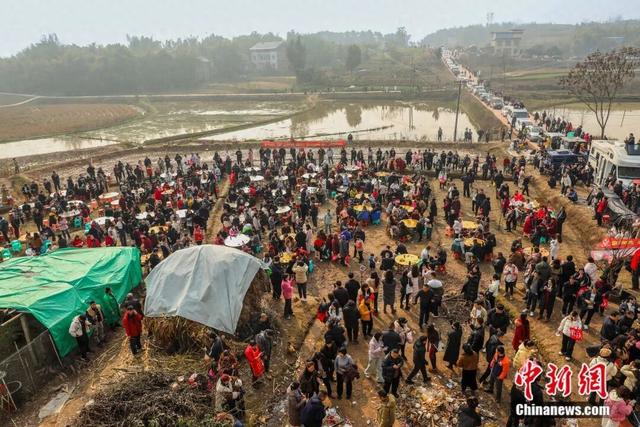
Group 1 - The article highlights the cultural and culinary significance of Hechuan, a district in Chongqing, where a local event featuring a traditional pig feast attracted numerous visitors, showcasing the region's rich heritage and community spirit [1][3][5] - Hechuan is described as a historical and cultural hub, known for its unique geographical features where three rivers converge, contributing to its historical importance and vibrant local culture [12][14][18] - The article emphasizes the development of Hechuan's tourism, particularly through the promotion of historical sites like Diaoyu City, which is undergoing efforts to enhance its cultural heritage and tourism appeal [18][20][36] Group 2 - Hechuan's economy is diversifying with a focus on modern industries, including the production of intelligent connected vehicle parts and hot pot ingredients, which are significant contributors to the local economy [50][54][60] - The district has established a complete industrial chain for hot pot ingredients, with over 100 processing enterprises generating an annual output value exceeding 5 billion yuan, highlighting its role as a key player in the regional food industry [54][56] - Hechuan is actively integrating into broader economic initiatives, such as the Chengdu-Chongqing economic circle and the Western Land-Sea New Corridor, aiming to enhance its connectivity and economic growth [60]

赵刚主持召开座谈会征求对政府工作报告的意见建议
Shan Xi Ri Bao· 2026-01-15 00:45
Group 1 - The provincial government, led by Governor Zhao Gang, held a meeting to gather opinions and suggestions on the "Government Work Report (Draft for Comments)" from various representatives [1] - Representatives from different fields provided valuable insights on topics such as technological innovation, industrial development, business environment, legal construction, rural revitalization, grassroots governance, education, healthcare, and cultural development [1] - Zhao Gang emphasized the importance of these suggestions and committed to further refining and improving government initiatives based on the feedback received [1] Group 2 - Zhao Gang highlighted that the province has adhered to Xi Jinping's thoughts and implemented the spirit of the 20th National Congress and subsequent plenary sessions, focusing on high-quality development and modern construction [2] - The government aims to achieve new breakthroughs in high-quality development by 2026, which marks the beginning of the "14th Five-Year Plan" [2] - The provincial government encourages continued support from representatives to leverage unique advantages and contribute to the modernization efforts in Shaanxi [2]
【新时代陇原先锋】“带着大家一起挣钱才是真本事”——记西和县何坝镇民旺马铃薯专业合作社党支部书记郭大权
Xin Lang Cai Jing· 2026-01-14 01:04
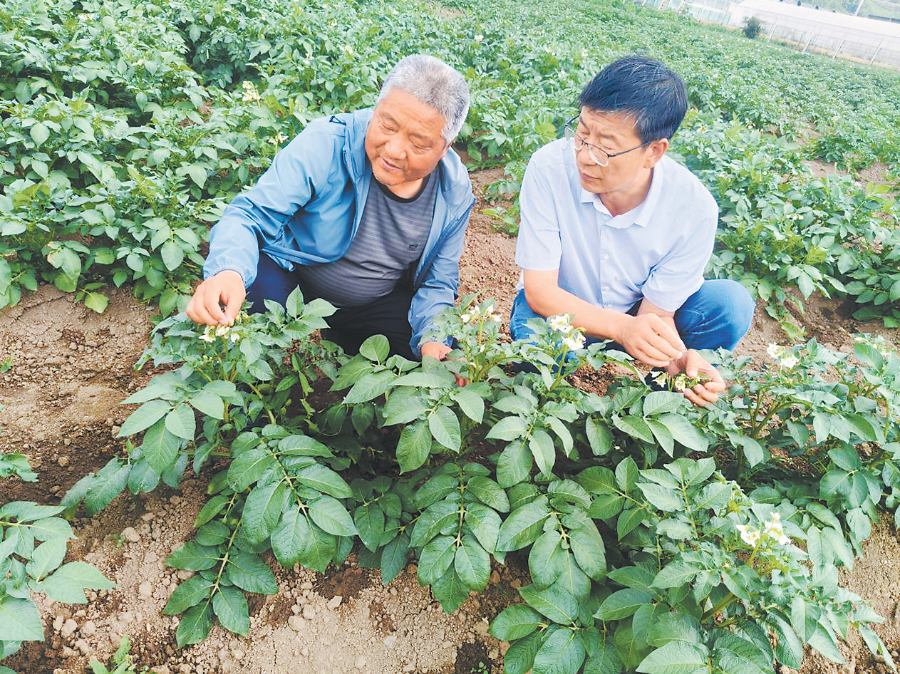
Core Viewpoint - The article highlights the efforts of Guo Daqian, a dedicated leader in the potato industry in Xihe County, who has significantly contributed to the economic development of his community through agricultural innovation and collaboration [1][5]. Group 1: Agricultural Development - Guo Daqian began his journey in potato farming in 2005, realizing the importance of collective wealth creation, stating, "Bringing everyone along to make money is true skill" [1]. - Under his leadership, over 500,000 acres of land in Xihe County have been planted with high-quality potatoes, resulting in a cumulative increase of 17.5 million kilograms in production [2]. - Guo has established various agricultural infrastructures, including seed production greenhouses and a trading market, which have facilitated the growth of the potato industry in the region [2]. Group 2: Technological Innovation - Guo emphasizes the importance of technology in agriculture, viewing it as a "golden key" to increasing yields and income for local farmers [1]. - A new fog cultivation production facility, costing 5.9 million yuan, is set to produce 12 million seed potatoes annually, reducing costs and increasing economic benefits by 3.6 million yuan [4]. Group 3: Community Impact - Guo's cooperative has created job opportunities for over 120 individuals and has supported more than 12,000 farming households, with an average income increase of over 6,000 yuan per household [4]. - The cooperative's model, which integrates party leadership, companies, cooperatives, and poverty alleviation, has transformed 6,200 acres of land into seed breeding bases, achieving an average yield of 2,500 kilograms per acre [4]. Group 4: Recognition and Legacy - Guo has received numerous accolades for his contributions, including the title of "Outstanding Communist Party Member" and "Labor Model" in the province, reflecting his commitment to community development [5]. - Despite his achievements, Guo remains dedicated to hands-on involvement in farming, continuing to support and educate local farmers [5].
突出政策性定位 不得投资于限制类、淘汰类产业优化布局和投向 政府投资基金“立规矩”
Xin Lang Cai Jing· 2026-01-12 21:04
Core Viewpoint - The article discusses the release of the "Work Method" by several government departments in China, which aims to systematically regulate the layout and investment direction of government investment funds, emphasizing their policy-oriented role and support for major strategies and key areas [1][2]. Group 1: Government Investment Fund Guidelines - The "Work Method" emphasizes that government investment funds should focus on policy-oriented positioning and effectively support major strategies, key areas, and weak links where the market cannot fully play its role [1][2]. - It is the first systematic regulation at the national level regarding the layout and investment direction of government investment funds [1]. - The guidelines aim to promote the deep integration of technological and industrial innovation, cultivate emerging and future industries, and support the development of advantageous and characteristic industries [2]. Group 2: Issues and Challenges - Experts point out that the rapid growth in the number and scale of funds has led to deep-seated issues, such as unclear positioning of some funds and overlapping investment areas among local funds, resulting in homogenized competition and resource waste [1]. - Some funds have deviated from their original policy-driven purpose and have been misused as tools for illegal investment attraction [1]. - These issues not only affect the social and economic benefits of government investment funds but may also lead to a "crowding out effect" on social capital, distorting market resource allocation [1].
这场服装盛会3月相约郑州
Zheng Zhou Ri Bao· 2026-01-12 00:46
Core Viewpoint - The "2026 International Brand Clothing ODM Supply Chain Expo and Henan Clothing Conference" will be held from March 6 to 8 at the Zhengzhou International Convention and Exhibition Center, aiming to enhance the position of Henan's clothing industry in national and global supply chains [1][2] Group 1: Event Details - The expo will cover an exhibition area of 15,000 square meters with over 800 international standard booths [1] - The event will feature eight vertical fields including smart manufacturing, accessories, cross-border e-commerce, and original design, covering the entire clothing industry chain [1] - A six-in-one model of "meeting, exhibition, show, performance, learning, and business" will be adopted to showcase the latest products and technologies in the industry [1] Group 2: Objectives and Activities - The expo aims to gather industry elites, optimize resource allocation, promote technological innovation, and deepen the integration of the industry chain, facilitating Henan's transition from a "textile and clothing province" to a "strong textile and clothing province" [1] - Concurrently, the "Henan Fashion Week" will feature activities such as brand joint releases, model competitions, and image designer contests, highlighting the fashion creativity of Henan [1] Group 3: Industry Insights - Industry insiders emphasize that Henan has excellent factories, products, and entrepreneurs but lacks a platform for collective voice and visibility on a national level [2] - The expo aims to showcase that Henan excels not only in women's pants but also in women's wear, children's clothing, outdoor jackets, and down jackets, while being capable of handling smart, green, and fashionable global orders [2]
“全域整治+产业发展”助力乡村振兴
Xin Lang Cai Jing· 2026-01-08 19:02
Core Viewpoint - The article highlights the efforts of Lushan Township in Huzhou City, Zhejiang Province, to promote rural revitalization through comprehensive governance and industrial development [1] Group 1: Rural Development Initiatives - Lushan Township has implemented a strategy combining "comprehensive governance + industrial development" to enhance rural areas [1] - Key initiatives include the construction of agricultural service centers and the promotion of concentrated farmland and land use [1] - The township is also focusing on improving rural living environments and creating beautiful and livable homes [1] Group 2: Impact on Rural Governance - The efforts aim to deepen comprehensive rural governance and achieve overall rural beauty [1] - These initiatives are part of a broader strategy to support rural revitalization in the region [1]
贵州正安:小吉他奏响产业发展“奋进曲”
Xin Lang Cai Jing· 2026-01-07 19:17
Core Viewpoint - The guitar industry in Zheng'an County, Guizhou, has transformed from a non-existent sector to the world's largest guitar production base, with products sold in over 40 countries, producing one out of every seven guitars globally [1][7]. Group 1: Industry Development - Zheng'an County's guitar industry has evolved from a weak industrial base to a robust sector, driven by local workers returning from cities with skills and capital [1][3]. - The establishment of the Zunyi Shenchun Musical Instrument Manufacturing Co. in 2013 marked the beginning of this transformation, leading to a comprehensive industrial chain that includes raw material supply, component production, and logistics [1][2]. Group 2: Technological Advancements - The introduction of smart equipment, such as CNC machining centers and robotic arms, has reduced the defect rate from 5% to less than 1%, significantly improving production efficiency and customer satisfaction [2]. - The Zheng'an guitar industry has developed a complete supply chain within the industrial park, housing 144 companies that provide all necessary components for guitar production [2]. Group 3: Product Quality and Innovation - The quality of Zheng'an guitars has improved, with companies like Natasha Musical Instrument Manufacturing Co. producing around 2,000 guitars monthly and holding 34 patents for innovative products [3][4]. - The use of bamboo as a sustainable material for guitar production has been successfully implemented, offering cost advantages and reducing reliance on imported woods [4]. Group 4: Cultural Integration and Community Engagement - Zheng'an County promotes the integration of guitar culture with tourism and education, creating events that enhance community engagement and cultural identity [6]. - Approximately 56,800 residents, or about one-sixth of the population, are involved in guitar learning, establishing a cultural foundation for the industry's growth [6]. Group 5: Economic Impact - In 2024, Zheng'an is projected to produce 2.46 million guitars, generating over 1 billion yuan in comprehensive output value and providing direct employment for over 5,000 people [7]. - The county has registered 218 guitar-related patents and developed 87 guitar brands, showcasing its significant economic contribution through the guitar industry [7].
从“小切口”写出社情民意“大文章”
Xin Lang Cai Jing· 2026-01-07 19:17
(来源:新华日报) 灌南县政协委员从百姓视角,持续深耕和发力高铁、教育等具体领域和小切口,撰写上报了一大批接地 气、可操作的社情民意信息。2025年,《莫让高铁换乘成"囧途"》《中小学假期设置"单一化"问题突 出》《内河船员船上饮用水安全问题需引起重视》等30余篇信息被全国政协和省政协采用。 强产业、优环境始终是政协委员聚焦和建言的重点。2025年,县政协按照年度协商计划,开展了"提高 政务服务水平、打造'近悦远来'营商环境"和"加快建设特色农业产业、助力乡村全面振兴"等一系列专题 调研,广大委员围绕优化营商环境、助力产业发展撰写的《人造板材产业"绿色化"进程亟待提速》《加 快推进气凝胶产业》《科学有序发展"电炉短流程"炼钢》等社情民意信息被省市政协采用,《关于科学 处置涉企投诉举报,优化我市营商环境的建议》受到连云港市委、市政府主要领导的批示肯定,有关成 果正在积极转化落实。 "去年,我们确立了每双周进行一次组稿调度、机关例会每月通报一次用稿情况、主席会议每季度听取 一次汇报的'三个一'制度;邀请分布在各镇、园区的16名选调生为家乡发展建言献策;聚焦科学编制'十 五五'发展规划征集社情民意信息。我们将进一步 ...