女装

Search documents
纺织服装行业周报20260323:本周发布春季策略,看好上游涨价品种-20260323
Shenwan Hongyuan Securities· 2026-03-23 10:35
Core Insights - The report indicates a favorable outlook for the textile and apparel industry, particularly focusing on upstream price increases, midstream pressures, and downstream differentiation in 2026 [3][10][15] - The textile and apparel sector underperformed the market recently, with the SW textile and apparel index declining by 5.4% from March 16 to March 20, 2026, lagging behind the SW All A index by 1.3 percentage points [4][10] Industry Overview - Recent industry data shows that the retail sales of consumer goods in China reached 8.6 trillion yuan in January-February 2026, growing by 2.8% year-on-year. The retail sales of clothing, shoes, hats, and textiles totaled 283.1 billion yuan, with a year-on-year increase of 10.4% [33] - Exports of textiles and apparel from China amounted to 504.5 billion USD in January-February 2026, reflecting a year-on-year growth of 17.6%. In February alone, the export value was 224.4 billion USD, up 73.4% year-on-year [37] Upstream Market Dynamics - The report highlights a significant price increase in Australian wool, which has risen by 55% since the end of August 2025, driven by supply reductions and recovering demand. The Australian wool index was reported at 1246 cents per kilogram as of March 18, 2026 [10][45] - Domestic cotton prices showed a slight decline, with the national cotton price B index at 16,638 yuan per ton, down 0.7% for the week ending March 20, 2026. In contrast, international cotton prices increased, with the M index at 77 cents per pound, up 3.3% [42] Midstream and Downstream Insights - The midstream sports manufacturing sector is currently under pressure due to geopolitical uncertainties and demand fluctuations, but it is expected to experience new growth in the medium to long term. Key players like Nike are anticipated to initiate a new innovation cycle, benefiting the entire supply chain [11][16] - Li Ning's 2025 annual report showed a revenue increase of 3.2% to 29.6 billion yuan, driven by strong performance in professional categories. The company expects high single-digit revenue growth in 2026, with improved gross margins [12][19] Investment Recommendations - The report recommends focusing on upstream price-increasing products and the recovery of sports manufacturing. Companies such as Baolong Oriental and Shenzhou International are highlighted as potential investment opportunities [10][16] - In the apparel segment, there is a call to explore high-performance outdoor brands and social apparel, with recommendations for companies like Li Ning, Anta Sports, and Bosideng [17][19]

纺织服装行业周报:推荐关注中游困境反转机会
HUAXI Securities· 2026-03-14 00:20
Investment Rating - The industry rating is "Recommended" [6] Core Views - The report highlights a potential reversal opportunity in the midstream sector of the textile and apparel industry, despite concerns over currency appreciation, rising raw material prices, and slowing overseas demand [4][17]. - The performance of key companies such as Yuanyuan Group and Jian Sheng Group indicates mixed results, with some showing resilience in a weak market [15][16]. Summary by Sections Company Performance - Yuanyuan Group reported revenues of $803.1 million and net profit of $38.1 million for 2025, reflecting a year-on-year decline of 1.8% and 2.9% respectively. Excluding tax dispute impacts, net profit decreased by 19% [15]. - Jian Sheng Group achieved revenues of $258.9 million and net profit of $40.5 million in 2025, with a year-on-year growth of 0.59% and 24.62% respectively. The company also reported a significant increase in operating cash flow [16]. Investment Recommendations - For upstream companies, recommendations include Bailong Dongfang and Fuchun Dyeing & Weaving, with beneficiaries being Taihua New Materials. - In the midstream sector, despite market concerns, recommended stocks include Xingye Technology and Jian Sheng Group. - For brand companies, it is expected that March revenue growth will be weaker than in January and February, with recommendations for Jin Hong Group, Luolai Life, and Fuanna [4][17]. Market Trends - The textile and apparel sector saw a slight increase in the SW index, outperforming the Shanghai Composite Index by 0.82 percentage points [18]. - The report notes that the online sales of sportswear on platforms like Taobao and Tmall have shown improvement, with specific brands like Balabala Shoes experiencing significant growth [4][32]. Raw Material Prices - As of March 13, the China Cotton 3128B Index was at 16,877 RMB/ton, with a year-to-date increase of 8.29%. The price of nylon in the East China market rose by 30.43% year-to-date [5][34]. - The report also highlights fluctuations in wool prices, with an increase of 8.19% year-to-date [37]. Export Data - In January 2026, textile and apparel exports reached $22.444 billion, marking a year-on-year increase of 26.34%. Textile exports grew by 64.52% year-on-year [51].

“购在中国”花样翻新,外国游客追着“年味”来中国
Zhong Guo Zheng Quan Bao· 2026-02-15 00:21
Group 1 - The inbound tourism sector in China is experiencing a surge during the traditionally low season around the Spring Festival, with a notable increase in bookings for 2026, projected to rise by over 10% year-on-year, primarily from European countries [3] - The inbound tourism business of the company is expected to nearly double in 2025 compared to 2024, with key source markets including Poland, Japan, and Germany, covering 51 countries and regions [3] - The increase in visa facilitation, including the rise in the number of countries with unilateral visa exemptions and mutual visa agreements, has significantly boosted inbound tourism, with 30.08 million foreign visitors expected in 2025, marking a 49.5% increase year-on-year [3] Group 2 - Foreign tourists are increasingly interested in diverse shopping options in China, moving beyond traditional souvenirs to include popular items like blind boxes, headphones, and smartphones, reflecting a shift in consumer preferences [5] - The company reported that in 2025, the sales volume of duty-free shopping in Wangfujing is expected to reach nearly 11,000 transactions, with a total consumption amount exceeding 34 million yuan, significantly surpassing the previous year's figures [5] - Clothing items, including women's, men's, and sportswear, are among the most popular categories for foreign tourists, with these categories accounting for approximately 23%, 15%, and 15% of the total duty-free sales, respectively [5]


拉夫劳伦第三季度财报超预期,中国市场营收增长超30%
Jing Ji Guan Cha Wang· 2026-02-13 22:23
Core Viewpoint - Ralph Lauren reported a 12% year-over-year increase in net revenue for Q3 FY2026, reaching $2.4 billion, exceeding market expectations, with revenue growth in the Chinese market exceeding 30% [1] Financial Report Analysis - The Asian market was the main driver of growth, with revenue growth of 22% at constant exchange rates, led by the Chinese market [2] - The company improved its average selling price by 18% through a full-price sales strategy, with high-potential categories like women's wear and outerwear growing nearly 10% [2] - Ralph Lauren added 2.1 million new customers and surpassed 68 million social media followers [2] - Based on strong performance, the company raised its full-year revenue guidance to a high single-digit to low double-digit growth (previously 5%-7%) [2] Recent Stock Performance - Over the past week, the stock exhibited a pattern of initial decline followed by recovery, with a cumulative increase of 7.67% and a volatility of 10.39%, peaking at $372.50 on February 13 [3] - Following the earnings release, the stock closed down 4.52% on February 5, but rebounded to close at $369.18 on February 13, with a single-day increase of 1.69% and a trading volume of approximately $199 million [3] - During the same period, the apparel manufacturing sector rose by 0.96%, indicating the company's performance slightly outpaced the industry [3] Institutional Insights - According to a report from Zhongtai Securities on February 10, Ralph Lauren's volume and price growth exceeded expectations, with the resilience of the China region supporting performance [4] - The brand's upgrade strategy has driven gross margin expansion to 69.9% [4] - The report suggests that the company is leveraging its global premium pricing power to transition into a top-tier luxury business model [4]
花花公子卖了中国业务50%股权
21世纪经济报道· 2026-02-13 01:17
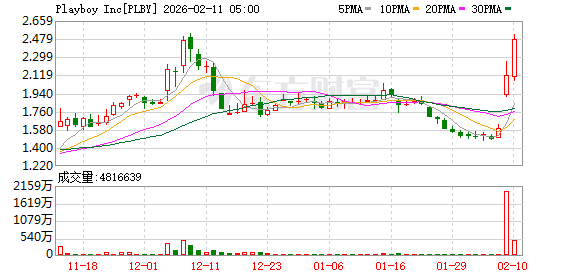
Core Viewpoint - Playboy, Inc. has signed a final agreement to sell 50% of its business in China to United Trademark Group (UTG) for a total cash amount of $122 million, aiming to address brand dilution issues and enhance operational management in the region [1][2]. Group 1: Transaction Details - The transaction consists of three parts: $45 million paid over two years for the acquisition of the 50% stake, $67 million as a minimum guaranteed dividend over eight years, and an additional $10 million for brand support over the next three years [1]. - After the transaction, UTG will take over product development, channel expansion, and brand operations in China, while Playboy retains a 50% stake and benefits from guaranteed dividends and additional revenue sharing [1]. Group 2: Background on UTG - UTG, headquartered in Shanghai, manages over 10 international brands, including Jeep and several Italian brands, and has been the exclusive agent for Playboy in mainland China [2]. - This acquisition marks a shift for UTG from being a brand agent to a co-owner of the Playboy brand in China [2]. Group 3: Brand Management Challenges - Playboy's aggressive brand licensing strategy in China has led to brand value dilution, with the company relying heavily on licensing for revenue, which constitutes nearly half of its total income [2][3]. - As of 2023, the brand's revenue share from China has significantly decreased to 9.51%, down from approximately 27% in 2021, indicating a decline in market presence [4].



花花公子卖中国业务50%股权
Di Yi Cai Jing Zi Xun· 2026-02-11 20:12
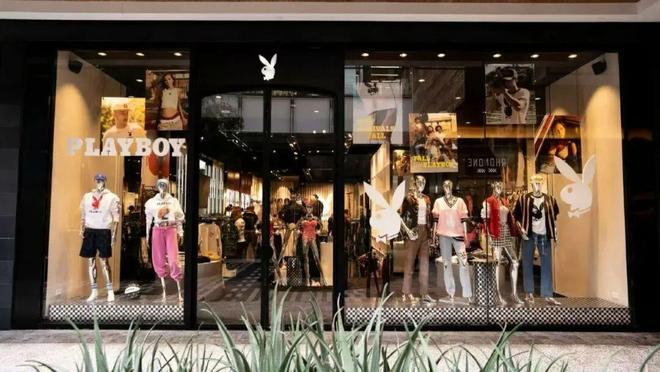
Core Viewpoint - Playboy is restructuring its business in China after years of rapid growth, selling a 50% stake in its Chinese operations to UTG Group for $122 million, which includes all operational rights in mainland China, Hong Kong, and Macau [2] Group 1: Business Strategy and Changes - The sale to UTG Group aims to address issues stemming from excessive brand licensing and management challenges that have led to a decline in brand image and quality [3][4] - Playboy's brand management center was established in China in 2020 to tackle historical issues and improve brand perception, indicating a recognition of the need for better control over its brand [2][3] Group 2: Market Challenges - The brand has faced significant challenges, including the proliferation of counterfeit products and a blurred line between genuine and fake merchandise, leading to consumer confusion [3] - Quality issues have arisen from licensed manufacturers prioritizing sales over product quality, resulting in a tarnished brand reputation [3][4] - The rise of domestic brands and changing consumer preferences among younger generations have further pressured Playboy's market share [4] Group 3: Future Prospects - UTG Group's experience with international brands and understanding of the Chinese market may help in consolidating fragmented licensing and combating counterfeiting [4] - The transition from merely licensing the brand to actively managing it will require time and effort to prove effective in revitalizing Playboy's presence in China [4]
拉夫劳伦财报超预期股价先抑后扬,中国市场增长强劲
Jing Ji Guan Cha Wang· 2026-02-11 15:22
Core Viewpoint - Ralph Lauren's Q3 FY2026 earnings report highlighted strong revenue growth, particularly in the Chinese market, which exceeded market expectations [1][2]. Financial Performance - For Q3 FY2026, net revenue increased by 12% year-over-year to $2.4 billion, surpassing market forecasts [1]. - The Asian market was identified as the primary growth driver, with revenue growth of 22% at constant currency, and the Chinese market showing over 30% growth [2]. - The company raised its full-year revenue guidance to a high single-digit to low double-digit growth range, up from the previous forecast of 5%-7%, indicating management's confidence in growth momentum [2]. Stock Performance - Following the earnings release, the stock initially dropped by 4.52% to $338.66 on February 5, with trading volume increasing to 2.25 million shares [3]. - The stock rebounded, closing at $362.08 on February 11, marking a single-day increase of 1.66% [3]. - Over the week, the stock experienced a cumulative increase of 2.08% with a volatility range of 12.73%, reaching a high of $365.15 on February 11, indicating market absorption of the earnings report [3].
花花公子卖中国业务50%股权
第一财经· 2026-02-11 11:57
Core Viewpoint - Playboy's strategy in the Chinese market has shifted from aggressive brand licensing to a more controlled approach, as evidenced by the sale of a 50% stake in its Chinese operations to UTG Group for $122 million, aiming to address brand dilution and operational challenges [3][5]. Group 1: Brand Licensing Challenges - Playboy experienced rapid expansion in China through extensive brand licensing, leading to a high market penetration but also to brand dilution and confusion among consumers due to the proliferation of counterfeit products [3][4]. - The brand's image has deteriorated over time, with quality issues arising from licensed manufacturers seeking to cut costs, resulting in products being perceived as low-quality or "street goods" [4][5]. - Ongoing disputes with licensing partners have further complicated the brand's operations, highlighting the challenges of maintaining brand integrity in a fragmented market [5]. Group 2: Market Dynamics and Consumer Trends - The initial success of Playboy in China was attributed to its early entry into the market when competition was minimal and consumer interest in foreign brands was high, but this advantage has diminished as local brands have emerged and consumer preferences have shifted [5]. - The brand has struggled to connect with the younger generation (Gen Z), leading to a continuous loss of market share as consumer tastes evolve [5]. Group 3: Future Prospects with UTG Group - The acquisition by UTG Group, which has experience managing international brands in China, is seen as a potential turning point for Playboy, with hopes of consolidating brand management and addressing the issues of unauthorized licensing and counterfeit products [5]. - The transition from merely licensing the brand to actively managing it will require time and effort to restore Playboy's reputation and market position in China [5].
花花公子1.22亿美元卖中国业务“半壁江山”,能否告别“卖商标”时代?
Di Yi Cai Jing· 2026-02-11 10:58
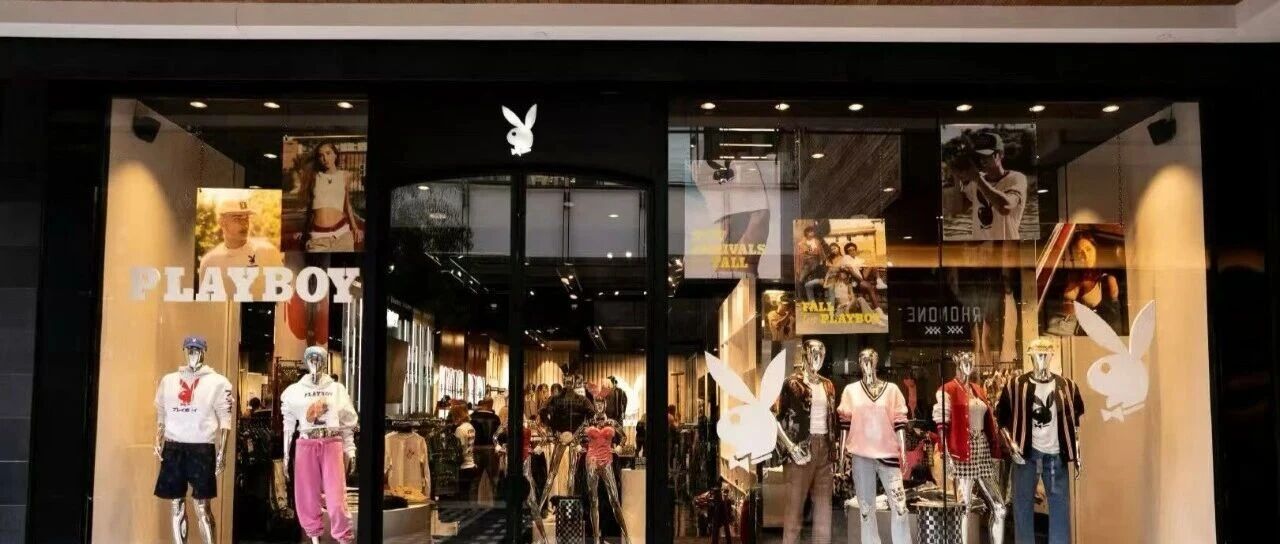
Core Viewpoint - The era of "quick money from licensing" is over for Playboy, which is now seeking to restructure its business in China after years of chaotic growth and brand dilution [1][6]. Group 1: Business Transaction - Playboy announced the sale of 50% of its Chinese business to UTG Group for $122 million, which includes operational rights in mainland China, Hong Kong, and Macau [1]. - UTG Group has experience managing international brands in China, which may help address the issues Playboy has faced in the market [6]. Group 2: Brand Challenges - Playboy's brand image has suffered due to excessive licensing, leading to confusion between genuine and counterfeit products, with many unauthorized variations flooding the market [3]. - Quality issues have arisen from licensed manufacturers prioritizing sales over product quality, resulting in complaints and a tarnished brand reputation [3]. - Ongoing disputes with licensing partners have further complicated Playboy's brand management in China [4]. Group 3: Market Dynamics - The initial success of Playboy in China was attributed to early market entry and a lack of competition, but the brand now faces challenges from local competitors and changing consumer preferences [5]. - The brand's failure to connect with the Gen Z consumer demographic has led to a decline in market share, highlighting the need for a strategic shift [5]. Group 4: Future Outlook - The transition from merely licensing the brand to actively managing it will require time and effort, as the market has evolved beyond the previous model of quick profits from brand licensing [6].
“品牌稀释”之后,花花公子转让中国业务50%股权
2 1 Shi Ji Jing Ji Bao Dao· 2026-02-11 09:59
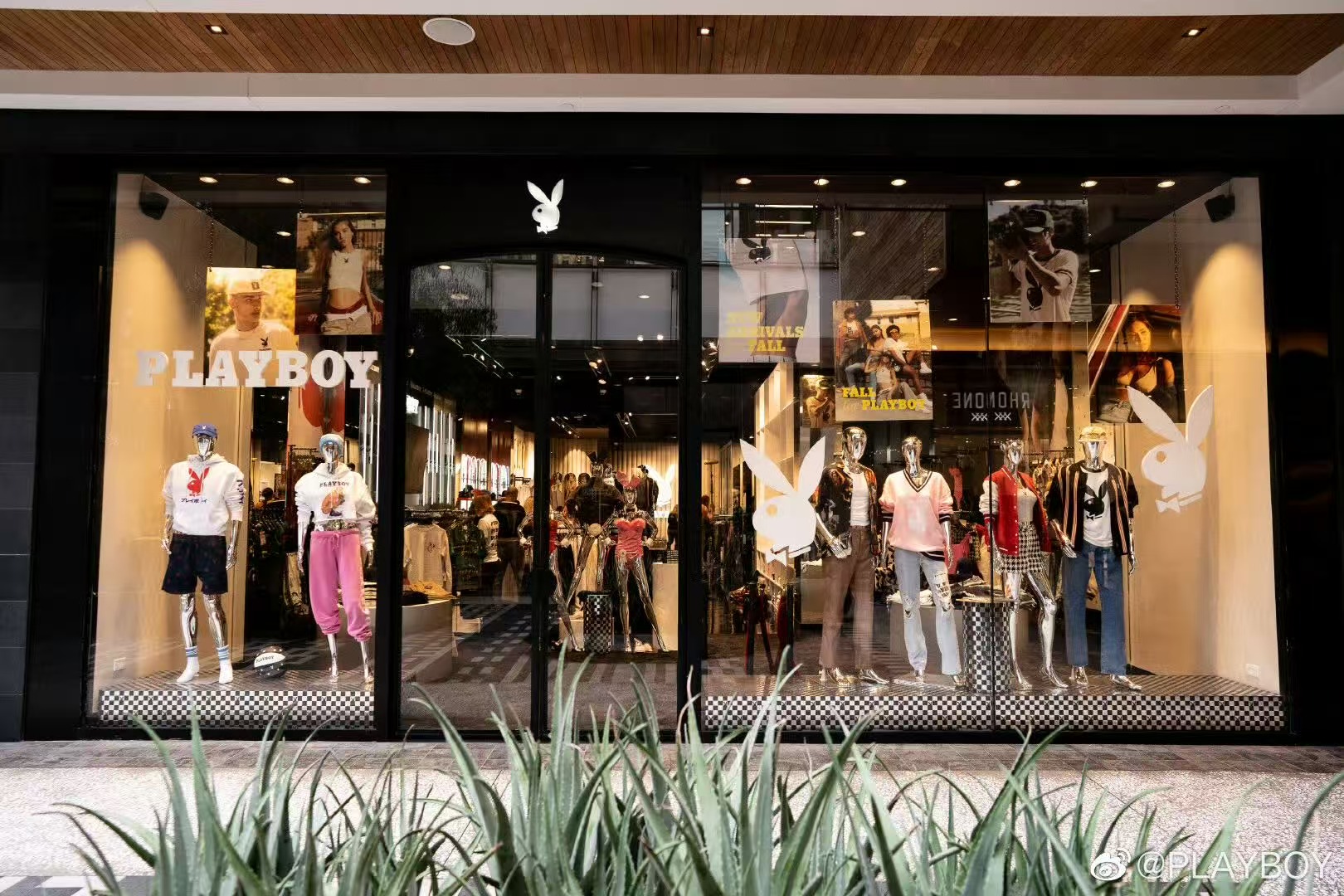
Core Viewpoint - Playboy, Inc. has signed a final agreement to sell a 50% stake in its Chinese business to United Trademark Group (UTG) for a total of $122 million, aiming to address brand dilution issues and enhance operational management in the region [2][4]. Group 1: Transaction Details - The agreement includes three payment components: $45 million paid over two years for the stake, $67 million as a minimum guaranteed dividend over eight years, and an additional $10 million for brand support over the next three years [2]. - After the transaction, UTG will take over product development, channel expansion, and brand operations in China, while Playboy retains a 50% stake and guaranteed dividends [2]. Group 2: UTG's Background - UTG, headquartered in Shanghai, is a global consumer brand management group that manages over 10 international brands, including Jeep and several Italian brands [3]. - Previously, UTG was the exclusive agent for the Playboy brand in mainland China and is now transitioning from a brand agent to a co-owner [3]. Group 3: Brand Management Issues - Playboy's aggressive brand licensing strategy in China has led to brand value dilution, with the company relying heavily on licensing for revenue, which constitutes nearly half of its total income [4]. - The brand has been licensed to multiple local companies for over 30 years, covering various product categories, which has contributed to the dilution of its brand value [4][6]. Group 4: Financial Performance - In 2021, the Chinese market accounted for 27% of Playboy's total revenue, second only to the U.S. market at 52%, with approximately 2,500 physical stores and 1,000 online stores in China [5]. - However, by fiscal year 2024, revenue from the Chinese market dropped to $11.04 million, representing only 9.51% of total revenue, indicating a significant decline from its previous high [7].