
公积金制度改革

Search documents
2026年房地产怎么干?中央经济工作会议定调
Nan Fang Du Shi Bao· 2025-12-12 03:32
Core Viewpoint - The central economic work conference held on December 10-11, 2023, emphasized stabilizing the real estate market and implementing policies to mitigate risks while promoting a new development model for the sector [1][2]. Group 1: Stabilizing the Real Estate Market - The conference highlighted the need to stabilize the real estate market through city-specific policies aimed at controlling new supply, reducing inventory, and optimizing supply [1][5]. - The focus on "going inventory" is critical, with the national inventory cycle reaching a historical high of 27.4 months as of November, indicating significant pressure to reduce stock [5]. - Current unsold new housing area has reached 7.56 billion square meters, an increase from 7.30 billion square meters year-on-year, underscoring the need for effective inventory management [5][6]. Group 2: Risk Management - The conference reiterated the importance of risk management in the real estate sector, with a focus on preventing significant price declines and ensuring developers maintain sales and cash flow [4][3]. - The need to address existing corporate risks and the potential for new debt risks among leading companies was emphasized, indicating ongoing concerns about the industry's stability [3][4]. Group 3: Housing Fund Reform - The conference called for accelerated reforms of the housing provident fund system to address low loan rates in some cities and to support a rental-purchase model [7]. - Since 2025, over 260 housing provident fund policies have been introduced nationwide, with expectations for further reforms in 2026, including increased loan limits and more flexible usage [7]. Group 4: New Development Model - The need to construct a new development model for real estate was highlighted, moving away from traditional stimulus measures towards a focus on long-term stability and demand-supply balance [8][9]. - The shift in policy direction reflects a recognition that the previous model is unsustainable, necessitating a comprehensive approach to stabilize the market through innovative supply and demand strategies [9].

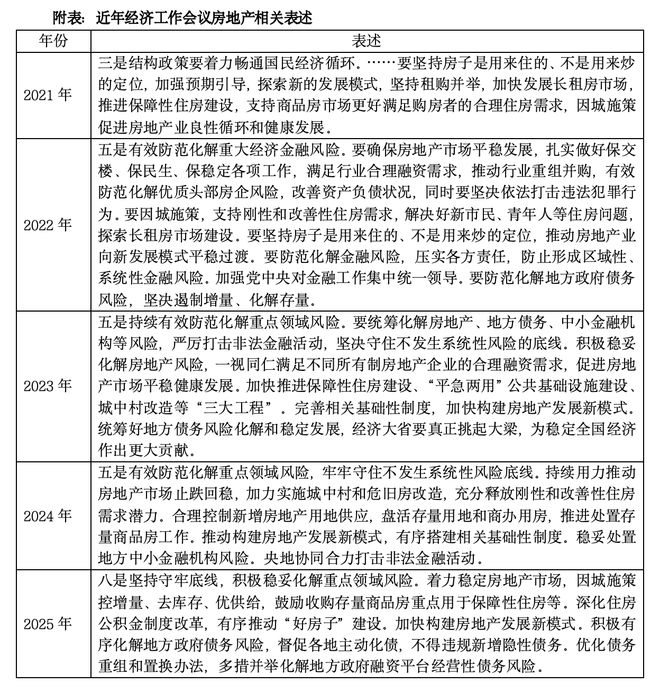
(经济观察)中央定调着力稳定房地产市场,如何发力?
Zhong Guo Xin Wen Wang· 2025-12-12 01:44
中新社北京12月12日电 (记者 庞无忌)中央经济工作会议12月10日至11日在北京举行。作为观察来年中 国经济政策变动最重要的"风向标",此番会议明确"着力稳定房地产市场"。这是继2024年中央经济工作 会议提出"持续用力推动房地产市场止跌回稳"后,中央经济工作会议再次强调"稳楼市"。 广东省住房政策研究中心首席研究员李宇嘉表示,在当前民生属性夯实、"租购并举"的背景下,公积金 应该发挥更大作用。 ——有序推动"好房子"建设。 国家发改委宏观经济研究院研究员刘琳指出,今年以来,商品房供给指标下降,既是各地落实严控增量 政策要求的正向反映,也是市场自发调整的结果。 ——更好发挥公积金制度作用。此番会议明确,深化住房公积金制度改革。 随着房地产市场的阶段性"换挡",公积金还需要进一步扩大覆盖面、拓宽使用范围。 易成栋分析,未来公积金可以更广泛地用于租房、装修、危旧房改造、城市更新等用途,更好发挥普惠 金融的作用、更好地支持民生保障。 据中指研究院监测,2025年以来中国各地出台的公积金相关政策超260条,预计2026年将延续此趋势, 贷款额度进一步提升、使用范围更加灵活、异地互认互贷等或将是重点方向。近期,深圳 ...
“公积金互助”扩围:从购房工具走向家庭保障
Zhong Guo Jing Ying Bao· 2025-07-25 10:09
Core Viewpoint - The "intergenerational mutual assistance" policy for housing provident funds is gaining attention as a response to the deep adjustment period in the real estate market, allowing direct relatives to share account balances for down payments or mortgage repayments, marking a shift from "single housing support" to "family livelihood security" [1][6]. Group 1: Policy Implementation and Impact - Multiple regions have introduced the mutual assistance policy, with 166 contributors in Gansu extracting 31.5144 million yuan within four months, indicating the policy's effectiveness in alleviating housing pressure [2]. - The policy aims to lower the financial burden of home purchases for families and improve the efficiency of provident fund usage, especially as some elderly individuals no longer buy homes, leaving funds idle [2][3]. - The mutual assistance policy allows for broader funding sources, including family members' provident fund accounts, and prioritizes the use of the borrower's own account before tapping into relatives' accounts [3]. Group 2: Regulatory Concerns and Recommendations - Concerns about potential violations and arbitrage opportunities exist, such as fictitious purchases or circular transactions to extract funds from relatives' accounts [4]. - Recommendations for improving regulatory oversight include ensuring closed-loop funding, setting withdrawal limits, and implementing punitive measures for violations [4][5]. Group 3: Broader Trends in Provident Fund Policy - The mutual assistance policy reflects a broader reform of the housing provident fund system, transitioning from a "housing purchase exclusive tool" to a "comprehensive livelihood security" approach [6]. - Since January 2025, many regions have adjusted provident fund policies, including lowering loan rates, increasing loan limits, and relaxing withdrawal conditions, with nearly 150 policy adjustments reported in the first half of the year [6][8]. - The usage scenarios for provident funds are expanding beyond home purchases to include rental payments and housing renovations, with initiatives like direct rental payments being implemented [6][7]. Group 4: Future Directions and Innovations - Current innovations in provident fund policies include expanding coverage to self-employed individuals, allowing lower contribution rates for struggling businesses, and supporting various housing-related expenses [7]. - The 2024 national housing provident fund report indicates a total deposit of approximately 3.6 trillion yuan and a withdrawal amount of about 2.8 trillion yuan, with a withdrawal rate of 76.15%, slightly down from the previous year [8].