
农业保险

Search documents
一课田间、一问家国、一束星光,沪皖少年共绘田野答卷
Xin Lang Cai Jing· 2025-07-09 08:38
Core Viewpoint - The article highlights the integration of technology and agriculture through educational initiatives aimed at enhancing the scientific literacy of youth, particularly in rural areas, while showcasing the role of insurance in mitigating agricultural risks [5][8][19]. Group 1: Educational Initiatives - The "Youth Science Literacy Enhancement Program" allows students from rural areas to engage in hands-on learning experiences related to agriculture and technology [3][17]. - The program includes practical lessons on identifying plant diseases and understanding the impact of natural disasters on agriculture, emphasizing the importance of insurance in risk management [6][10]. - The initiative aims to bridge the educational resource gap between urban and rural areas, fostering a new generation of informed individuals who can contribute to modern agricultural practices [13][22]. Group 2: Technological Integration in Agriculture - The use of the "Ainongbao App" exemplifies how technology can assist farmers in self-insurance, pest identification, and weather forecasting, transforming traditional farming practices [8][11]. - The integration of AI, IoT, and big data in agricultural insurance is reshaping product offerings and service delivery, enhancing efficiency and quality in the sector [11][12]. - The article discusses specific case studies where technology has been applied to improve agricultural practices, such as smart farming in aquaculture and livestock management [12][21]. Group 3: Corporate Social Responsibility - The company has been actively involved in educational philanthropy for over 30 years, establishing numerous hope primary schools and supporting rural education initiatives [20][21]. - The commitment to enhancing youth education is seen as a long-term strategy to empower individuals and contribute to national technological competitiveness [22][23]. - The article emphasizes the importance of sustainable educational practices that not only provide immediate benefits but also foster long-term growth and development in rural communities [22][23].



旗帜领航助振兴 国元与农并肩行
Ren Min Wang· 2025-07-01 02:35
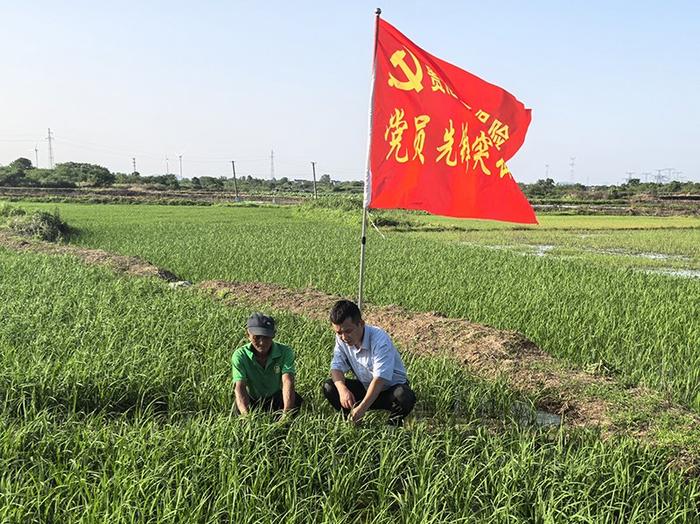
Core Viewpoint - The central government emphasizes the importance of agricultural development, rural revitalization, and farmers' prosperity, highlighting that the key to achieving these goals lies in the Party's leadership [1]. Group 1: Agricultural Insurance and Risk Management - Agricultural insurance serves as a solid foundation for farmers to stabilize production, ensuring national food security and preventing large-scale poverty [1]. - Guoyuan Insurance's Anhui branch integrates Party leadership into the agricultural insurance service chain, focusing on food security as a strategic priority [3]. - In response to drought conditions, the company formed a "Party Member Agricultural Technology Service Team" to assist farmers with irrigation and disaster prevention [3]. Group 2: Emergency Response and Support - During heavy rainfall, the company conducted inspections and advised large-scale operators on water management and emergency preparations [4]. - The company streamlined claims processes to ensure timely compensation for farmers affected by disasters, reinforcing the "red barrier" of risk prevention [4]. Group 3: Innovative Insurance Products - The introduction of "insurance + futures" models has provided farmers with financial security against price fluctuations in livestock, exemplified by a farmer receiving 374,000 yuan in compensation for insured pigs [7]. - New insurance products, such as the "meat chicken target price insurance" and "goose farming insurance," have been launched to help farmers mitigate risks in livestock farming [9]. Group 4: Agricultural Innovation and Development - The company is not only stabilizing production but also acting as a catalyst for agricultural innovation, as seen with the introduction of insurance for medicinal herbs like cat's claw grass [11]. - The "leadership plan" implemented by the company has been recognized and included in provincial training programs, showcasing its commitment to integrating Party leadership with agricultural insurance [11][12]. Group 5: Commitment to Rural Revitalization - Guoyuan Insurance aims to continuously support rural revitalization by deepening its agricultural insurance services and maintaining a close relationship with farmers [12].
引金融服务入田间地头 保险业助乡村全面振兴
Zhong Guo Zheng Quan Bao· 2025-06-25 20:36
Core Insights - The insurance industry is increasingly playing a vital role in rural revitalization through innovative products, optimized service models, and technology empowerment [1][6][7] Group 1: Agricultural Insurance Development - The agricultural insurance product system has significantly expanded, covering major crops and local specialty products, with a total insurance premium scale of 152.1 billion yuan, providing risk protection exceeding 5 trillion yuan for 147 million households [2] - In 2024, China Life Property & Casualty Insurance plans to cover over 11.5 million acres of major grain crops, providing risk protection of approximately 80.5 billion yuan [2] Group 2: Innovative Insurance Products - Insurance companies are launching specialized insurance products based on local resources, such as pomegranate planting insurance in Shandong and apple industry chain insurance in Gansu [3] Group 3: "Insurance+" Service Model - The insurance industry is evolving from simple risk compensation to a comprehensive service model that supports rural industry development, exemplified by the "breeding insurance + live collateral loan" model in Shanxi [4] Group 4: Personal Risk Protection - The insurance sector is also providing personal risk protection for local residents, with China Life offering over 28 billion yuan in personal risk coverage for nearly 490,000 people in targeted poverty alleviation areas in 2024 [5] Group 5: Technology Empowerment - The application of technologies such as big data and satellite remote sensing is reshaping agricultural insurance services, enhancing the precision and efficiency of underwriting and claims [6][7] - China Life Property & Casualty Insurance is promoting disaster monitoring and early warning systems to improve risk management capabilities [7]


岭南荔枝上保险 农户从靠天吃饭到知数而行
2 1 Shi Ji Jing Ji Bao Dao· 2025-06-25 12:29
Core Viewpoint - The modern insurance industry is providing new guarantees for the ancient lychee industry, which has faced significant risks throughout its history, particularly in transportation and cultivation [1][4][6]. Group 1: Transportation and Supply Chain - The historical challenges of transporting lychees from Lingnan to Chang'an included significant quality degradation and loss during transit, with only a fraction of the fruit surviving the journey [2]. - Modern cold chain logistics have drastically reduced transportation time from 5-7 days to under 30 hours, enhancing both cost efficiency and product freshness [2]. - The implementation of drone networks in recent years has improved the logistics of lychee transportation, addressing initial bottlenecks and reducing costs for farmers [2]. Group 2: Agricultural Risks - Despite advancements in transportation, the lychee cultivation process still faces substantial risks, particularly from natural disasters and pest infestations [3]. - Extreme weather events such as typhoons and heavy rainfall can lead to significant crop losses, while diseases like anthracnose can rapidly spread and diminish the value of the harvest [3]. Group 3: Insurance Solutions - The lychee industry in Guangdong, which covers over 4 million acres and accounts for more than half of China's lychee production, requires effective insurance solutions to mitigate various risks [4]. - Current insurance offerings include policy-based crop cost insurance and weather index insurance, which trigger payouts based on specific meteorological conditions [4]. - The central government has been increasing support for agricultural insurance, with a budget of 547 billion yuan for 2024, aimed at enhancing risk coverage for farmers [5]. Group 4: Technological Integration - The establishment of the "Lychee Risk Research Laboratory" represents a significant step in integrating modern technology with agricultural practices, providing comprehensive risk management solutions for the lychee supply chain [6][7]. - The use of blockchain technology allows consumers to trace the entire production process of lychees, ensuring quality and safety, while the combination of food responsibility insurance and traceability insurance enhances brand value [6][7]. - The laboratory aims to promote advanced cultivation techniques across various regions, contributing to the standardization and branding of the lychee industry in China [7].
为大豆种植上保险!青岛市首单政策性保险成功落地
Qi Lu Wan Bao Wang· 2025-06-23 08:37
Group 1 - The core viewpoint of the articles highlights the successful implementation of soybean insurance products in Qingdao, which includes "Complete Cost Insurance" and "Planting Income Insurance" for soybean farmers, providing nearly 10,000 yuan in risk coverage for 12 acres of soybeans [1][2] - The central government's policy encourages the expansion of insurance coverage for major crops, including soybeans, with a financial subsidy structure where 90% is covered by the government and 10% by farmers, aimed at stabilizing farmers' income and ensuring food security in Qingdao [1][2] - The Qingdao branch of Taiping Insurance actively promotes agricultural insurance as a tool for rural revitalization and risk management, ensuring that farmers are well-informed about the policies and benefits available to them [2] Group 2 - The successful underwriting of the first soybean insurance policy in Qingdao is seen as a significant step towards enhancing the agricultural insurance landscape and supporting the local agricultural economy [1][2] - Taiping Insurance plans to continue innovating in the agricultural insurance sector, aiming to increase coverage and support the high-quality development of the agricultural industry in Qingdao [2] - The collaboration with local government agencies, including the Qingdao Agricultural and Rural Bureau and the Qingdao Financial Regulatory Bureau, has facilitated the effective implementation of these insurance products [2]
日照市全面推广农业保险新政策,助力乡村振兴
Qi Lu Wan Bao Wang· 2025-05-29 07:28
Core Viewpoint - The new agricultural insurance policy in Rizhao City aims to enhance agricultural risk management, protect farmers' interests, and promote rural revitalization, responding positively to the central government's directives on expanding insurance coverage [1][2]. Group 1: Insurance Policy Details - The new policy includes six types of insurance, covering complete cost insurance for wheat, corn, rice, and soybeans, as well as income insurance for corn and soybeans [1]. - The coverage amounts for complete cost insurance are set at 1,000 yuan per mu for wheat, 950 yuan for corn, 1,150 yuan for rice, and 700 yuan for soybeans, with premiums of 30 yuan, 40 yuan, 46 yuan, and 35 yuan per mu respectively [1]. - The income insurance for corn and soybeans has coverage amounts of 1,000 yuan and 830 yuan per mu, with premiums of 55 yuan and 45 yuan per mu, and insurance rates ranging from 3% to 5.5% [1][2]. Group 2: Financial Support and Subsidies - Farmers are required to bear only 20% of the premiums, with the central government subsidizing 35% and provincial government providing additional subsidies based on the region [2]. - The new policy significantly increases premium subsidies, with a total subsidy of 80% for major grains and soybeans, alleviating the financial burden on farmers [2]. Group 3: Progress and Achievements - From 2020 to 2024, the scale of policy-based agricultural insurance premiums in Rizhao has grown by 28%, reaching 105 million yuan, while financial subsidy funds increased by 25% to 82.67 million yuan [2]. - The risk coverage level has risen by 41%, reaching 3.243 billion yuan, and the number of insured farmers has increased by 17%, totaling 564,100 instances [2]. Group 4: Local Insurance Innovations - Rizhao has developed six local specialty insurance products tailored to its agricultural characteristics, including insurance for silkworms, tea, blueberries, and marine farming [3]. - The agricultural insurance system is continuously improving, with the establishment of a high-quality development joint meeting mechanism and the issuance of management guidelines to enhance the efficiency of financial fund usage [3]. Group 5: Future Directions - The Rizhao City Finance Bureau plans to strengthen collaboration with agriculture and financial regulatory departments to further expand and enhance agricultural insurance coverage, ensuring better benefits for the agricultural sector [3].
滨州市保险行业协会开展农业保险助力乡村振兴调研
Qi Lu Wan Bao Wang· 2025-05-28 05:16
Group 1 - The research team conducted a study on the role of agricultural insurance in supporting rural industry development and ensuring farmers' income as part of the rural revitalization strategy [1] - A meeting was held to understand the promotion and overall development status of agricultural insurance in Yangxin County, including premium income and claims handling [4] - The team emphasized the need for insurance companies to simplify claims processes and ensure timely compensation for affected farmers to minimize losses and support summer grain harvest [6] Group 2 - The research included an investigation into the meat cattle insurance at the Yiliyuan cattle breeding base, focusing on coverage rates and the insurance's role in mitigating risks from market price fluctuations and disease outbreaks [9] - The study provided important data to enhance service levels of insurance institutions and laid a solid foundation for agricultural insurance's role in rural revitalization [9] - The association plans to continue monitoring agricultural insurance developments and encourage innovation among insurance institutions to support the rural revitalization efforts in Binzhou [9]
农业保险绘就“猪粮安天下”锦绣画卷——四川的实践与探索
Zheng Quan Ri Bao Zhi Sheng· 2025-05-11 15:14
Core Viewpoint - Agricultural insurance plays a crucial role in ensuring the stable production and supply of essential agricultural products, directly impacting food security and consumer levels in society [1] Group 1: Agricultural Insurance in Sichuan - Sichuan is recognized as a strategic base for ensuring the supply of important primary products, particularly in pig and grain production [1] - The "Chuan Nong Bao" platform developed by PICC Sichuan provides a comprehensive service system for pig insurance, enhancing efficiency in underwriting and claims processing [2][3] - The platform utilizes satellite remote sensing technology for accurate underwriting and integrates features for precise claims matching, ensuring a closed-loop management from underwriting to claims [2] Group 2: Insurance Products and Coverage - In recent years, PICC Sichuan has focused on price insurance needs, helping large-scale farmers and enterprises mitigate market price risks [3] - The pig insurance products cover various types of pigs and risks throughout the production lifecycle, including mortality, cost loss, market, and income risks [3] - In 2024, PICC Sichuan insured 22.88 million pigs, providing risk coverage of 25.98 billion yuan and direct compensation of 516 million yuan [3] Group 3: High-Standard Farmland Insurance Model - PICC Sichuan has adopted an "insurance + technology + service" model to support high-standard farmland construction, enhancing professional risk management capabilities [4][5] - The company employs new technologies like satellite remote sensing and drones for loss assessment, improving operational efficiency [4] - A comprehensive management mechanism has been established to ensure effective implementation of high-standard farmland insurance, covering over 900,000 acres with risk coverage exceeding 1.3 billion yuan [5] Group 4: Food Security Initiatives - To strengthen food security, PICC Sichuan designs insurance products based on seasonal agricultural activities, compensating for additional costs incurred during adverse weather conditions [6] - The company promotes a risk management transition from "risk equalization" to "risk reduction," enhancing farmers' resilience against risks [6] - From 2022 to 2024, PICC Sichuan insured 49.19 million acres of major grains, providing risk coverage of 41.6 billion yuan and paying out 1.095 billion yuan in claims [6]
农险保障网,织密织牢护春苗(春耕进行时)
Ren Min Ri Bao· 2025-04-22 21:52
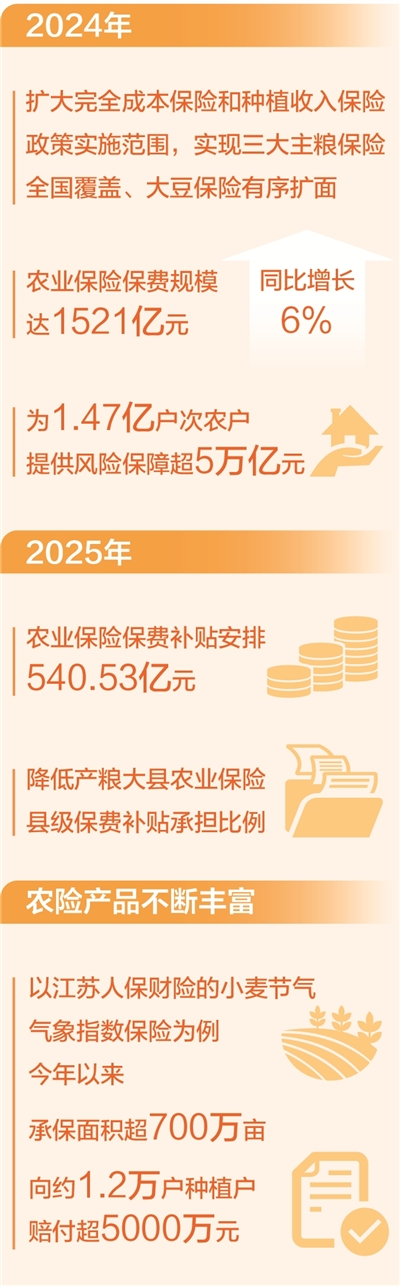
Core Insights - The article emphasizes the expansion of agricultural insurance policies in China, particularly focusing on the complete cost insurance and planting income insurance for major crops, aiming for nationwide coverage and orderly expansion of soybean insurance [4][6]. Group 1: Agricultural Insurance Expansion - The implementation of complete cost insurance and planting income insurance is being expanded to cover three major grains nationwide, with soybean insurance also being gradually expanded [6]. - In 2023, the agricultural insurance premium scale reached 152.1 billion yuan, a year-on-year increase of 6%, providing risk protection exceeding 5 trillion yuan for 147 million farming households [6]. Group 2: Innovative Insurance Products - New insurance products, such as the meteorological index insurance for wheat, have been introduced to help farmers mitigate risks associated with climate conditions [5]. - The meteorological index insurance has covered over 7 million acres and compensated approximately 50 million yuan to around 12,000 farmers this year [5]. Group 3: Risk Management and Disaster Prevention - The insurance industry is increasingly focusing on disaster prevention and reduction, with initiatives to enhance disaster warning and risk reduction services [7]. - The National Financial Supervision Administration encourages insurance companies to participate in disaster relief and emergency management, improving loss assessment efficiency [7]. Group 4: Technological Advancements - The use of technology, such as drones and satellite remote sensing, is being promoted to enhance the accuracy and efficiency of insurance underwriting and claims processes [9][10]. - Insurance companies are leveraging technology to streamline the insurance application process, making it more convenient for farmers [9]. Group 5: Collaborative Efforts - Local governments and insurance institutions are working together to ensure that all types of farmers are informed about agricultural insurance and encouraged to participate [8]. - The collaboration between insurance companies and agricultural departments is crucial for developing targeted insurance products that address local agricultural risks [5].
从薄弱环节入手 切实提升粮食综合生产能力
Zheng Quan Ri Bao· 2025-04-13 21:41
Core Viewpoint - The recently issued "Plan for Accelerating the Construction of an Agricultural Powerhouse (2024-2035)" by the Central Committee of the Communist Party of China and the State Council aims for significant progress in agricultural development by 2027, with a focus on enhancing food production capacity and ensuring self-sufficiency in key agricultural products [1] Group 1: Agricultural Production Capacity - By 2024, China's total grain production is projected to reach 14.13 trillion jin, marking the 21st consecutive year of bumper harvests and the first time surpassing the 1.4 trillion jin threshold, indicating strong resilience and potential in grain production [1] - The plan emphasizes the need for financial support to enhance comprehensive grain production capacity, targeting weak links such as independent breeding, agricultural machinery research and development, and technology transformation [1][2] Group 2: Financial Support and Risk Management - Financial support should also focus on upgrading and optimizing the grain industry chain through investments in storage logistics and agricultural product processing, which can increase the added value of grain and enhance production resilience [2] - Agricultural insurance is highlighted as a crucial risk management tool that can help farmers withstand natural disasters and market fluctuations, significantly reducing production risks [2] - The government is encouraged to implement policies that promote financial institutions to increase support for grain production, ensuring effective allocation of financial resources [2] Group 3: Integration of Finance and Agriculture - The deep integration of finance and grain production is expected to steadily enhance China's comprehensive grain production capacity [3]