
医养结合

Search documents
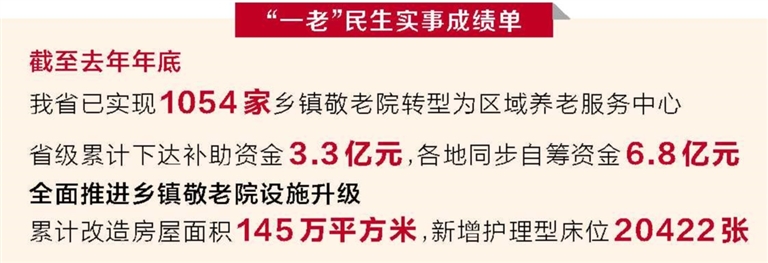
新闻发布厅丨让每一位农村老人安享晚年
He Nan Ri Bao· 2026-02-06 23:11
Core Insights - The provincial government of Henan has prioritized the enhancement of rural elderly care services, aiming to transform over 1,000 township nursing homes into regional elderly care service centers by 2025 [4] - As of the end of last year, 1,054 township nursing homes have already been converted into regional elderly care service centers, supported by a total of 3.3 billion yuan in provincial subsidies and 6.8 billion yuan in local funding [4] - The transformation includes upgrading facilities, adding 20,422 nursing beds, and establishing various functional rooms such as assessment rooms, medical rooms, and recreational spaces [4] Group 1 - The provincial government has established a rural elderly care service network consisting of "centers + village-level stations + home-based services" to expand service reach [5] - In Nanyang City, 111 township nursing homes have been transformed, with 127 village-level elderly care service stations and 579 rural meal assistance points established [5] - Over 100,000 visits have been made to provide care for elderly individuals in special difficulties [5] Group 2 - The integration of medical and elderly care services has gained attention, with a new model allowing direct settlement of medical insurance within nursing facilities [6] - The province is promoting the coordinated planning of grassroots medical institutions and elderly care facilities, developing a "two-in-one" model for integrated services [6] - Future plans include strengthening collaboration between regional elderly care centers and local medical institutions, enhancing talent development, and promoting large-scale operations of elderly care service centers [6]

增进民生福祉 共筑美好家园
Xin Lang Cai Jing· 2026-02-06 19:58
Core Insights - The government work report emphasizes the importance of improving and safeguarding people's livelihoods, indicating a commitment to social welfare and community support [2][3][6] Group 1: Social Welfare Initiatives - The report outlines the establishment of a dynamic monitoring mechanism for low-income households, ensuring that those eligible for social assistance receive it [2] - There is a focus on enhancing elderly care services, with plans to improve the county-level elderly care network and increase the quality of care facilities [2][4] - The report highlights the need for a comprehensive support system for vulnerable groups, including children and low-income families, through cross-departmental data sharing [2][3] Group 2: Healthcare Improvements - Plans to enhance grassroots medical services are included, with a commitment to expanding telemedicine services to improve access to healthcare for rural populations [3] - The report emphasizes the importance of energy supply for public welfare, particularly in extreme weather conditions, ensuring that heating services remain reliable [3] Group 3: Agricultural and Economic Development - The report encourages the development of high-standard farmland to increase agricultural productivity, with expectations of higher yields per acre [5] - Initiatives to boost rural income through innovative marketing strategies, such as live-streaming sales of agricultural products, are being implemented [4] Group 4: Infrastructure and Community Development - The report outlines plans for urban infrastructure improvements, including safety upgrades to gas pipelines and drainage systems, to enhance community living conditions [6] - Investments in public services, such as transportation and communication infrastructure, are being prioritized to improve overall community welfare [7]
畅通医养绿色通道 低心率高龄老人得到专业救治
Huan Qiu Wang· 2026-02-05 02:50
Group 1 - The article highlights a case of a 96-year-old patient with severe health issues, including heart block and low heart rate, requiring urgent medical attention [1] - The National Health Commission has released a detailed plan for the integration of medical and elderly care, emphasizing the establishment of green channels for elderly patients in healthcare institutions [1] - The rapid organization of multidisciplinary teams in hospitals, facilitated by the green channel, allows for effective treatment of elderly patients with multiple chronic conditions [2] Group 2 - The medical team conducted a thorough review of the patient's medical history and adjusted medication based on real-time heart rate monitoring [2] - The successful implantation of a temporary pacemaker and leadless pacemaker was performed under precise imaging guidance, showcasing advancements in elderly care procedures [2] - Post-operative care included continuous heart monitoring and dynamic rehabilitation adjustments, underscoring the importance of specialized care for elderly patients [2]
从“老有所养”到“老有颐养”
Xin Lang Cai Jing· 2026-02-03 20:49
Core Viewpoint - The articles highlight the ongoing improvements in the elderly care system in various regions, focusing on enhancing the quality and accessibility of services while expanding the coverage of social security for the elderly [4][5][11]. Group 1: Policy and System Improvements - By 2025, the region aims to enhance the pension security system and elderly care services, ensuring basic guarantees while expanding service supply [4]. - The focus is on building a comprehensive elderly care service system based on home care, community support, and institutional care, integrating medical and nursing services [4][5]. - The introduction of policies and projects has improved the accessibility of elderly services, transitioning from "old-age support" to "enjoyable old age" [4][5]. Group 2: Social Security Expansion - The region is actively expanding basic pension insurance coverage, including more flexible employment and new economy workers into the social security system [5][6]. - The proportion of flexible employment and new economy workers among newly insured individuals is expected to increase significantly by 2026 [8]. - Efforts are being made to streamline the transfer and continuity of pension insurance between urban and rural residents, enhancing the stability and resilience of the coverage [8]. Group 3: Medical and Nursing Integration - The integration of medical and nursing services is being explored, with healthcare institutions collaborating with elderly care facilities to provide comprehensive services [9][10]. - Facilities are being equipped with medical resources, allowing elderly residents to receive medical care without leaving their homes [9][10]. - The establishment of health archives for seniors and regular home visits by medical staff are part of the ongoing efforts to enhance service quality [10]. Group 4: Infrastructure and Service Quality - Significant investments are being made in infrastructure for elderly care, with projects like the comprehensive elderly care center in Keke Dala City, which has a total investment of 6.06 billion yuan [11][12]. - The region has established a network of operational elderly care institutions and community service centers, enhancing the overall service framework [12]. - The introduction of smart elderly care platforms aims to provide integrated services, including meal assistance and medical support, to vulnerable elderly populations [12][13].
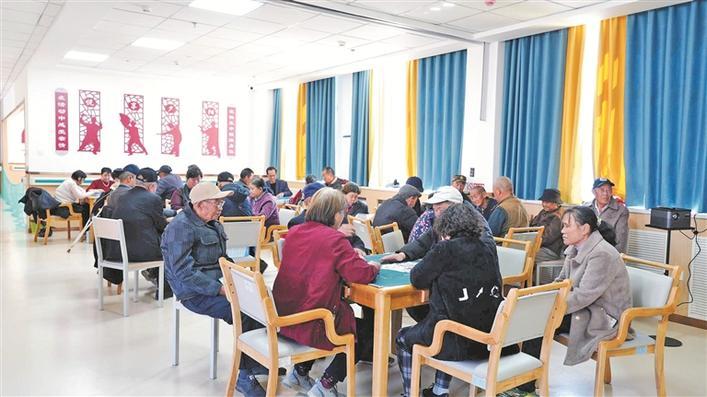
夯实就业根基 护航“一老一小”多地聚力勾勒2026民生“幸福图”
Xin Lang Cai Jing· 2026-02-02 19:04
Group 1 - The core focus of local government work reports for 2026 emphasizes "stabilizing employment" and "enhancing people's livelihoods" as key priorities [1] - Multiple regions have set specific employment targets, such as Beijing aiming for at least 280,000 new urban jobs and Guangdong targeting over 1.1 million new urban jobs [1] - The implementation of "stabilizing jobs, expanding capacity, and improving quality" actions is highlighted as a crucial strategy to address current employment challenges [2][3] Group 2 - Skills enhancement is identified as a critical factor for stabilizing employment and increasing income, with over 11 million subsidized training sessions planned for 2025 [2] - Various provinces have detailed skill training initiatives, such as Shandong's plan to train 400,000 individuals and Guangdong's focus on vocational skill improvement [3] - The Ministry of Human Resources and Social Security plans to implement targeted training actions for key groups and sectors, including youth and migrant workers [3] Group 3 - The reports also address the "one old and one young" support system, focusing on elderly care and childcare services as essential components of social welfare [4] - Specific measures include the establishment of new elderly service centers and the enhancement of long-term care insurance systems in regions like Beijing and Guangdong [4] - Childcare initiatives are also emphasized, with plans for new childcare service centers and quality improvement actions in provinces like Shandong and Guangdong [4] Group 4 - Experts note that the government's focus on employment, elderly care, and childcare reflects a strong commitment to improving the quality of life for families [5] - The financial allocation towards social welfare is expected to create a supportive environment for employment, elderly care, and childcare, enhancing overall public satisfaction and happiness [5]
中医赋能医养融合 守护民生健康底色——陕西商南县富水镇中心卫生院中医药医养结合工作纪实
Huan Qiu Wang· 2026-02-02 03:07
Core Insights - The article highlights the integration of traditional Chinese medicine (TCM) services into the healthcare system of Fushui Town, aiming to meet the health needs of the local population, especially the elderly, while supporting rural revitalization efforts [1] Group 1: Infrastructure Development - The Fushui Town Central Health Center has established itself as a model TCM facility, equipped with various treatment rooms and modern medical equipment to provide comprehensive services [2] - The center has a core team of four experienced TCM physicians and regularly invites local experts to enhance service quality, expanding its offerings to include 18 TCM techniques [2] Group 2: Service Integration - TCM services have been deeply integrated into daily healthcare, with a focus on chronic diseases prevalent among the elderly, achieving a 40% share of TCM in overall medical services since 2025 [3] - A comprehensive service system has been developed, combining in-hospital treatment, community outreach, and online health education to increase accessibility [3] Group 3: Innovative Service Models - The center has introduced a "TCM + Elderly Care" service model, addressing the needs of elderly patients with mobility issues through a dual approach of centralized care and home visits [4][5] - A standardized process for home care services has been established, demonstrating significant improvements in patient recovery and providing a replicable model for similar services in rural areas [5]
市人大代表金迎
Xin Lang Cai Jing· 2026-02-02 00:29
面对深度老龄化,上海积极构建地方医养结合体系,基本实现养老机构医疗服务全覆盖,"医养结合"高 质量发展还要继续出新招。 首先,完善跨部门协同机制,优化政策与服务衔接。由市级层面统筹,推行"一表申请、并联审批"模 式,简化机构设立流程;建立全市动态更新的"养老—医疗床位联动转介资源库",促进"五床"有序衔 接;探索"长护险+基本医保"打包支付,并设立"医办养"专项补贴,覆盖机构与人才激励;构建有序高 效的医养联合体运行机制,促进资源整合与服务协同。 其次,推动公立医疗资源有序开放,引导市场力量形成互补。盘活公立医疗机构闲置资源,转型为医养 结合服务单元;允许公益"医办养"机构实行差异化收费,增强机构"造血"能力;改革薪酬激励制度,向 一线养老服务人员倾斜;鼓励社会资本参与康复护理、认知障碍照护等薄弱环节,形成多层次供给体 系。 (来源:上观新闻) 此外,聚焦失能老人核心需求,推动数字化转型,建设全市互联互通的养老服务平台,动态掌握医养服 务需求;建立"一人一档"需求评估与服务响应机制,推动"互联网+医养"融合发展;加强照护专业人才 队伍建设,通过院校定向培养、在职持续培训和短期专项实训,提升对失能老人的专业照护 ...
记者实地探访—— 能医能养 养老机构如何“一步到位”
Xin Lang Cai Jing· 2026-02-01 21:21
Core Viewpoint - The newly passed "Beijing Elderly Care Service Regulations" aims to implement a dual-track development model of "nursing integrated with medical care" and "medical care integrated with nursing," allowing elderly care institutions to establish medical facilities and be included in basic medical insurance support [1][8] Group 1: Overview of the New Regulations - The regulations will take effect on July 1, 2023, promoting the integration of medical and elderly care services [1] - The dual-track model encourages elderly care institutions to provide medical services, reducing the need for elderly individuals to travel between hospitals and nursing homes [8] Group 2: Case Study of a Nursing Home - The "Happiness Nursing Care Institute" in Shijingshan District is the first large-scale demonstration project in Beijing, combining both elderly care and medical services, and is recognized as a two-star elderly care institution and a designated medical insurance institution [2] - The institute has 300 medical beds and serves elderly patients with various medical needs, including those requiring intensive care and rehabilitation [2][3] Group 3: Financial Benefits and Demand - The costs of medical beds in the nursing home are significantly lower than those in hospital intensive care units, and many expenses can be reimbursed by medical insurance, alleviating the financial burden on families [3] - The nursing home has a high occupancy rate, indicating strong demand for integrated care services, with many elderly residents expressing satisfaction with the combination of medical and daily care [4] Group 4: Addressing Elderly Care Challenges - The nursing home employs a "five-bed linkage" model, allowing for flexible switching between different types of beds based on the residents' health conditions, thus providing timely medical care without the need for hospital visits [6][7] - The integration of medical and elderly care services addresses significant pain points in elderly care, particularly for those with medical needs [7] Group 5: Future Outlook - The regulations aim to enhance the service levels of elderly care institutions and address existing gaps in rehabilitation, nursing, and palliative care services [8] - There is optimism that the new regulations will promote the dual-track model of care, improving the overall landscape of elderly care in Beijing [8]
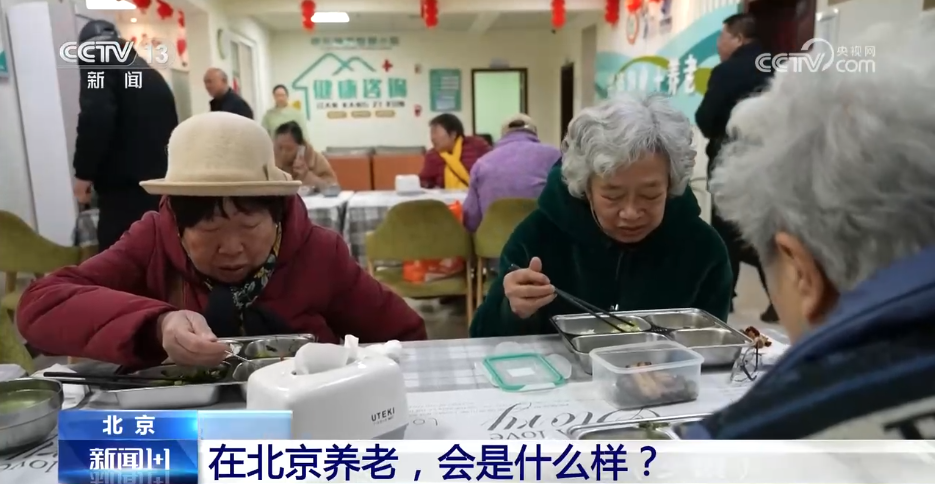
新闻1+1丨在北京养老,将发生哪些改变?
Yang Shi Wang· 2026-01-30 18:04
Core Viewpoint - The newly passed "Beijing Elderly Care Service Regulations" aims to address the challenges of elderly care in a super-large city, with a focus on the needs of over 5 million elderly residents in Beijing as the city approaches a heavily aging society by 2024 [1] Group 1: Regulatory Framework - The new regulations represent a comprehensive upgrade from the previous "Home-based Elderly Care Service Regulations," removing the term "home-based" to reflect a broader approach to elderly care [1] - The regulations clarify the responsibilities of government, market, society, and families in providing elderly care services, emphasizing the need for coordinated resources [4] Group 2: Elderly Care Needs - Beijing's elderly care system must respond to the complex and diverse needs of the elderly population, which includes basic care as well as high-quality, personalized services [3] - The regulations introduce the concept of "family elderly care beds," allowing families of disabled elderly individuals to apply for care services from local institutions [6] Group 3: Financial Support and Accessibility - The government will support families applying for family elderly care beds through service purchases, making the costs more manageable for families [9] - The regulations also include provisions for training family caregivers to enhance their ability to provide care [6] Group 4: Integration of Medical and Elderly Care - A significant highlight of the regulations is the emphasis on the integration of medical and elderly care services, addressing the rigid demand for such services among the elderly [11] - The regulations encourage elderly care institutions to establish medical facilities and ensure that these facilities are included in health insurance coverage [13]
辽宁代表委员建言:织密“一老一小”民生保障网
Zhong Guo Xin Wen Wang· 2026-01-30 06:02
辽宁代表委员建言:织密"一老一小"民生保障网 代表委员们还建议,应充分利用辽宁医学院校众多的优势,设立相关专业,开展定向培训,为社区和养 老机构输送专业人才。同时,积极引入科技力量,例如推广智能穿戴设备远程监控、社区应急响应等, 通过试点探索"科技+养老"的可行路径。 "我们的目标是构建一个社会保障框架内的长期照护管理机制。"赵平总结道。通过整合民政、医保、补 偿及社会保险等多重机制,对护理服务、用品及助餐助浴等项目予以专项支持,并建立科学评估、专人 管理与数据动态追踪体系,方能确保失能老人得到更妥善的照顾,切实减轻家庭和社会的沉重负担,让 辽宁的老人健康、有尊严、幸福地生活,让儿童在安全、专业、温暖的环境下茁壮成长。(完) "面对日益严峻的老龄化,尤其是失能老人照护,我们必须未雨绸缪,协同各方。"辽宁省政协委员、中 国医科大学附属盛京医院麻醉科主任赵平指出,亟需构建一个家庭、社区、医院有效联动,民政、医 保、卫生健康等部门协同配合的机制,将现有的各项措施和资源充分联动、整合起来,建立更为高效、 有力的保障体系。 赵平认为,当前的核心困境在于"断点":失能老人常因髋部骨折、中风、阿尔茨海默病等老年高发疾病 入 ...