
可持续发展目标

Search documents
新华鲜报丨凝聚全球工程力量!这场大会共绘绿色未来
Xin Hua She· 2025-10-13 14:30
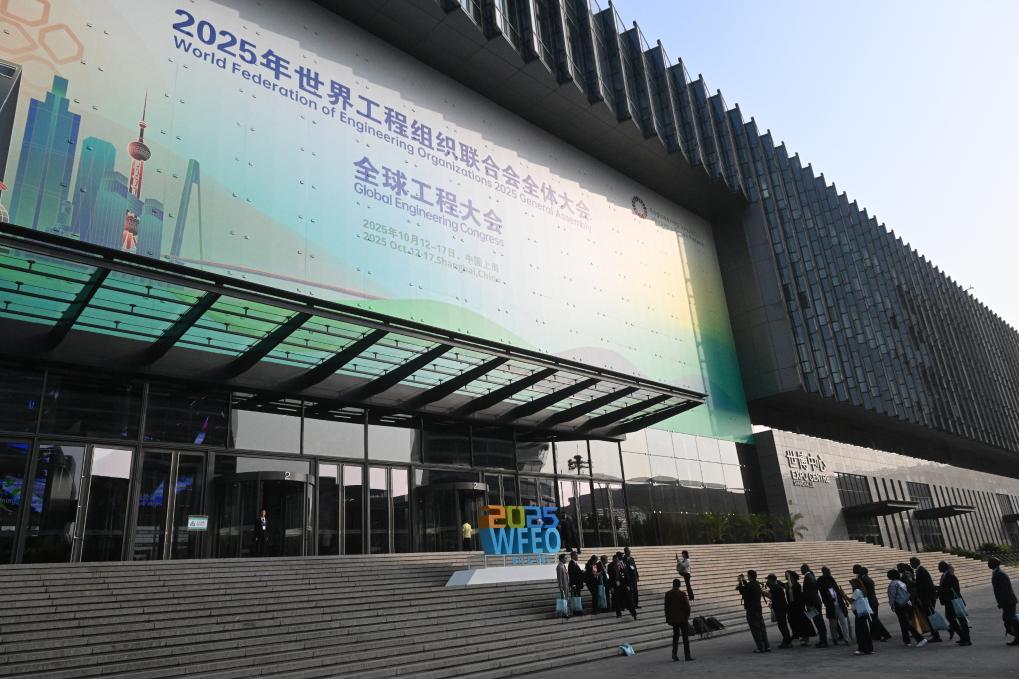
Core Viewpoint - The 2025 World Federation of Engineering Organizations (WFEO) General Assembly highlights China's transformation into a leading engineering nation, emphasizing the importance of engineering in addressing global challenges and achieving sustainable development goals [3][5]. Group 1: Engineering's Role in Global Challenges - Engineering is recognized as a key force in addressing critical challenges, with the WFEO emphasizing the need for innovation and practice in achieving sustainable development goals [3]. - The UN's 2025 Sustainable Development Goals report indicates that only 35% of the goals are progressing well, with nearly half showing slow progress and 18% regressing [3]. Group 2: Global Engineering Achievements - The assembly announced the "2025 Global Top Ten Engineering Achievements," showcasing Chinese engineering innovations such as the DeepSeek open-source language model and humanoid robots, which play a crucial role in tackling global challenges [5]. - The event featured discussions on advanced technologies to accelerate the green transformation in engineering, covering topics like artificial intelligence, clean energy, and resilient cities [5]. Group 3: Talent Development in Engineering - The assembly addressed the need for a large and well-structured engineering talent pool, promoting initiatives like the "Excellence Engineer Education and Training Program 2.0" to integrate engineering education with new industries [5]. - China has joined the Washington Accord, indicating international recognition of its engineering education quality, and has signed mutual recognition agreements with countries like Myanmar and Singapore to facilitate the global mobility of engineers [5]. Group 4: China's Global Engineering Influence - China is leveraging its practices to empower global engineering efforts, as seen in projects like the China-Laos Railway, where it not only provided technology but also trained local professionals [8]. - The upcoming new "Shanghai Declaration" aims to provide optimal solutions for addressing global sustainable development challenges, reflecting China's commitment to collaborate with the global engineering community [8].

第十一届世界自由区组织大会发布《海南宣言》
Zhong Guo Xin Wen Wang· 2025-10-12 14:12
Group 1 - The core viewpoint of the article emphasizes the adoption of sustainable development goals through various initiatives, including circular economy principles, renewable energy usage, and enhanced environmental governance [1] - The declaration highlights the role of innovation and future industries as catalysts, focusing on sectors such as hydrogen economy, electric vehicle production, and artificial intelligence [1] - It calls for the creation of an inclusive ecosystem that facilitates small and medium enterprises' access to global value chains and promotes knowledge transfer through collaboration among local industries and academic institutions [1] Group 2 - The declaration urges stakeholders, including free zone management agencies and governments, to embrace digitalization and accelerate the adoption of digital tools to enhance efficiency and transparency [2] - It advocates for the implementation of forward-looking indicators and new key performance metrics to measure broader economic, social, and environmental impacts beyond traditional investment and employment metrics [2] - The declaration announces the launch of the World Free Zone Organization - China Economic Special Zone Strategic Alliance Center [3]
世界粮食安全和营养状况:应对食品价格高通胀,保障粮食安全和营养
FAO· 2025-10-08 01:23
Group 1: Global Hunger and Food Security - The global hunger rate is projected to decrease to 8.2% in 2024, down from 8.5% in 2023 and 8.7% in 2022, indicating progress in regions like Southeast Asia, South Asia, and South America[10] - An estimated 638 million to 720 million people will face hunger in 2024, which is about 7.8% to 8.8% of the global population, reflecting a decrease of 22 million from 2022[10] - Approximately 23 billion people are expected to experience moderate or severe food insecurity in 2024, with a global prevalence rate of 28.0%[10] Group 2: Food Prices and Economic Impact - Food prices have continued to rise, with the average cost of a healthy diet reaching $4.46 per day in purchasing power parity terms in 2024, up from $4.30 in 2023 and $4.01 in 2022[11] - Despite rising food prices, the number of people unable to afford a healthy diet decreased from 2.76 billion in 2019 to 2.6 billion in 2024, although Africa saw an increase from 864 million to over 1 billion[11] - In low-income countries, the number of people unable to afford a healthy diet rose to 545 million in 2024, representing 72% of the population[11] Group 3: Nutritional Status and Child Malnutrition - The global prevalence of stunting among children has decreased from 26.4% in 2012 to 23.2% in 2024, while rates of wasting and overweight have remained stable[12] - The proportion of exclusively breastfed infants under six months increased significantly from 37.0% in 2012 to 47.8% in 2023, contributing to improved nutritional outcomes[12] - The prevalence of anemia among women aged 15 to 49 has risen from 27.6% to 30.7% between 2012 and 2023, indicating a worsening nutritional status[12]
中方代表观点相近国家发言 呼吁国际社会坚决遏止单边强制措施
Xin Hua She· 2025-10-03 23:42
Core Viewpoint - The international community must remain vigilant and strengthen cooperation to firmly oppose unilateral coercive measures, which are deemed illegal and detrimental to global order [1][2]. Group 1: Unilateral Coercive Measures - Unilateralism is spreading, and such measures are a major cause of international chaos and disruption of world order [1]. - These measures violate principles of sovereign equality and cooperation, interfere in domestic affairs, and contravene the purposes and principles of the UN Charter [1][2]. - Despite calls for their cancellation, unilateral coercive measures continue to have destructive and even lethal consequences for targeted countries and their populations [2]. Group 2: Impact on Development and Human Rights - Unilateral coercive measures exacerbate current humanitarian and economic challenges, severely affecting global production, supply chain stability, and food, energy, and financial security [2]. - These measures violate fundamental human rights, including the rights to life, health, development, and education, hindering the ability of targeted countries to achieve these rights [2]. Group 3: Call for Action - There is a need for affected countries to gain access to foreign investment and technology, and to enhance international cooperation in various fields, including culture, sports, and transportation [3]. - The "Group of 77 and China" has reiterated that unilateral coercive measures do not aid economic and social development, and the Non-Aligned Movement has condemned such measures [3]. - A call is made for Western countries to heed the international community's demands, comply with the UN Charter and international law, and immediately and unconditionally lift unilateral coercive measures [3].
“中国-联合国全球南南发展支持机制” 正式启动|联合国现场
2 1 Shi Ji Jing Ji Bao Dao· 2025-09-30 06:10
Core Insights - The "China-UN Global South Development Support Mechanism" has been officially launched to enhance South-South and trilateral cooperation, aiming to accelerate the implementation of the UN Sustainable Development Goals [1][2] - The mechanism is backed by an initial seed funding of $10 million, focusing on practical projects and initiatives in developing countries, particularly targeting the most vulnerable nations [1][3] Group 1 - The mechanism aims to create stronger executable projects and amplify effects through practical cooperation in technology and capacity building [1][3] - It will prioritize support for the least developed countries, landlocked developing countries, and small island developing states, complementing China's "Global Development Initiative" and the Belt and Road Initiative [1][2] - The operational design emphasizes flexibility, catalytic financing, and inclusivity, supporting small-scale, demand-driven, and rapid-response projects [2][3] Group 2 - The focus areas include green resilient development, digital transformation, risk mitigation, sustainable industrialization, and economic empowerment of youth and women [3] - The mechanism will leverage technical cooperation and capacity building, ensuring alignment with countries' self-determined priorities for inclusive, sustainable, and scalable outcomes [3] - It aims to generate demonstrative projects to accumulate experience and create paradigms for broader replication, injecting new momentum into the acceleration of the 2030 Agenda [3]
“中国-联合国全球南南发展支持机制” 正式启动
2 1 Shi Ji Jing Ji Bao Dao· 2025-09-30 06:03
Core Insights - The "China-UN Global South Development Support Mechanism" has been officially launched to enhance South-South and trilateral cooperation, aiming to accelerate the implementation of the UN Sustainable Development Goals [1][2] - The mechanism is backed by an initial seed funding of $10 million, focusing on practical projects and initiatives in developing countries, particularly targeting the most vulnerable nations [1][3] Group 1 - The mechanism aims to create stronger executable projects and leverage effects through practical South-South cooperation [1] - It will prioritize support for the least developed countries, landlocked developing countries, and small island developing states, complementing China's "Global Development Initiative" and the Belt and Road Initiative [1][2] - The operational design emphasizes flexibility, catalytic financing, and inclusivity, supporting small-scale, demand-driven, and rapid-response projects [2] Group 2 - Key focus areas include green resilient development, digital transformation, risk mitigation, sustainable industrialization, and economic empowerment of youth and women [3] - The mechanism will utilize technical cooperation and capacity building, ensuring alignment with countries' self-determined priorities for inclusive and sustainable outcomes [3] - It aims to generate demonstrative projects to accumulate experience and create paradigms for broader replication, injecting new momentum into the 2030 Agenda [3]
2025中国—东盟青年文化周开幕
人民网-国际频道 原创稿· 2025-09-28 03:11
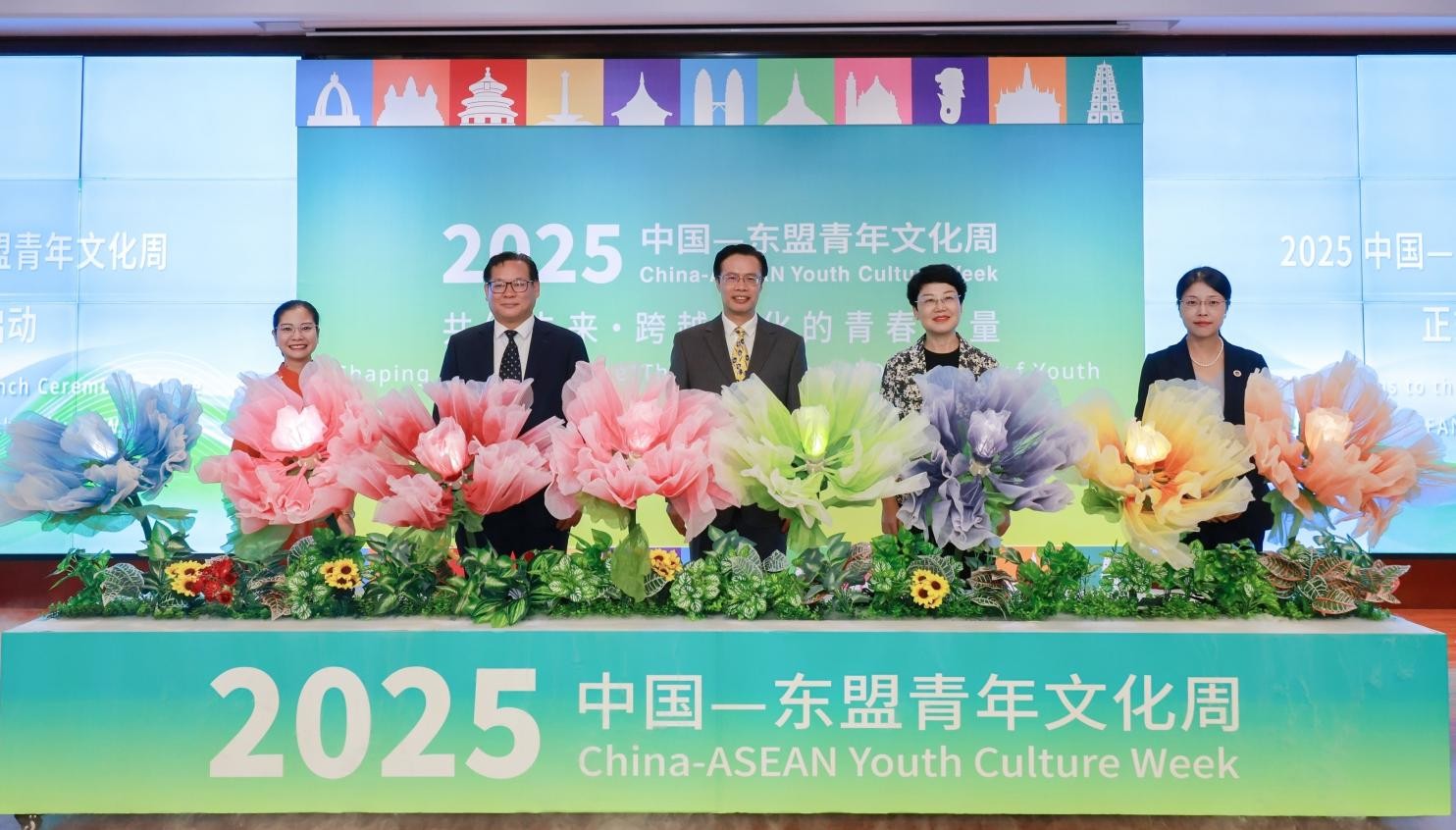
Core Points - The 2025 China-ASEAN Youth Cultural Week opened at the University of International Business and Economics, with over 200 experts and youth from China and ASEAN participating [1][4] - The theme of the event is "Drawing the Future Together: The Youth Power Across Cultures" [1] - Keynote speeches emphasized the role of youth as both observers and active builders of interconnected regions, promoting cultural exchange and cooperation [4] Group 1 - The opening ceremony featured video addresses from key figures including the Secretary-General of the China-ASEAN Center and ambassadors from the Philippines and Thailand [4] - Participants expressed hope that youth can bridge cultural gaps and enhance mutual understanding through sharing experiences and cultural exchanges [4] - The event aims to foster friendship and cooperation between China and ASEAN, encouraging youth to become creators of a shared future [4] Group 2 - The opening ceremony included two roundtable discussions focusing on "Youth Ecological Actions under Sustainable Development Goals" and "The Common Future of China-ASEAN Youth" [8] - A week-long series of activities is planned, including workshops on understanding Chinese modernization, dialogues on future talent, and cultural experiences [8] - Youth leaders from China and ASEAN will visit Quzhou, Zhejiang, and participate in ASEAN-themed events in Thailand [8]
外交部:中国将继续做推动全球发展事业的行动派和实干家
Xin Hua She· 2025-09-26 11:28
Core Viewpoint - The core viewpoint emphasizes that poverty and hunger elimination is the primary goal of the United Nations' 2030 Sustainable Development Agenda, with China contributing over 70% to global poverty reduction efforts [1][2]. Group 1: China's Contribution to Poverty Reduction - China has successfully lifted 800 million people out of poverty, achieving the UN's 2030 poverty reduction target a decade early, and has a contribution rate exceeding 70% to global poverty alleviation [2]. - The country actively supports many nations in exploring poverty reduction and sustainable development paths that align with their specific conditions [2]. Group 2: Global Development Initiatives - China has proposed and implemented a Global Development Initiative, continuously upgrading the Global Development and South-South Cooperation Fund, and supporting over 180 projects in more than 60 countries, benefiting over 30 million people [2]. - The Chinese government emphasizes that the right to survival and development is a fundamental human right, positioning its poverty eradication efforts as a significant human rights project [2]. Group 3: International Cooperation and Challenges - The Chinese government acknowledges the unprecedented challenges faced by the UN in advancing sustainable development goals, as highlighted by Secretary-General Guterres and various world leaders during the UN General Assembly [1]. - There is a call for reshaping the foundation of international cooperation to address the increasing issues of poverty and hunger globally [1].
外交部:做推动全球发展事业的行动派和实干家
Yang Shi Xin Wen Ke Hu Duan· 2025-09-26 09:30
Core Points - The UN Secretary-General Antonio Guterres highlighted unprecedented challenges facing the UN, including setbacks in sustainable development goals and increasing poverty and hunger, calling for a re-establishment of international cooperation to create welfare for people [1] - Chinese spokesperson Guo Jia Kun emphasized that poverty and hunger elimination is the primary goal of the UN's 2030 Sustainable Development Agenda and a common aspiration of the international community [1] - China has successfully lifted 800 million people out of poverty, achieving the UN's 2030 poverty reduction target 10 years ahead of schedule, contributing over 70% to global poverty reduction efforts [1] - China is committed to helping developing countries address their urgent livelihood issues and has proposed the Global Development Initiative, supporting over 180 projects in more than 60 countries, benefiting over 30 million people [1] Human Rights Perspective - Guo Jia Kun stated that the right to survival and development is a fundamental human right, and China's eradication of absolute poverty is the largest human rights project and the best human rights practice [2] - China aims to continue its proactive role in promoting global development and work collaboratively with all parties to eliminate poverty and hunger, making the vision of common development a reality [2]
古特雷斯呼吁改革国际金融体系,借全球发展倡议推动2030议程
2 1 Shi Ji Jing Ji Bao Dao· 2025-09-25 05:17
Group 1 - The core message emphasizes the need for international cooperation to achieve sustainable development goals, as highlighted by Secretary-General Guterres during the Global Development Initiative High-Level Meeting [1] - The global development landscape is facing severe challenges, including fiscal constraints, geopolitical tensions, unilateral trade measures, and climate risks, leading to a fragile economic outlook [2] - The COVID-19 pandemic continues to impact economic recovery, with many economies experiencing weak growth and insufficient investment, exacerbating inequality and poverty [2] Group 2 - The "Seville Commitment" established at the Fourth International Conference on Financing for Development provides a comprehensive framework to bridge the $4 trillion financing gap for sustainable development [3] - There is a critical need to implement the agreement into actionable steps, such as expanding concessional financing and reforming the international financial system to better reflect the needs of developing countries [3] - Guterres calls for increased participation of developing countries in capital and decision-making processes to achieve a fair global financial architecture [3] Group 3 - The Global Development Initiative aligns closely with sustainable development goals, particularly in poverty eradication, food security, climate change response, and promoting inclusive growth [4] - Guterres praises China's proposed mechanisms to enhance the initiative's effectiveness and urges countries to revitalize cooperation to advance the 2030 sustainable development agenda [4] - A call for reaffirming multilateralism based on unity and results, leveraging the UN Charter and the Global Development Initiative to build an inclusive, resilient, and sustainable future for all [4]