
固态电池技术突破

Search documents
固态电池新突破!新能源车续航有望翻倍!
中国能源报· 2025-10-16 08:59
Core Viewpoint - Solid-state batteries represent a core technological direction for next-generation lithium batteries, with vast application prospects in fields such as new energy vehicles and low-altitude economy. Recent advancements by Chinese scientists have significantly upgraded the performance of solid-state batteries, potentially allowing for a range of 1,000 kilometers with a 100-kilogram battery, compared to the previous maximum of 500 kilometers [1][4]. Breakthroughs in Solid-State Battery Technology - The main challenge in solid-state batteries lies in the interface between the solid electrolyte and the lithium metal anode, which affects charging and discharging efficiency. Traditional solid electrolytes, like sulfide, are hard and brittle, while lithium metal is soft, leading to poor contact and inefficiencies [3][5]. - Three key technological breakthroughs have been achieved to address the contact issues between the solid electrolyte and lithium anode, effectively overcoming the range limitations of solid-state batteries [4][5]. Key Technological Innovations - **"Special Glue" - Iodine Ions**: A collaborative effort by the Chinese Academy of Sciences and various research teams has developed a "special glue" that directs lithium ions to fill gaps at the interface between the electrode and electrolyte, enhancing contact and efficiency [6]. - **Flexible Transformation Technique**: Researchers have created a flexible framework using polymer materials that allows the electrolyte to withstand significant deformation without damage. This innovation improves the battery's ability to store energy by 86% by incorporating chemical components that enhance lithium ion mobility and retention [7]. - **"Fluorine Reinforcement"**: A team from Tsinghua University has modified the electrolyte with fluorinated polyether materials, providing high voltage resistance and preventing breakdown during high-stress conditions. This technology ensures safety and extends the battery's operational range [9].


固态电池新突破!新能源车续航有望翻倍!突破1000公里天花板!
鑫椤锂电· 2025-10-16 07:59
Core Viewpoint - Solid-state batteries represent a core technological direction for next-generation lithium batteries, with significant application prospects in fields such as new energy vehicles and low-altitude economy. Recent advancements by Chinese scientists have overcome critical challenges, enabling a leap in solid-state battery performance, potentially allowing for over 1000 kilometers of range with a 100-kilogram battery, compared to the previous maximum of 500 kilometers [1][2]. Group 1: Challenges in Solid-State Batteries - The primary challenge in solid-state batteries lies in the interaction between lithium ions and the solid electrolyte, where the solid electrolyte's high hardness and brittleness create inefficiencies in charge and discharge processes [2][4]. - The interface between the solid electrolyte and the lithium metal anode is problematic, resembling a poorly adhered combination of hard and soft materials, which affects battery efficiency [2][4]. Group 2: Key Technological Breakthroughs - Three major technological breakthroughs have been achieved, addressing the interface issues between the solid electrolyte and lithium anode, thereby enhancing the battery's range [4]. - A "special glue" developed by the Chinese Academy of Sciences helps to fill gaps at the interface, allowing for better contact and efficiency in solid-state batteries [6]. - A flexible framework created using polymer materials enhances the electrolyte's durability, allowing it to withstand significant deformation while improving lithium ion mobility and increasing energy storage capacity by 86% [8]. - A fluorinated polymer modification provides high voltage resistance, ensuring safety and performance under extreme conditions, such as puncture tests and high temperatures [10].

固态电池,新突破!
Zheng Quan Shi Bao· 2025-10-16 06:46
Core Insights - Solid-state batteries represent a key technological direction for next-generation lithium batteries, with significant application prospects in electric vehicles and low-altitude economy sectors. Recent advancements by Chinese scientists have led to a breakthrough in all-solid-state lithium batteries, potentially doubling the range from 500 kilometers to over 1000 kilometers with a 100-kilogram battery [1]. Group 1: Technical Challenges and Breakthroughs - The primary challenge in solid-state batteries lies in the interface between the hard, brittle sulfide solid electrolyte and the soft lithium metal anode, which affects charging and discharging efficiency [3][5]. - Multiple research teams in China have achieved three critical technological breakthroughs that address the contact issues at the solid-solid interface, thereby overcoming the range limitations of solid-state batteries [6]. Group 2: Key Technological Innovations - A "special glue" developed by the Chinese Academy of Sciences helps to fill gaps at the interface between the electrode and electrolyte, enhancing the contact and efficiency of lithium-ion transport [7]. - A flexible framework created using polymer materials allows the electrolyte to withstand significant deformation without damage, improving the battery's durability and increasing its energy storage capacity by 86% [9]. - A fluorinated polymer material has been used to enhance the electrolyte's resistance to high voltage, ensuring safety and performance under extreme conditions, such as puncture tests and high-temperature environments [11].
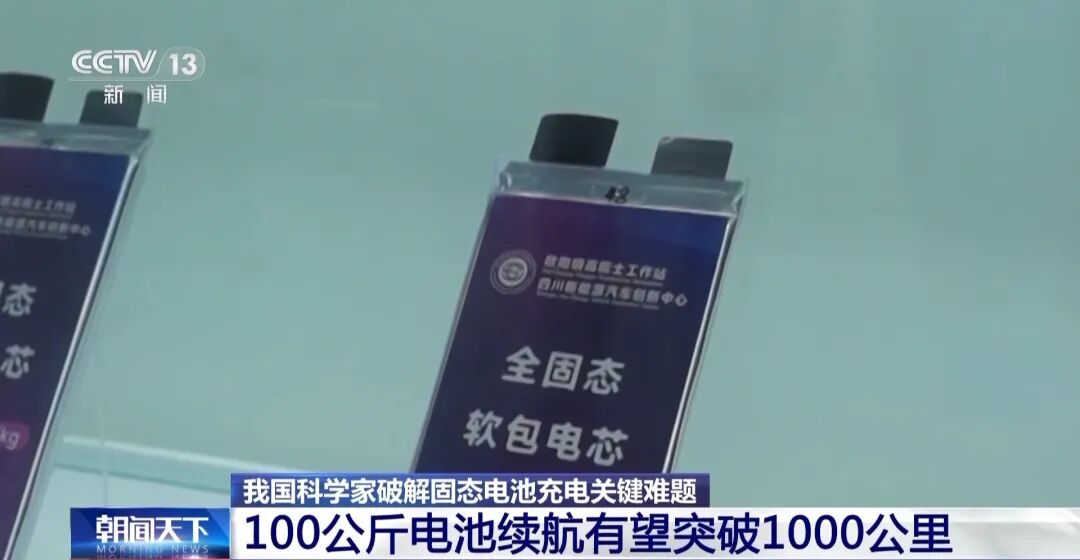
固态电池新突破!新能源车续航有望翻倍!
新华网财经· 2025-10-16 06:35
Core Viewpoint - Solid-state batteries represent a core technological direction for next-generation lithium batteries, with significant application prospects in fields such as new energy vehicles and low-altitude economy. Recent advancements by Chinese scientists have led to a breakthrough in all-solid-state lithium batteries, potentially doubling the range from 500 kilometers to over 1000 kilometers with a 100-kilogram battery [1][2]. Group 1: Challenges in Solid-State Batteries - The primary challenge in solid-state batteries lies in the interface between the solid electrolyte and the lithium metal anode, which affects charging and discharging efficiency due to poor contact [2][4]. - Traditional sulfide solid electrolytes are hard and brittle, while lithium metal is soft, creating a mismatch that complicates the interface [2]. Group 2: Key Technological Breakthroughs - Three major technological breakthroughs have been achieved to enhance the interface between the solid electrolyte and lithium metal, addressing the contact issues and significantly improving battery range [4]. Group 3: Innovations in Solid-State Battery Technology - The development of a "special glue" using iodine ions allows for the active attraction of lithium ions to fill gaps at the interface, improving contact and performance [5][6]. - A flexible framework created from polymer materials enhances the electrolyte's durability, allowing it to withstand over 20,000 bends without damage, while also increasing lithium ion mobility and storage capacity by 86% [8]. - A fluorinated polymer modification provides high voltage resistance, ensuring safety during high-temperature and puncture tests, thus maintaining both safety and range [10].

固态电池新突破 新能源车续航有望超过1000公里
中国基金报· 2025-10-16 06:16
Core Insights - Chinese scientists have successfully overcome key challenges in all-solid-state lithium batteries, enabling a significant upgrade in performance, with potential range exceeding 1000 kilometers compared to the previous maximum of 500 kilometers for 100 kg batteries [2] Group 1: Breakthrough Technologies - The first breakthrough involves a "special glue" called iodine ions developed by a research team from the Chinese Academy of Sciences, which helps improve the interface between the electrode and electrolyte, enhancing battery efficiency [3] - The second breakthrough is a "flexible transformation" technique from the Chinese Academy of Sciences' Institute of Metal Research, where polymer materials create a flexible framework for the electrolyte, allowing it to withstand over 20,000 bends and enhancing energy storage capacity by 86% [3] - The third breakthrough comes from Tsinghua University, which uses fluorinated polyether materials to reinforce the electrolyte, ensuring safety and performance under high voltage and temperature conditions [3]
A股异动丨有新突破,固态电池股拉升,当升科技涨近8%
Ge Long Hui A P P· 2025-10-16 05:31
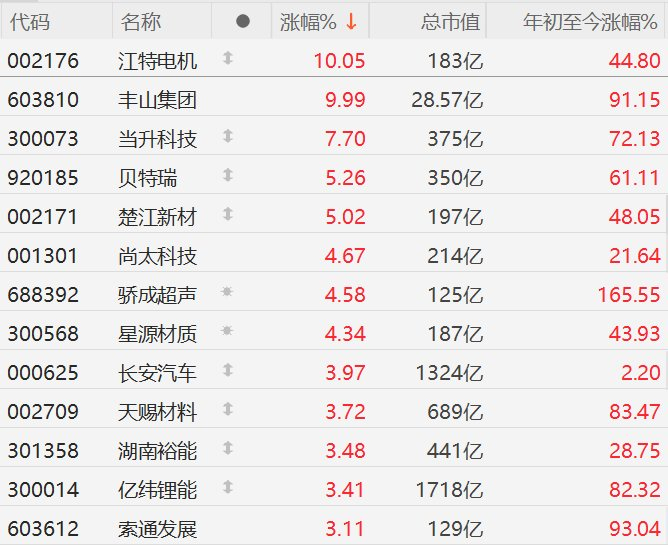
Core Viewpoint - The solid-state battery sector in the A-share market is experiencing a significant surge, driven by advancements in technology and promising applications in electric vehicles and low-altitude economy sectors [1]. Group 1: Market Performance - Jiangte Electric and Fengshan Group reached their daily limit up, while Dongsheng Technology saw an increase of nearly 8% [1]. - Other companies such as Better Ray, Shangtai Technology, and Xingyuan Materials also experienced gains [1]. - The market capitalization and year-to-date performance of key companies in the sector are as follows: - Jiangte Electric: Market Cap 18.3 billion, YTD Gain 44.80% - Fengshan Group: Market Cap 2.857 billion, YTD Gain 91.15% - Dongsheng Technology: Market Cap 37.5 billion, YTD Gain 72.13% - Better Ray: Market Cap 35 billion, YTD Gain 61.11% - Shangtai Technology: Market Cap 21.4 billion, YTD Gain 21.64% [2]. Group 2: Technological Advancements - Chinese scientists have recently made significant progress in solid-state battery technology, overcoming critical challenges in all-solid-state lithium batteries [1]. - The performance of solid-state batteries has seen a leap forward, with the potential to double the range from 500 kilometers to over 1000 kilometers for a 100-kilogram battery [1].





固态电池,新突破!
证券时报· 2025-10-16 05:20
Core Viewpoint - Solid-state batteries represent a core technological direction for next-generation lithium batteries, with vast application prospects in fields such as new energy vehicles and low-altitude economy [1] Summary by Sections Breakthroughs in Solid-State Batteries - Chinese scientists have successfully overcome critical challenges in all-solid-state lithium batteries, achieving a significant upgrade in performance, with potential range improvements from 500 kilometers to over 1000 kilometers for a 100-kilogram battery [2][6] Technical Challenges - The main challenge in solid-state batteries lies in the interface between the solid electrolyte and the lithium metal anode, which affects charging and discharging efficiency due to poor contact [4][3] Key Technological Breakthroughs - Three major technological breakthroughs have been made to enhance the interface between the solid electrolyte and lithium metal, addressing the contact issues and significantly improving battery range [7] Special Adhesive Technology - A "special adhesive" developed by the Chinese Academy of Sciences helps lithium ions move to the interface between the electrode and electrolyte, filling gaps and improving contact [8][9] Flexible Structure Innovation - Researchers have created a flexible framework for the electrolyte using polymer materials, allowing the battery to withstand deformation without damage, while also enhancing lithium ion mobility and increasing energy storage capacity by 86% [11] High-Pressure Resistance - A team from Tsinghua University has modified the electrolyte with fluorinated polyether materials, providing high voltage resistance and ensuring safety during high-temperature and puncture tests [13]
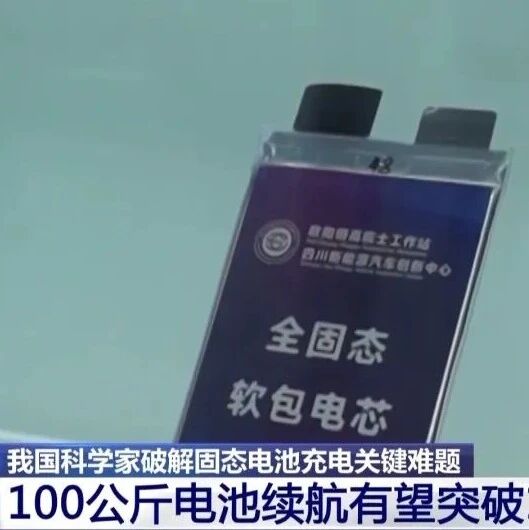
固态电池新突破 新能源车续航有望超过1000公里
Yang Shi Xin Wen· 2025-10-16 03:14
Core Viewpoint - Multiple research teams in China have successfully overcome key challenges in all-solid-state lithium batteries, leading to a significant upgrade in solid-state battery performance, which could potentially double the range of electric vehicles [1]. Group 1 - The breakthrough in solid-state lithium battery technology represents a major advancement in the energy storage sector [1]. - Enhanced performance of solid-state batteries is expected to have a transformative impact on the electric vehicle industry, particularly in terms of driving range [1].
固态电池新突破:新能源车续航有望翻倍
财联社· 2025-10-16 03:10
Core Viewpoint - Solid-state batteries represent a core technological direction for next-generation lithium batteries, with significant application prospects in sectors like new energy vehicles and low-altitude economy. Recent advancements by Chinese scientists have led to breakthroughs in all-solid-state lithium batteries, potentially doubling the range from 500 kilometers to over 1000 kilometers with a 100-kilogram battery [1]. Group 1: Challenges in Solid-State Battery Development - The primary challenge in solid-state batteries lies in the efficient movement of lithium ions between the anode and cathode, akin to delivery personnel navigating a road. The commonly used sulfide solid electrolyte is hard and brittle, while the lithium metal anode is soft, leading to poor interface contact that affects charging efficiency [2]. Group 2: Key Technological Breakthroughs - Three critical technological breakthroughs have been achieved, allowing for better integration of the solid electrolyte and lithium anode, thus addressing the interface contact issue and enhancing battery range [4]. Group 3: Innovations in Solid-State Battery Components - A "special glue" developed by the Chinese Academy of Sciences helps lithium ions move to the interface between the electrode and electrolyte, filling gaps and improving contact [5]. - A flexible framework made from polymer materials enhances the electrolyte's durability, allowing it to withstand significant deformation while increasing lithium ion mobility and storage capacity by 86% [8]. - A fluorinated polymer material has been used to modify the electrolyte, providing high voltage resistance and ensuring safety during operation, even under extreme conditions [10][11].
一口气看懂固态电池两大新突破
Hu Xiu· 2025-10-11 00:02
Core Viewpoint - The breakthrough in solid-solid interface contact challenges for all-solid-state batteries by a Chinese research team indicates that mass production of these batteries is now closer than ever [1] Group 1 - The research team has developed multiple solutions to address the world-class challenges associated with solid-solid interface contact in all-solid-state batteries [1] - The advancements in this field suggest that the scientific community is adopting innovative approaches, likened to "Melded Fusion" [1] - The progress made in overcoming these barriers signifies a significant step towards the commercialization of all-solid-state batteries [1]