大风

Search documents
今冬以来最强冷空气来袭 黑龙江开启“速冻”模式
Zhong Guo Xin Wen Wang· 2025-11-27 13:39
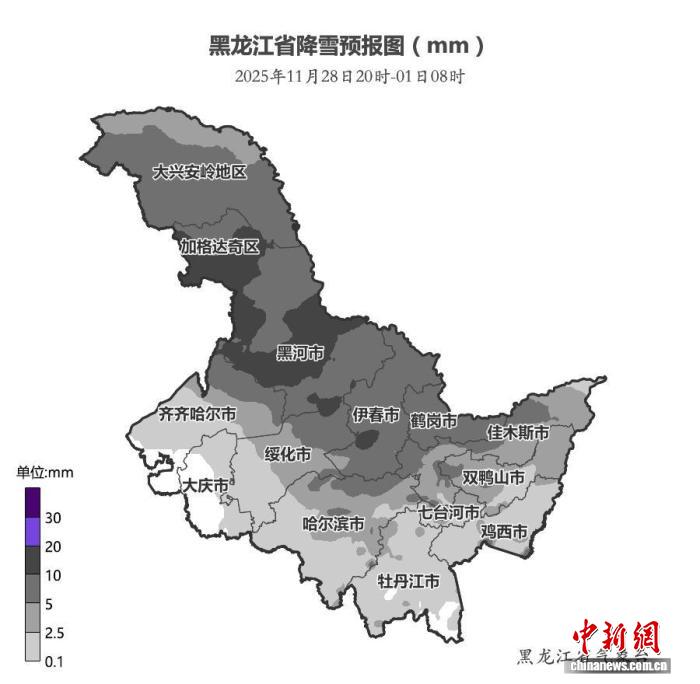
Core Points - The strongest cold air mass of the winter is expected to impact Heilongjiang Province starting from the night of November 28, leading to a cold wave and strong winds across most areas [1][3] - Significant snowfall is forecasted, with accumulations of 6 to 12 centimeters in certain regions, and temperatures are expected to drop by 8°C to 10°C, with some areas experiencing drops of 12°C to 14°C [1][5] Weather Forecast - From the night of November 28 to November 30, heavy snow is anticipated in regions such as Daxing'anling, Heihe, Yichun, and northern Qiqihar, with localized blizzards expected [3][5] - Wind gusts of 6 to 7 levels are predicted, with some areas experiencing gusts of 8 to 9 levels, particularly during the day on November 29 [5][7] Impact on Transportation and Public Safety - The combination of snowfall and strong winds will lead to slippery roads and reduced visibility, potentially causing significant travel disruptions due to ice and snow accumulation [7] - Public safety measures are advised, including precautions against cold weather and respiratory illnesses, as well as ensuring proper heating practices to prevent carbon monoxide poisoning [7]

较强冷空气继续影响东北及黄淮以南地区 黄淮江淮等地有沙尘
Zhong Guo Xin Wen Wang· 2025-11-27 00:40
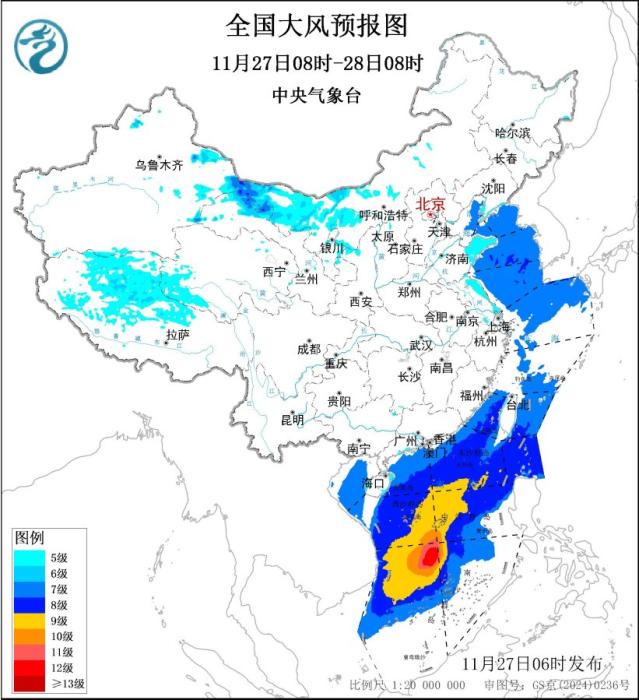
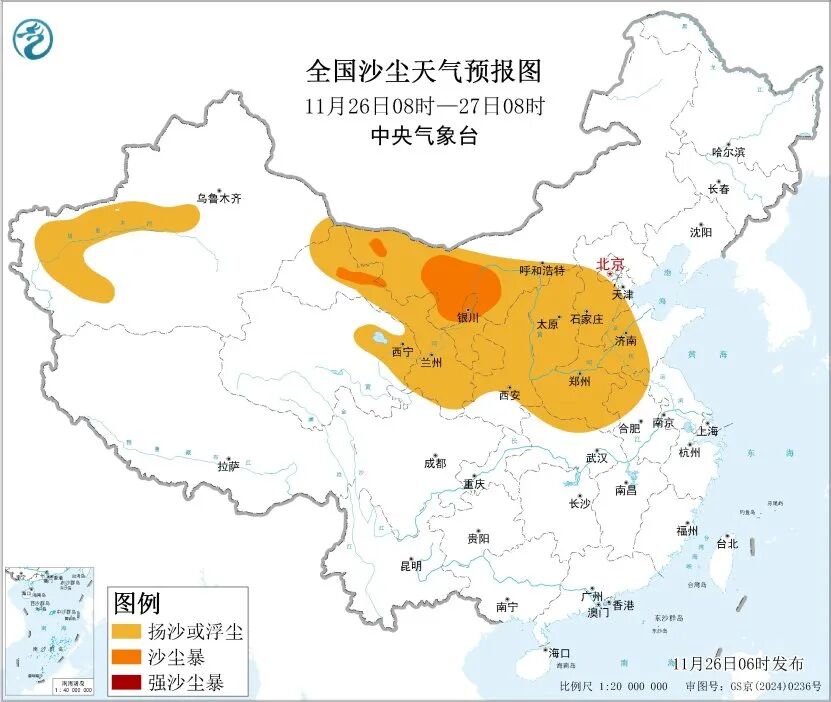
Core Points - A strong cold air mass continues to affect Northeast and regions south of the Huanghuai, with significant impacts expected on energy supply, public health, transportation, and urban operations [1][3][4] - The 27th typhoon "Tianqin" has intensified to typhoon level, with maximum wind speeds reaching 12 levels (33 m/s) and is expected to affect maritime conditions significantly [7][11] Weather Impact Summary - From November 27 to 28, temperatures in most areas south of Huanghuai are expected to drop by around 4°C, while Northeast regions may see drops of 4-6°C, with localized areas experiencing drops of 8-10°C [3][4] - Snowfall has been reported in Inner Mongolia and Northeast regions, with maximum snowfall recorded at 7.7 mm in Tonghua, Jilin [2][3] - Wind gusts of 7-9 levels are expected in various regions, with some areas experiencing gusts up to 14 levels [2][3][4] - Dust storms are anticipated in parts of Inner Mongolia, Gansu, and other regions due to strong winds [4][6] Typhoon "Tianqin" Details - The center of typhoon "Tianqin" is located approximately 485 kilometers southeast of Sansha City, Hainan Province, with a minimum central pressure of 975 hPa [7] - The typhoon is expected to move westward at a speed of 5-10 km/h, with a gradual weakening anticipated after November 28 [7][11] - Areas affected by the typhoon will experience wind speeds of 6-8 levels, with gusts reaching up to 12 levels in proximity to the typhoon's center [7][11]
大风!沙尘暴!三股冷空气将来袭!
Yang Shi Wang· 2025-11-26 10:43
Group 1 - The core message indicates that cold air is frequently affecting China, with significant temperature fluctuations expected from late November to early December [1][3] - A series of cold air masses will lead to temperature drops of 4°C to 12°C across various northern regions, with specific areas experiencing rapid temperature changes [3][4] - The Central Meteorological Observatory has issued blue alerts for sandstorms and yellow alerts for strong winds due to the impact of cold air [4][6] Group 2 - Snowfall is expected to increase in Northeast and North China, with some areas experiencing moderate to heavy snow [2][10] - The weather forecast predicts a significant reduction in precipitation in the southwest and northern regions in the coming days [2][10] - Strong winds are anticipated across multiple regions, with wind speeds reaching 5-7 levels and gusts up to 11-12 levels in certain areas [5][7]
气温“过山车”,容易对人造成哪些伤害?如何防护?北京疾控提醒
Xin Jing Bao· 2025-11-24 05:17
Group 1 - The Beijing Meteorological Bureau issued a yellow wind warning on November 23, indicating that temperatures will drop significantly due to strong cold air, with nighttime lows reaching -3°C and daytime highs falling to single digits on November 24 and 25 [1] - The Beijing CDC advises the public to take precautions against cold weather, especially for vulnerable populations who are at higher risk for respiratory diseases and cardiovascular issues during this period [1] Group 2 - Cold weather can increase the risk of cardiovascular diseases as cold stimuli cause blood vessels to constrict, raising blood pressure and heart strain, potentially leading to conditions like angina, myocardial infarction, and stroke [2] - Respiratory diseases are more prevalent in winter, with cold air and dust exacerbating conditions such as asthma and chronic bronchitis; patients are advised to wear masks and maintain indoor air circulation [2] - Cold temperatures can lead to joint issues, with reduced blood circulation causing pain and stiffness; individuals with previous injuries or arthritis should keep joints warm and engage in light exercises [2] Group 3 - During windy weather, it is recommended to wear masks and use public transportation instead of bicycles or electric vehicles to ensure safety [3] - Maintaining indoor air circulation is crucial, with recommendations to ventilate rooms at least 2-3 times a day for over 30 minutes to reduce the risk of respiratory disease transmission [3] - A balanced diet rich in protein and high-calorie foods is suggested to help the body resist cold, alongside adequate intake of fresh fruits and vegetables [3] Group 4 - Ensuring sufficient sleep and maintaining a regular schedule while avoiding late nights can enhance the immune system [4]
寒潮抵达华南 寒潮和大风预警继续发布
Yang Shi Wang· 2025-11-18 01:42
Summary of Key Points Core Viewpoint - A significant cold wave is affecting various regions in China, leading to temperature drops of 6-10°C, with some areas experiencing drops exceeding 12°C. The cold wave is accompanied by strong winds and precipitation, including snow and rain, prompting weather warnings from the Central Meteorological Observatory [1][2]. Group 1: Temperature Changes - On November 18, areas such as Huanghuai East, Jianghuai, Jianghan, and parts of southern China are experiencing temperature drops of 6-10°C, with some regions seeing drops of over 12°C [1]. - The lowest temperature line is expected to move south to the southern parts of Jiangsu and Anhui, reaching central Hubei [1]. Group 2: Wind Conditions - Regions including Inner Mongolia, Hebei, and parts of southern China are experiencing winds of 5-6 levels, with gusts reaching 7 levels. Coastal areas are facing stronger winds of 7-8 levels, with gusts up to 10-11 levels in certain sea areas [2]. - The Central Meteorological Observatory has issued a blue warning for strong winds due to these conditions [2]. Group 3: Precipitation Forecast - On November 17, light snow or sleet was reported in northeastern Inner Mongolia and eastern Heilongjiang, with some areas experiencing moderate to heavy rain [2]. - Rain and snow are expected to primarily affect the central and eastern Tibetan Plateau, as well as parts of Yunnan and Guangxi on November 18 [2].
强冷空气来袭 北京发布寒潮、大风蓝色预警信号
Xin Hua She· 2025-10-16 11:39
Core Points - Beijing Meteorological Station issued a blue alert for cold wave due to strong cold air, predicting a temperature drop of around 8°C from the night of October 16 to the night of October 18, with minimum temperatures in the plains expected to reach around 4°C [1] - A blue alert for strong winds was also issued, forecasting north winds of 3 to 4 levels in most areas of Beijing from noon to night on October 17, with gusts in certain districts reaching around 7 levels [1] - On October 16, the weather was overcast with light rain, and the maximum temperature was around 15°C, with significant rainfall expected during the night [1] Weather Alerts - During the strong wind warning, it is advised to enhance outdoor activity safety management and suspend organized outdoor activities such as climbing, hiking, and cycling [2] - Public should pay attention to travel safety and avoid tall buildings and temporary structures during the wind alert [2] - During the cold wave alert, it is recommended for the public to dress warmly to prevent colds and cardiovascular diseases [2]
江西32县(市、区)出现中度及以上气象干旱
Zhong Guo Xin Wen Wang· 2025-10-16 10:27
Core Points - Jiangxi Province is experiencing moderate to severe meteorological drought in 32 counties since October, attributed to unusually high temperatures and low precipitation levels [1][2] - The average temperature in Jiangxi for October is reported at 28.2°C, which is 7°C higher than the historical average, marking the highest level since 1961 [1] - The average precipitation in the province is only 11 millimeters, which is 60% less than the normal levels for this time of year [1] Weather Impact - On October 13, a weak cold front brought thunderstorms and heavy rainfall to parts of Jiangxi, with 4 counties experiencing heavy rain and 28 counties reporting significant rainfall [2] - A significant drop in temperature is expected starting October 18, with average temperatures forecasted to decrease by 8°C to 10°C due to a strong cold front [2] - The weather conditions may affect the harvest of late rice and citrus fruits, prompting local authorities to prepare for autumn harvest activities [2]

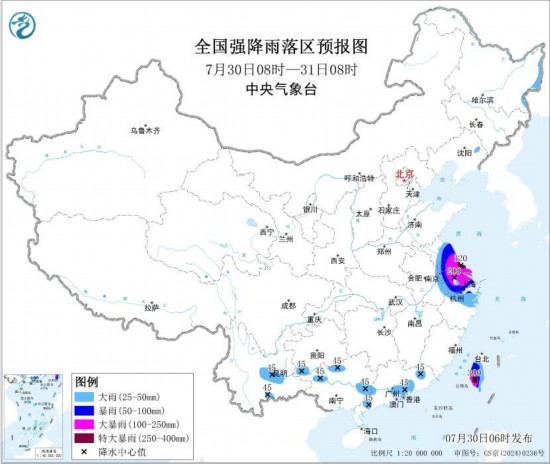
暴雨+大风+台风多预警齐发 这些地区出门需注意安全
Zhong Guo Xin Wen Wang· 2025-07-30 00:42
Core Viewpoint - Multiple weather warnings have been issued by the Central Meteorological Observatory, including orange alerts for heavy rain, yellow alerts for strong winds, and yellow alerts for typhoons, indicating severe weather conditions across various regions in China [1]. Group 1: Heavy Rain Alerts - From 08:00 on July 30 to 08:00 on July 31, areas including southern Jiangsu, Shanghai, northern Zhejiang, eastern Anhui, southern Guangdong, central Guangxi, southern Yunnan, Taiwan Island, eastern Heilongjiang, and northeastern Liaoning are expected to experience heavy to torrential rain, with some regions facing extreme rainfall (250-320 mm) [2][10]. - Specific areas such as southeastern Jiangsu, northern Shanghai, northern Zhejiang, and southern Taiwan may see localized extreme rainfall, with hourly precipitation potentially exceeding 70 mm [2]. Group 2: Strong Wind Alerts - From 08:00 on July 30 to 08:00 on July 31, regions including western and northeastern Inner Mongolia, eastern Xinjiang, northern and western Qinghai, Gansu's Hexi Corridor, Shanghai, northern Zhejiang, and southern Jiangsu are forecasted to experience winds of 5-6 levels, with gusts reaching 7 levels [4]. - In certain areas like Shanghai, northern Zhejiang, and southern Jiangsu, wind speeds may reach levels 7-8, with gusts of 9-10 levels [4]. Group 3: Typhoon Alerts - The 8th typhoon of the year, "Zhu Jie Cao," made landfall in Zhoushan, Zhejiang, with maximum wind speeds of 9 levels (23 m/s) and a minimum central pressure of 975 hPa [6]. - The typhoon is expected to move northwest at a speed of 10-15 km/h, potentially strengthening before making a second landfall between Ningbo, Zhejiang, and Qidong, Jiangsu, with wind speeds of 9-10 levels [8].