
社会信用体系

Search documents
助力解决个体经济融资难 个体工商户信用评价指标国家标准发布
Ren Min Ri Bao· 2025-09-11 21:58
Core Viewpoint - The National Standard for Individual Business Credit Evaluation Indicators (GB/T 46278—2025) has been established to facilitate the orderly sharing and efficient utilization of credit evaluation information, thereby supporting credit financing for individual businesses [1] Group 1: Purpose and Benefits - The credit evaluation aims to leverage credit value to assist financial institutions in developing and providing financial products and services tailored to the characteristics of individual businesses [1] - The initiative seeks to expand the scale and coverage of loans for individual businesses, enhancing the precision and convenience of loan access [1] - It will also support targeted assistance for individual businesses, encouraging and guiding their sustainable development through standardized support [1] Group 2: Implementation and Impact - The release and implementation of this standard align with the policy requirements for high-quality development of the social credit system and the construction of a unified national market [1] - It addresses the current challenges faced by the individual economy, particularly the difficulties of expensive and inaccessible financing [1] - The standard will aid in flexible regulation, prudent supervision, and targeted assistance for individual businesses [1]
为失信者“重生”提供法律保障
Jing Ji Guan Cha Bao· 2025-09-04 06:04
Core Viewpoint - The construction of the social credit system is gaining momentum, with the "Credit Repair Management Measures (Draft for Comments)" publicly soliciting opinions since September 1, aiming to help credit subjects efficiently rebuild their credit [1][2]. Group 1: Policy Developments - The "Credit Repair Management Measures (Draft for Comments)" clarifies the scope of credit subjects and categorizes dishonest information for better management, focusing on facilitating credit restoration [1][3]. - The central government has issued a series of normative documents to promote the construction of the social credit system, providing institutional support for individual credit repair and the "rebirth" of dishonest subjects [2][3]. Group 2: Statistical Insights - As of June 30, 2025, 17.1 million individuals have voluntarily fulfilled their obligations or reached settlement agreements due to credit sanctions, with the number of new entries into the dishonest list showing a downward trend [1]. - In 2024, 2.821 million individuals successfully returned to the market through credit repair, marking a year-on-year increase of 35.4%, surpassing the number of new entries into the dishonest list for the first time [2]. Group 3: Regulatory Framework - The draft introduces a more focused approach by limiting credit subjects to legal entities and organizations, excluding natural persons, and implementing a tiered management system for dishonest information categorized as "minor, general, and severe" [3]. - The draft also specifies the application process for credit repair, facilitating both the dishonest subjects and regulatory departments, particularly for bankrupt companies with special measures for temporary shielding of dishonest information [3].
《经济的正确打开方式》
Sou Hu Cai Jing· 2025-08-13 07:13
Core Insights - China's economy demonstrates resilience amid global uncertainties, attributed to stable institutions, active markets, innovative technology, and green development [4] - Property rights and trust form the foundation of the economy, enabling investment and efficient transactions through a robust social credit system [4] - Green finance and carbon neutrality are seen as catalysts for a new industrial revolution, reshaping capital flows and global rules through market-oriented approaches [4] Group 1: Economic Foundations - Clear property rights encourage investment, while a strong trust framework enhances transaction efficiency [4] - The establishment of a social credit system fosters a business culture that promotes low-cost collaboration among strangers [4] - Evaluative governance, such as rankings for best business environments, can accelerate local service improvements and industrial upgrades if designed effectively [4] Group 2: Technological Advancements - The rise of generative AI is significant, optimizing pricing, enhancing efficiency, and empowering industries, though it requires a balance of computing power, data, and algorithms [5] - Blindly following trends in technology can lead to negative repercussions, emphasizing the need for strategic investment in human capital [5] Group 3: Future Development - High-quality development is shifting focus from material investment to human capital investment, with upgrades in education, healthcare, and social security acting as invisible drivers of economic growth [5] - The future economy will favor those who can accurately identify opportunities and endure the process of refinement [5]


夯实全国统一大市场的法治根基
Jing Ji Ri Bao· 2025-08-12 22:44
Group 1 - The construction of a unified national market is a significant decision made by the central government, emphasizing the importance of legal foundations and regulatory frameworks [1][4] - The recent Central Financial Committee meeting outlined the basic requirements for advancing the unified national market, focusing on "five unifications and one openness" [1][2] - There are existing challenges in the relationship between government and market, including local protectionism and inconsistent regulatory standards [2][3] Group 2 - The need to clarify the boundaries between government and market roles is crucial for optimizing resource allocation and maximizing efficiency [2][3] - Strengthening legal frameworks, such as the Fair Competition Review Regulations, is essential for ensuring fair competition and addressing issues of administrative power abuse [3][5] - The establishment of a comprehensive market economy foundation, including property rights protection and social credit systems, is necessary for the effective operation of the unified national market [4][5] Group 3 - Promoting market-oriented reforms in factor markets is key to enhancing resource allocation and productivity [7][8] - Addressing systemic barriers to the free flow of factors requires legal reforms and the establishment of unified trading rules [8] - The development of a unified labor market and a national data market is essential for facilitating smooth resource circulation and integration [7][8]
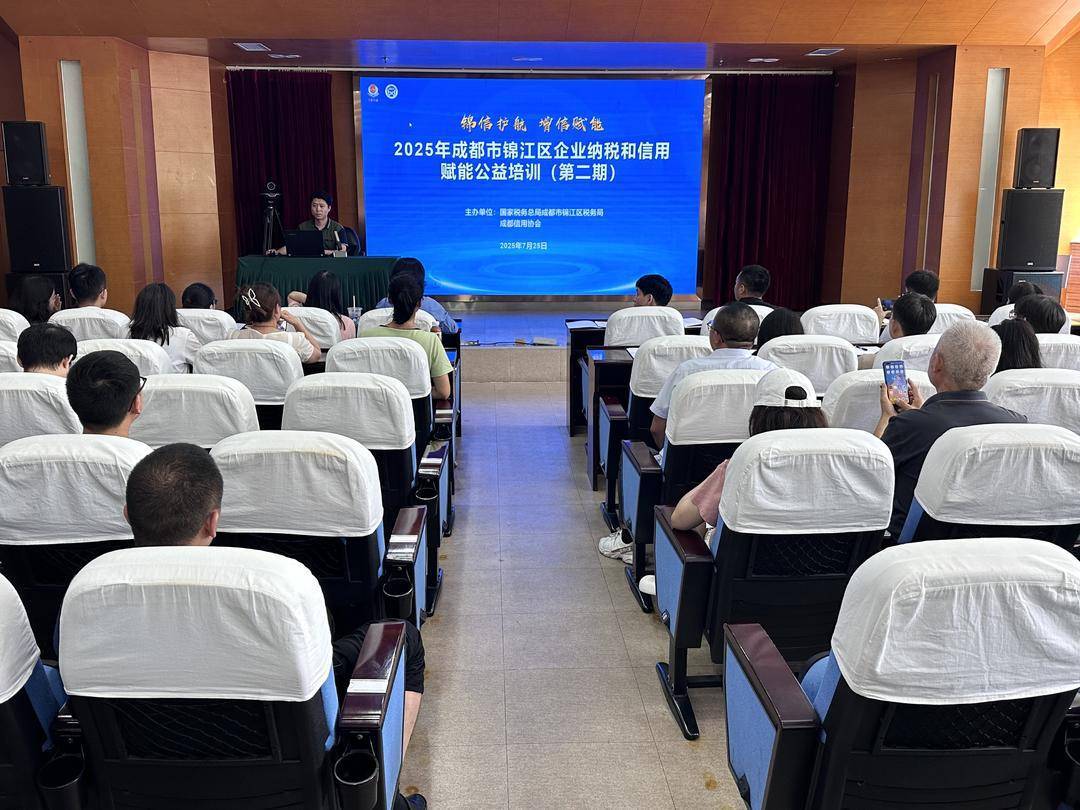
税信双向赋能,成都锦江“纳税信用+企业信用”培训为企业注入新动能
Sou Hu Cai Jing· 2025-07-25 12:45
Group 1 - The event "Jinxin Huohang: Empowering Tax Credit + Corporate Credit" training aims to enhance tax credit management for enterprises in Chengdu's Jinjiang District, aligning with the national goal of improving the social credit system and tax collection reforms [3][4] - Tax credit is described as an "economic ID card" for enterprises, serving not only as a compliance report but also as a means to access policy benefits and financial resources [3][4] - The training gathered 40 leading enterprises from various sectors, including real estate, construction, and healthcare, to discuss the importance of tax credit in fostering business development [3][4] Group 2 - Chengdu Credit Association provided a comprehensive plan for "credit repair" and "credit empowerment," focusing on improving corporate credit ratings and correcting credit issues [4] - The event included a Q&A session where enterprises raised concerns about restoring credit ratings and enhancing tax credit, with experts providing tailored solutions [4] - A unique "credit health report" was distributed to each participating enterprise, summarizing their tax level, credit score, and risk indicators, facilitating a one-stop service for credit improvement [4][5] Group 3 - The Jinjiang District Tax Bureau and Chengdu Credit Association plan to continue offering multiple training sessions throughout the year, focusing on customized courses and interactive expert discussions to make credit a driving force for high-quality enterprise development [5]
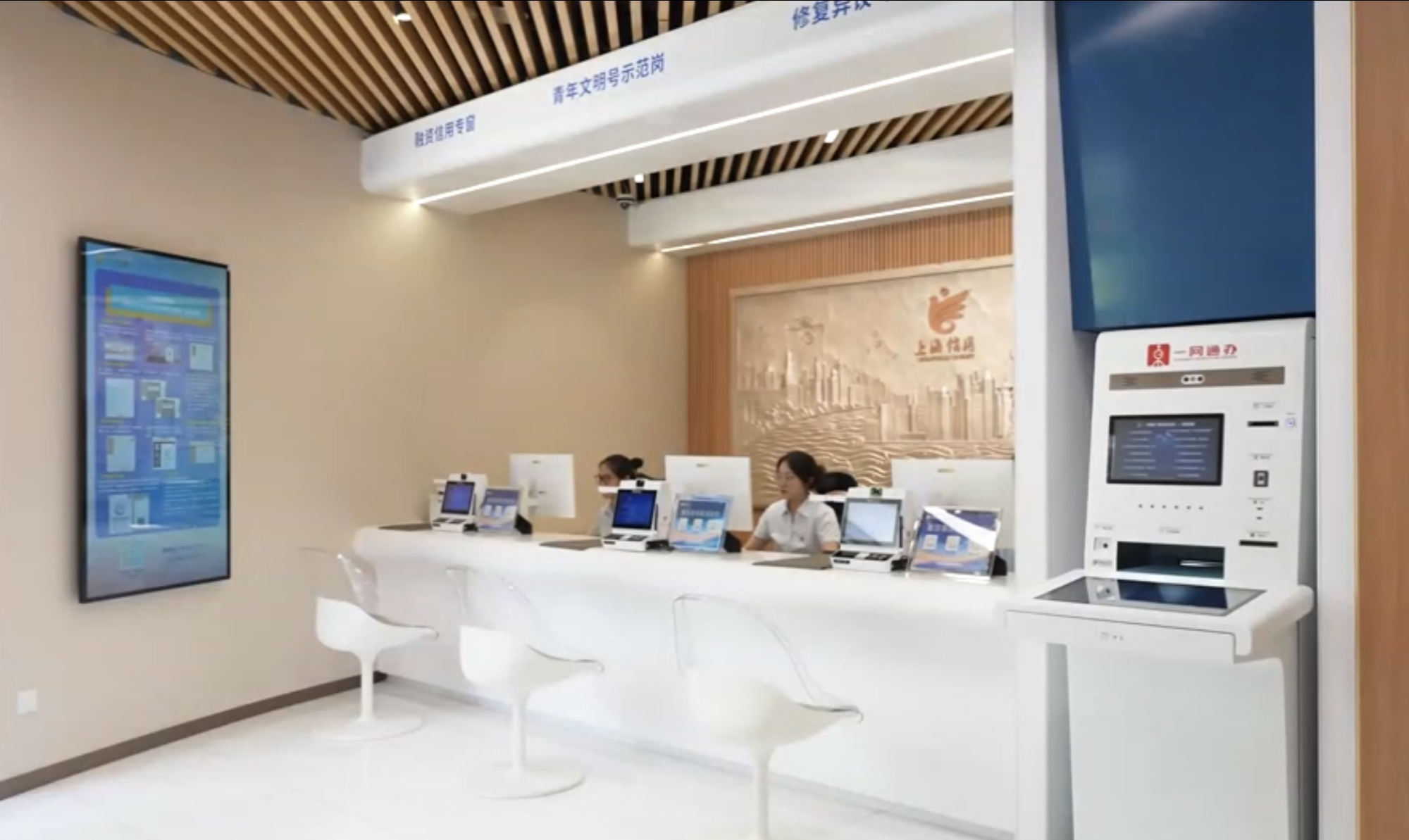
中国改革现场丨“信用代证”全国落地进入倒计时,一纸报告如何“瘦身”万千证明?
Yang Guang Wang· 2025-07-21 16:03
Core Viewpoint - The introduction of "credit代证" (credit substitute certificate) aims to simplify the process for companies to obtain necessary credit documentation, replacing multiple individual certificates with a single specialized credit report, thereby enhancing efficiency and reducing bureaucratic burdens [2][20][22]. Group 1: Background and Challenges - Companies previously faced significant challenges in obtaining multiple "no illegal record" certificates from various government departments, often requiring months of effort and coordination [6][10]. - The lack of standardized processes and the existence of conflicting requirements among departments created inefficiencies and confusion for businesses [6][10]. Group 2: Implementation of "Credit代证" - The "credit代证" reform began in Shanghai, where a pilot program was launched in 2017, initially covering four areas and gradually expanding to 41 fields by 2023 [8][10]. - The new system allows companies to obtain a specialized credit report from a single point of contact, significantly reducing the time and effort required to gather necessary documentation [4][10]. Group 3: Customization and Data Integrity - Shanghai has introduced a "customized" credit report option, allowing businesses to select specific proof items and timeframes according to their needs, thus catering to diverse requirements [10][11]. - Ensuring data accuracy and integrity is critical, with a system in place that holds data-producing departments accountable for the reliability of the information [11][20]. Group 4: National Expansion and Future Outlook - The "credit代证" initiative has gained traction nationwide, with various regions implementing their own versions of the policy, leading to significant time savings for businesses [12][21]. - By September 2023, the goal is to achieve nationwide recognition of credit reports, facilitating seamless access to credit information across different regions and sectors [20][21].
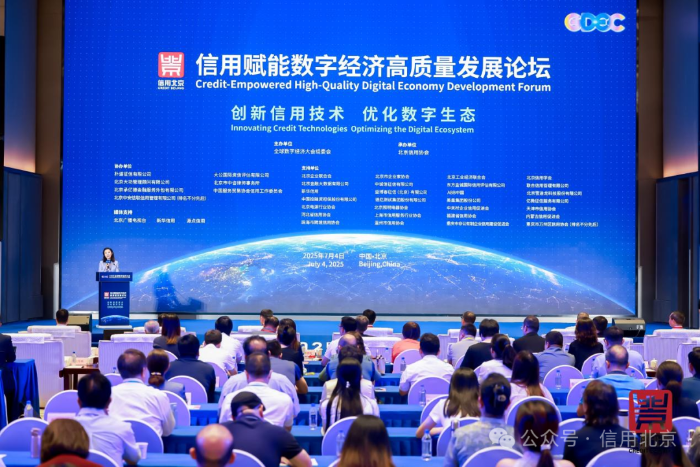
2025全球数字经济大会“信用赋能数字经济高质量发展论坛”在北京召开
Zhong Guo Jin Rong Xin Xi Wang· 2025-07-06 09:24
Core Viewpoint - The forum aims to establish a high-end dialogue platform in the credit field with international influence, promoting an open, inclusive, and innovative credit ecosystem to support the high-quality development of the digital economy in Beijing [2][4]. Group 1: Forum Objectives and Themes - The forum focuses on the integration of credit and digital economy, emphasizing the importance of social credit as a foundational element for high-quality digital economic development [4][6]. - It aims to enhance the application of credit information and improve service efficiency through innovative technologies in response to new scenarios and demands in the digital economy [4][6]. Group 2: Achievements and Future Directions - Beijing has made significant progress in building its social credit system, improving infrastructure, and enhancing the digitalization of credit services, which has positively impacted social governance and economic development [6]. - Future efforts will focus on leveraging new opportunities from the digital economy, activating credit data elements, and fostering a good ecosystem for credit services to support high-quality economic and social development [6]. Group 3: Expert Discussions and Innovations - Experts discussed various themes such as "Credit + Digital Economy," "Credit + AI," and "Credit Standardization + Digital Economy," sharing insights on the development of personal credit in China and the impact of AI on credit rating transformations [7]. - The forum provided a platform for dialogue on the paths and methods for credit to empower new productive forces and the challenges posed by the digital economy to the credit service industry [7]. Group 4: Announcements and Publications - The forum announced the launch of the "Zhongguancun Sci-Tech Financial Service Center E-Platform," aimed at upgrading Beijing's technology financial services [9]. - The Beijing Credit Association released the "Blue Book on the Development of Beijing's Credit Service Industry (2025)," detailing the current state of the industry [9].
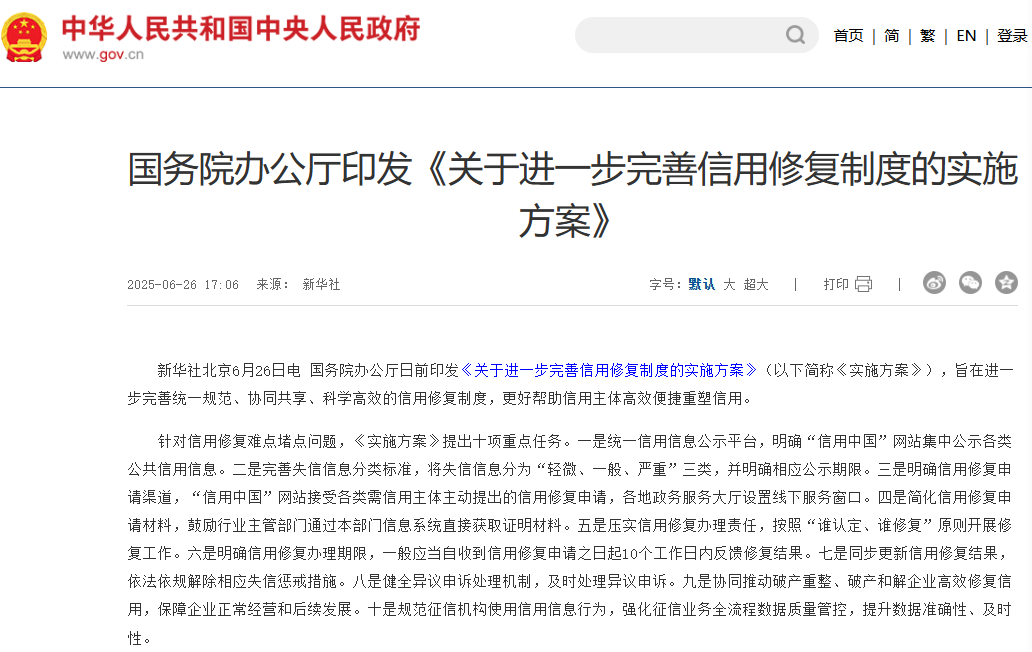
《关于进一步完善信用修复制度的实施方案》发布
Huan Qiu Wang· 2025-06-27 02:21
Core Viewpoint - The State Council has issued an implementation plan to enhance the credit repair system, aiming to create a more efficient and fair social credit framework for entities with credit issues [1]. Group 1: Implementation Details - The plan establishes a unified credit information disclosure platform, consolidating all public credit information on the "Credit China" website to avoid confusion from multiple disclosures [2]. - It categorizes dishonesty information into three levels: "minor, general, and serious," with differentiated disclosure periods ranging from a maximum of 3 months for minor issues to 1-3 years for serious ones [2]. - The plan simplifies the application process for credit repair, allowing various channels for submission, including online applications through "Credit China" and in-person assistance at local government service centers [2]. Group 2: Special Considerations - Special provisions are made for specific groups, such as companies undergoing bankruptcy restructuring, allowing temporary shielding of dishonesty information and updating credit evaluations to support their operations [3]. - The plan emphasizes the regulation of credit reporting agencies, mandating that any repaired information must align with the "Credit China" website and establishing a sharing mechanism to combat illegal information deletion [3]. Group 3: Future Outlook - The implementation of this plan is seen as a significant step towards improving the social credit system, with the goal of providing fairer and more accessible repair channels for entities, thereby stimulating market vitality and boosting development confidence [3]. - Over the next five years, the establishment of a high-quality, inclusive financial system is expected to create a more resilient credit environment benefiting a broader range of social entities [3].
中国特色金融发展之路从这里出发——习近平同志在闽金融论述和实践经验
Jing Ji Ri Bao· 2025-06-24 13:50
Group 1 - The transformation of Lianjia boat dwellers from living on water to settling on land illustrates the positive impact of financial innovation in China, particularly through products like housing loans and entrepreneurial loans [1][2] - The establishment of a credit rating system for fishermen has enabled former boat dwellers to access credit limits of up to 1.5 million yuan, facilitating their transition from mere survival to thriving businesses [1][2] Group 2 - Xi Jinping's leadership in Fujian from 1985 to 2002 was marked by a strong emphasis on financial reform and innovation, laying the groundwork for modern financial practices in the region [2][3] - The strategic planning during Xi's tenure in Xiamen included the development of a comprehensive financial strategy that anticipated the implementation of deposit insurance, which was realized in 2015 [4] Group 3 - The introduction of financial officers in rural areas has improved access to financial services for villagers, allowing for better alignment of financial products with local needs [7][8] - The initiative to send financial personnel to rural areas has resulted in enhanced understanding of local agricultural needs and improved financial literacy among farmers [8] Group 4 - The financial sector in Fujian has seen significant growth, with a focus on supporting the real economy through various financial products and services, including those aimed at small and micro enterprises [12][15] - The balance of loans in the forestry sector reached 161.38 billion yuan, reflecting a 13.7% year-on-year increase, indicating a robust support system for rural economic development [15] Group 5 - The establishment of the Xiamen International Bank and other financial institutions has played a crucial role in supporting the development of the local economy and facilitating foreign investment [16][17] - The financial reforms initiated in Xiamen have set a precedent for broader financial liberalization across China, enhancing the region's attractiveness to international financial institutions [18] Group 6 - The focus on financial risk prevention has been a key aspect of Fujian's financial strategy, with measures implemented to maintain stability and prevent systemic risks [19][21] - The establishment of a financial dispute resolution center in Xiamen has contributed to maintaining a stable financial environment by effectively addressing consumer grievances [22]
三亚经济圈五市县签署跨区域信用合作框架协议
Hai Nan Ri Bao· 2025-06-23 02:00
Core Points - The signing of the "Sanya Economic Circle" cross-regional credit cooperation framework agreement aims to achieve shared credit resources and enhance the credit development landscape for high-quality growth in the Sanya economic circle [1][2] - The agreement involves five cities and counties, focusing on establishing mechanisms for credit information sharing and mutual recognition of application scenarios [1] - The initiative supports the national strategy for regional coordinated development and is a significant breakthrough in collaborative credit development [2] Group 1 - The agreement will create a credit information sharing list and a cross-regional mutual recognition list for application scenarios, clarifying the scope, standards, and norms for information sharing [1] - There will be joint credit promotion activities and shared talent cultivation resources to foster a culture of integrity within the region [1] - The five cities and counties will explore collaborative regulatory mechanisms for the tourism market and a coordinated exit mechanism for dishonest executors, enhancing the overall business environment [1] Group 2 - The initiative is a strong support for deepening the "delegation, management, and service" reform and improving the social credit system [2] - The next steps include efficiently implementing the agreement and continuously improving the long-term mechanism for cross-regional credit cooperation [2] - The credit construction will drive high-quality development in the Sanya economic circle and inject strong credit vitality into the construction of Hainan Free Trade Port [2]