
科技小院

Search documents
河北曲周:科技小院忙“三夏”
Ren Min Wang· 2025-05-26 15:23
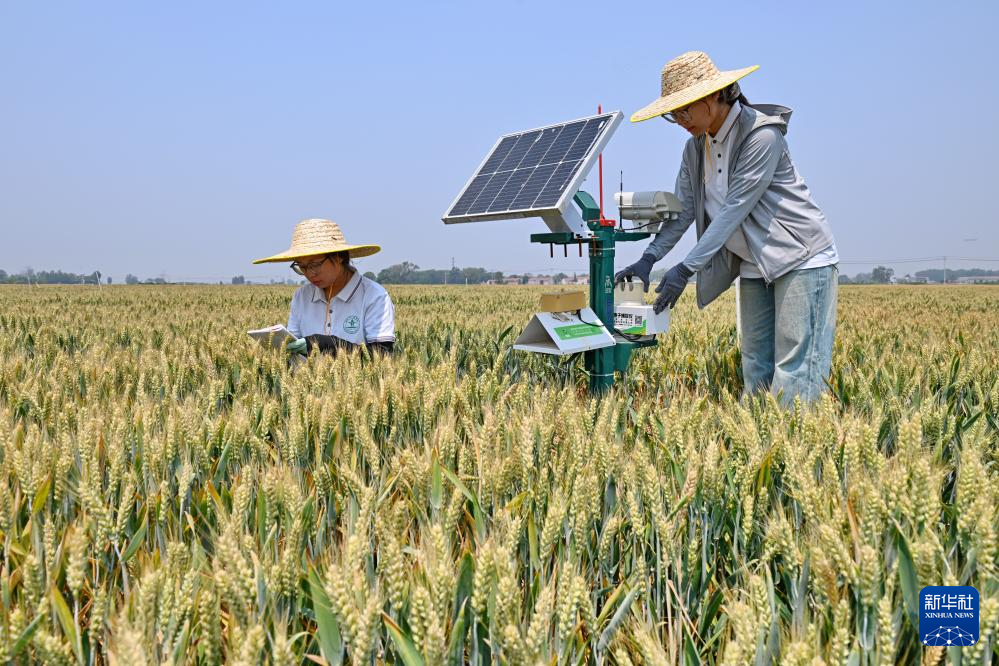
Core Viewpoint - The establishment of agricultural technology institutes by China Agricultural University in Quzhou County, Hebei Province, aims to enhance wheat production and cultivate high-level agricultural talent, contributing to rural modernization [2][4][6][8][10][12][14][16]. Group 1 - The current agricultural scene in North China is characterized by a bountiful wheat harvest, indicating a successful growing season [2][4][6][8][10][12][14][16]. - Students from the technology institutes are actively engaged in fieldwork, monitoring wheat growth and conducting various experiments to ensure high yields [2][4][6][8][10][12][14][16]. Group 2 - The technology institutes were established in 2009, with graduate students deployed to the agricultural frontlines to address practical issues in rural development [2][4][6][8][10][12][14][16]. - The initiative focuses on training high-level agricultural professionals to support the modernization of agriculture and rural areas [2][4][6][8][10][12][14][16].

山东商河:“科技小院”助力特色产业富农增效
Xin Hua Wang· 2025-05-23 07:14
Core Insights - The article highlights the successful implementation of agricultural technology in garlic farming in Shandong Province, leading to increased yields and income for farmers [1][2][3] Group 1: Agricultural Technology Implementation - The introduction of "Technology Small Courtyards" has allowed farmers to adopt scientific management practices, resulting in an average yield increase of over 200 pounds per acre, reaching 3,000 pounds per acre for garlic [1] - The collaboration with universities has led to the establishment of nine "Technology Small Courtyards," attracting over 10 professors and 20 graduate students to promote technological advancements in agriculture [1][2] - Soil improvement techniques have been implemented, increasing soil organic matter by 1.8 percentage points and reducing soil compaction by 26% in experimental fields [1] Group 2: Economic Impact - The garlic industry in Baijiao Town has an annual output value exceeding 1 billion yuan, with garlic and garlic products exported to over 40 countries [3] - The implementation of technology has resulted in an increase in nitrogen and phosphorus utilization rates by 2 percentage points and a reduction in agricultural pollution by over 10% [2] - The garlic processing company, Jinan Shangyu Bao Food Technology Co., processes 15,000 tons of garlic annually, with an export value of over 50 million yuan last year [3] Group 3: Employment and Income Generation - The garlic industry has created job opportunities for over 8,000 rural workers, with an average annual income increase of over 30,000 yuan per person [3] - The dual empowerment of "Technology Small Courtyards" and technology consultants has facilitated agricultural training and technical guidance for over 10,000 individuals and more than 1,000 enterprises [2]
在北京西瓜大棚拍短视频,巴西农村发展部长记录中国经验
Xin Jing Bao· 2025-05-15 05:42
Group 1 - Brazilian Minister of Rural Development and Family Agriculture, Paulo Teixeira, is visiting China to study agricultural modernization practices that can benefit Brazil's 5 million small farmers [1][2] - Teixeira emphasizes the importance of China's experience in combating hunger and poverty, which can serve as a model for Brazil [1][2] - The collaboration between China and Brazil in agricultural machinery and technology is expected to enhance the productivity and income of Brazilian farmers [2][3] Group 2 - The establishment of "Technology Small Courtyards" in Brazil, in partnership with Chinese agricultural universities and companies, aims to create innovative platforms for family agriculture development [2][3] - Teixeira highlights the low level of agricultural mechanization among Brazilian small farmers and the need for diverse agricultural machinery to meet regional demands [3][4] - The cooperation between China and Brazil is seen as beneficial not only for their own agricultural sectors but also as a model for other Latin American countries [3][4] Group 3 - Teixeira expresses a strong interest in learning from China's cooperative farming models to modernize Brazilian smallholder agriculture [4][6] - The use of advanced technologies such as automated irrigation systems and monitoring robots in Chinese cooperatives is noted as a significant advancement that could be adopted in Brazil [6] - The potential for future collaboration in agricultural cooperatives is emphasized, with the aim of creating new opportunities and ideas for Brazilian farmers [6]
全国157家培养单位已设立科技小院1800余个
Ke Ji Ri Bao· 2025-05-11 01:10
Core Insights - The "Science and Technology Courtyard" serves as a crucial platform for cultivating graduate students and is a key battleground for rural development initiatives [1] - As of now, there are over 1,800 Science and Technology Courtyards established across 31 provinces in China, with 14 international courtyards set up in 11 countries [1] - The model has significantly transformed agricultural practices in regions like Quzhou County, leading to increased grain production and farmer income [1] Group 1 - The "2+X" experimental model is designed to address various agricultural challenges through collaborative solutions involving students and farmers [2] - Each courtyard aims to implement a system that combines traditional farming methods with innovative solutions tailored to specific production issues [2] - The practical approach emphasizes hands-on experience for students, allowing them to work closely with farmers to solve real-world problems [2] Group 2 - The "3+X" and "4+X" experimental models have evolved from the initial "2+X" framework, showcasing the adaptability and scalability of the approach [3] - A notable success includes a wheat-corn planting trial in Quzhou County, which achieved a 40% increase in yield and efficiency, alongside significant reductions in emissions and water usage [3] - The average income increase per mu of land was reported at 795 yuan, highlighting the economic benefits of the initiative [3]
中国之声一线调研丨数商兴农科技小院织密全国科技小院协作网 优质农产品如何在田野“种得好”、在电商“卖得俏”?
Yang Guang Wang· 2025-04-29 02:20
Core Viewpoint - The establishment of the "Digital Business and New Farmer Training" technology small courtyard in Dali, Yunnan, represents a significant step in integrating agricultural research, technology services, and talent cultivation, addressing the challenges of agricultural product marketing and technology application in rural revitalization [1][4]. Group 1: Development of Technology Small Courtyards - The first technology small courtyard was established in 2009, and as of now, over 1,800 such courtyards have been built across the country, playing a crucial role in rural revitalization [1]. - The "Digital Business and New Farmer Training" technology small courtyard is the first of its kind to focus on the integration of digital commerce and new farmer training [1][4]. Group 2: Collaboration and Product Marketing - Yang Jing, a graduate from the technology small courtyard, is responsible for selecting high-quality agricultural products from over 1,800 technology small courtyards and coordinating their sales [2][3]. - The national technology small courtyard collaboration network has been upgraded to a multi-dimensional organization focusing on government, industry, academia, research, and application [2][3]. Group 3: E-commerce and Supply Chain - The recent central government document emphasizes the need to accelerate the construction of modern circulation networks for agricultural products and support high-quality rural e-commerce development [4]. - The "Digital Business and New Farmer Training" technology small courtyard has recently launched over 100 SKUs covering high-quality agricultural products from more than 20 technology small courtyards, aiming for market entry and brand establishment [4]. Group 4: Agricultural Innovation and Market Demand - The focus has shifted from merely improving planting techniques to also addressing the sales and market demand for agricultural products, recognizing the importance of connecting production with consumer needs [7][11]. - The integration of technology and market demand is seen as a pathway to enhance the quality and profitability of agricultural products, ultimately benefiting farmers and contributing to rural revitalization [11].


支持科技小院扎根农村助农惠农
Jing Ji Ri Bao· 2025-04-19 22:08
Core Viewpoint - The "Technology Small Courtyard" model is being promoted to support rural revitalization and enhance farmers' income through scientific innovation and practical training [1][2]. Group 1: Development and Impact - The "Technology Small Courtyard" serves as a comprehensive service platform that integrates scientific innovation, social services, and talent cultivation, directly connecting higher education institutions with rural agricultural production [2][3]. - Since 2009, over 1,800 "Technology Small Courtyards" have been established, involving more than 2,700 experts and over 10,000 graduate students across 31 provinces, indicating a mature development model [3]. - The initiative aims to transform traditional farmers into modern rural talents by providing zero-cost, accessible scientific services and addressing agricultural production challenges through research and technology [2][3]. Group 2: Challenges and Future Directions - The current rapid expansion of "Technology Small Courtyards" faces challenges such as uneven development across regions, inadequate management mechanisms, insufficient funding, and low data standardization [4]. - To enhance the effectiveness of the "Technology Small Courtyard" model, there is a need for improved top-level design, standardized governance, and a focus on solving local agricultural challenges [5]. - The model is evolving towards a 4.0 version that emphasizes ecological industrialization and collaborative innovation, aiming to increase China's agricultural international influence and competitiveness [5].