
货币供应

Search documents
下周关注丨5月CPI等数据将公布,这些投资机会最靠谱
Di Yi Cai Jing· 2025-06-08 01:27
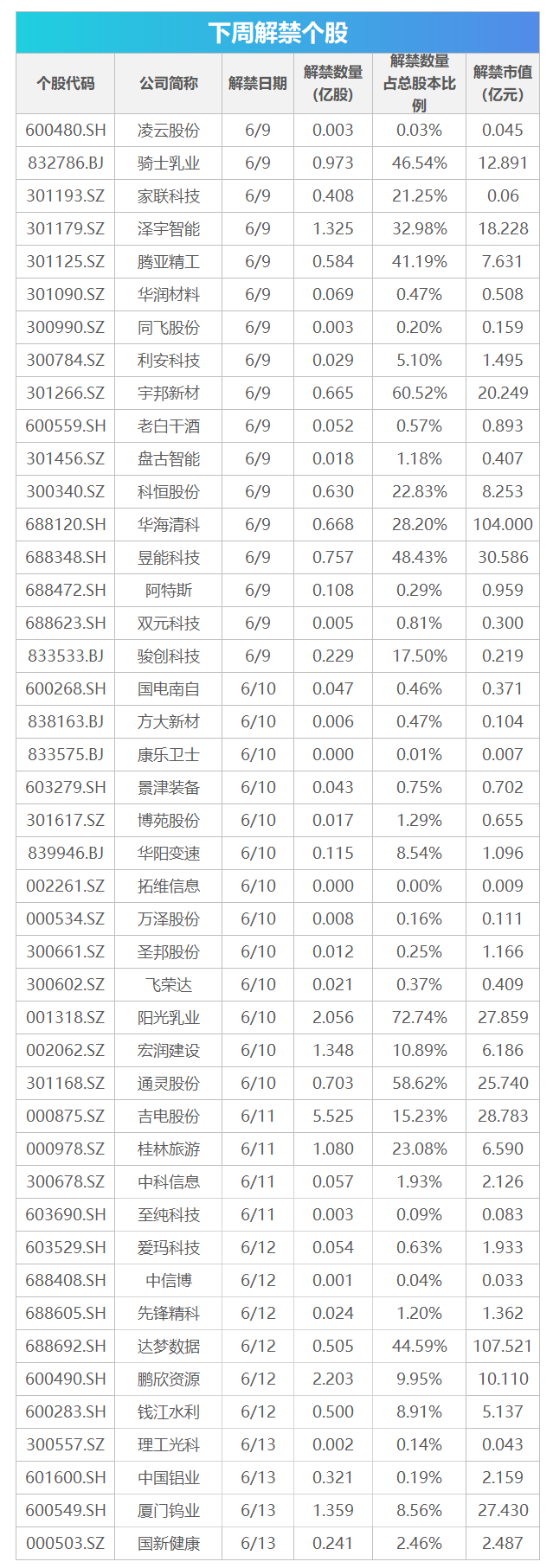
Economic Data Release - The National Bureau of Statistics will release the CPI and PPI data for May on June 9, with expectations that the CPI will remain at -0.1% year-on-year, unchanged from April [2] - The vegetable price index in Shouguang, China, decreased by 16.3% year-on-year in May, worsening from a 14.2% decline in the previous month [2] - The average pork price in 22 provinces fell by 0.6% month-on-month in May due to strong supply and weaker holiday demand [2] Financial Data Release - Financial data including new loans, M2, and social financing (社融) for May is expected to be released next week [3] - The net financing of government bonds in May is projected to be around 1.5 trillion yuan, showing a year-on-year increase despite a high base last year [3] - New credit is estimated at approximately 630 billion yuan, which is lower than the same period last year, while social financing growth is expected to remain stable at 8.7% year-on-year [3] Apple Developer Conference - The Apple Worldwide Developers Conference (WWDC) will take place online from June 10 to June 14, with the keynote scheduled for June 9 at 10 AM Pacific Time [4] - This annual event is a significant platform for Apple to announce new technologies and products [4] Stock Market Developments - A total of 44 stocks will face the lifting of trading restrictions next week, with a combined market value of 46.709 billion yuan based on the closing price on June 6 [5] - Notable companies with significant unlock values include Dameng Data at 10.752 billion yuan and Huahai Qingke at 10.4 billion yuan [5] New Stock Issuance - Two new stocks are set to be issued next week, with a total of approximately 84.889 million shares and expected fundraising of 1.126 billion yuan [8] - The stocks include Huazhi Jie on June 10 and Xinhenghui on June 11, with respective subscription limits of 8,000 and 14,000 shares [9]

12年前的大盘技术指征重现,重申减仓
鲁明量化全视角· 2025-05-18 03:54
Group 1 - The core viewpoint emphasizes a recommendation to reduce positions in the market, particularly in the main board and small-cap sectors, due to signs of a potential market reversal and weakening economic fundamentals [1][5]. - The recent market rebound is noted, with the CSI 300 index increasing by 1.12% and the Shanghai Composite Index by 0.76%, but the overall trend is seen as reversing after a series of gains [2][4]. - Economic indicators show a weakening trend in the domestic economy, with M1 growth significantly below market expectations, reinforcing the view that the economic performance in April was impacted by tariff shocks [3][4]. Group 2 - The technical analysis indicates that the recent market movements are driven by speculative trading rather than institutional or public fund adjustments, with a significant withdrawal of speculative funds observed [4][5]. - The current market conditions are compared to those of May 2012, suggesting a high similarity in technical characteristics, which raises concerns about potential market corrections [4][5]. - The recommendation for the main board is to maintain a low position to avoid risks, while the small-cap sector is also advised to keep a low position due to the relative weakness observed [5]. Group 3 - The analysis highlights the impact of recent U.S. economic news, including the rejection of a tax cut proposal and the downgrade of the U.S. credit rating by Moody's, which are expected to have negative implications for the U.S. economy and, consequently, for global markets [3][4]. - The focus on the automotive industry is suggested as a short-term momentum model to watch, indicating potential opportunities despite the overall cautious stance [5].

经济数据与当下宏观热点
2025-03-18 01:38
Summary of Key Points from the Conference Call Industry Overview - The conference call discusses the economic performance in early 2025, focusing on various sectors including retail, fixed asset investment, real estate, industrial production, and employment data [2][4][5][8][9]. Core Insights and Arguments - **Economic Recovery Signs**: The economic data for January and February 2025 shows signs of recovery, with retail sales increasing by 4% year-on-year, up from 3.7% at the end of last year [2]. - **Consumer Goods Performance**: Essential consumer goods like food and clothing saw significant growth, with food sales up 11.5% and clothing up 3.3%. Optional consumer goods also improved, with cosmetics up 4.4% and sports goods up 25% [2][4]. - **Fixed Asset Investment Growth**: Fixed asset investment grew by 4.1% year-on-year, driven mainly by infrastructure investment, which rose by 9.95% [2][5]. - **Real Estate Sector**: Real estate investment showed a reduced negative growth of -9.8%, with sales area decline narrowing to -5.1% [2][7]. - **Industrial Production**: Industrial value added increased by 5.9%, indicating stable industrial production levels, confirming that the third quarter of last year was the GDP growth low point [2][8]. - **Employment Concerns**: The urban unemployment rate reached 5.4% in February, the highest since March 2023, indicating ongoing economic pressures [2][9]. - **Export Performance**: Exports grew by 2.3% year-on-year in January and February, a significant drop from 10.7% in December 2024, influenced by the timing of the Spring Festival and tariff impacts on exports to the U.S. [2][14][15][16]. Additional Important Insights - **Consumer Policy Changes**: New consumer policies in 2025 emphasize mobilizing various sectors to stabilize the housing market and enhance income, with a focus on tourism and emerging industries [2][11]. - **Childcare Subsidies**: Some regions have introduced childcare subsidies to attract residents and support the real estate market, indicating a broader strategy to boost population growth [2][12]. - **Financial Data**: Social financing in February exceeded 2 trillion, reflecting strong government bond issuance and a historical high for the period [2][19][21]. - **Monetary Supply Trends**: M1 and M2 growth rates indicate a lack of significant change in corporate liquidity, suggesting stable internal financing demand [2][22]. - **Policy Expectations**: Upcoming government bond issuances and potential interest rate cuts are anticipated to support macroeconomic conditions [2][23].