
货币供应

Search documents
【宏观经济】一周要闻回顾(2026年2月11日-2月25日)
乘联分会· 2026-02-25 08:38
Group 1: Consumer Price Index (CPI) Overview - In January 2026, the national consumer price index (CPI) increased by 0.2% year-on-year, with urban areas rising by 0.2% and rural areas by 0.1% [3] - Food prices decreased by 0.7%, while non-food prices increased by 0.4% [3] - The CPI rose by 0.2% month-on-month, with both urban and rural areas showing a 0.2% increase [3] Group 2: Price Changes of Various Goods and Services - In January, the prices of food, tobacco, and dining out decreased by 0.2% year-on-year, contributing to a 0.06 percentage point decline in CPI [3] - Key food items saw significant price changes: egg prices fell by 9.2%, pork prices dropped by 13.7%, while fresh vegetables and fruits increased by 6.9% and 3.2% respectively [3] - Other categories showed varied price changes: other goods and services increased by 13.2%, while transportation and housing prices decreased by 3.4% and 0.1% respectively [4] Group 3: Month-on-Month Price Changes - In January, food, tobacco, and dining prices remained stable month-on-month [6] - Notable month-on-month increases included egg prices rising by 2.7% and fresh fruit prices by 2.0%, while fresh vegetable prices decreased by 4.8% [6] - Other categories experienced price increases: other goods and services rose by 2.7%, and living goods and services by 0.9% [6] Group 4: Social Financing and Loan Growth - In January 2026, the social financing scale increased by 7.22 trillion yuan, marking a historical high for the same period [7][9] - The total RMB loan balance reached 276.62 trillion yuan, with a year-on-year growth of 6.1% [9] - Household loans increased by 456.5 billion yuan, while corporate loans rose by 4.45 trillion yuan [9] Group 5: Financial Sector Performance - By the end of January, the broad money supply (M2) reached 347.19 trillion yuan, growing by 9% year-on-year [10] - The banking sector's total assets amounted to 480 trillion yuan, reflecting an 8% year-on-year increase [13] - The non-performing loan ratio for commercial banks was 1.50%, with a provision coverage ratio of 205.21% [14]


2026年1月金融数据点评:货币先行释放经济向好信号
Soochow Securities· 2026-02-14 06:08
Financing Overview - In January 2026, the new social financing (社融) increased by 72,200 billion RMB, a year-on-year increase of 1,654 billion RMB[1] - Government bond financing contributed significantly with an increase of 9,764 billion RMB, up 2,831 billion RMB year-on-year, representing 13.5% of total social financing, the highest since 2021[4] - Corporate bond financing added 5,033 billion RMB, a year-on-year increase of 579 billion RMB, but slightly below the three-year average of 3,471 billion RMB[1] Loan Dynamics - Financial institutions issued 47,100 billion RMB in new loans in January 2026, which is 4,200 billion RMB less than the same period last year[2] - Corporate loans accounted for 44,500 billion RMB, down 3,300 billion RMB year-on-year, while household loans increased by 4,565 billion RMB, up 127 billion RMB year-on-year[2] - The total loan balance grew by 6.10% year-on-year, a decrease of 0.3 percentage points from the end of 2025[2] Money Supply Trends - As of January 2026, M1 grew by 4.9% year-on-year, an increase of 1.1 percentage points from the end of 2025[3] - M2 increased by 9.0% year-on-year, up 0.5 percentage points from the end of 2025[3] - Total deposits rose by 80,900 billion RMB, a year-on-year increase of 37,700 billion RMB, with significant contributions from fiscal deposits[3] Economic Signals - The increase in M1 and M2 indicates a strong liquidity supply and a positive signal for economic activity and capital market performance[4] - The structure of loans is improving, with a notable increase in short-term loans for enterprises, which rose by 20,500 billion RMB, up 3,100 billion RMB year-on-year[6] - The government’s proactive fiscal measures and moderate monetary easing are expected to continue supporting financing structures and economic growth[4]
1月金融数据出炉:社融增量创历史同期新高
Sou Hu Cai Jing· 2026-02-14 05:58
Core Viewpoint - The financial data released by the People's Bank of China indicates a positive start to the economy in January, with significant growth in social financing and money supply, supporting economic stability at the beginning of the year [1][4]. Financing Channels Diversification - In January, the social financing scale increased by 7.22 trillion yuan, 1.66 trillion yuan more than the same period last year, indicating a recovery in financing demand from the real economy [2]. - Government bond net financing reached 976.4 billion yuan, an increase of 283.1 billion yuan year-on-year, accounting for 13.5% of the monthly social financing increment, the highest level since 2021 [3]. - The growth rate of off-balance-sheet financing tools, such as trust loans and discounted bank acceptance bills, has rebounded, reflecting a diversification of financing channels in the financial market [4]. Money Supply - As of the end of January, the broad money supply (M2) reached 347.19 trillion yuan, growing by 9% year-on-year, which is 0.5 and 2 percentage points higher than the previous month and the same period last year, respectively [4]. - The narrow money supply (M1) was 117.97 trillion yuan, with a year-on-year growth of 4.9%, up 1.1 percentage points from the previous month [4]. - The cash in circulation (M0) was 14.61 trillion yuan, with a year-on-year increase of 2.7%, and a net cash injection of 519.1 billion yuan in January to meet pre-Spring Festival liquidity demands [4]. Bank Credit "Opening Red" - The total RMB loan balance at the end of January was 276.62 trillion yuan, with a year-on-year growth of 6.1%, and an increase of 4.71 trillion yuan in January, aligning with market expectations [5][6]. - Corporate loans were the main contributor, increasing by 4.45 trillion yuan in January, with short-term loans rising by 2.05 trillion yuan and medium to long-term loans by 3.18 trillion yuan, accounting for over 70% of the total [5]. - Household loans increased by 456.5 billion yuan in January, driven by diverse consumer demands and supportive policies for personal consumption loans [6]. Deposit Performance - The total balance of deposits in both domestic and foreign currencies reached 344.46 trillion yuan at the end of January, with a year-on-year growth of 10.1% [8]. - RMB deposits increased by 8.09 trillion yuan, with household deposits, non-financial corporate deposits, fiscal deposits, and deposits from non-bank financial institutions all showing significant increases [8]. - The robust growth in deposits indicates overall ample funding supply and sufficient market liquidity, supporting the ongoing efforts of monetary policy to stabilize growth and optimize structure [8].
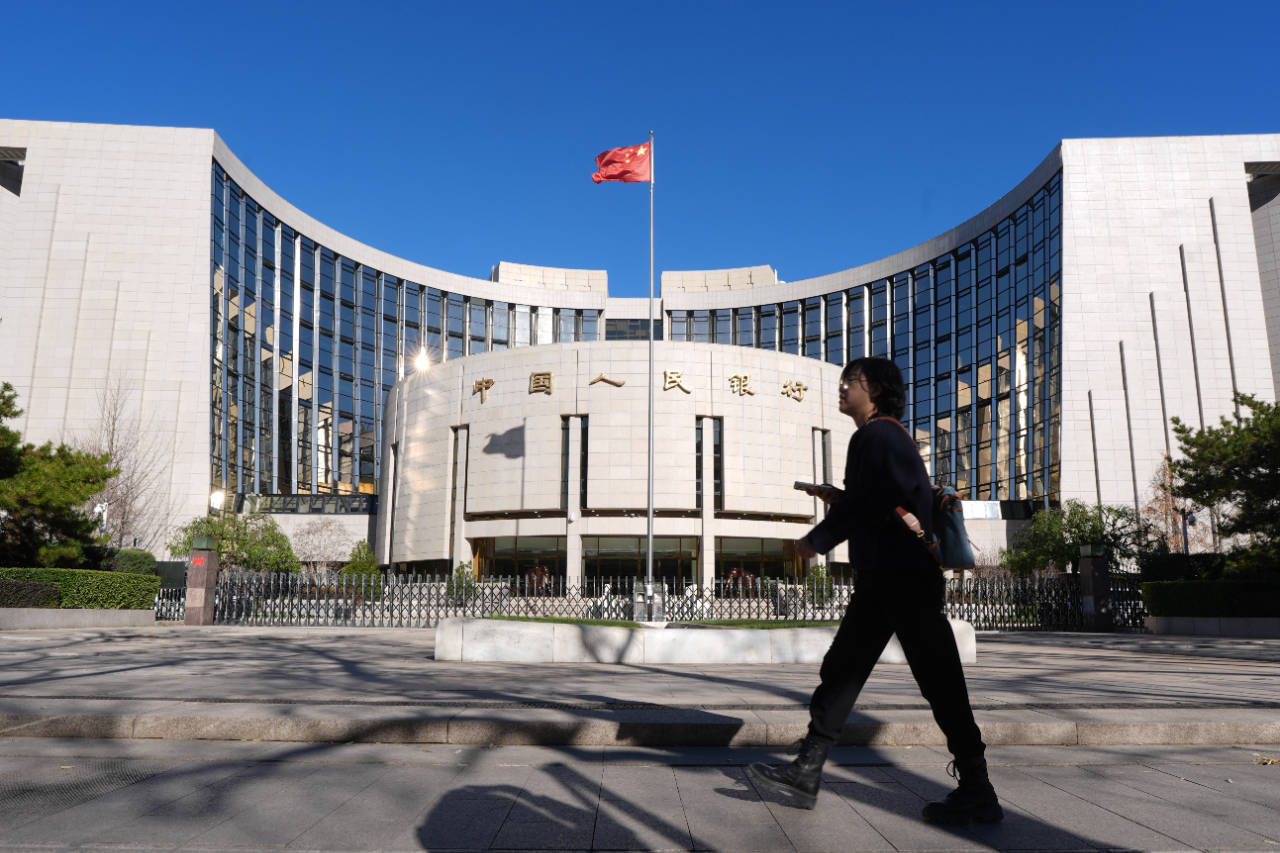
今年首月我国社会融资规模增量创新高
Ren Min Ri Bao· 2026-02-13 20:21
Group 1 - The People's Bank of China reported that in January 2026, RMB loans increased by 4.71 trillion yuan, maintaining reasonable growth, while the social financing scale increased by 7.22 trillion yuan, setting a historical record for the same period, which is 166.2 billion yuan more than the same period last year [1] - By the end of January, the RMB loan balance reached 276.62 trillion yuan, with a year-on-year growth of 6.1%. Household loans increased by 456.5 billion yuan, with short-term loans rising by 109.7 billion yuan and medium to long-term loans increasing by 346.9 billion yuan. Corporate loans increased by 4.45 trillion yuan, with short-term loans up by 2.05 trillion yuan and medium to long-term loans up by 3.18 trillion yuan, while bill financing decreased by 873.9 billion yuan [1] - The total social financing scale at the end of January was 449.11 trillion yuan, with a year-on-year growth of 8.2%. The RMB loan balance to the real economy was 273.3 trillion yuan, also reflecting a year-on-year growth of 6.1% [1] Group 2 - At the end of January, the broad money supply (M2) balance was 347.19 trillion yuan, showing a year-on-year increase of 9%. The narrow money supply (M1) balance was 117.97 trillion yuan, with a year-on-year growth of 4.9%. The currency in circulation (M0) balance was 14.61 trillion yuan, increasing by 2.7% year-on-year [2] - In January, a net cash injection of 519.1 billion yuan was recorded [2]
2026年首月我国社会融资规模增量为7.22万亿元
Xin Hua Wang· 2026-02-13 10:37
Core Insights - The People's Bank of China reported that in January 2026, RMB loans increased by 4.71 trillion yuan, maintaining reasonable growth, while the social financing scale increased by 7.22 trillion yuan, setting a historical record for the same period [1] Group 1: Loan Data - As of the end of January, the RMB loan balance reached 276.62 trillion yuan, reflecting a year-on-year growth of 6.1% [1] - In January, household loans increased by 456.5 billion yuan, with short-term loans rising by 109.7 billion yuan [1] - Corporate loans increased by 4.45 trillion yuan, with medium to long-term loans accounting for 3.18 trillion yuan [1] Group 2: Money Supply - By the end of January, the broad money supply (M2) stood at 347.19 trillion yuan, showing a year-on-year increase of 9% [1] - The narrow money supply (M1) was 117.97 trillion yuan, with a year-on-year growth of 4.9% [1] - The currency in circulation (M0) reached 14.61 trillion yuan, reflecting a year-on-year increase of 2.7% [1] Group 3: Deposit Data - In January, RMB deposits increased by 8.09 trillion yuan, with household deposits rising by 2.13 trillion yuan and non-financial enterprise deposits increasing by 2.61 trillion yuan [1] Group 4: Social Financing - As of the end of January, the total social financing scale was 449.11 trillion yuan, with a year-on-year growth of 8.2% [1] - The social financing increment for January was 7.22 trillion yuan, which is 166.2 billion yuan more than the same period last year [1]
2025全年人民币贷款增加16.27万亿元
Xin Lang Cai Jing· 2026-01-16 00:33
Core Insights - In 2025, China's total RMB loans increased by 16.27 trillion yuan, with corporate loans accounting for 15.47 trillion yuan [1] - The total RMB loan balance reached 271.91 trillion yuan by the end of December 2025, reflecting a year-on-year growth of 6.4% [1] Loan Data - Household loans increased by 441.7 billion yuan in 2025 [1] - Corporate loans saw a significant rise, with medium to long-term loans increasing by 8.82 trillion yuan [1] Deposit Data - RMB deposits rose by 26.41 trillion yuan in 2025, with household deposits contributing 14.64 trillion yuan [1] - By the end of December, the total balance of RMB deposits was 328.64 trillion yuan, marking an 8.7% year-on-year increase [1] Money Supply - As of December 2025, the broad money supply (M2) stood at 340.29 trillion yuan, growing by 8.5% year-on-year [1] - The narrow money supply (M1) reached 115.51 trillion yuan, with a year-on-year growth of 3.8% [1] Social Financing - The total social financing scale increased by 35.6 trillion yuan in 2025, which is 3.34 trillion yuan more than in 2024 [1] - By the end of 2025, the total social financing stock was 442.12 trillion yuan, reflecting an 8.3% year-on-year growth [1]
我国人民币贷款增加16.27万亿元
Xin Lang Cai Jing· 2026-01-15 22:30
Group 1 - The core viewpoint of the article highlights the significant increase in RMB loans in China for the year 2025, amounting to 16.27 trillion yuan [2] - Corporate loans accounted for the majority of this increase, with a rise of 15.47 trillion yuan, indicating strong borrowing activity among enterprises [2] - Household loans also saw an increase, with a total rise of 441.7 billion yuan, reflecting ongoing consumer borrowing trends [2] Group 2 - By the end of December 2025, the total RMB loan balance reached 271.91 trillion yuan, marking a year-on-year growth of 6.4% [2] - The total amount of RMB deposits increased by 14.64 trillion yuan, with household deposits contributing 26.41 trillion yuan to this growth [2] - The broad money supply (M2) reached 340.29 trillion yuan, while the narrow money supply (M1) was at 115.51 trillion yuan, showing increases of 3.8% and 8.5% respectively [2] Group 3 - The total social financing scale for 2025 was 35.6 trillion yuan, which is an increase of 3.34 trillion yuan compared to the previous year [2] - By the end of 2025, the total social financing stock was 442.12 trillion yuan, reflecting an 8.3% year-on-year growth [2]
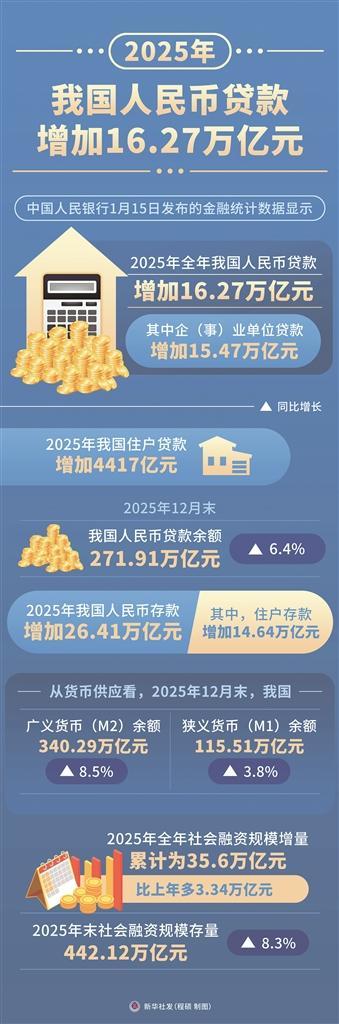
2025年我国人民币贷款增加16.27万亿元
Xin Hua She· 2026-01-15 07:17
Core Insights - The People's Bank of China reported that in 2025, the total increase in RMB loans was 16.27 trillion yuan, with corporate loans accounting for 15.47 trillion yuan [1] Loan Statistics - In 2025, household loans increased by 441.7 billion yuan, while corporate loans rose by 15.47 trillion yuan, including a significant increase of 8.82 trillion yuan in medium to long-term loans [1] - By the end of December 2025, the total RMB loan balance reached 271.91 trillion yuan, reflecting a year-on-year growth of 6.4% [1] Deposit Statistics - In 2025, total RMB deposits increased by 26.41 trillion yuan, with household deposits contributing 14.64 trillion yuan [1] Money Supply - As of December 2025, the broad money supply (M2) stood at 340.29 trillion yuan, marking an 8.5% year-on-year increase, while the narrow money supply (M1) was 115.51 trillion yuan, up by 3.8% [1] Social Financing - The total increment in social financing for 2025 was 35.6 trillion yuan, which is 3.34 trillion yuan more than the previous year [1] - By the end of 2025, the total social financing stock reached 442.12 trillion yuan, showing a year-on-year growth of 8.3% [1]
图说中国宏观专题-经济动能等待变化
2025-12-31 16:02
Summary of Key Points from the Conference Call Industry Overview - The macroeconomic data for November indicates a weakening in China's economy, particularly in domestic demand, with consumption, fixed asset investment, and the real estate market showing signs of decline [1][4] - Industrial enterprises are experiencing negative growth in revenue and profit for two consecutive months, raising concerns about corporate profitability and its impact on stock valuations [1][5] Core Insights and Arguments - **Economic Performance**: November's industrial value added showed a slight increase of 0.44% month-on-month, but high-tech industries grew at a slower pace, with some sectors like smartphones and solar batteries experiencing negative growth [2][4] - **Consumer Spending**: Retail sales growth was only 1.3% year-on-year, with significant declines in categories such as jewelry and home appliances due to high base effects and recent price fluctuations [2][3] - **Investment Trends**: Fixed asset investment decreased by 2.6% year-on-year, with manufacturing, infrastructure, and real estate investments all showing declines [2][4] - **Real Estate Market**: The real estate sector continues to struggle, with sales volume and area reaching their lowest points of the year, indicating a lack of recovery [3][4] - **Corporate Profitability**: Industrial enterprises reported a revenue decline of 0.3% and a profit drop of 13.1% year-on-year, with the profit margin decreasing to 5.3% [5][6] - **Inventory and Debt Levels**: Industrial inventories are on the rise, with nominal and actual inventories increasing by 4.6% and 6.8% year-on-year, respectively, indicating growing operational pressures [7] - **Monetary Policy**: M1 and M2 money supply growth has slowed, reflecting weak consumer demand, while short-term loans to households decreased significantly [8] - **Fiscal Policy**: General public fiscal revenue fell to -0.02% year-on-year, with government spending growth lagging behind previous years, particularly in infrastructure [8][9] Additional Important Insights - **Government Initiatives**: The Central Economic Work Conference emphasized the need to stimulate economic potential, stabilize the real estate market, and boost investment, which may enhance risk appetite in the market [2][4][15] - **Sectoral Performance**: High-tech manufacturing and related raw material industries are showing resilience, while traditional consumer goods and public utilities face challenges [8][10] - **Future Outlook**: The fiscal rhythm is expected to accelerate in 2026, with a focus on timely implementation of policies to support economic recovery and corporate profitability [10][11] This summary encapsulates the critical insights from the conference call, highlighting the current challenges and potential policy responses within the Chinese economy and specific industries.
韩国央行对货币供应和流动性统计数据进行全面修改
Xin Lang Cai Jing· 2025-12-30 06:20
Core Insights - The Bank of Korea has announced a comprehensive revision of its monetary and liquidity statistics, excluding highly volatile beneficiary securities from the broad money (M2) measure, aligning with international standards set by the IMF [1][3] Group 1: Monetary Supply Changes - Since January 2023, the growth of Korea's monetary supply has been below the long-term average, with the new M2 figure for October reported at 4,056.8 trillion KRW (approximately 2.82 trillion USD), down from 4,466.3 trillion KRW under the previous standard [1][2] - The year-on-year growth rate of M2 has decreased from 8.7% under the old standard to 5.2% under the new standard [1][2] Group 2: Rationale and Context - The adjustments come amid criticism that the Bank of Korea's loose monetary policy has led to excess liquidity, contributing to the depreciation of the Korean won and rising housing prices [1][2] - The new framework is expected to enhance the international comparability of Korea's monetary statistics, as similar exclusions of beneficiary securities are being adopted by major developed countries like the United States [2][3]