Capex

Search documents
Morgan Stanley’s Michael Zezas on policy catalysts to watch in 2026
CNBC Television· 2025-12-19 17:40
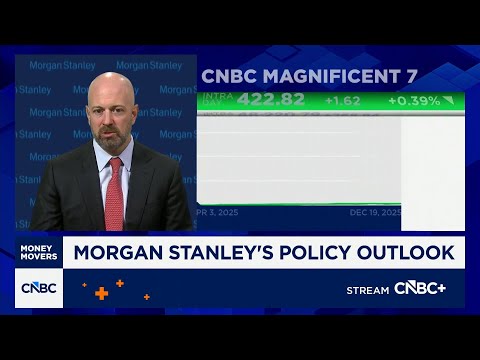
Joining us now, Morgan Stanley, global head of fixed income research and public policy strategy, Michael Zizus. Uh, Michael, it's kind of remarkable to reflect back on 2025 uh, and really think about what the markets weathered on the policy front. Is there anything left in the tank in terms of public policy for 2026.>> Yeah, I I won't say no because that seems like it's probably the wrong answer. But what what what I would say is that next year there's definitely some policy catalyst to pay attention to the ...

'Fast Money' traders talk the pullback in the tech sector
CNBC Television· 2025-12-17 22:44
What what what is all this telling us. He's talking to Gaia. >> I understand about Thanks for watching everybody.Matt Lenny starts right now. What is all this telling us about the AI trade. One of the terms we've used is the sanctity of capex.And I think for a long time people felt like the capex spend was somehow etched in stone as it came down from the mountaintop on one of the you know slabs of Fred Flintstone like granite. it's not etched in stone and I think we're learning that now and I think the whol ...



Fed meeting turned out to be pretty risk on, says PIMCO's Richard Clarida
CNBC Television· 2025-12-11 14:27
Richard Clar is here, former vice chairman of the Federal Reserve and global ep e e e e e e e e e e e e e e e e e e e economic adviser at PINCO. Thanks Rich for coming in. Um yeah, glad to be here.>> And I was going to start with a half empty half full analysis. So if if JPAL on the one hand says man um we look at at what's going on and we're worried about inflation and we're worried about uh the jobs market. This is a really complicated time for monetary policy.That's the half empty. the half full is, you ...
Cramer's Stop Trading: Nvidia
Youtube· 2025-12-02 15:25
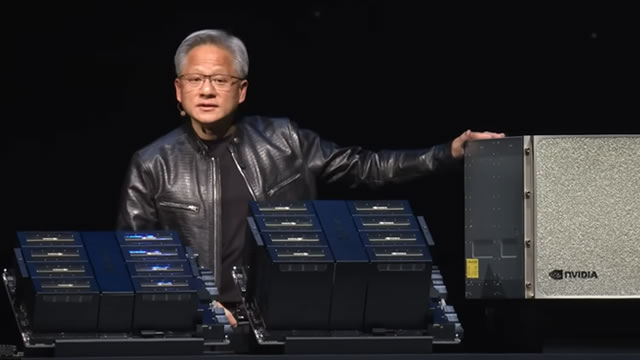
Group 1 - The CFO of Nvidia, Colet Crest, emphasized that the transition from CPU to GPU dominance in technology is significant, with 90% of PC server processing now relying on GPUs [1] - New orders for Nvidia's products are stacking on top of previous orders, indicating strong demand and continuity in production rather than a complete overhaul of existing technology [1] - There is a belief that the narrative around high capital expenditures (capex) being a barrier is misleading, as evidenced by Google's substantial investment, which contradicts claims of financial strain in the industry [1] Group 2 - The perception that companies are struggling financially while making significant profits, particularly Nvidia, is described as a misconception [2] - The importance of Amazon Web Services (AWS) is highlighted, indicating its critical role in the tech landscape [2] - The competitive landscape includes deep-pocketed rivals, suggesting a need for companies to be strategic and assertive in their market positioning [4]
美国股票策略展望-2026 前瞻 -市场情绪高涨,却无处可去-2026 Year Ahead_ All bulled up, and no place to go
2025-12-02 06:57
Summary of Key Points from the Conference Call Industry and Company Overview - The conference call focuses on the **US Equity Strategy** for the year ahead, particularly the **S&P 500** and its projected performance through 2026. Core Insights and Arguments 1. **S&P 500 Target for 2026**: The target for the S&P 500 is set at **7100**, indicating a **5% price return** from current levels, supported by a forecasted **14% earnings growth** or **$310** per share, despite a **10-point PE contraction** [1][18][19]. 2. **Market Sentiment**: Current market sentiment is described as contained rather than euphoric, with a recommended equity allocation of **56%**, which is below historical peaks [10][31]. 3. **Capex vs. Consumption**: There is an expectation of broadening capital expenditures (capex) over consumption, with a shift towards **blue-collar jobs** as AI impacts white-collar employment [2][12][13]. 4. **Sector Adjustments**: The outlook for **Consumer Staples** has been raised to **overweight** from **underweight**, while **Consumer Discretionary** has been lowered to **underweight** from **marketweight**. The firm remains **overweight** on **Financials, Real Estate, Materials, Health Care, and Energy** [6][12]. 5. **AI Investment Outlook**: There is caution regarding AI investments, with a noted **air pocket** ahead as monetization remains uncertain. The capital intensity of hyperscalers has increased significantly, raising concerns about future returns [3][14][15]. 6. **Credit Cycle Concerns**: The credit cycle is anticipated to be different from previous cycles, with emerging issues in private lending and a potential increase in **bad vintage** private investments due in **2026** [4][16]. 7. **Earnings Growth and Valuation**: Earnings growth is expected to be in the mid-double digits, but multiples are projected to compress by **5-10%**. The fair value model estimates the S&P 500's fair value at **5900**, indicating a potential downside from current levels [10][21][22]. Additional Important Insights 1. **Liquidity Trends**: While liquidity has been strong, the direction is expected to worsen, with less emphasis on buybacks and more on capex [11][13]. 2. **Job Market Dynamics**: The job market is shifting, with a decrease in entry-level office jobs due to efficiency gains from AI, impacting consumption growth [12][13]. 3. **Valuation Metrics**: The S&P 500 is statistically expensive across multiple metrics, trading above historical averages, which raises concerns about future returns [55][56]. 4. **Investor Behavior**: Individual investors have significantly influenced market volumes, accounting for approximately **40%** of small-cap and **20%** of large-cap volumes this year [13]. This summary encapsulates the key points discussed in the conference call, providing insights into the expected performance of the S&P 500, sector adjustments, and broader market dynamics.
Hon Hai: US Capex for Data Center To Start at $1-5 Billion
Bloomberg Television· 2025-11-21 16:54
What about in terms of the compute capacity. Talk about it in gigawatts, then a gigawatt per week working the goal of one gigawatt per week. That would be sense goal, but we can start with one gigawatt per month. So you think you can add one gigawatt per month next year, starting next the second half of the year, second half of the year. So you think you can add six gigawatts next year.I'm not sure. It really depends on our starting our new way of doing things. It takes time.But eventually we will. We're go ...

We're not in an AI bubble, says JPMorgan's Bob Michele
CNBC Television· 2025-11-17 13:54
Market Overview & Economic Outlook - JP Morgan Asset Management manages $800 billion [1] - The US economy is performing well, with Corporate America absorbing tariffs and consumers doing well [2] - Expectation of a rate cut by the Federal Reserve in December, acting as a tailwind into 2026 [3] - Current market conditions suggest positive returns for investments made today over the next decade [4] - A stimulative macro environment exists with governments borrowing and spending, coupled with easing central bank accommodation and regulatory tailwinds in the US [5] Technology & Investment Strategy - Companies are gearing up for capital expenditure (capex) next year, planning to increase hiring and expand AI initiatives [6] - While some AI investments may be fruitless, others will yield significant returns, similar to the dot-com era [7][8] - The dot-com bubble serves as a lesson, but companies should not stop investing in technology despite potential valuation downturns [8] Demographic Trends - The demographic of 34-year-olds, born around 1991, are dominating earning, spending, and saving [5]

Altimeter's Gerstner on Sam Altman's comments about OpenAI's revenue trajectory
CNBC Television· 2025-11-07 22:30
OpenAI's Financial Performance & Investment - Initial investment of 1.4% of $4 trillion (USD) into OpenAI raised concerns given the $13 billion (USD) revenue [1] - OpenAI is projected to exit the year with $20 billion (USD) in revenue [3] - OpenAI anticipates exceeding $100 billion (USD) in revenue by 2027 or 2028 [4] - Capital expenditure (capex) is estimated at $1.4 trillion (USD), with partners bearing half, reducing OpenAI's burden to $600-700 billion (USD) [4] - OpenAI's annual capex is projected to be $100-200 billion (USD) over five years [4] Market Reaction & Context - The NASDAQ experienced a 40% increase from its April low, with AI stocks rising significantly [2] - Market interpreted Sam Altman's response regarding OpenAI's investment and revenue as a potential cause for concern [1][3] - Market sentiment shifted after clarification that OpenAI's future revenue projections justify the current investment [5]
Could see market upside through year end but it may be choppy, says iCapital's Sonali Basak
Youtube· 2025-11-05 21:35
Market Outlook - The market is currently around fair value, suggesting potential upside but with expected volatility as the year ends [1][2] - Data collection issues may impact upcoming government data releases, particularly for October and November, leading to investor nervousness [2][4] Earnings and Company Performance - Nvidia is anticipated to report significant orders, with expectations of a $500 billion order announcement, which could influence market performance [3][4] - Meta has been a drag on EPS despite a healthy earnings environment, raising concerns about accessing AI themes without stock market volatility [9][10] Capital Expenditure and Cash Flow - The ratio of capital expenditure to free cash flow is currently around 70%, with expectations it could rise to 75-80%, raising concerns about negative free cash flow for some firms [10] - The financing of the capital expenditure boom will be a significant narrative moving forward [10] Sector Performance - The composition of the "Magnificent 7" stocks is shifting, with some laggards catching up while top performers are falling behind due to changes in capital expenditure dynamics [13][14] - Financials, despite showing 20% EPS growth, are trading 13% below the S&P 500, indicating potential for further growth in this sector [15]
There's more to go in capex and upside for AI, says UBS' Alli McCartney
Youtube· 2025-11-03 20:40
Group 1 - Current infrastructure spending is significantly lower than historical averages, with only slightly less than 1% of GDP being spent compared to the historical range of 2% to 5% [2] - There is a belief that the current technological advancements, particularly in AI, could lead to a transformational tech trade, which may involve significant creative destruction [6][11] - The economic landscape is characterized as K-shaped, where wealth inequality is increasing, with the rich getting richer while lower-level employees face job insecurity due to technological advancements [10][12] Group 2 - The Federal Reserve's approach may need to adapt to the changing labor market dynamics influenced by technology, immigration, and an aging population [13] - There is a recognition that the current economic growth is driven by supply-side factors, which may require a different perspective from traditional demand-side economic theories [9] - The potential for a new infrastructure build driven by technological advancements is seen as a critical factor for future economic growth [4][5]