Embodied Intelligence

Search documents
创新高 沪指17连阳 两市成交3.6万亿
Xin Lang Cai Jing· 2026-01-12 16:57
Group 1 - The A-share market experienced a collective rise on January 12, with the Shanghai Composite Index increasing by 1.09%, marking a 17-day consecutive gain and reaching a new high not seen in over a decade [1] - The Shenzhen Component and ChiNext Index rose by 1.75% and 1.82% respectively, with over 4,100 stocks gaining and more than 200 stocks hitting the daily limit [1] - The trading volume in the Shanghai and Shenzhen markets reached 3.6 trillion yuan, surpassing 3 trillion yuan for the second consecutive trading day, and increasing by 478.7 billion yuan compared to the previous trading day, setting a new historical record for trading volume [1] Group 2 - Key sectors showing significant gains included software development, internet services, cultural media, aerospace, gaming, communication equipment, computer devices, education, and shipbuilding, while the insurance sector showed weakness [1] - The AI application sector saw notable increases, with several stocks like Yidian Tianxia and Zhide Mai hitting the daily limit, while the commercial aerospace sector also performed well [1] - Institutional perspectives suggest focusing on "two main lines and two auxiliary lines," emphasizing technology innovation and growth sectors, as well as manufacturing and resource sectors for potential recovery [2]
Datasea Announces Major Acoustic Technology Advancements in Brain-Computer Interface Applications
Prnewswire· 2026-01-12 14:30
Core Insights - Datasea Inc. has made significant advancements in acoustic-driven technologies aimed at brain-computer interfaces (BCI) and rehabilitation robotics, which are expected to support applications in embodied intelligence and health robotics within a multi-billion-dollar market [1][12]. Group 1: Technology Advancements - The company has developed two key acoustic technology initiatives focused on assistive communication and rehabilitation robot control, enhancing the application of BCI technologies [3][4]. - The assistive communication initiative aims to create a BCI-based system for recognizing user intentions and controlling external devices, particularly for patients with neurological conditions [4][5]. - The rehabilitation robotics initiative seeks to translate neural signals into structured control logic for upper-limb rehabilitation robots, improving the alignment of neural signal interpretation with robotic execution [6][7]. Group 2: Integration and Framework - Datasea's advancements build upon its existing acoustic-driven BCI technology framework, which addresses issues such as noise interference and signal stability during BCI signal acquisition [8][10]. - The company is establishing a complete technical loop that includes signal enhancement, personalized intent decoding, structured system control, and feedback mechanisms, laying a foundation for industrial-grade BCI technology deployment [10][11]. Group 3: Market Context - The global BCI market is projected to reach approximately USD 15–20 billion by 2030, with non-invasive BCI technologies expected to grow rapidly due to their safety and broader application potential [16]. - Key demand drivers for BCI technologies include medical rehabilitation, consumer electronics, and intelligent wearable devices, supported by a growing ecosystem for technology and application [12][16]. Group 4: Strategic Collaborations - Datasea has initiated collaborations with domestic health robotics companies to integrate its acoustic-driven BCI technologies into health robot systems, facilitating the transition from research and development to practical applications [11].



不用VLA!从视频生成模型到机器人控制
具身智能之心· 2026-01-11 03:02
Core Insights - The article discusses a new paradigm in embodied intelligence, focusing on the use of video generation for robot control, specifically through a model called LVP (Large Video Planner) [8][12][18]. Group 1: Model Architecture and Contributions - The LVP model consists of 14 billion parameters and is designed for embodied decision-making, utilizing video data to enhance robot control capabilities [18]. - The model leverages vast amounts of human activity videos available online, which contain rich information about physical interactions, rather than relying solely on scarce high-quality robot action data [11][19]. - Key innovations include the introduction of Diffusion Forcing and History Guidance techniques to improve video generation accuracy and coherence, ensuring that generated videos are physically consistent and relevant to the robot's current state [24][26]. Group 2: Data Set and Training - The LVP-1M dataset, comprising approximately 1.4 million video clips, was specifically constructed for training the model, incorporating diverse sources such as robot data, egocentric human data, and general internet videos [29][30]. - The dataset includes various types of interactions and scenarios, enhancing the model's ability to generalize across different tasks and environments [30][31]. Group 3: Action Extraction and Execution - A visual action extraction pipeline was developed to translate generated videos into actionable robot movements without requiring additional training [32]. - The pipeline includes detailed action descriptions and aligns the timing of robot movements with human actions to ensure smooth execution [34]. Group 4: Performance and Testing - The LVP model demonstrated superior performance in real-world tasks compared to existing video generation models and robot strategy models, achieving higher success rates in novel tasks [41][42]. - The model's zero-shot generalization ability allows it to perform tasks it has never encountered before, such as tearing tape and scooping coffee beans, showcasing its adaptability [42]. Group 5: Limitations and Future Directions - The article acknowledges limitations such as slow video generation times, reliance on external components for action extraction, and the challenges of open-loop execution [48]. - Future developments aim to enhance the model's real-time closed-loop control capabilities and further improve its understanding of the physical world [48].

Salcomp's Debut on CES 2026
Prnewswire· 2026-01-08 03:53
Core Insights - Salcomp is showcasing its complete humanoid robot technology matrix at CES 2026, emphasizing its capabilities in core components, hardware manufacturing, and scenario implementation [1][3] - The company aims to challenge the top three intelligent hardware manufacturers globally, contributing to the development of physical intelligent industries [2] Company Capabilities - Salcomp has established a comprehensive technical chain in the robotics field, covering core components, assembly R&D, and industrial scenario implementation, positioning itself as a provider of integrated services including ODM design, processing, assembly, and testing [3] - The company has completed over 5,000 units of humanoid robot hardware and assembly services, demonstrating its large-scale service capability [4] Production Capacity - Salcomp has set up an embodied intelligent robot innovation center, with a pilot base capable of producing 5,000 units per year, aimed at bridging the gap from laboratory prototypes to large-scale production [5] - Future plans include upgrading this base to a super factory with an annual production capacity of 500,000 units, enhancing its large-scale delivery advantage [5] Strategic Focus - At CES 2026, Salcomp highlighted its strengths in manufacturing, application understanding, and mass production guarantee, aiming to assist enterprises in accelerating technology implementation and product mass production [6] - The company is committed to advancing the global embodied intelligent industry towards high-quality development through its full-stack service capabilities [6]
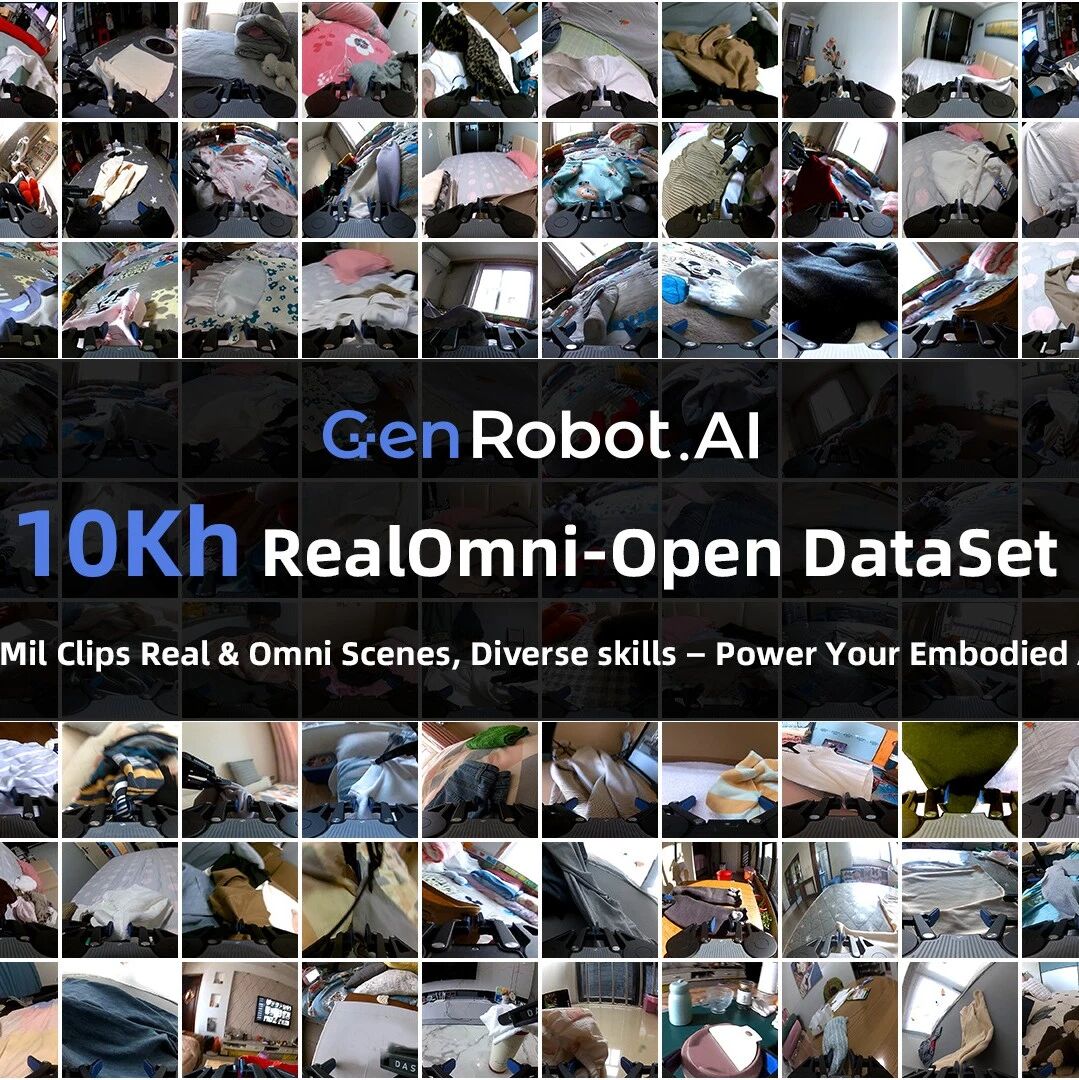
行业最大规模、泛化程度最高无本体具身数据集合来了——“10KhRealOmni-OpenDataSet”
机器人大讲堂· 2026-01-06 12:56
Group 1 - The company has collected over 1 million hours of data from more than 3,000 households using Gen DAS Gripper and the industry's first large-scale data production line, Gen ADP, accelerating the development of the embodied industry [1] - The overall industry volume and individual skill scale are the largest, with a cumulative duration exceeding 10,000 hours and a total data scale of over 1 million clips, ensuring each skill has the highest data volume in the industry [1] - The data collection focuses on 10 common household scenarios and 30 skills, ensuring quality by avoiding excessive dispersion [1] Group 2 - The data includes multi-modal, high-quality information such as large FOV raw images, trajectories, annotations, and joint actions, with industry-leading accuracy and quality [1] - The first phase of data has been uploaded, covering 12 skills across 4 major scenario tasks, with plans to complete the remaining skills and provide support for data format conversion and usage [2] - The data is available for download at a specified link, and users are encouraged to provide feedback and suggestions for additional scenarios and skills to be digitized [2]





北京市机器人产业协会诚聘精英!
机器人大讲堂· 2026-01-06 12:56
Core Viewpoint - The Beijing Robot Industry Association aims to connect cutting-edge technology, policies, and core enterprises to empower the future of the robotics industry [3]. Group 1: Association Overview - The Beijing Robot Industry Association was established in March 2025, initiated by multiple organizations including the China Electronic Information Industry Development Research Institute and the Beijing Humanoid Robot Innovation Center [3]. - The association's mission is to implement national innovation strategies and support the development of the robotics industry in Beijing by acting as a bridge between the government and its members [3]. - Key responsibilities include conducting in-depth research on industry policies, analyzing industry data, organizing industry exchange activities, and promoting collaboration within the industry [3]. Group 2: Job Opportunities - The association is hiring for various positions, including a Deputy Secretary-General, Business Development Department Head, and Industry Research Department Head, with requirements for relevant educational backgrounds and work experience [4][5][6][7][10]. - Candidates are expected to have strong communication, organizational, and analytical skills, as well as a solid understanding of the current state of the robotics industry and relevant policies [5][6][10]. - The association offers competitive salary and benefits, including social insurance, paid annual leave, holiday benefits, and regular training [10]. Group 3: Industry Segmentation - The article lists various segments within the robotics industry, including industrial robots, service and special robots, medical robots, humanoid robots, embodied intelligence, core components, and educational robots [15][16][17][18][19][20][21]. - Each segment features specific companies that are leading in their respective fields, indicating a diverse and growing industry landscape [15][16][17][18][19][20][21]. Group 4: Community Engagement - The association encourages community engagement through discussion groups and forums to explore topics related to robotics and share insights on cutting-edge technology and industry trends [22][23].

狂飙与悬崖:2025,机器人驶出浅滩
机器人大讲堂· 2026-01-03 09:14
Core Insights - The year 2025 marks a historic turning point for the global robotics industry, with the concept of embodied intelligence and robotics moving towards large-scale application, transitioning humanoid robots from experimental technology to production tools in factories [1][2] - The industry has achieved multiple breakthroughs in technology, commercial implementation, and ecosystem construction, while also facing challenges such as bubble risks, technical bottlenecks, and commercialization tests [1] Group 1: Core Transformation - Embodied intelligence is the driving force behind the evolution of the robotics industry in 2025, fundamentally rewriting the underlying logic of industry development [4] - The shift from a linear framework of perception-planning-execution to a collaborative evolution model using AI large models as the brain and robots as the body allows robots to understand environments and make autonomous decisions [4] - This trend has permeated various fields, including industrial robots, service robots, and special robots, enhancing their capabilities in complex environments [4] Group 2: Market and Capital - The robotics sector has become a darling of the capital market in 2025, with mergers, IPOs, and financing surging, although underlying risks and market differentiation exist [9] - The industry is entering a deep integration phase, with mergers shifting from mere scale pursuit to capability enhancement and ecosystem building [9] - Over 30 companies in the robotics supply chain initiated IPO processes, with Hong Kong becoming the preferred listing location [11] Group 3: Scene Implementation - The application of robots has expanded from traditional industries to service, special environments, and consumer markets, with real orders confirming commercial value [17] - Industrial manufacturing remains the primary scene for robot commercialization, with domestic companies accelerating high-end breakthroughs [17] - Service robots are increasingly used in logistics and cleaning, while special robots demonstrate value in extreme environments [19] Group 4: Technology and Ecosystem - The robotics industry achieved significant breakthroughs in core components, technical standards, and ecosystem collaboration in 2025 [22] - The focus of global competition has shifted from hardware parameters to the construction of underlying capabilities [22] - Domestic companies have significantly improved their international standing in the field of embodied intelligence, with new standards being established [24] Group 5: Challenges and Outlook - Despite notable achievements, the robotics industry faces challenges such as the need for breakthroughs in core technologies and commercial viability [28] - The period from 2025 to 2026 is seen as a critical window for the industry to transition from validation to scaling [28] - The robotics sector is poised to become a trillion-dollar industry, reshaping manufacturing, services, and human lifestyles [29]

具身智能抢人大战:毕业一年,年薪300万元
投中网· 2026-01-03 06:32
Core Viewpoint - The competition for top talent in the field of embodied intelligence is intensifying, with salaries reaching unprecedented levels, reflecting the industry's urgent demand for skilled professionals [3][5][8]. Group 1: Talent Demand and Salary Trends - ByteDance's recruitment for senior algorithm experts in embodied intelligence offers salaries between 95,000 to 120,000 yuan per month, indicating a significant increase in compensation for skilled professionals [3]. - A recent graduate from a prominent embodied intelligence company is reportedly commanding an annual salary of 3 million yuan, excluding potential stock options, highlighting the lucrative opportunities available in this sector [3]. - Top candidates with experience in motion control can easily receive multiple job offers, with salaries for leadership positions nearing 10 million yuan [3][5]. Group 2: Recruitment Strategies and Market Dynamics - The demand for algorithm talent is particularly high, with a reported 6% year-on-year increase in job postings in the robotics industry, and a fourfold increase in positions related to humanoid robots [5]. - Companies are adopting aggressive recruitment strategies, including early engagement with PhD candidates and offering high signing bonuses and tailored projects to attract talent [6][9]. - The competition for talent is not limited to algorithm positions; hardware engineers are also in high demand, as their expertise is crucial for the successful implementation of embodied intelligence products [9]. Group 3: Industry Challenges and Future Outlook - The current talent shortage in the embodied intelligence sector is characterized by a significant imbalance between supply and demand, as the rapid growth of the industry outpaces the availability of qualified professionals [8][9]. - The industry is experiencing a phase of "irrational prosperity," with high salaries and aggressive recruitment seen as necessary to attract talent and overcome technical challenges [12][13]. - By 2027, the industry is expected to reach a critical juncture for large-scale production of embodied intelligence robots, with the current period viewed as a prelude to exponential growth [14][15].

搞过自驾的小伙伴,在其他领域还是很抢手
自动驾驶之心· 2025-12-31 00:31
Group 1 - The core viewpoint of the article highlights the competitive landscape of the autonomous driving industry, emphasizing the focus on technology, cost, and efficiency as key areas of competition this year [1] - The industry has seen a shift with many professionals transitioning to sectors like embodied AI and drones, while autonomous driving remains a mature AI field, making algorithm talents highly sought after [1][2] - Major technological directions in autonomous driving have converged this year, including end-to-end systems, VLA, world models, and reinforcement learning, with many midstream companies tackling challenges like OCC and multi-sensor fusion perception [3] Group 2 - The membership of the paid community focused on autonomous driving has officially surpassed 4,000, indicating a growing interest in the development of technology routes and job information [3] - The company expresses gratitude to its supporters and announces various benefits and discounts for the new year, encouraging continued efforts in the upcoming year [4]
国泰海通|机械:商业航天和机器人共构宏大叙事
国泰海通证券研究· 2025-12-28 14:49
Group 1 - The article emphasizes the importance of focusing on robot manufacturers and core component suppliers, including actuators and motors, reducers, screw types, screw equipment, bearings, sensors, and complete machines [1] - On December 26, the Shanghai Stock Exchange released guidelines for the IPO of commercial aerospace companies, supporting those in a critical phase of large-scale commercialization [1] - The Long March 8A rocket successfully completed its sixth launch, marking a high-density launch year with six successful missions in 2025 [1] Group 2 - The narrative of commercial aerospace and humanoid robots is highlighted, with Elon Musk announcing plans to launch a rocket to Mars by the end of 2026, carrying a Tesla Optimus humanoid robot for feasibility testing [2] - The acceleration of financing in the embodied intelligence sector is noted, indicating a growing interest and investment in this area [3]