
Humanoid Robot

Search documents
中国工业:花旗深圳 - 上海产业考察-买入 SYTECH 与 Leader Drive-China Industrials_ Citi Industrial Tour in Shenzhen _ Shanghai _ Buy SYTECH and Leader Drive
花旗· 2025-12-01 00:49
Investment Rating - The report assigns a "Buy" rating to SYTECH and Leader Drive, while it has "Sell" ratings on Envicool and Topband due to rich valuations and increased competition [1][8]. Core Insights - The report highlights a shift in global market liquidity from high-beta stocks like AI and humanoid robots to low-beta stocks, driven by stretched valuations and concerns over monetization [1]. - Order growth momentum for AI infrastructure components such as PCB, CCL, liquid cooling, and power supply is expected to continue rising through 2026 [1]. - SYTECH is noted for its competitive advantage in the CCL market, being the first and only Chinese CCL player in NVIDIA's supply chain, while Leader Drive is positioned well in the US NEV and robot supply chain [1][2]. Summary by Sections AI Infrastructure Chain - The AI infrastructure supply chain, including CCL, PCB, liquid cooling, and power supply, accounts for a significant portion of AI server BOM, with CCL having a better competitive landscape due to high industry concentration [2]. - SYTECH is set to launch a five-year plan to capitalize on AI-CCL opportunities, with expectations of strong revenue and net profit growth of 30% and 164% respectively in Q4 [5]. - New entrants in the liquid cooling market are expected to challenge existing players like Envicool, which is facing increased competition [10]. Humanoid Robot Supply Chain - Leader Drive anticipates significant growth in shipments from major robotic players, with the first batch of shipments expected to reach over a thousand units this year [13]. - The emergence of new players like Xiaomi and XPENG is expected to benefit upstream component suppliers, including Leader Drive [13]. - Leader Drive is becoming a key supplier for harmonic reducers to leading US humanoid robot manufacturers, enhancing its market share [2][13]. AGV / AMR Warehouse Automation - The warehouse automation market is transitioning from traditional AGVs to more flexible AMRs, driven by e-commerce growth and labor shortages [17]. - Companies like Hangcha are expected to benefit from this transition, leveraging their existing capabilities in forklift manufacturing to enter the intelligent warehouse automation space [18][20].
武汉未来智能创投基金设立
FOFWEEKLY· 2025-11-25 09:59
Group 1 - The Wuhan Wuchuang Future Intelligent Investment Fund, with a total scale of 1 billion yuan, has been officially registered [1] - The fund is initiated by Wuchuang Investment, Wuhan Fund, and Changzheng Capital, with contributions from Wuhan Innovation Investment Group, Wuhan Industrial Development Fund, and Hubei Human-Robot Industry Investment Fund [1] - The first phase of the fund has a scale of 200 million yuan, managed by Wuchuang Capital, and it is the first municipal-level artificial intelligence industry fund in Wuhan [1] - The fund will focus on investments in cutting-edge technology fields such as artificial intelligence and humanoid robots [1]


中国人形机器人 - 花旗 2025 行业考察:2026 年或迎产能指数级增长-China Humanoid Robot-What’s New from Citi 2025 Industrial Tour Likely Exponential Production Growth in 2026
花旗· 2025-11-24 01:46
Investment Rating - The report maintains a positive sector view on humanoid robots, with a top pick being UBTECH and recommendations to accumulate stocks of Hengli Hydraulic, Leader Drive, and Shuanghuan Drive due to recent stock weakness [1]. Core Insights - Humanoid robot revenues are expected to grow exponentially in 2026, with all five companies visited during the Citi Industrial Tour anticipating at least a doubling of revenues compared to 2025 [1]. - The production ramp-up by Chinese and leading US humanoid robot makers is driving this growth, supported by accelerated supply chain build-up and increased capacity [1]. - Orbbec's humanoid robot revenue is projected to increase from Rmb10 million in 2025 to Rmb100-200 million in 2026, with key customers including UBTECH and AgiBot [2]. - UBTECH is enhancing its data collection capabilities through partnerships with training centers, which is expected to boost future shipments [3]. - Lingyi iTech anticipates humanoid robot orders to reach Rmb1 billion in 2025, with a target to grow revenue to Rmb10 billion by 2030 [4]. - Leader Drive expects its humanoid robot product shipments to at least double in 2026, driven by aggressive production guidance from key customers [5]. - Rongtai is expanding its micro ball screw capacity to support a leading US humanoid robot maker's production ramp-up to 3,000 units per week by Q1 2026 [5]. Summary by Company Orbbec - Revenue growth from Rmb1 million in 2024 to Rmb10 million in 2025, with a potential increase to Rmb100-200 million in 2026 [2]. UBTECH - Main products include Walker S1/S2 for industrial applications, with a forecast of humanoid robot shipments reaching at least 500 in 2025 and 2,000 in 2026 [9]. Lingyi iTech - Aims for humanoid robot revenue of Rmb10 billion by 2030, with significant orders expected in 2025 [4]. Leader Drive - Approximately 20% of revenue in 9M25 came from humanoid robot products, with expectations for significant growth in 2026 [5]. Rongtai - Preparing to support a production increase to 3,000 humanoid robots per week by Q1 2026, with plans to expand capacity to 5,000 per week by the end of 2026 [5].


Tesla Rival Xpeng To Release 3 Robotaxi Models, Says Technology Does Not Depend On LiDAR — Optimus Rival IRON Could Be A 'Tour Guide' - XPeng (NYSE:XPEV)
Benzinga· 2025-11-18 10:19
Core Insights - Xpeng Inc. is set to launch three new Robotaxi models in 2026 as part of its autonomous driving initiative [2] - The company plans to begin pilot Robotaxi operations in China next year and will open source its VLA 2.0 autonomous driving system for global commercial partners [2] - Volkswagen will be the initial launch customer for the VLA 2.0 model, and Xpeng's Robotaxi service will utilize Alibaba's Amap mapping platform [3] Group 1: Robotaxi Development - Xpeng's CEO announced the launch of three Robotaxi models planned for 2026 [2] - The autonomous driving software developed by Xpeng does not rely on high-definition maps or LiDAR technology [2] - Pilot operations for the Robotaxi service are expected to commence in China next year [2] Group 2: Humanoid Robot Initiative - Xpeng's humanoid robot, named IRON, is intended for commercial applications such as tour guiding and retail assistance, with mass production targeted for 2026 [4] - The company anticipates selling over 1 million units of the IRON robot annually by 2030 [4] - Comparisons have been made between Xpeng's IRON and Tesla's Optimus line of humanoid robots [5] Group 3: Market Performance - Xpeng's stock experienced a decline of 1.87%, trading at $22.01 during pre-market hours [5]



One of Tesla's Chinese rivals has a unique strategy for building its humanoid robot: make it huggable
Business Insider· 2025-11-17 17:44
Core Insights - Xpeng, a Chinese EV startup, is focusing on creating a humanoid robot named Iron that is designed to be "highly human-like" to compete with Tesla's Optimus robot [1][2] - The company aims to sell 1 million units of Iron annually by 2030, with mass production expected to start by the end of 2026 [3][4] - Xpeng plans to utilize Iron in retail settings and as tour guides, indicating a strategic approach to market entry [4] Company Developments - Xpeng has showcased Iron with customizable body types, including male and female variants, to enhance user appeal [2] - The company is set to launch seven new vehicles next year, including three robotaxi models, and plans to begin mass production of a $280,000 flying car in 2026 [6] - Xpeng has achieved significant sales growth this year and is nearing profitability, positioning itself as a strong competitor in the EV market [5] Market Outlook - The CEO of Xpeng predicts that the market for humanoid robots could surpass that of the automotive market in the long run [4] - Xpeng's strategy to incorporate humanoid robots into its stores next year reflects a proactive approach to leveraging technology for customer engagement [4]

蓝思科技_花旗 2025 中国会议新动态_2026 年增长动力未减
花旗· 2025-11-16 15:36
Investment Rating - The investment rating for Lens Technology is "Buy" with a target price of Rmb38.00, indicating an expected share price return of 27.4% and an expected total return of 28.9% [7]. Core Insights - Key growth drivers for Lens Technology in 2026 include advancements in foldable phones, automotive laminated glass for new energy vehicles (NEVs), AI glass development, increased robot shipments, and faster SSD module assembly [1]. - The company anticipates significant revenue from humanoid robots, with projections of supplying over 10,000 units in 2026 and achieving breakeven at an annual production of 100,000 units [2]. - Lens Technology is also expanding its high-end smartphone offerings, expecting an increase in average selling price (ASP) due to new models and materials [4]. - In the automotive sector, the company plans to support over 1 million vehicles in 2026 with a targeted gross margin of 20-30% on its laminated glass products [5]. - The company is positioned to supply over 1 million AI edge devices in 2026, with ongoing negotiations for additional content and features [9]. - The valuation is based on a target price of Rmb38.00, supported by a projected 31% three-year earnings compound annual growth rate (CAGR) [14]. Summary by Sections Humanoid Robots - Lens Technology is supplying over 1,000 dexterous hands and 3,000 humanoid robots in 2025, with additional orders for 10,000 robot dogs, potentially generating hundreds of millions in revenue [2]. Server Products - The company's SSD products are currently undergoing verification, with expectations for completion in the coming months [3]. High-End Smartphones - The company expects an incremental content gain of less than $100 per foldable phone model in the second half of 2026, with positive shipment forecasts [4]. Automotive Sector - Lens Technology will have the capacity to support over 1 million vehicles in 2026, with ASPs ranging from Rmb3,000 to Rmb4,000 [5]. AI Edge Devices - The company is set to support over 300,000 Rokid AI glasses in 2025 and over 1 million in 2026, with ongoing negotiations for additional features [9].

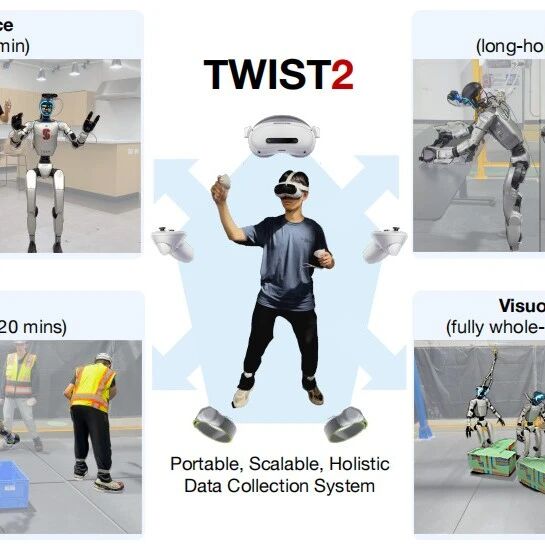
总成本1250 美元!1分钟部署!TWIST2打造低成本人形机器人数据采集方案!
机器人大讲堂· 2025-11-16 05:41
Core Insights - The article discusses the advancements in humanoid robotics, particularly focusing on the TWIST2 system, which integrates portability, scalability, and full-body control capabilities, overcoming the limitations of traditional motion capture systems [1][3][4]. Group 1: TWIST2 System Overview - TWIST2 is a new humanoid robot remote operation and data collection system developed by teams from Amazon FAR, Stanford University, and UC Berkeley, which allows robots to perform complex tasks autonomously [3][4]. - The system eliminates the need for expensive motion capture equipment, enabling quick deployment and operation [4][14]. Group 2: Key Innovations of TWIST2 - The system features a low-cost detachable neck module priced at $250, which provides egocentric vision capabilities when combined with a $400 stereo camera [9][14]. - TWIST2 utilizes a combination of PICO 4U VR devices and two leg motion trackers, with a total hardware cost of approximately $1,000, allowing for easy setup in just one minute [14][17]. - The system captures full-body human movements at a frequency of 100Hz, significantly improving data collection efficiency compared to previous systems [14][24]. Group 3: Data Collection Efficiency - TWIST2 allows a single operator to control the entire data collection process, achieving high efficiency with the ability to complete 100 successful demonstrations in just 20 minutes [22][25]. - The system's total data flow frequency exceeds 50Hz, with a latency of less than 0.1 seconds, enhancing the operator's ability to perform precise tasks [24]. Group 4: Autonomous Control Capabilities - TWIST2 introduces a hierarchical visual motion strategy framework that enables robots to execute tasks autonomously based on visual input, without relying on simplified speed commands [26][30]. - The framework has been successfully tested, allowing robots to perform complex tasks such as precise object manipulation and dynamic balance [32][35]. Group 5: Cost-Effectiveness and Accessibility - The total cost to set up a complete TWIST2 system is around $1,650, making high-quality humanoid robot research more accessible [37]. - The research team has made the system, data, and models open-source, positioning TWIST2 as a foundational infrastructure for humanoid robotics research [39].
甘肃人形机器人创新中心有限公司成立,注册资本1000万
Xin Lang Cai Jing· 2025-11-04 04:06
Core Viewpoint - The establishment of Gansu Humanoid Robot Innovation Center Co., Ltd. indicates a growing focus on the robotics industry in Gansu province, with a registered capital of 10 million RMB and a focus on industrial automation and intelligent robotics [1] Company Summary - Gansu Humanoid Robot Innovation Center Co., Ltd. was founded on November 3, with a legal representative named Jia Le [1] - The company has a registered capital of 10 million RMB [1] - The business scope includes manufacturing industrial automation control systems, research and development of intelligent robots, and sales of intelligent robots [1] Shareholder Information - The company is jointly held by Gansu Huayue Investment Co., Ltd., Gansu Huayue Robot Technology Partnership (Limited Partnership), and Lanzhou Chengfa Industrial Investment Co., Ltd. [1]
中国工业科技_2025 年第三季度业绩大多符合预期,个股涨跌分化;人工智能、ESS 需求及海外扩张为关键亮点-China Industrial Tech_ 3Q25 results mostly in-line with idiosyncratic beats_misses; AI, ESS demand, and overseas expansion key highlights
2025-11-04 01:56
Summary of Conference Call Notes Industry Overview - The conference call discusses the **China Industrial Technology** sector, focusing on companies involved in PCB, energy storage systems (ESS), consumer electronics, and industrial automation. Key Highlights 1. **3Q25 Results**: - Overall results were mostly in-line with sector averages showing revenue and operating profit growth of **+18%** and **+17%** year-over-year respectively [1] - Notable performance from major domestic PCB customers driven by AI applications, particularly from **Hans Laser** [1] - Growth in capital expenditures (capex) for batteries and consumer electronics [1] - Resilient market share gains in the industrial automation (IA) segment, particularly for **Inovance** [1] 2. **Challenges Faced**: - Smaller players like **Pony Testing** and **HCFA** struggled with scaling and profitability [1] - Prolonged capex weakness in process automation markets such as steel and chemicals affected companies like **Baosight** and **Supcon** [1] - Temporary delays in defense orders impacted **AVIC Jonhon**, alongside high exposure to precious metals leading to margin deterioration [1] 3. **Margin Trends**: - Smaller players are more vulnerable in a deflationary environment with average selling price (ASP) pressures [2] - **AVIC Jonhon** faced margin deterioration due to precious metal price hikes [2] - Larger companies like **Sanhua** achieved margin beats through stringent SG&A cost control [2] - **Kstar** reported a gross profit margin (GPM) increase of over **3 percentage points** in its ESS segment due to a favorable product mix [2] Actionable Investment Ideas 1. **Buy Recommendations**: - **Hans Laser**: Strong demand in PCB and consumer electronics, with a **+96%** year-over-year growth in 3Q25 [3] - **Kstar**: Positive outlook with diversified customer base and robust ESS pipeline [3] - **Inovance**: Resilient momentum in industrial automation [3] - **Nari Tech** and **Centre Testing**: Defensive plays with stable margins [3] 2. **Sell Recommendations**: - **Raycus**: Limited military end-market sales [3] - **Baosight**: Continued weakness in domestic steel industry capex [3] - **Sanhua-A**: Potential profit-taking pressure due to overly optimistic market expectations [3] Sector Focus Areas 1. **AI Demand**: - **Hans Laser** is experiencing strong growth in PCB equipment sales due to capex expansion from key suppliers like **Victory Giant** for NVIDIA [6] - **Kstar** anticipates higher year-over-year sales growth in data center products driven by domestic and overseas orders [6] 2. **Energy Storage**: - **Sungrow** expects **40%-50%** global ESS installation growth in 2026, driven by renewable energy needs and market-driven policies in China [7] - **Kstar** aims to double its ESS sales growth in 2025, optimistic about demand outlook [7] 3. **Consumer Electronics**: - **OPT** anticipates stronger demand due to shifts in product form factors, particularly with Apple's upcoming products [8] - **Hans Laser** benefits from solid demand for iPhone 17 and next-generation smartphones [8] 4. **Overseas Expansion**: - **Hongfa** holds a dominant market share in HVDC relays and plans to expand capacity in Germany and Indonesia [10] - **Inovance** is also expanding overseas to support sales growth [10] Conclusion The China Industrial Technology sector shows a mix of strong growth opportunities, particularly in AI and energy storage, while facing challenges from smaller players and specific market weaknesses. Investment strategies should focus on larger, resilient companies with strong growth prospects while being cautious of smaller firms facing profitability issues.



优必选-买入评级_人工智能融合类人形机器人先锋企业
2025-11-03 02:36
Summary of UBTECH Conference Call Company Overview - **Company**: UBTECH - **Industry**: Humanoid Robots and Smart Service Robotics - **Market Position**: Leading player in China's humanoid robot and smart service robot market, with a diverse product portfolio including industrial, logistics, commercial, and educational applications [11][57] Key Insights Market Potential - **Global Humanoid Robot Sales**: Expected to reach 1 million units by 2030, driven by advancements in AI, 3D perception, control technologies, and declining costs of components [1][14] - **CAGR Forecast**: Anticipated 57% total revenue CAGR from 2025 to 2028, with humanoid robots contributing 66% of total sales by 2028, up from 21% in 2025 [3][30] Financial Projections - **Revenue Estimates**: Projected sales of HK$1,958 million in 2025, increasing to HK$4,958 million by 2027 [9] - **Net Income**: Expected to improve from a loss of HK$1,234 million in 2023 to a loss of HK$156 million by 2027, with a break-even point anticipated by 2028 [4][31] - **Valuation**: Price Objective (PO) set at HK$187, indicating a 34% upside potential from the current price of HK$140 [1][32] Product Development and Partnerships - **Walker-Series Deployment**: As of 2025, Walker-series humanoid robots deployed in major auto factories including BYD and FAW-Volkswagen, with strategic partnerships formed with Foxconn and SF Express [2][29] - **AI Network Development**: Introduction of BrainNet, an industrial-use AI network enabling collaboration among multiple humanoid robots [2] Sales Growth and Market Dynamics - **Sales CAGR for Humanoid Robots**: Expected 131% CAGR for humanoid robot sales from 2025 to 2028, with significant order backlog of over RMB600 million [3][30] - **ASP Reduction**: Anticipated average annual ASP reduction of 25% for Walker-series and 13% for Tiangong-series humanoid robots, driving demand growth [30] Risks and Challenges - **Market Risks**: Potential slower development of humanoid robots, increased competition, and technological complexities [1][3] - **Production Constraints**: Near-term production capacity constraints for key components may impact growth [48] Additional Insights - **Long-term Demand Drivers**: Aging population, labor shortages, and technological improvements are expected to drive demand for humanoid robots [46][49] - **Global Market Leadership**: The US and China are leading in humanoid robot technology, with different focuses on software and hardware integration [55][56] Conclusion UBTECH is positioned for significant growth in the humanoid robot market, with strong revenue projections and a robust product pipeline. The company is leveraging strategic partnerships and technological advancements to enhance its market presence, while also navigating potential risks associated with competition and production challenges.