Workflow
RWA
icon
Search documents
30.9% 持股锁定!壳王陈国强交棒,德祥地产的 RWA 估值革命来了
Ge Long Hui· 2026-01-22 06:33
Core Viewpoint - The article discusses the strategic maneuvers of Chen Guoqiang, a prominent figure in Hong Kong's capital market, particularly focusing on the transformation of Deshang Real Estate and the aggressive tactics employed by Ruikai Group to gain control over it [1][3][4]. Group 1: Strategic Moves - Ruikai Group's operation is characterized as a "textbook-level control battle," where it initially acquired a 10% stake and subsequently increased its holding to 30.90% through a secondary issuance and structured warrants, investing HKD 470 million at a 68% premium [3]. - The details of a HKD 1.70 exercise price and a one-year lock-up commitment reveal Ruikai's long-term ambitions, aiming for absolute control rather than short-term gains [3][4]. Group 2: Transformation of Deshang Real Estate - Chen Guoqiang's strategy involves selling off nearly HKD 1 billion in overseas and local properties, which appears to be asset reallocation but is actually a move to dismantle his real estate foundation for the next generation [4]. - The collaboration between Chen Guoqiang and Ruikai is framed as a "cross-generational dialogue," combining Chen's clean shell and market credibility with Ruikai's RWA technology and capital allocation system to pivot Deshang Real Estate into the digital asset infrastructure sector [4][5]. Group 3: Competitive Advantages - Ruikai's strength lies not only in financial resources but also in its ability to inject social resources and operational capabilities into the target company, providing long-term liquidity and connecting with high-quality resources in the new capital cycle [4]. - The involvement of Wu Jiezhuang, a legislative council member, adds a significant policy endorsement, reinforcing Deshang's compliance as an RWA vehicle and signaling strong market confidence in its long-term prospects [4]. Group 4: Valuation Perspective - Deshang Real Estate's valuation should no longer be based on traditional real estate logic, as Chen Guoqiang is transitioning the company from physical asset sales to digital asset issuance through RWA technology [5]. - The article emphasizes the need for investors to reconsider the potential valuation ceiling of a company that shifts its foundational logic from "selling land" to "issuing digital assets," highlighting the significance of this capital game in the Hong Kong market [5].
2026酒店业新变局:寒冬中探寻突破的持久之道
Sou Hu Cai Jing· 2026-01-21 16:47
Core Viewpoint - The hotel industry is experiencing a dichotomy, with some players struggling while others thrive through innovation in operations and business models, emphasizing efficiency and cash flow health over mere expansion [1][3]. Group 1: Industry Trends - The economic hotel segment is shrinking, with brands like Pudding Hotel and Wan Feng exiting the market, while leading players like Huazhu and Atour are leveraging "stay + retail" and AI technology to enhance their operations [1][3]. - The focus has shifted from opening new locations to improving operational efficiency and innovating business models, as the era of aggressive expansion is over [1][3]. Group 2: Financial Challenges - The hotel industry is capital-intensive, with long payback periods, particularly for mid-range hotels, which now have a return cycle extending to 5-6 years, compounded by tightening financing conditions [3][4]. - Many innovative ideas are hindered by a lack of funding, as hotels face significant financial pressure [3][4]. Group 3: Digital Hotel Solutions - A new digital hotel solution has emerged, aiming to tokenize future revenue rights of hotels into digital equity, allowing public investors to purchase these rights [4][6]. - For example, a hotel with 300 rooms can issue 20,000 digital rights at 2,000 yuan each, generating 40 million yuan in cash without incurring debt, effectively "securitizing" future room revenues [6][7]. Group 4: Benefits of Digital Solutions - This approach provides quick capital for hotels, allowing them to bypass traditional financing routes and directly attract market investment [7][9]. - Tokenizing assets enhances liquidity, enabling holders to transfer rights in a compliant secondary market, thus unlocking the value of previously illiquid assets [7][9]. - The model fosters a win-win ecosystem where equity holders are also long-term customers, enhancing customer loyalty and trust through transparent digital technology [7][10]. Group 5: Future Outlook - With the influx of funds from digital equity sales, hotels can further develop their "stay + retail" offerings, creating more sophisticated environments and products [9][10]. - The integration of AI with clear user profiles and blockchain data can lead to more precise service delivery and automated management of rights [9][10]. - The hotel industry is likely to evolve into a multifaceted value platform that combines investment, consumption, and brand experience, moving beyond traditional accommodation services [10].
大洋集团01991.HK与鹤延国际达成战略合作,拓展文化IP出海的智能化新范式
Cai Fu Zai Xian· 2026-01-20 09:05
Core Viewpoint - The article discusses the strategic collaboration between Ocean Group and He Yan International Cultural Industry Co., Ltd., focusing on the integration of digital content, cultural assets, and global dissemination in the context of the rapidly evolving digital content industry [1][3]. Group 1: Strategic Collaboration - Ocean Group has formed a strategic partnership with He Yan International to enhance its capabilities in digital marketing, AI digital personas, multilingual content distribution, and global traffic operations [1][2]. - He Yan International aims to explore sustainable development models for cultural content in the digital economy, emphasizing the integration of cultural content with modern technology and business models [2][3]. Group 2: Technological Integration - Ocean Group is leveraging its digital marketing infrastructure to provide comprehensive solutions for cultural IP, including content generation, brand building, and global dissemination [3][4]. - The collaboration aims to transform traditional cultural dissemination methods into a scalable and sustainable digital asset dissemination system, utilizing advanced technologies like blockchain and AI [3][4]. Group 3: Cultural IP Globalization - The partnership reflects a shift in cultural IP globalization from being sentiment-driven to system-driven, with platforms that possess technical capabilities, content understanding, and global operational experience becoming central to the new wave of content dissemination [5]. - Ocean Group's investments in digital marketing, AI digital personas, and RWA asset management position it to convert content value into long-term asset value [5][6]. Group 4: Future Pathways - Ocean Group is building a digital content and asset operation platform that spans multiple industries and scenarios, aiming for stable and sustainable value growth in the digital economy [6].
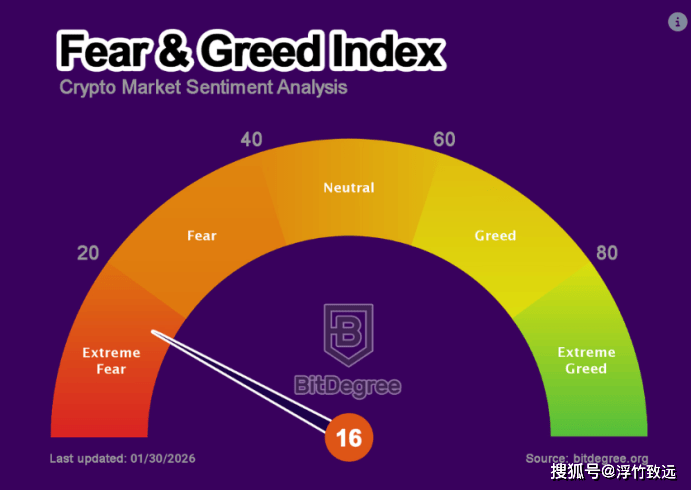
市场变天!比特币、以太坊涨不停?山寨币为何拉跨?注意这个风险!
Sou Hu Cai Jing· 2026-01-15 09:40
Market Overview - The market has shown signs of a potential pullback after a recent rally, indicating a need for caution against chasing prices [1] - In the last 24 hours, a total of 133,426 individuals experienced liquidation, amounting to $452 million, with long positions liquidated at $194 million and short positions at $259 million [1] Key Cryptocurrency Levels - **Bitcoin (BTC)**: The critical level is $96,920; closing above this may signal the end of a short-term pullback, with resistance at $97,940, $99,800, and $101,500. If it fails to close above $96,920, support levels to watch are $95,700, $94,660, and $93,510 [3] - **Ethereum (ETH)**: The key level is $3,330; if it holds above this, a short-term pullback may conclude, with resistance at $3,400, $3,445, and $3,490. A close below $3,330 could lead to further pullback, with support at $3,275, $3,227, and $3,170 [5] - **BNB**: The critical level is $940; closing above this may indicate the end of a pullback, with resistance at $955, $970, and $985. If it cannot reclaim $940, support levels are $929, $917, and $907 [7] - **Solana (SOL)**: The key level is $145; a breakout above this could signal the end of a short-term pullback, with resistance at $148, $152, and $156. If it remains below $145, support levels to monitor are $143, $140, and $137 [9] Market Dynamics - The overall market uptrend has led to a liquidity influx benefiting both major and altcoins, although previously high-performing coins have started to decline [11] - The recent downturn in the BSC meme coin market is seen as a natural market correction, with expectations for new cycles to emerge as the market stabilizes [13] - The performance of $RIVER has been highlighted, with a successful short position yielding over 30% profit, demonstrating effective trading strategies [13] Notable Tokens - **Chainlink (LINK)**: Considered a stable investment with lower volatility; if it holds above the daily resistance of $15, it could target $17, supported by its role in RWA projects [15] - **Internet Computer (ICP)**: The potential for a significant price increase is noted, with comparisons to previous surges in the storage sector, particularly in the context of the AI boom [17]
1.14 受CPI数据影响BTC重返95000
Sou Hu Cai Jing· 2026-01-14 14:03
Group 1 - Bitcoin surged past the $95,000 mark influenced by CPI data, indicating a consensus leaning towards potential interest rate cuts by the Federal Reserve [1] - The overall cryptocurrency market experienced a mild rebound, with a total market capitalization increase of 0.75% to approximately $3.13 trillion, and a 24-hour price increase of about 4.52% [1] - Ethereum (ETH) showed strong performance with a price increase of approximately 7.46%, benefiting from a recovery in on-chain activity [3] Group 2 - Institutional ETF inflows were robust, with Bitcoin ETF net inflows reaching $753 million, although macroeconomic uncertainties limited further price increases [3] - Ethereum's on-chain transaction volume grew by 6.8% to 2.05 million transactions, with accelerated adoption in DeFi and Real World Assets (RWA) [3] - JPMorgan predicts that Ethereum could surpass Bitcoin by 2026, with price forecasts ranging from $4,500 to $7,000, and an optimistic scenario suggesting a price of $11,000 [3]
顺势而为迎RWA赛道风口,中国数智科技加码转型构建数字服务生态
Zhi Tong Cai Jing· 2026-01-14 02:57
Core Insights - The rapid development of AI and blockchain technology, along with the steady advancement of global stablecoin support policies, is driving the Web3.0 industry into a phase of explosive growth, particularly in the Real World Assets (RWA) sector, which is expected to create trillion-dollar market opportunities [1][2]. Industry Overview - RWA refers to the digitization of real-world physical or financial assets, utilizing blockchain and smart contract technology to create a digital representation of underlying asset values in a virtual environment [2]. - The rise of RWA is attributed to the maturity of Web3.0 technology and the flourishing development of the metaverse, which is built on decentralized ecosystems [2][3]. - By 2030, the global RWA asset total is projected to exceed $16 trillion, representing about 10% of global GDP, indicating a significant market potential [1][3]. Company Strategy - China Smart Technology (01796) is strategically entering the AI and blockchain sectors, having signed a strategic cooperation agreement with Yidian Zhizhi and acquired 51% of its shares to enhance its capabilities in these areas [1][6]. - The company is focusing on various industries, including renewable energy, pharmaceuticals, industrial manufacturing, and agriculture, to deploy its digital asset platform [6][7]. - Recent collaborations with companies in the energy and healthcare sectors demonstrate the company's commitment to leveraging RWA opportunities and enhancing its digital service ecosystem [6][7]. Market Trends - The RWA sector is expected to see a surge in demand for underlying technology services, as the need for blockchain platforms to support asset tokenization grows [5]. - Regulatory frameworks are being established globally, with regions like Hong Kong leading the way in developing policies that support RWA tokenization and digital asset ecosystems [4][5]. - The integration of RWA into various industries is accelerating, with significant interest from major companies in adopting RWA-related strategies through partnerships and investments [3][4]. Future Outlook - The rapid transformation of China Smart Technology from a traditional home decoration company to a digital service platform reflects its proactive approach to capitalize on the RWA market and digital asset trends [8]. - The convergence of Web3.0 and the metaverse, supported by favorable policies, is expected to drive substantial growth in the RWA sector, creating a multi-trillion-dollar market opportunity [1][8].
顺势而为迎RWA赛道风口,中国数智科技(01796)加码转型构建数字服务生态
智通财经网· 2026-01-14 02:43
Core Viewpoint - The rapid development of AI and blockchain technology, along with the global support for stablecoin policies, is driving the Web3.0 industry into a phase of explosive growth, particularly in the Real World Assets (RWA) sector, which is expected to create trillion-dollar market opportunities [1][2]. Industry Overview - RWA refers to the digitization of real-world physical or financial assets, utilizing blockchain and smart contract technology to create a digital representation of underlying asset values in a virtual environment [2]. - The rise of RWA is attributed to the maturity of Web3.0 technologies and the flourishing of the metaverse, which is built on decentralized internet principles [2][3]. - By 2030, the global RWA asset total is projected to exceed $16 trillion, representing about 10% of global GDP, indicating a significant market potential [1][3]. Company Strategy - China Smart Technology (01796) has strategically entered the AI and blockchain sectors, evidenced by its acquisition of a 51% stake in Yidian Smart and partnerships in various industries such as renewable energy, pharmaceuticals, and agriculture [1][6]. - The company aims to leverage cutting-edge technologies like VR, AR, AI, and blockchain to enhance industry upgrades and create a digital asset platform [6][8]. - Recent collaborations with companies in sectors like healthcare and smart agriculture demonstrate the company's commitment to building a comprehensive digital service ecosystem [7][8]. Market Dynamics - The RWA sector is expected to see a surge in demand for underlying technology services, as real-world assets require blockchain platforms for tokenization [5]. - Regulatory frameworks are being established globally, with regions like Hong Kong leading in developing policies that support RWA tokenization and digital asset ecosystems [4][8]. - The integration of RWA into traditional finance and the crypto world is anticipated to create a core market segment, with significant investment opportunities emerging as the sector matures [3][4].
刘晓春:金融数智化的本质与误区
3 6 Ke· 2026-01-12 11:37
Core Insights - The narrative around financial digital innovation has shifted towards "smart digitalization" replacing "digitalization" due to breakthroughs in AI models and the introduction of stablecoin regulations in regions like the US and Hong Kong since 2025 [1] - The excitement surrounding AI and tokenization mirrors the early days of internet finance, emphasizing the need to eliminate intermediaries and enhance customer targeting and risk control [1] - AI and blockchain are tools in financial innovation, and understanding the essence of financial innovation is crucial for effective application [1] Group 1: Financial Innovation Technologies - Financial innovation requires three key technologies: financial technology, institutional technology, and scientific technology [2][3] - Financial technology encompasses broad economic and financial knowledge, emphasizing that financial innovation is fundamentally about finance, not just technology [3] - Institutional technology involves legal and regulatory frameworks that ensure stakeholder rights and risk prevention during financial transactions [4] - Scientific technology plays a supportive role in financial innovation, facilitating breakthroughs and improvements through the application of new and existing technologies [4][5] Group 2: Role of AI and Human Intervention - AI should not be viewed as a complete replacement for human roles; rather, it should enhance human capabilities in financial processes [6][7] - Relying solely on AI for risk control in lending has shown that human intervention can significantly improve loan quality [7] - The pursuit of reducing human labor through AI must be balanced with the need for human oversight to avoid misdirection in innovation [7] Group 3: Technology and Business Compatibility - No single technology can address all aspects of financial business; a combination of technologies is often necessary to meet specific business needs [8][9] - Financial transactions are based on trust and relationships, which cannot be solely managed by technology [9][10] - The complexity of financial services requires a nuanced approach to technology application, ensuring that it aligns with the unique characteristics of financial transactions [10][11] Group 4: Cost-Effectiveness in Financial Innovation - The primary goal of financial innovation is to achieve reasonable returns that cover costs and risks while serving the real economy [14] - Smaller financial institutions face challenges in competing with larger ones regarding technology investment and returns, necessitating strategic resource allocation [14][15] - The application of new technologies should be evaluated based on their cost-effectiveness and overall impact on business operations, rather than simply replacing old technologies [16][17]
2025年Web3全景复盘:5个趋势决定下一个10年
Sou Hu Cai Jing· 2026-01-07 08:38
Group 1 - The core viewpoint of the article is that 2025 will be a year of significant structural changes in the Web3 industry, shifting from "breakthrough" to "reconstruction" [1] - Trend 1: Web3 is transitioning from a "wild growth" phase to a "strong regulation" era, where regulatory frameworks become essential for project sustainability [1][2] - Global regulations are becoming executable, quantifiable, and accountable, with different approaches in regions like Europe, Asia, and China [2][5] - The EU's MiCA regulation will fully take effect in 2025, establishing unified standards for transparency and supervision in crypto asset markets [3] - Singapore's MAS will enforce clear licensing timelines and penalties for unlicensed digital token service providers [4] - China reiterates that virtual currency-related activities are illegal, emphasizing compliance over speculation [5] Group 2 - Trend 2: Capital is no longer chasing hot narratives but is focusing on practical applications that can be implemented [11] - The overall scale of investment remains stable at around $10 billion, but the structure is changing, with larger financing rounds becoming more common [12] - Investment is increasingly directed towards "financial" Web3 applications, with trading, custody, and brokerage services being the top focus areas [13] - Stablecoins are gaining importance as foundational financial infrastructure, with a total market cap nearing $300 billion and over $4 trillion in on-chain transactions [14] - The total issuance of tokenized RWA assets is approximately $20 billion, with government bonds and money market assets making up a significant portion [19] - Mergers and acquisitions are becoming the primary exit strategy, with over 260 deals worth nearly $8.6 billion completed in 2025 [20] Group 3 - Trend 3: The narrative around Web3 technology is cooling, but infrastructure is maturing [21] - Competition among public chains and Layer 2 solutions is shifting from conceptual debates to performance and cost efficiency [22] - The focus is moving away from extreme decentralization towards optimal usability, with a need for clear governance and control mechanisms [24] Group 4 - Trend 4: Web3 is integrating with traditional finance and the real economy, moving beyond mere conceptual collaborations [22][25] - Traditional financial institutions are adopting blockchain technology for backend processes like settlement and asset registration [25] - RWA is becoming a clear vehicle for the integration of Web3 and the real economy, with more traditional financial institutions participating [26] - The real economy is selectively adopting blockchain for complex scenarios that require multiple participants and high trust costs [27] Group 5 - Trend 5: Opportunities for ordinary individuals are shifting from speculative trading to cognitive dividends [28] - Speculative trading is facing restrictions, with new opportunities arising from understanding regulations and compliance [29] - Individuals who can connect Web3 capabilities with real business needs will be in high demand [30] - The focus is on long-term perspectives and risk management, rather than short-term asset speculation [31] - Web3 is evolving into a long-term industry, providing sustainable participation opportunities for those willing to understand its structure [32]
Major Web3 events shelved, marking first cancellations of 2026
Yahoo Finance· 2026-01-05 23:09
Core Insights - Two major Web3 events, NFT Paris and RWA Paris, have been officially canceled for 2026 after four successful editions, marking the end of Paris's status as a leading hub for Web3 gatherings in Europe [1][5]. Group 1: Event Cancellation - The cancellation was announced on January 6, 2026, due to the severe impact of the prolonged crypto market downturn [5][6]. - NFT Paris, launched in 2022, quickly became a flagship event for the NFT and digital art sectors, attracting tens of thousands of attendees and hundreds of speakers globally [5]. - The expansion into RWA Paris reflected the industry's shift towards tokenization and institutional adoption [5]. Group 2: Market Context - The NFT market has cooled since its 2021 boom, but NFTs continue to evolve beyond digital art, influencing sectors like gaming, identity, and tokenized assets [3]. - Real-world asset (RWA) tokenization applies the concept of NFTs to tangible assets, increasing liquidity, transparency, and accessibility for global investors [4].