Workflow
Trade Tensions
icon
Search documents
Weekly Market Wrap: IBM, Grindr, and Ford
Yahoo Finance· 2025-10-26 00:27
Economic Impact - The current government shutdown is the second-longest in history, leading to dissatisfaction among furloughed workers and economic instability in regional banks [1] - The Consumer Price Index (CPI) rose by 3% over the past 12 months, slightly below the expected 3.1%, influencing expectations for a Federal Reserve rate cut [2] - Bank of America analysts predict a 25 basis point rate cut to a range of 3.75-4.0% at the upcoming Federal Open Market Committee meeting [3] Market Performance - Despite the government shutdown, the stock market remains largely unaffected, with the S&P 500 advancing 1.9% this week and the Nasdaq Composite rising 2.3% [5] - The small-cap Russell 2000 closed 2.5% higher this week, benefiting from the new CPI report and potential rate cuts [5] Commodity Trends - Gold prices declined by 2% this week after a continuous rally in the last quarter, while the CBOE Volatility Index decreased by 21% [4] - Oil prices closed 0.6% lower on Friday but maintained a weekly gain of 6.8% due to earlier increases from Russian oil sanctions [4] Trade Relations - Ongoing trade tensions are highlighted by President Trump's termination of trade negotiations with Canada, alleging illegal influence on the U.S. Supreme Court [5] - The Supreme Court is set to hear oral arguments regarding the legality of tariffs imposed by President Trump under the International Emergency Economic Powers Act on November 5 [6]
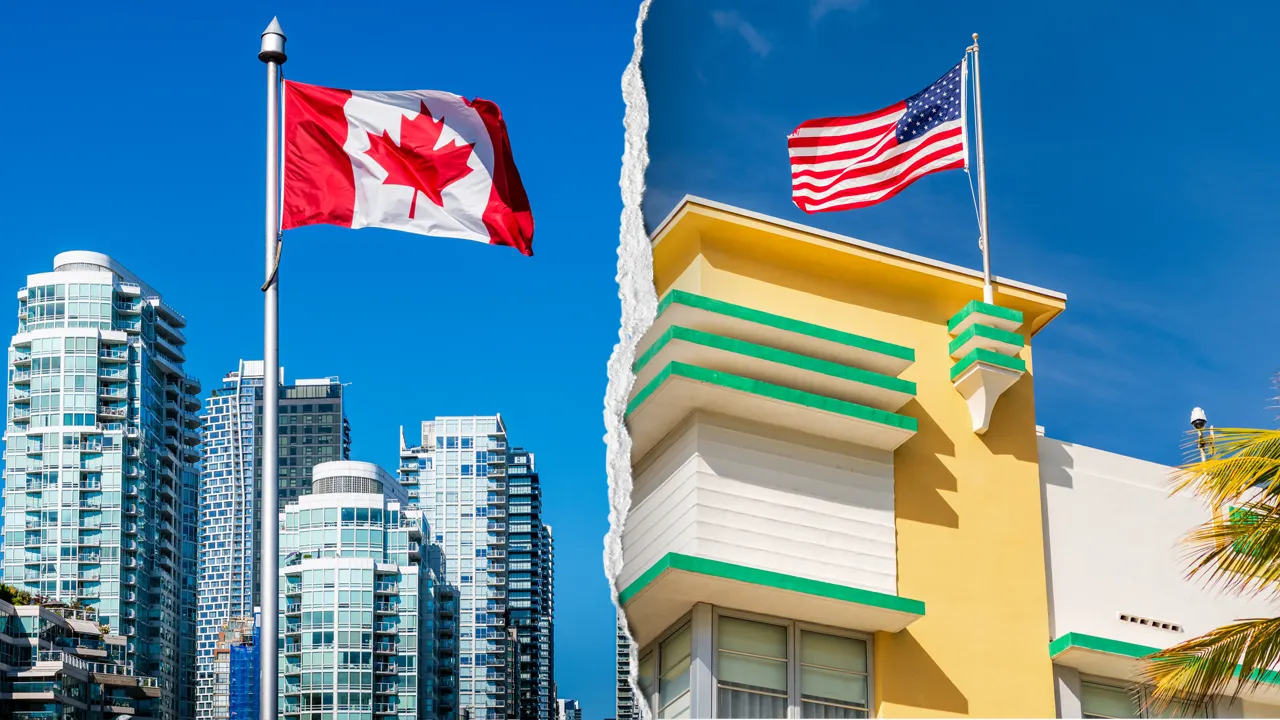
Trade tensions have become personal for Canada and we're paying a price: U.S. Travel Association CEO
Youtube· 2025-10-24 19:21
Core Insights - The decline in Canadian visitation to the United States has reached 23% year-over-year, significantly impacting the travel industry, particularly for small hotels that lack international properties to offset losses [2][6][7] - Canadian travelers are crucial for the U.S. travel market, spending approximately $2,000 per person per trip, making their absence felt in the industry [8][12] - The U.S. travel sector is facing challenges due to long visa wait times and infrastructure issues, which could hinder recovery efforts ahead of major events like the FIFA World Cup and the Olympics [9][12][13] Travel Trends - The travel landscape is shifting, with Canadians opting for domestic travel instead of visiting the U.S., while some U.S. hotels are benefiting from increased domestic travel, particularly among affluent travelers [4][6][7] - Other international markets, such as Japan and the UK, are seeing an increase in travel to the U.S., contrasting with the decline from Canada [2][3] Industry Challenges - The travel industry is under strain due to the decline in Canadian visitors, and there is a pressing need to resolve trade negotiations to facilitate a rebound [3][7] - Infrastructure issues, particularly at airports like Newark, are causing significant delays and could impact travel experiences negatively [9][11] Opportunities - The upcoming FIFA World Cup presents a significant opportunity for U.S. travel businesses, with the potential to attract an additional 8 million visitors if managed effectively [13] - Improvements in TSA processes, such as not requiring travelers to remove shoes, are steps in the right direction, but more work is needed to enhance the competitiveness of the U.S. as a travel destination [14]
X @The Economist
The Economist· 2025-10-24 07:00
Trade Relations - After six months of trade tensions, China is breathing more easily than America [1] Geopolitical Analysis - The report explains three reasons why China is faring better than America in the trade tensions [1] Potential Risks - The report also highlights what could still go wrong in the trade relationship [1]
X @Bloomberg
Bloomberg· 2025-10-24 03:13
Trade tensions remain a key focus for India markets, with senior executives at refiners warning that flows of Russian oil will likely fall to near zero following US sanctions.Read what could move markets today for free with your email. https://t.co/L3ggDlbT5x ...
X @Bloomberg
Bloomberg· 2025-10-24 02:56
Market Trends - Trade tensions are a key focus for India markets [1] - US sanctions are likely to cause Russian oil flows to India to fall to near zero [1] Industry Impact - Refiners' senior executives warn of potential disruptions in Russian oil supply [1]
Adelayde Exploration Closes Acquisition of the Sisson NW Tungsten Project in New Brunswick
Newsfile· 2025-10-23 21:10
Core Insights - Adelayde Exploration Inc. has successfully closed an acquisition of the Sisson NW Tungsten Project, which consists of 89 claims over approximately 4,890 contiguous acres in New Brunswick, adjacent to Northcliff Resources Ltd.'s Sisson Tungsten Mine [1][2] Company Developments - The acquisition allows Adelayde to expand its footprint to a total of 9,780 acres prospective for tungsten, coinciding with rising global demand for critical metals amid trade tensions between the USA and China [2] - The company plans to initiate work plans for the Sisson Tungsten and George Lake South Antimony projects, along with a maiden drill program on the Esmeralda County gold project in Nevada in 2025 [2] Financial Terms of Acquisition - Under the option agreement, Adelayde will earn a 100% interest in the Sisson NW Tungsten Project by issuing 6,000,000 common shares at a deemed price of $0.11 per share and making a cash payment of $5,000 [2] - The payment structure includes an immediate payment of $5,000 and the issuance of 4,500,000 shares, followed by an additional 1,500,000 shares after incurring a minimum of $200,000 in exploration expenditures within 18 months [2] Industry Context - The global supply of tungsten and antimony is tight, with China producing approximately 80-90% of each, while demand is increasing for applications in electronics, defense, and energy technologies [2] - The strategic stockpiling and supply risks are contributing to higher prices for these critical metals as Western nations seek alternative sources [2]
Global Markets, U.S. Futures Mixed; Energy Stocks Boosted by Russian Oil Tariffs
WSJ· 2025-10-23 08:23
Core Viewpoint - U.S. stock futures are experiencing mixed movements due to heightened trade tensions following Trump's threat of new restrictions on software products against China [1] Group 1 - The announcement has led to increased uncertainty in the market, impacting investor sentiment [1] - Companies involved in software and technology sectors may face potential regulatory challenges as a result of these threats [1] - The situation could lead to further escalation in U.S.-China trade relations, affecting global supply chains [1]
亚洲经济学 - 哪些亚洲经济体更易受中国通缩压力影响-Asia Economics-Which Asian economies are more exposed to deflationary pressures from China
2025-10-23 02:06
Summary of Key Points from the Conference Call Industry Overview - The focus is on the **Asia Pacific** region, particularly the economic impacts of **China's deflationary pressures** on other Asian economies. Core Insights and Arguments 1. **China's Deflationary Environment**: - China's economy has been experiencing deflation for 10 consecutive quarters, with a GDP deflator of -1.0% as of Q3 2025, indicating persistent deflationary pressures [2][4][44]. - The non-commodity Producer Price Index (PPI) in Asia excluding China is also declining, influenced by China's trade surpluses and excess capacity [1][10]. 2. **Impact on Asia Ex China**: - The report identifies **Thailand, Malaysia, and Korea** as the most exposed economies to China's deflationary pressures, while **Australia and Japan** are the least exposed [3][76][80]. - The PPI for Thailand is at -1.2%, Malaysia at -5.0%, and Korea at 0.7%, indicating varying levels of exposure to deflation [76]. 3. **Central Banks' Response**: - Central banks in Asia are likely to continue easing monetary policy, as inflation is within or below comfort zones for eight out of ten economies in the region [5]. 4. **Trade Dynamics**: - China's trade surplus has increased significantly, from **US$890 billion** in September 2024 to **US$1,174 billion** currently, with exports to the US declining by **27%** year-on-year [56][62]. - The share of Asia ex China in China's exports has risen from **39%** to **41%** [10]. 5. **Sectoral Analysis**: - Sectors most affected by China's deflation include **motor vehicles, electronics, and battery manufacturing**. These sectors are experiencing significant pricing pressures due to competitive dynamics with China [67][70]. - The report highlights that **13 out of 14 non-commodity manufacturing sectors** in China are seeing price declines, with pharmaceuticals and automotive sectors being particularly impacted [47][52]. Additional Important Insights 1. **Risks to the Economic Outlook**: - Potential risks include stronger global growth or intensified anti-involution efforts in China, which could alter the current deflationary trajectory [6]. 2. **Framework for Assessment**: - A scorecard approach is introduced to assess the exposure of Asian economies to China's deflation, considering factors like PPI weight, correlation with China's PPI, and export similarity [3][75]. 3. **Long-term Implications**: - Without significant stimulus to boost demand, achieving a sustained exit from deflation in China remains challenging, which will continue to affect the broader Asian economic landscape [4][43]. 4. **Sector-Specific Pricing Trends**: - Pricing trends in key sectors such as **autos and batteries** remain weak, with significant price declines noted in recent months [52][54]. 5. **Comparative Analysis of Economies**: - Japan and Australia show resilience with positive PPI growth, indicating lower exposure to deflationary pressures compared to their Asian counterparts [80][81]. This summary encapsulates the critical insights from the conference call, highlighting the interconnectedness of China's economic conditions and their implications for the broader Asia Pacific region.
US stocks today: Wall Street mixed as earnings season heats up; GM, Halliburton lead gains
The Times Of India· 2025-10-21 15:08
Market Overview - The Dow Jones Industrial Average rose 0.1% to 46,757.20, while the S&P 500 slipped 0.1% to 6,731.14 and the Nasdaq Composite declined 0.3% to 22,933.67 [2][4] - Tech giants, including Alphabet, saw a decline, with Alphabet dropping 1.3% from its record high, becoming the heaviest drag on the S&P 500 [3][4] Company Performance - General Motors (GM) surged 10.2% after reporting quarterly results that surpassed analyst expectations and raised its full-year financial forecasts [2][4] - CEO Mary Barra indicated that GM is taking steps to curb losses in its electric vehicle business by 2026, acknowledging slower-than-expected EV adoption [2][4] - Halliburton and Danaher both climbed over 8% after reporting stronger-than-expected profits [2][4] - Coca-Cola rose 3.4% and GE Aerospace advanced 4.2% on positive earnings reports [2][4] - Warner Bros. Discovery shares jumped 10.6% as the company considers a sale of all or part of its business due to unsolicited interest [2][4] Market Sentiment - Analyst Patrick O'Hare noted that earnings news for the September quarter continues to be better than expected, with generally reassuring guidance [3][4] - CFRA Research's Sam Stovall highlighted investor concerns regarding stretched valuations amid strong year-to-date gains [5] International Markets - Markets in Europe and Asia were broadly higher, with Japan's Nikkei 225 rising 0.3% and Shanghai gaining 1.4% [5] - Hong Kong rose 0.7% amid hopes for a meeting between President Donald Trump and Chinese President Xi Jinping to ease trade tensions [5] Bond Market - The yield on the 10-year Treasury fell to 3.95% from 4.00% [5]
South Korea’s crackdown on US tech giants could cost $1T, report warns
Fox Business· 2025-10-21 10:01
Core Insights - A new study indicates that South Korea's stringent competition regulations targeting U.S. tech firms could result in nearly $1 trillion in lost economic growth for both countries over the next decade, with U.S. companies potentially losing $525 billion and South Korean small businesses facing losses of approximately $469 billion [1][4]. Group 1: Economic Impact - The Competere Foundation's research highlights that South Korea's regulatory environment is detrimental not only to U.S. tech firms but also to its own economy, particularly affecting small businesses [4][8]. - The report emphasizes that reduced foreign investment will disproportionately impact smaller Korean businesses, urging both nations to prioritize regulatory reform to enhance economic ties [8]. Group 2: Regulatory Environment - The aggressive enforcement actions by Korea's Fair Trade Commission (KFTC) are seen as unfairly limiting U.S. tech firms and discouraging foreign investment, which could lead to broader diplomatic and trade implications [2][6]. - Experts warn that the current regulatory approach may backfire, complicating trade negotiations and potentially leading to a more confrontational stance between the U.S. and South Korea [9][10]. Group 3: Competitive Landscape - The restrictive measures against U.S. companies may create opportunities for Chinese firms, which are less deterred by inconsistent enforcement of regulations, posing risks to U.S. economic interests and national security [12].