
全面从严治党

Search documents
推进全面从严治党,总书记提出新要求
Yang Shi Xin Wen Ke Hu Duan· 2026-01-14 00:50
Group 1 - The core message emphasizes the need for stronger and more practical measures to advance the comprehensive and strict governance of the Party, ensuring the implementation of major decisions made by the Central Committee [5][8] - The importance of political supervision is highlighted as a crucial guarantee for the Party's political line and a necessary measure to maintain the authority and centralized leadership of the Central Committee [8][10] - The speech outlines the necessity of effectively confining power within institutional frameworks as a key task in the new era of strict Party governance [11][14] Group 2 - The ongoing anti-corruption struggle is described as a critical battle that cannot be lost, with the current situation remaining severe and complex [15][16] - The need to maintain a high-pressure stance against corruption is reiterated, with specific pathways for future anti-corruption efforts outlined [16][17] - The report mentions significant statistics from 2025, including 78.9 thousand cases filed and 67.7 thousand individuals punished by the disciplinary inspection and supervision agencies [17]

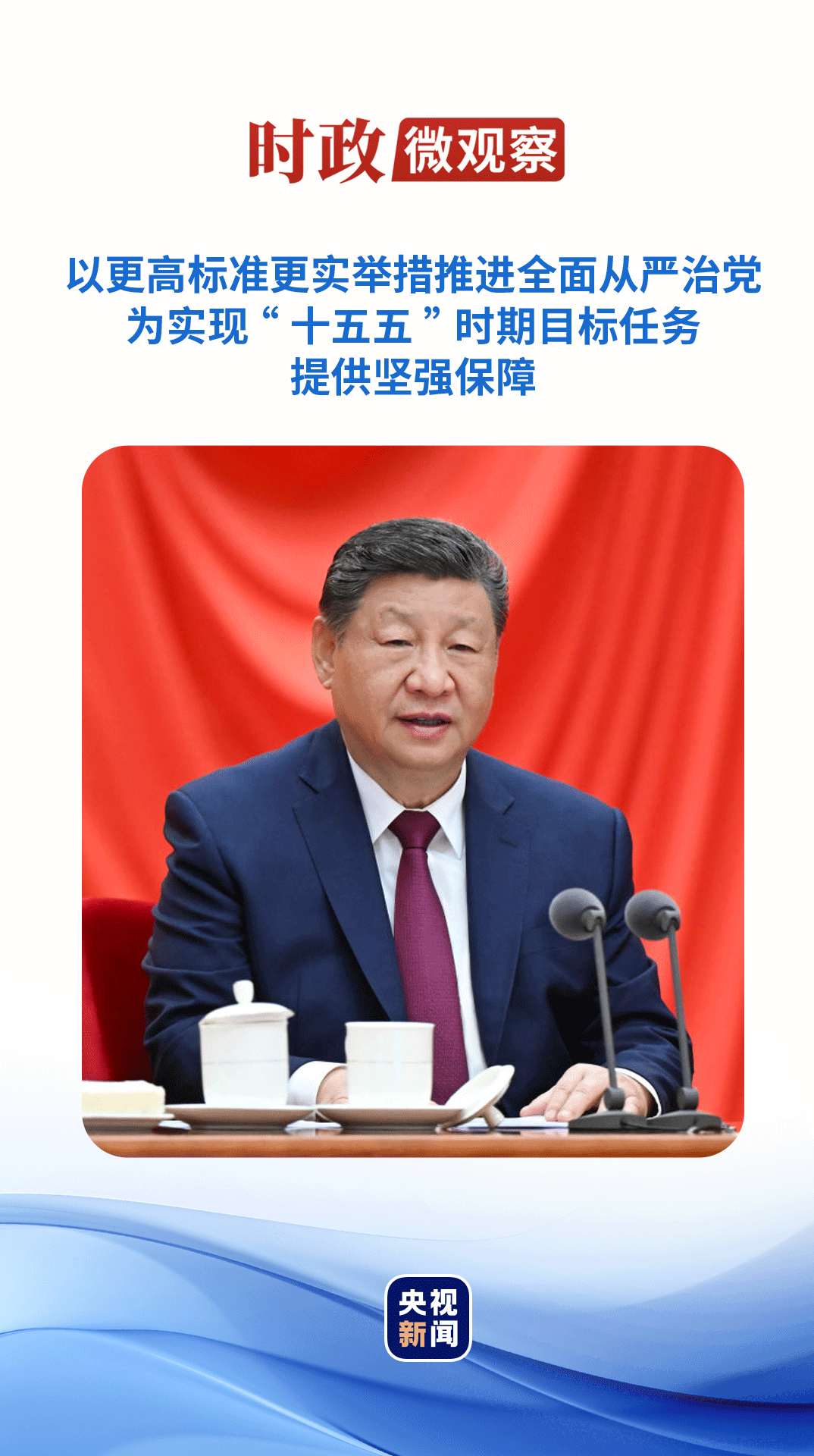
二十届中央纪委五次全会与会同志谈学习贯彻习近平总书记重要讲话精神
Xin Hua She· 2026-01-14 00:10
Group 1 - The core message emphasizes the significant achievements in strict governance of the Party over the past year and the strategic deployment for advancing this governance to ensure the successful start of the "14th Five-Year Plan" [3][4] - The importance of implementing the major decisions and deployments of the Party Central Committee is highlighted as a fundamental requirement for maintaining its authority and leadership [4][5] - Political supervision is identified as a crucial guarantee for the implementation of the Party Central Committee's major decisions, with a focus on enhancing the specificity, precision, and regularity of supervision [5][6] Group 2 - The necessity of confining power within institutional frameworks is underscored as a key task in the new era of strict governance of the Party [6][7] - The execution of regulations and the importance of strong supervision and discipline are emphasized to ensure that institutional rules are effectively enforced [7][8] - The ongoing complexity of the anti-corruption struggle is acknowledged, with a call for maintaining a high-pressure stance against corruption and focusing on areas with concentrated power and resources [8][9] Group 3 - The need for deepening the understanding of new types of corruption and enhancing the use of technology in disciplinary inspection work is stressed to improve the effectiveness of anti-corruption efforts [9] - The responsibility of disciplinary inspection agencies in promoting the Party's self-revolution and strict governance is highlighted, with a commitment to maintaining the Party's unity and purity [9]

以有效管党治党保障经济社会发展
Jing Ji Ri Bao· 2026-01-14 00:04
中国共产党一路走来的光辉历程表明:管党治党越有效,经济社会发展的保障就越有力。 党的二十届四中全会把"以全面从严治党为根本保障"写入"十五五"时期经济社会发展的指导思想, 并就持之以恒推进全面从严治党作出一系列部署。在开局之年的二十届中央纪委五次全会上,习近平总 书记进一步明确提出,要"更加坚决有力地贯彻落实党中央重大决策部署,更加科学有效地把权力关进 制度笼子,更加清醒坚定地推进反腐败斗争"。"三个更加",精准锚定新时代新征程管党治党的关键抓 手和实践路径,具有极强的现实针对性和深远的战略意义。 "十五五"时期,我国进入了基本实现社会主义现代化夯实基础、全面发力的关键时期。国际风云激 荡变幻、国内经济运行中周期性结构性矛盾较为突出,在这样的大背景下回答好时代的考题、担负起历 史的重任,迫切需要把管党治党责任进一步落实到位,不断提高党领导经济社会发展的能力和水平。 打最硬的铁,须是铁打的人。对照这样的要求,我们取得的成效有目共睹,但远未到大功告成的时 候。数据显示,2025年前11个月,全国查处的违反中央八项规定精神问题中,"在履职尽责、服务经济 社会发展和生态环境保护方面不担当、不作为、乱作为、假作为,严重 ...
系统发力提升基层纪检监察监督质效
Zhong Yang Ji Wei Guo Jia Jian Wei Wang Zhan· 2026-01-13 23:46
Core Viewpoint - Strengthening grassroots supervision is essential for enhancing the effectiveness of governance and promoting strict party discipline at the grassroots level [1][2][3] Group 1: Improvement of Supervision System - The grassroots supervision system must be improved to address its extensive reach and complexity, requiring a cohesive supervisory force [1] - The establishment of a collaborative supervision mechanism among various departments, including audit, statistics, finance, and agriculture, is crucial for effective oversight [1] - The integration of supervisory resources aims to enhance the effectiveness of supervision through coordinated efforts and joint inspections [1] Group 2: Clarification of Rights and Responsibilities - A closed-loop supervision mechanism for "micro-powers" has been developed to ensure that power is exercised within established boundaries [2] - The creation of a clear list of "micro-powers" at the village level helps in defining authority and responsibilities across various administrative tasks [2] - Procedures for exercising power are standardized, with flowcharts established for each item on the list to facilitate transparency and accountability [2] Group 3: Strengthening the Supervision Team - The integration of supervisory resources is aimed at enhancing the quality and efficiency of grassroots disciplinary inspection and supervision [3] - Continuous optimization of personnel allocation ensures that supervisory forces are adequately staffed and focused on frontline enforcement [3] - Training mechanisms are being improved to enhance the professional skills of supervisory personnel, employing various educational methods to ensure comprehensive capability development [3]
明纪释法丨重温党的纪律建设的总体要求
Zhong Yang Ji Wei Guo Jia Jian Wei Wang Zhan· 2026-01-13 23:46
Group 1 - The core message emphasizes the importance of strict discipline within the Communist Party to ensure the successful implementation of the "14th Five-Year Plan" and the overall modernization of socialism in China [1][3][10] - The "Disciplinary Regulations" serve as a fundamental guideline for the Party's discipline construction, highlighting the necessity of adhering to Marxist principles and the leadership of Xi Jinping [2][4][5] Group 2 - The regulations outline four main requirements for discipline construction, including the guidance of Xi Jinping's Thought on Socialism with Chinese Characteristics for a New Era [6][9] - The Party's leadership is identified as the most essential characteristic of socialism with Chinese characteristics, necessitating strict adherence to political discipline and the "Two Maintains" principle [8][10] Group 3 - The regulations stress the need for a comprehensive approach to Party governance, integrating political, ideological, organizational, and disciplinary construction [9][11] - The emphasis on discipline is framed as a historical necessity for the Party to maintain unity and effectiveness in governance, especially in the face of significant challenges [10][11]
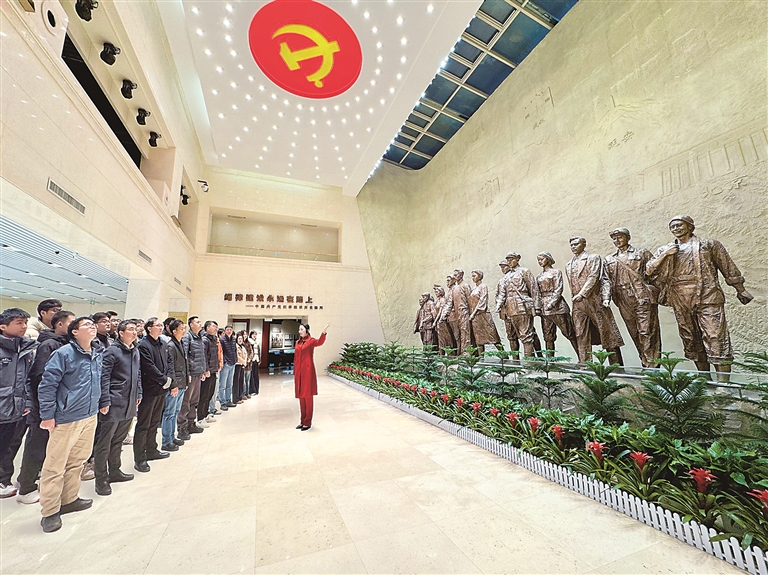
织密扎牢管党治党制度笼子
Zhong Yang Ji Wei Guo Jia Jian Wei Wang Zhan· 2026-01-13 23:46
Core Points - The article emphasizes the importance of institutional governance within the Communist Party of China, highlighting the need to put power into a "system cage" as a key task for strict governance of the Party in the new era [3][4][5] - It discusses the continuous innovation and improvement of the Party's internal regulations and systems under the guidance of Xi Jinping's thoughts, aiming to enhance the Party's leadership and organizational structure [4][5][6] - The article outlines various new regulations and amendments aimed at strengthening the Party's internal governance, including the introduction of the first comprehensive regulation on ideological and political work [6][7][8] Group 1: Institutional Governance - The article states that the Party's self-revolution focuses on institutional governance, which is a distinctive feature of the Party's management and governance [3][4] - It mentions the implementation of the Central Eight Regulations as a starting point for improving Party conduct and governance [3][4] - The article highlights the necessity of integrating legal governance and regulatory governance to create a complementary system [5][6] Group 2: Regulatory Innovations - The article details the issuance of new regulations, such as the "Regulations on the Responsibility System for Ecological Environment Protection" to enhance ecological governance [5][6] - It notes the revision of the "Regulations on Saving and Opposing Waste in Party and Government Agencies" to tighten financial management and resource usage [5][6] - The introduction of the "Regulations on the Discussion and Decision-Making Procedures for Party Member Disciplinary Actions" aims to standardize disciplinary processes within the Party [6][7] Group 3: Strengthening Execution and Supervision - The article emphasizes the need for strict enforcement of regulations and the importance of supervision in ensuring compliance with Party rules [11][12] - It discusses the role of disciplinary inspection agencies in monitoring the implementation of regulations and addressing violations [11][12] - The article highlights the importance of education and training for Party members to enhance their understanding and adherence to regulations [15][19]
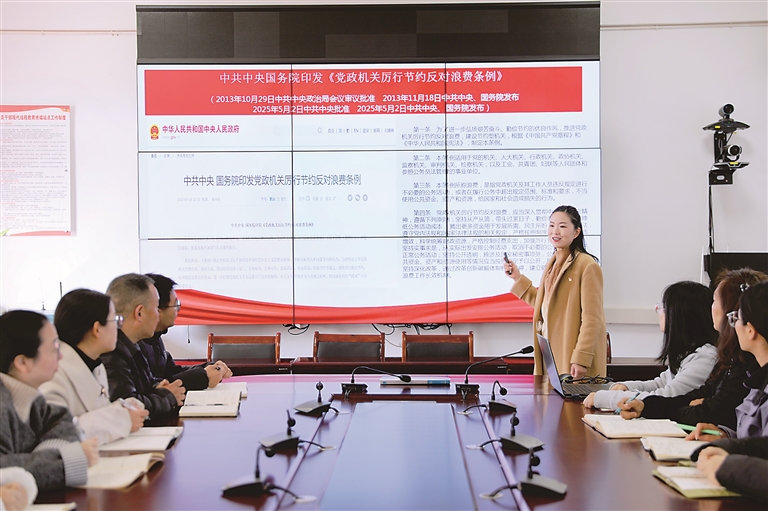
努力营造风清气正的政治生态为经济社会发展创造良好环境
Zhong Yang Ji Wei Guo Jia Jian Wei Wang Zhan· 2026-01-13 23:45
Group 1 - The "15th Five-Year Plan" period is crucial for achieving socialist modernization, emphasizing the need for political responsibility and historical mission among party organizations and members [1] - Strengthening party governance is linked to economic and social development, with a focus on creating a clean political environment to foster growth [1] - Continuous efforts to combat corruption and improve political ecology are essential for high-quality economic and social development [2] Group 2 - The need for in-depth analysis and coordinated supervision to address issues related to responsibility, integrity, and public sentiment is highlighted [2] - Emphasis on a high-pressure stance against corruption, ensuring that corrupt individuals have no refuge [2] - The importance of promoting a culture of integrity and addressing corruption in key areas to create a fair and just development environment is stressed [2] Group 3 - Strengthening work style and addressing the "Four Winds" is vital for purifying the political ecology and optimizing the economic environment [3] - Continuous education on the central eight regulations is necessary to prevent regression and ensure that party members focus on practical issues [3] Group 4 - A commitment to addressing persistent issues in the business environment is emphasized, with a focus on solving urgent problems faced by enterprises and the public [4] - Accountability for improving the business environment is stressed, with a call for swift action against inefficiencies and bureaucratic obstacles [4]
把各方面监督贯通起来
Zhong Yang Ji Wei Guo Jia Jian Wei Wang Zhan· 2026-01-13 23:45
Group 1 - The core strategy of the anti-corruption campaign emphasizes the need for integrated governance and enhanced collaboration among various supervisory bodies to improve overall governance effectiveness [1][2] - The importance of party internal supervision as a guiding force for all types of supervision is highlighted, with a focus on strengthening the responsibilities of party committees and leadership [1][2] - The necessity for a comprehensive and efficient supervisory system that covers all levels and aspects of governance is stressed, aiming to transform institutional advantages into effective governance [3][4] Group 2 - The role of disciplinary inspection and supervision agencies is crucial in the strict governance of the party, focusing on their primary responsibilities and enhancing collaborative mechanisms [2][4] - Continuous efforts are being made to improve the quality and effectiveness of grassroots supervision, ensuring that various supervisory methods are integrated and operationalized [2][3] - The establishment of communication and coordination mechanisms among different supervisory departments is essential for addressing common and critical issues effectively [4]
不断加强党的创新理论武装
Zhong Yang Ji Wei Guo Jia Jian Wei Wang Zhan· 2026-01-13 23:45
Group 1 - The core message emphasizes the importance of using Xi Jinping's Thought on Socialism with Chinese Characteristics for a New Era to guide the work of the Party's disciplinary inspection and supervision [1][3] - The focus is on strengthening the theoretical foundation and ensuring that the Party's innovative theories are deeply integrated into the entire process of disciplinary inspection and supervision work [2][4] - There is a commitment to enhance the political, theoretical, and practical foundations of the work, ensuring that the direction, ideas, and measures of disciplinary inspection are clearer and more effective [2][3] Group 2 - The implementation of Xi Jinping's Thought is seen as essential for achieving high-quality development in disciplinary inspection and supervision, with a focus on practical application and deep learning [3][5] - Various mechanisms are being established to promote learning and application of the Party's innovative theories among disciplinary inspection cadres, including a multi-faceted learning approach [2][4] - The importance of translating theoretical insights into practical measures for political supervision and anti-corruption efforts is highlighted, aiming for a more scientific and effective governance system [4][5]
永远在路上部分与会同志接受集体采访侧记
Zhong Yang Ji Wei Guo Jia Jian Wei Wang Zhan· 2026-01-13 23:45
Group 1 - The core message emphasizes the significant achievements in strict party governance over the past year and outlines strategic deployments to further enhance these efforts during the critical period of socialist modernization [1] - The importance of understanding the decisive significance of the "two establishments" and enhancing the "four consciousnesses" is highlighted, along with the commitment to political responsibility in strict party governance [1] - The need for a high-pressure stance against corruption is reiterated, emphasizing that there must be no tolerance for corruption and that efforts must be made to eliminate the conditions that allow corruption to thrive [2] Group 2 - The essence of corruption is identified as the abuse of power, necessitating the regulation of power operations, particularly focusing on leadership roles and the enforcement of institutional authority [3] - The importance of integrating various departments to enhance the effectiveness of anti-corruption measures is stressed, promoting a collaborative approach to governance [2][3] - The necessity for continuous improvement in work styles and the promotion of a culture of integrity within the education system is emphasized, alongside the commitment to addressing issues of formalism and reducing burdens on grassroots levels [4]