电动汽车

Search documents
芝浦不同意出售?国巨要强买!
半导体行业观察· 2025-02-27 01:50
Core Viewpoint - Yageo Group is determined to acquire Shibaura Electronics despite the latter's lack of consent, emphasizing the strategic importance of Shibaura's temperature sensor technology for AI and electric vehicle applications [1][3]. Group 1: Acquisition Rationale - Shibaura Electronics has excellent temperature sensor technology, crucial for AI and electric vehicle applications. However, 60% of its business is domestic in Japan, with only 6% of sales coming from major markets like Europe and the US [3]. - The largest portion of Shibaura's sales comes from home appliances, accounting for 44%, while automotive and industrial applications contribute minimally and are unlikely to see significant growth [3]. Group 2: Business Strategy Post-Acquisition - Yageo plans to leverage its global influence and existing customer base in advanced fields like AI and automotive to help Shibaura expand its business in Europe and the US [4]. - The strategy focuses on growth through investment and support rather than cost-cutting, aiming for a mutually beneficial relationship [4]. - Yageo intends to expand Shibaura's factories, similar to its previous acquisition of Tokin, where it invested in debt repayment and new factory construction [4]. Group 3: Market Environment and Timing - The decision to pursue the acquisition now is influenced by significant changes in the global business environment and Japanese regulations over the past three years, including geopolitical risks and economic downturns [5][6]. - Taiwan has emerged as a center for the AI industry, increasing the urgency for Yageo to act [6]. Group 4: Approach to Acquisition - Yageo is open to proceeding with a tender offer even without Shibaura's consent but hopes to demonstrate sincerity to gain their approval [7]. - The company has never conducted an unsolicited acquisition before but believes that adapting to the rapidly changing industry landscape is essential for future success [9].


融达期货宏观日报0226
Hua Rong Rong Da Qi Huo· 2025-02-26 08:55
Macro Economic Insights - U.S. Treasury Secretary Bessent stated that the 10-year Treasury yield should "naturally" decline, emphasizing the need for economic "privatization" through tariffs aimed at increasing industrial capacity and job creation[1] - Trump announced that Ukrainian President Zelensky is expected to visit the U.S. for an agreement, while Russia demands Ukraine's military surrender and territorial concessions as conditions for a ceasefire[1] - Copper prices surged over 3% as Trump ordered an investigation into U.S. copper imports, indicating potential tariffs due to national security concerns[1] Commodity Market Performance - Domestic commodity futures closed mostly lower, with crude oil down 2.19% and glass down 2.16%[2] - Basic metals saw declines, with aluminum down 1.21% and stainless steel down 0.91%[2] - Agricultural products also fell, with soybean meal down 1.34% and vegetable oil down 1.09%[2] Global Asset Performance Overview - NYMEX crude oil closed at $69.12, down 2.52% daily and 11.42% year-on-year[4] - LME copper closed at $9,395.00, down 1.13% daily but up 8.63% year-on-year[4] - COMEX gold closed at $2,928.60, down 1.36% daily but up 35.34% year-on-year[4] Bond Market Insights - The 10-year Chinese government bond yield is at 1.75%, down 0.57% daily and down 25.31% year-on-year[4] - The 10-year U.S. Treasury yield is at 4.40%, down 0.02% daily and up 0.30% year-on-year[4] - The China-U.S. interest rate differential stands at -2.65, reflecting a slight increase of 0.01%[4] Currency and Forex Trends - The U.S. Dollar Index is at 106.28, down 0.36% daily and up 3.25% year-on-year[4] - The offshore RMB is trading at 7.25 against the U.S. dollar, showing a minor increase of 0.01%[4] - The Euro to U.S. dollar exchange rate is at 1.05, up 0.44% daily but down 3.77% year-on-year[4]
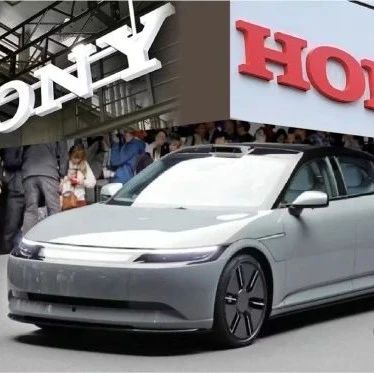
索尼本田的新EV将搭载AI智驾功能
日经中文网· 2024-10-21 03:00
Core Viewpoint - Sony Honda Mobility plans to launch a high-end electric vehicle (EV) named "Afeela" in 2026, featuring AI-assisted driving capabilities, marking the first public introduction of such technology in Japanese cars [1] Group 1: AI and Autonomous Driving - The collaboration between Sony and Honda aims to integrate AI as the "brain" for driving, which is expected to accelerate the enhancement of autonomous driving performance [1] - The AI control functions will be introduced in phases, with upgrades occurring one to two times a year, starting with "Level 3" capabilities for specific conditions like highways [1] - Current mainstream autonomous driving technologies rely on sensors and cameras for obstacle recognition, but using AI can improve the speed of driving function enhancements and reduce costs by minimizing the need for expensive sensors [1] Group 2: Market Trends and Competition - The global market for autonomous vehicles is projected to reach $27.528 trillion by 2033, expanding 17 times from 2023 [1] - Companies like Tesla and BYD are already implementing similar AI features in their EVs, indicating a competitive landscape where cross-industry players are reshaping the traditional automotive industry, historically dominated by Japanese, American, and European manufacturers [1] - The value addition in vehicles has shifted from engine-centric components to battery and digital technologies, with batteries currently accounting for about 30% of production costs [1]