智能体

Search documents
特斯拉大模型“上车”细节曝光:语音助手接入豆包与DeepSeek;全球最轻的MR头显发布,双目8K,价格有望9999?丨AI周报
创业邦· 2025-08-23 10:09
Core Insights - The article highlights significant developments in the AI industry, including new product launches, funding events, and advancements in AI technology. Domestic Developments - DeepSeek released its new model V3.1, enhancing agent capabilities and increasing API prices effective September 6, with input prices rising from 2 to 4 yuan per million tokens and output prices from 8 to 12 yuan [4][6]. - Tesla is integrating advanced AI capabilities into its voice assistant, collaborating with ByteDance's Volcano Engine and DeepSeek [6][7]. - Vivo launched its first mixed reality headset, the Vivo Vision, featuring a lightweight design and high-resolution display, although pricing details remain undisclosed [8]. - Manus reported a revenue run rate of $90 million, indicating strong growth potential in the AI agent platform market [16]. - The Chinese government reported that over 60% of AI model training data is now in Chinese, with some models reaching 80% [15][16]. International Developments - Meta is restructuring its AI division into four groups, focusing on different aspects of AI development [33][38]. - Intel's market value surged by $24 billion, reaching levels not seen since the internet bubble, with a dynamic P/E ratio of 53 [34][37]. - Databricks announced a valuation exceeding $100 billion as it seeks additional funding [34]. - OpenAI has raised $8.3 billion in a recent funding round, with annual recurring revenue projected to exceed $20 billion by year-end [42]. AI Financing Overview - A total of 19 AI financing events were disclosed globally this week, with a total funding amount of 11.59 billion yuan, averaging 828 million yuan per event [46]. - In China, the highest funding was reported for Magic Warehouse Robotics, which completed a multi-million yuan Series A round [53]. - Internationally, Cognition raised $500 million in Series C funding, focusing on AI programming technology [55].



在OpenAI炼Agent一年半,回国做出首个开源Agent训练框架!这个30岁清华天才却说:创业不是技术命
AI前线· 2025-08-23 05:32
Core Viewpoint - The article highlights the journey and achievements of Wu Yi, a prominent figure in AI and reinforcement learning, emphasizing his contributions to the field and the unique positioning of his startup, BianSai Technology, which focuses on the AReaL framework for training large models [2][4][8]. Group 1: Career and Achievements - Wu Yi has a distinguished background, being an ACM World Medalist and a coach for the IOI team, with significant experiences at Facebook, ByteDance, and OpenAI [2][4]. - His startup, BianSai Technology, was acquired by Ant Group in 2024, and the team has developed a unique asynchronous reinforcement learning framework called AReaL, which has gained traction on GitHub with 2.4k stars [2][4][8]. Group 2: Insights from OpenAI Experience - Wu Yi's decision to join OpenAI was somewhat serendipitous, as he initially aimed for Google Brain but found OpenAI more accommodating due to its non-profit structure [4][5]. - He emphasizes the importance of evidence-driven decision-making in AI development, advocating for a flexible approach that allows for rapid adjustments based on new findings [5][13]. Group 3: Reinforcement Learning and Competitions - Wu Yi discusses the differences in performance of AI models in competitions like IOI and CCPC, attributing failures to the readiness of the models rather than inherent limitations of AI [6][7]. - He believes that AI's role in competitive programming is akin to sports, where psychological factors and skills play a significant role [6][7]. Group 4: AReaL Framework and Market Position - AReaL is positioned as a unique framework for training agent models, with Wu Yi asserting that there are currently no direct competitors in this space [2][33][36]. - The framework aims to facilitate faster and more effective training of agent models, focusing on user-friendliness and performance [36][37]. Group 5: Future Directions and Challenges - Wu Yi anticipates that multi-agent systems will become increasingly important as the complexity of agent workflows grows, presenting new opportunities for algorithm development [41][42]. - He expresses confidence that agent technology will evolve to become a mainstream interaction form in AI, moving towards more autonomous and proactive roles [42].

上市公司积极布局智能体
Zhong Guo Zheng Quan Bao· 2025-08-22 20:10
Core Insights - DeepSeek has launched DeepSeek-V3.1, marking a significant step towards the "Agent Era" with improved response times and enhanced performance in tool usage and agent tasks [1] - Industry experts view 2025 as the "Agent Year," with increasing applications of large models in sectors like healthcare, financial intelligence, and e-commerce [1][2] - Companies are actively developing and implementing agent applications, achieving tangible results in various verticals [2][3] Company Developments - 360 Group's founder Zhou Hongyi emphasizes that agents represent a more advanced evolution compared to large models, integrating task planning and tool utilization capabilities [2] - GuoDianYunTong has focused on financial technology and urban intelligence, developing the Wangdao industry model and successfully applying it in digital auditing and government services [2][3] - Langxin Group has introduced the "Langxin Nine Functions AI Energy Model," which integrates time-series prediction and AI agent technology for optimized decision-making in electricity markets [4] Industry Trends - The shift from passive "dialogue" to active "thinking-action" paradigms in human-computer interaction is reshaping organizational structures and business models [3] - The consensus among companies is that specialized agents are more viable than general-purpose agents, requiring collaboration among multiple foundational models [3][4] - The current environment of open-source ecosystems, policy support, and accelerated application deployment is fostering growth in AI scene platforms and consumer application enterprises [4]
企业级AI陷“落地焦虑”,联想SSG胡贯中:全栈AI是关键
2 1 Shi Ji Jing Ji Bao Dao· 2025-08-22 13:01
Core Insights - The application of AI in industrial scenarios is transitioning from "conceptual enthusiasm" to "implementation challenges" as companies seek structural growth opportunities driven by AI technology [1][2] - Lenovo's SSG Group reported a 19.8% year-on-year revenue increase to 16.3 billion yuan, achieving double-digit growth for 17 consecutive quarters, significantly outperforming the industry average [1][3] Investment Trends - Companies are increasingly investing in generative AI, moving from pilot projects to large-scale applications, driven by technological maturity and competitive pressures [3][4] - The evaluation of AI projects has become more pragmatic, with a focus on quantifiable business outcomes and ROI, rather than merely adopting AI for its own sake [4][5] Deployment Strategies - A hybrid deployment model combining local and cloud solutions is gaining traction, addressing data security concerns while allowing for flexibility and scalability [5][6] - Key industries such as manufacturing and supply chain are becoming primary areas for AI integration due to their complex processes and data-intensive nature [6][7] Market Evolution - The enterprise AI market is shifting from a focus on technological advancement to an emphasis on scenario adaptability and system collaboration [7][8] - Lenovo aims to provide end-to-end solutions that encompass data preparation, scenario handling, training, and management, facilitating rapid deployment and scalability [8][9] Future Directions - The future of enterprise AI is seen in the "inference market" and "intelligent agents," with a focus on applying trained models to generate measurable efficiency gains [9][10] - The integration of intelligent agents is viewed as a strategic pillar for enterprise AI, emphasizing the need for scenario-specific solutions rather than merely pursuing high-level technology [10]

实测智谱智能体:AI替我多付了7.9元
21世纪经济报道· 2025-08-22 11:29
Core Viewpoint - The article discusses the launch and features of AutoGLM2.0 by Zhiyu, highlighting its capabilities and the challenges of user trust in AI decision-making [1][12][15]. Group 1: Product Features and Innovations - AutoGLM2.0 allows users to perform tasks like ordering food and booking tickets through a cloud-based interface, enhancing user experience by executing commands in the cloud [6][12]. - The system operates without relying on the device's accessibility permissions, addressing privacy concerns associated with traditional mobile AI assistants [9][10]. - AutoGLM2.0 demonstrates improved multi-turn operation capabilities, allowing for smoother app interactions and task completion [12][15]. Group 2: User Trust and Ethical Considerations - The AI's ability to make decisions on behalf of users raises questions about the boundaries of AI autonomy, particularly when it makes unsolicited purchases [1][13][15]. - Zhiyu acknowledges the need for ongoing optimization to improve the accuracy of its decision-making processes, particularly regarding the addition of items like discount coupons without user consent [15]. - The article emphasizes the importance of establishing trust between users and AI systems, suggesting potential solutions like independent payment systems for AI to operate within defined limits [15][16]. Group 3: Competitive Landscape - The article notes that the AI assistant market is becoming increasingly competitive, with major players like Apple, Google, and domestic companies like Baidu and Tencent heavily investing in this space [3]. - Zhiyu's unique position as a model company without its own hardware or established app ecosystem is highlighted, indicating its strategic partnerships with hardware manufacturers to integrate AI capabilities [3][4].

推理、智能体、资本:2025年AI行业都认同啥趋势?
Sou Hu Cai Jing· 2025-08-22 10:17
Core Insights - The AI industry is experiencing rapid development, with significant changes in technology, product forms, and capital logic since the emergence of large models like ChatGPT in late 2022 [1] Group 1: Technology Consensus - The evolution of AI technology is centered around three main directions: the maturity of reasoning models, the rise of intelligent agents, and the strong development of the open-source ecosystem [2] - Reasoning models have become standard, with leading models from companies like OpenAI and Alibaba demonstrating strong reasoning capabilities, including multi-step logical analysis and complex task resolution [2][3] - Intelligent agents are defined as the key term for 2025, capable of autonomous planning and task execution, marking a significant leap from traditional chatbots [3] Group 2: Product Consensus - AI products are evolving with a focus on user experience, emphasizing interaction design, operational strategies, and result delivery [8] - Browsers are becoming the primary platform for intelligent agents, providing a stable environment for memory storage and task execution [9] - The operational strategy includes the widespread use of invitation codes to control user growth and early product releases for rapid iteration based on user feedback [10] Group 3: Capital Consensus - The AI industry is witnessing accelerated revenue growth, with leading companies like OpenAI projected to increase revenue from $1 billion in 2023 to $13 billion in 2025 [12] - Mergers and acquisitions are becoming prevalent, with large tech companies acquiring AI capabilities and private companies engaging in strategic acquisitions to enhance their ecosystems [13] - Investment in AI infrastructure is gaining attention, as the deployment of intelligent agents requires supporting capabilities like environment setup and tool invocation protocols [14]

AI替我多付了7.9元:智谱智能体带来的新问题
2 1 Shi Ji Jing Ji Bao Dao· 2025-08-22 09:53
Group 1 - The core idea of the article revolves around the advancements and implications of AI agents, particularly the AutoGLM2.0 launched by Zhipu, which showcases the potential of AI in performing real-world tasks like ordering food and making travel arrangements [1][19]. - The AI agent AutoGLM2.0 has demonstrated significant improvements in user experience, allowing for smoother multi-step operations and interactions with applications, which enhances its usability [17][19]. - There are ongoing concerns regarding user trust and the boundaries of AI decision-making, especially when the AI makes unsolicited choices that affect user expenses, as seen in the case of an additional coupon being added to an order without user consent [19][21]. Group 2 - Zhipu has adopted a dual strategy for its AI agents: collaborating with hardware manufacturers to integrate AI into mobile systems and developing its independent AI solutions, such as the AutoGLM series [2][3]. - The company has chosen to create a "cloud phone" to mitigate privacy risks associated with traditional mobile AI agents that require high-level permissions, thus ensuring that operations are conducted in a secure cloud environment [3][15]. - The cloud phone model allows users to maintain control over their devices while the AI performs tasks in the cloud, addressing both screen usage and permission issues that have plagued other mobile AI implementations [15][16]. Group 3 - The AI agent's ability to handle sensitive operations, such as payments, is designed to require user confirmation before proceeding, which aims to enhance security and user control [17][19]. - Future developments may include establishing a separate payment infrastructure for AI agents, allowing them to operate within defined financial boundaries while ensuring user oversight and the ability to reverse transactions [20][21]. - The overall success of AI agents like AutoGLM2.0 hinges on building a foundation of trust between users and the technology, which is critical for widespread adoption and acceptance [21].
DeepSeek-V3.1正式发布!天娱数科智能体布局与国产芯片的共振效应
Zheng Quan Shi Bao Wang· 2025-08-22 05:08
Core Insights - Tianyu Digital Technology reported a significant increase in revenue and net profit for the first half of 2025, with revenue reaching 988 million yuan, a year-on-year growth of 29.64%, and net profit attributable to the parent company at 23.62 million yuan, up 453.67% [1] - The company's performance is closely tied to advancements in AI technology, particularly in cost reduction and efficiency improvements, as well as the development of intelligent agents and domestic chip compatibility [1] - The rise of domestic AI technologies, such as DeepSeek, is reshaping the global industrial landscape through a model of "soft and hard collaboration" and "scene penetration" [1] Company Developments - Tianyu Digital Technology has established a comprehensive ecosystem in the intelligent agent field, from foundational technology architecture to practical applications, with its self-developed spatial intelligence MaaS platform, Behavision, accumulating over 1.5 million 3D data points and 650,000 multimodal data points [2] - The company has registered five datasets related to humanoid robotics and spatial data at the Beijing International Big Data Exchange, enhancing the precision of intelligent agents in recognizing object structures and dynamic relationships [2] - Tianyu has strategically invested in Chip Ming, integrating intelligent agent development with domestic chip innovation to create a collaborative AI ecosystem [2] Technological Advancements - Chip Ming's self-developed series of chips is the only global solution that integrates real-time 3D visual perception, edge AI, and SLAM into a single system-level chip, significantly reducing power consumption, latency, and computational load [3] - The chip utilizes a 12nm process technology, supports FHD resolution at 60fps, and optimizes asynchronous time distortion delay to as low as 1ms, with an edge AI computing power of 3.5 TOPS and a minimum power consumption of approximately 0.5 watts [3] - This chip can connect to six sensors and supports a complete AI/deep learning solution, providing customizable AI algorithm API interfaces to meet diverse customer needs [3] Industry Impact - Tianyu Digital Technology is building a competitive barrier in the intelligent agent industry through its integration of data, platforms, and chips, demonstrating the practical application capabilities of domestic AI technology [4] - The launch of DeepSeek-V3.1 marks a significant leap in the capabilities of intelligent agents, indicating that the Chinese intelligent agent industry is approaching its own "technological singularity" [4]

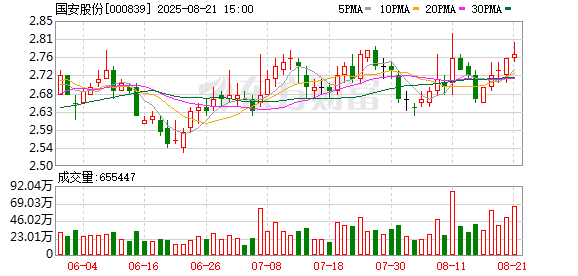
把握AI时代增长潜力 国安股份以数智服务打造增长新空间
Zheng Quan Ri Bao· 2025-08-21 08:35
Group 1 - The core viewpoint is that artificial intelligence (AI) technology is rapidly reshaping industries, with large models and AI agents becoming key engines for companies to build new productive forces [2] - Guoan Co. is focusing on AI business scenarios and accelerating the evolution of its core capabilities towards "platformization, intelligence, and productization" [2][10] - Honglian 95, a key technology subsidiary of Guoan Co., aims to complete digital infrastructure construction during the 14th Five-Year Plan and focus on AI intelligent platforms and large model integration in the 15th Five-Year Plan [2] Group 2 - The data annotation industry is experiencing explosive growth due to the increasing demand for high-quality data for training large models [3] - The market for data annotation is characterized by a shift from traditional labor-intensive methods to knowledge-intensive approaches, with significant professional requirements across different industries [3][4] - Honglian 95 has established a specialized annotation team capable of understanding domain data logic and quickly responding to dynamic annotation needs for large models [3][4] Group 3 - Data annotation is considered a "cornerstone project" for the AI era, providing essential support for AI innovation and creating significant economic value [4][6] - The industry is expected to see a compound annual growth rate of over 20% by 2027, driven by policy and market demand [6] - Challenges in the data annotation market include a shortage of professional talent, data security issues, and difficulties in quality control [6] Group 4 - Honglian 95 is investing in the development and optimization of annotation tools to enhance efficiency and security in data annotation [7] - The company aims to leverage a three-pronged approach of "professional teams + technical tools + vertical experience" to deepen its capabilities in the data annotation field [7] Group 5 - Honglian 95 is actively enhancing its AI technical capabilities and has integrated multiple domestic open-source large models into its systems [8] - The company has deployed various types of AI agents across its business systems to improve operational efficiency and service consistency [9] - The establishment of an AI intelligent system is expected to provide standardized support for market expansion and sustainable growth for Guoan Co. [9][10]