互联网平台企业涉税信息报送

Search documents
关于规范互联网平台企业涉税信息报送有关行政处罚事项的公告国家税务总局 工业和信息化部 国家互联网信息办公室公告2025年第22号
蓝色柳林财税室· 2025-09-30 12:47
Core Viewpoint - The announcement aims to regulate the reporting of tax-related information by internet platform enterprises and outlines the administrative penalties for non-compliance, emphasizing the importance of timely and accurate reporting to ensure legal compliance and protect the rights of enterprises [4]. Group 1: Background and Purpose - The announcement was issued to implement the "Regulations on Reporting Tax-Related Information by Internet Platform Enterprises," which took effect on June 20, 2025, to safeguard the legal rights of internet platform enterprises and standardize tax authority enforcement [4]. Group 2: Main Content - The announcement details the applicable scenarios, penalty authorities, and penalty measures for non-compliant internet platform enterprises. It encourages timely correction of violations without penalties if rectified within the specified period and clarifies what constitutes "serious circumstances" for penalties [5]. - Penalties are categorized based on the severity of the violations, with local tax authorities handling minor infractions and provincial-level authorities managing serious violations, including orders for business suspension and fines [5]. - For suspended enterprises, tax authorities will restrict invoice issuance and provide risk warnings to other businesses issuing invoices to them. Violations will be publicly reported through various channels [5]. Group 3: Violation Recognition - Violations are recognized based on the frequency of non-compliance, with specific criteria for reporting delays, omissions, and false reporting. Each instance of non-compliance is counted as one violation, with specific timeframes for assessment [6]. Group 4: Income Splitting and Tax Recovery - Income splitting refers to arrangements that lack reasonable commercial purpose, where income belonging to a single taxpayer is divided among multiple entities to reduce tax liabilities. Tax authorities will pursue tax recovery and penalties for such actions, especially if facilitated by the platform [7]. Group 5: Application for Lifting Penalties - After completing the required corrections, suspended internet platform enterprises must apply to their local tax authority to lift the suspension. The local authority will verify compliance before notifying the authority that issued the suspension [8]. Group 6: Implementation Date - The announcement is effective immediately upon publication, aligning with the previously established timeline for the initial reporting of tax-related information by internet platform enterprises [9].


国家税务总局:平台不得以任何形式向从业者转嫁税负!
Shang Hai Zheng Quan Bao· 2025-09-30 00:09
Core Viewpoint - The implementation of the new tax reporting regulations for internet platform enterprises will not increase the tax burden on gig workers such as delivery and courier personnel, while providing them with tax benefits and simplified tax processes [1][2][4]. Group 1: Impact on Gig Workers - Gig workers engaged in delivery and domestic services are not required to report their income, ensuring that their daily work and income remain unaffected by the new regulations [1]. - The new regulations will allow gig workers to benefit from tax exemptions and reduced tax burdens, as they are not subject to additional income reporting requirements [1][2]. Group 2: Tax Collection and Reporting Changes - The State Taxation Administration has introduced a cumulative withholding method for calculating personal income tax for gig workers, which allows for higher deductions and lower tax rates compared to previous methods [2][3]. - Under the new cumulative withholding method, gig workers with monthly incomes below 6,250 yuan will not have to withhold any personal income tax, and those with higher incomes may still receive refunds during annual tax reconciliation [3]. Group 3: Additional Tax Benefits - The new regulations also specify that gig workers can enjoy VAT exemptions for monthly sales below 100,000 yuan, further alleviating their tax burdens [4]. - The tax authorities will monitor and address any illegal practices by platforms that may attempt to impose additional fees on gig workers under the guise of tax withholding [4].
中国互联网平台涉税信息报送新规实施在即 业界解疑释惑
Zhong Guo Xin Wen Wang· 2025-09-29 18:30
Core Viewpoint - From October 1, Chinese internet platform companies will officially report identity and income information of operators and employees, but delivery workers and service providers will not be required to report income, ensuring no increase in their tax burden [1][2]. Group 1: Tax Reporting Regulations - The new regulations clarify that delivery workers, couriers, and domestic service providers are entitled to tax benefits or may not need to pay taxes, thus their daily work and income will not be affected [1]. - The State Taxation Administration has issued a supporting announcement detailing the cumulative withholding method for tax prepayment, which allows for a deduction of 20% of fees and a monthly exemption of 5000 RMB before applying a progressive tax rate of 3%-45% [1][2]. Group 2: Tax Burden Relief - Under the new cumulative withholding method, platform workers earning less than 6250 RMB monthly will not have to prepay taxes, and those with higher incomes can apply for tax deductions in the following year, potentially resulting in no income tax liability for annual earnings below 120,000 RMB [2]. - The announcement also specifies that service income from internet platforms can benefit from VAT exemptions for small-scale taxpayers with monthly sales below 100,000 RMB, eliminating the need for separate VAT filings [2]. Group 3: Compliance and Protection - Concerns from workers about potential excessive deductions by platforms have been addressed, with the tax authority emphasizing that platforms must comply with tax obligations and cannot transfer tax liabilities to workers [3]. - The tax authority will investigate any tax violations by platforms to protect the rights of workers and promote the healthy development of the platform economy [3].
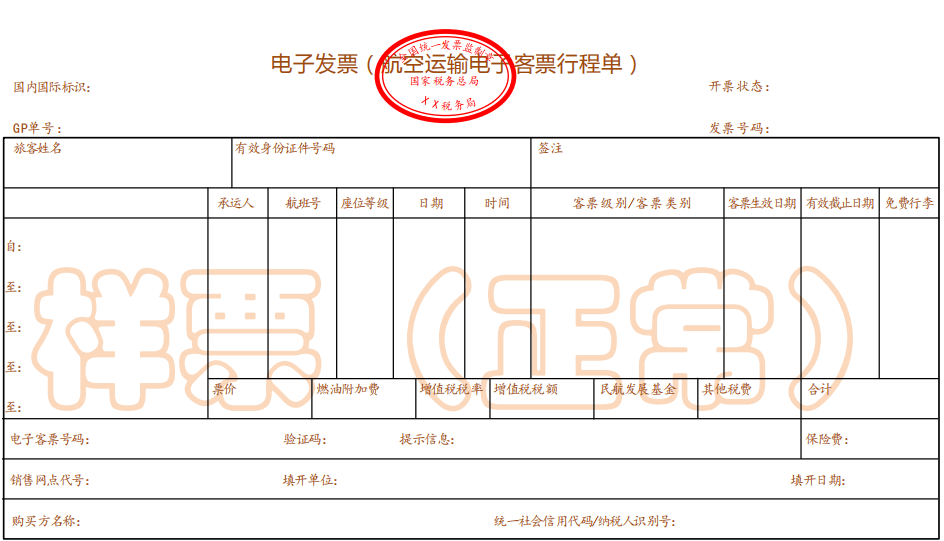
10月起,一批新规将施行,涉及民航铁路客运发票、金融服务等
Sou Hu Cai Jing· 2025-09-28 01:25
Group 1: New Regulations Effective from October - The revised Anti-Unfair Competition Law will take effect on October 15, addressing issues like "involution" competition and "free-riding" on brand names [1] - Starting October 1, civil aviation in China will fully transition to electronic invoices, eliminating paper travel itineraries for domestic flights [2] - The railway sector will also adopt electronic invoices from October 1, allowing passengers to request electronic invoices within 180 days after their journey [5] Group 2: Financial Infrastructure and Tax Regulations - The Financial Infrastructure Supervision Management Measures will be implemented on October 1, focusing on the regulation of financial infrastructure operations and risk management [6][7] - Internet platform companies will begin formally reporting tax-related information from October 1, promoting tax fairness between online and offline businesses [13] - New regulations for internet lending will be enforced, emphasizing the need for banks to manage costs and risks without compromising management standards for the sake of business scale [14][16] Group 3: Other Relevant Regulations - The Permanent Basic Farmland Protection Red Line Management Measures will come into effect on October 1, clarifying the responsibilities of natural resources and agricultural departments [10][12] - A new procedure for compulsory company deregistration will be implemented on October 10, detailing the process and conditions for such actions [17] - The Beijing Stock Exchange will switch to new stock codes starting October 9, with preparations for the transition already in place [18]
互联网平台企业涉税信息报送常见问答
蓝色柳林财税室· 2025-09-26 00:42
Core Viewpoint - The article provides a comprehensive guide on the reporting requirements for internet platform enterprises regarding tax-related information, emphasizing the importance of accurate and timely submission of identity and income information for shop operators and service providers. Group 1: Reporting Requirements for Shop Operators - If a shop within the platform is deregistered after the implementation of the regulations, the platform must report the operator's identity and income information for the third quarter of 2025 [2] - In cases where a shop changes its operator in the third quarter of 2025, the platform must report both the previous and new operator's identity and income information for the relevant periods [3][10] Group 2: Unique Identification Codes and Error Corrections - The unique identification code for a shop cannot be changed even if the operator changes; it must remain consistent for traceability [4][11] - If there is an error in the identity information, such as the unified social credit code, the erroneous entry must be voided and resubmitted [5][13] Group 3: Income Reporting Procedures - Platforms must submit the identity information of operators before reporting their income; the system will validate the identity submission first [6][14] - When reporting income for live streaming personnel, the identity information of the service organization must be submitted beforehand [7][16] Group 4: Special Cases for Mini Programs and Non-Monetary Benefits - Platforms providing infrastructure services for mini programs must report the operator's tax information based on whether the operator is classified as an internet platform enterprise [8][17] - For non-monetary economic benefits received by network anchors, the income should be recognized based on when these benefits reach the platform account, not when they are withdrawn [9][18] Group 5: Exclusion of Certain Income Types - Platforms are required to report all income, including any "fake order" income, without self-exclusion [10][19] - Domestic internet platform enterprises must report tax information for foreign operators and personnel engaged in transactions through their platforms [11][20]

互联网平台企业涉税信息10月1日起报送 税务部门提示
Yang Shi Xin Wen Ke Hu Duan· 2025-09-25 08:05
Core Viewpoint - Starting from October 1, 2023, internet platform enterprises are required to report identity and income information of operators and employees, as mandated by the State Council's regulations on tax information reporting for internet platform enterprises [1] Group 1: Compliance Requirements - Platform operators must legally register as market entities and fulfill tax declaration obligations, addressing issues of unregistered businesses that disrupt market order and consumer rights [2] - The implementation of the regulations allows authorities to aggregate operational information of the same operator across different platforms, promoting compliance and legal tax payment [2] Group 2: Tax Declaration Obligations - Platform operators and employees are required to accurately report all sales income from various channels and must not attempt to evade taxes by manipulating business structures or accounts [3] - Failure to comply with tax declaration requirements will result in legal consequences [3] Group 3: Addressing Illegal Activities - The rise of fake platforms and businesses engaging in tax evasion and fraudulent activities has been noted, which undermines fair competition and market integrity [4] - The new regulations aim to enhance transparency of income information, helping to prevent illegal activities and promote fair tax burdens across online and offline operations [4]
近期12366热点问答文化事业建设费
蓝色柳林财税室· 2025-09-23 09:27
Core Viewpoint - The article discusses the obligations and regulations regarding the Cultural Industry Development Fee, particularly focusing on the entities responsible for payment and the calculation methods for this fee [5][7]. Group 1: Obligations of Payment - The entities responsible for the Cultural Industry Development Fee include domestic advertising service providers and outdoor advertising operators [5]. - For foreign advertising service providers without a local establishment, the recipient of the advertising service in China is responsible for withholding the fee [5]. - Domestic units and individuals providing entertainment services are also liable for this fee [5]. Group 2: Policy Basis - The article references two key policy documents: 1. The notice from the Ministry of Finance and the State Administration of Taxation regarding the transition from business tax to value-added tax, which includes provisions for the Cultural Industry Development Fee [6]. 2. A supplementary notice addressing the management of this fee [6]. Group 3: Fee Calculation - The calculation for the fee owed for advertising services is defined as: - Fee amount = (Billing sales amount, including tax and additional fees, minus the tax-inclusive advertising publishing fee) × 3% [7]. - For entertainment services, the fee is similarly calculated based on the billing sales amount [7]. - The withholding amount for advertising services is calculated as: - Withholding fee = Payment for advertising services (including tax) × 3% [7].

支持水利工程建设,一文了解国家重大水利工程建设基金及申报操作步骤
蓝色柳林财税室· 2025-09-23 09:27
Core Viewpoint - The article provides a comprehensive overview of the National Major Water Conservancy Project Construction Fund, detailing its purpose, collection scope, standards, deadlines, and reporting procedures. Group 1: Fund Overview - The National Major Water Conservancy Project Construction Fund is established to raise funds for significant water conservancy projects, ensuring their smooth implementation and promoting sustainable economic and social development [3]. - The fund primarily supports projects like the South-to-North Water Diversion Project and addresses subsequent issues related to the Three Gorges Project [3]. Group 2: Collection Scope - The fund is collected based on the sales of electricity, which includes sales to power users by provincial power grid enterprises, sales after deducting reasonable line losses, and sales to subsidiaries and overseas [5]. - Additional sources include self-generated electricity by enterprises and sales from local independent grids, excluding sales from provincial grid enterprises to local independent grid enterprises [5]. Group 3: Collection Standards and Deadlines - Collection standards vary by province, ranging from 0 to 4.1934375 cents per kilowatt-hour, with Chongqing's rate set at 1.96875 cents per kilowatt-hour [6]. - The fund is collected monthly, with payment obligations due by the 15th of each month, and a final settlement required by March 31 of the following year for relevant enterprises [6]. Group 4: Exemptions and Reporting Procedures - Distributed photovoltaic power generation for self-use is exempt from the fund collection as per the Ministry of Finance's notification [6]. - The fund's reporting uses a standardized form, with specific steps outlined for electronic tax bureau submissions, including daily reporting and annual settlement processes [10][15].

契税那些事儿 这8种情况能免!
蓝色柳林财税室· 2025-09-23 06:54
Core Viewpoint - The article discusses various scenarios under which the deed tax can be exempted or reduced, particularly focusing on government policies that benefit specific groups such as non-profit organizations, individuals undergoing divorce, and financial institutions receiving debt assets [4][5][8]. Group 1: Exemptions for Individuals - In cases where land and property are expropriated by the government, the local government can decide to exempt or reduce the deed tax for the newly acquired property [4]. - Non-profit schools and medical institutions are exempt from deed tax when acquiring land or property for operational purposes [4]. - Individuals who receive property as part of a divorce settlement are exempt from deed tax [4]. - Exemption applies to individuals acquiring barren land for agricultural purposes [4]. Group 2: Exemptions for Organizations - Public rental housing management units are exempt from deed tax and stamp duty when purchasing housing for public rental purposes [5]. - Financial institutions and asset management companies are exempt from deed tax when receiving debt assets from August 1, 2023, to December 31, 2027 [5]. Group 3: Policy Duration - The exemptions for public rental housing and financial institutions are set to be effective until December 31, 2027 [5].

国家税务总局关于互联网平台企业报送涉税信息有关事项的公告国家税务总局公告2025年第15号
蓝色柳林财税室· 2025-09-07 03:32
Core Viewpoint - The announcement by the State Taxation Administration outlines the requirements for internet platform enterprises to report tax-related information, detailing who must report, what information to report, how to report, and the consequences of failing to report. Group 1: Reporting Entities - Internet platform enterprises required to report tax-related information include those providing services such as education, medical, travel, consulting, training, brokerage, design, performance, advertising, translation, technical services, audiovisual information, gaming, online literature, video generation, and online loans [1][2] - For domestic internet platforms with multiple operating entities, the entity holding the value-added telecommunications business operating license must report tax-related information [2] - For foreign internet platforms operating in China, the domestic entity with the value-added telecommunications business operating license must report, or a designated domestic agent if no such entity exists [2] Group 2: Reporting Content - Internet platform enterprises must report basic information, including changes, using the "Basic Information Reporting Form" [3] - They must also report identity information of operators and personnel within the platform, including details such as names, social credit codes, addresses, and contact information [3][4] - Income information must be reported, including total income, refund amounts, and net income from transactions conducted on the platform [6][7] Group 3: Reporting Timeline and Method - Internet platform enterprises must report basic information within 30 days of starting operations and any changes within 30 days of the change [8] - Quarterly reports of identity and income information must be submitted by the end of the following month after each quarter [8] - Reporting can be done through electronic tax offices, direct data interfaces, or other channels provided by tax authorities [8][29] Group 4: Consequences of Non-Compliance - Failure to report or provide tax-related information as required will result in penalties, and repeated non-compliance may lead to public disclosure of the entity's tax credit status [11] - Tax authorities may require additional information during audits or if tax risks are identified [10][39] Group 5: Additional Considerations - Internet platform enterprises must convert income reported in currencies other than RMB to RMB using the exchange rate on the reporting date [12] - The announcement specifies that tax authorities must maintain confidentiality regarding the tax-related information collected [39]