互联网平台

Search documents
国家出手调控油价;北京三部门约谈12家平台企业……盘前重要消息还有这些
证券时报· 2026-03-24 00:00
Group 1 - The Chinese government is urging all parties to cease military actions in the Middle East to prevent further escalation and protect global economic development [2][3] - The National Development and Reform Commission announced temporary adjustments to domestic fuel prices due to significant increases in international oil prices, with gasoline and diesel prices adjusted by approximately 0.87 yuan and 0.95 yuan per liter, respectively [3] - The Dalian Commodity Exchange has adjusted the price fluctuation limits and margin levels for liquefied petroleum gas futures contracts, increasing the fluctuation limit from 11% to 14% for certain contracts [4] Group 2 - China Bank is enhancing risk prevention measures in the precious metals market [6] - Several funds, including E Fund and Jiashi, will be suspended from trading on March 24 until 10:30 AM [7][8][9] - WuXi AppTec reported a 105.2% year-on-year increase in net profit for 2025 and plans to distribute a dividend of 15.7927 yuan per share [10] - Fuxiang Pharmaceutical expects a year-on-year net profit increase of 2222.67% to 3250.01% for the first quarter [11] - Huate Gas anticipates limited impact on its 2026 performance from price increases of certain gas products [12] - Dashengda's stock price is significantly deviating from its fundamentals, indicating a risk of rapid decline [13] - Wantong Kai is planning to acquire 100% equity of Zeng Rui Zhi Control and will be suspended from trading starting March 24 [14] - Libet has signed three significant contracts with its subsidiaries [15] Group 3 - Zijin Mining repurchased 21 million A-shares on March 23 [19] - Yongguan New Materials' actual controller plans to increase shareholding by 50 million to 100 million yuan [19] - Changyuan Donggu is planning to acquire 100% equity of Xiangyang Kanghao Electromechanical Engineering Company and will be suspended from trading starting March 24 [19] - Huadian Liaoning Energy has seen a cumulative increase of 89.81% over ten trading days, with no significant changes in daily operations [19] - Cangge Mining plans to repurchase shares worth 200 million to 400 million yuan [19]


12家平台企业被约谈
中国能源报· 2026-03-23 12:50
Core Viewpoint - The article discusses the regulatory actions taken by Beijing's market supervision authorities against various online platforms for engaging in "involutionary" competition practices, highlighting the need for compliance and rectification to protect merchants' rights and consumer interests [1][3]. Group 1: Issues Identified - Platforms have infringed on merchants' autonomy by unilaterally enrolling them in promotional activities and enforcing minimum pricing without consent, leading to financial losses for merchants [4][5]. - Specific examples include Taobao Flash Sale modifying prices and activities without merchant agreement, resulting in significant revenue drops for merchants [6]. - Ctrip has been reported to automatically adjust hotel prices, pressuring hotels to comply with lowest price requirements, thus undermining their pricing authority [7]. Group 2: Unreasonable Rules - Some platforms have established unreasonable rules that impose additional burdens on merchants through penalties and restrictions, increasing operational challenges [9][10]. - Ctrip's "cutting customer" penalties have been criticized for being overly broad, penalizing hotels for legitimate customer interactions outside the platform [10]. Group 3: False Advertising - Platforms have engaged in misleading advertising practices that violate consumer rights, such as promoting paid services that falsely claim to enhance ticket purchasing success [12]. - Ctrip's misleading "thumbs up" symbol has been flagged for misrepresenting service quality, prompting regulatory guidance for its removal [13]. - Other platforms, like Gaode, have been noted for failing to update promotional indicators, misleading consumers about ongoing discounts [14]. Group 4: Compliance Management Shortcomings - Several platforms lack effective compliance management systems, leading to inadequate oversight and risk management [15][16]. - QuNar's compliance mechanisms have been criticized for being ineffective, lacking a dedicated management structure [16]. - JD's compliance management has been deemed insufficient, with unclear responsibilities and a need for improved operational effectiveness [17]. Group 5: Regulatory Actions and Future Directions - Regulatory authorities have issued administrative warnings to platforms, mandating strict adherence to responsibilities and timely rectification of identified issues [17]. - The authorities plan to continue monitoring and publicly reporting violations, focusing on platforms that fail to comply with rectification requirements [17].





北京三部门联合约谈12家平台企业 通报“内卷式”竞争第一批问题
YOUNG财经 漾财经· 2026-03-23 11:40
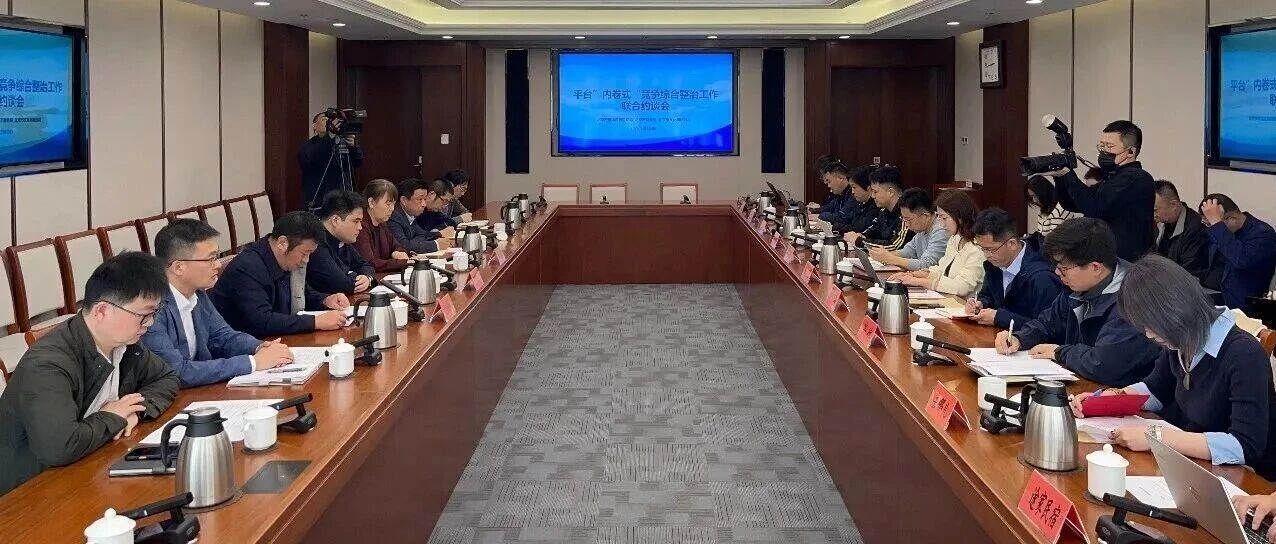
Core Viewpoint - Beijing's regulatory authorities have initiated a comprehensive rectification of "involutionary" competition among platform enterprises, focusing on issues such as infringement of merchants' rights, unreasonable rules, false advertising, and shortcomings in compliance management [1][3][8]. Group 1: Issues Identified - The first batch of issues identified includes the infringement of merchants' autonomy, where platforms modify merchant settings without consent and impose minimum pricing, leading to economic losses for merchants [3][4]. - Unreasonable rules have been set by some platforms, leveraging their dominant position to impose penalties and restrictions that increase the operational burden on merchants [4][5]. - False advertising practices have been reported, where platforms mislead consumers through deceptive promotional tactics, violating consumer rights [6][7]. Group 2: Compliance Management Shortcomings - Several platforms have been found to have ineffective compliance management systems, with unclear responsibilities and lack of actual implementation of compliance mechanisms [7][8]. - Specific examples include Qunar's lack of a functional compliance management organization and JD's outdated compliance structure, indicating a need for improvement in compliance practices [7][8]. Group 3: Regulatory Actions and Future Steps - Regulatory authorities have issued administrative warnings to platforms, mandating them to rectify identified issues and protect the rights of both merchants and consumers [8]. - The next steps involve ongoing monitoring and public reporting of violations, with a focus on creating a long-term prevention mechanism through multi-party consultations [8].

携程、去哪儿网、高德、京东、淘宝闪购、美团、飞猪旅行、同程旅行、途家民宿、小猪民宿、抖音、快手被约谈
新华网财经· 2026-03-23 10:20
Core Viewpoint - The article discusses the regulatory actions taken by Beijing's market supervision authorities against various online platforms for engaging in "involutionary" competition practices that harm merchants and consumers [1]. Group 1: Issues Identified - The main issues reported focus on four areas: infringement of merchants' autonomy, unreasonable rules, false advertising, and shortcomings in compliance management [3][7][9][13]. Group 2: Infringement of Merchant Autonomy - Some platforms have modified merchant settings without consent, forcing them into promotional activities and dictating pricing, which leads to financial losses for merchants and potential quality risks in goods and services [3]. - Example 1: Taobao Flash Sale unilaterally listed merchants' products in promotional events and altered prices without consent, resulting in significant revenue losses for merchants [4]. - Example 2: Ctrip used technical means to enforce minimum pricing on hotels, pressuring them to comply or face consequences such as reduced visibility on the platform [5][6]. Group 3: Unreasonable Rules - Certain platforms have established unfair rules that increase the operational burden on merchants through penalties and restrictions [7]. - Example 3: Ctrip's "cutting customer" rule penalizes hotels for directing customers away from the platform, even in legitimate scenarios, leading to unfair commission demands [8]. Group 4: False Advertising - Platforms have engaged in misleading advertising practices that violate consumer rights [9]. - Example 4: Third-party train ticket platforms misrepresented paid services as exclusive benefits, misleading consumers about their effectiveness [10]. - Example 5: Ctrip's misleading "thumbs up" symbol associated with certain hotels did not reflect actual service quality, prompting regulatory intervention [11]. - Example 6: Gaode failed to update promotional indicators post-campaign, misleading consumers about ongoing discounts [12]. Group 5: Compliance Management Shortcomings - Several platforms lack effective compliance management systems, leading to inadequate risk assessment and oversight [13]. - Example 7: Qu Nar's compliance mechanisms were found to be ineffective, lacking a structured approach to managing compliance risks [14]. - Example 8: JD's compliance management was criticized for not being updated dynamically, with unclear responsibilities [15]. Group 6: Regulatory Actions and Future Steps - Regulatory authorities have issued administrative warnings and mandated platforms to rectify identified issues, emphasizing the protection of merchants' and consumers' rights [15]. - The authorities plan to continue monitoring and addressing "involutionary" competition practices, ensuring platforms engage in fair competition and adhere to regulations [15].
北京三部门约谈12家平台企业
券商中国· 2026-03-23 09:16
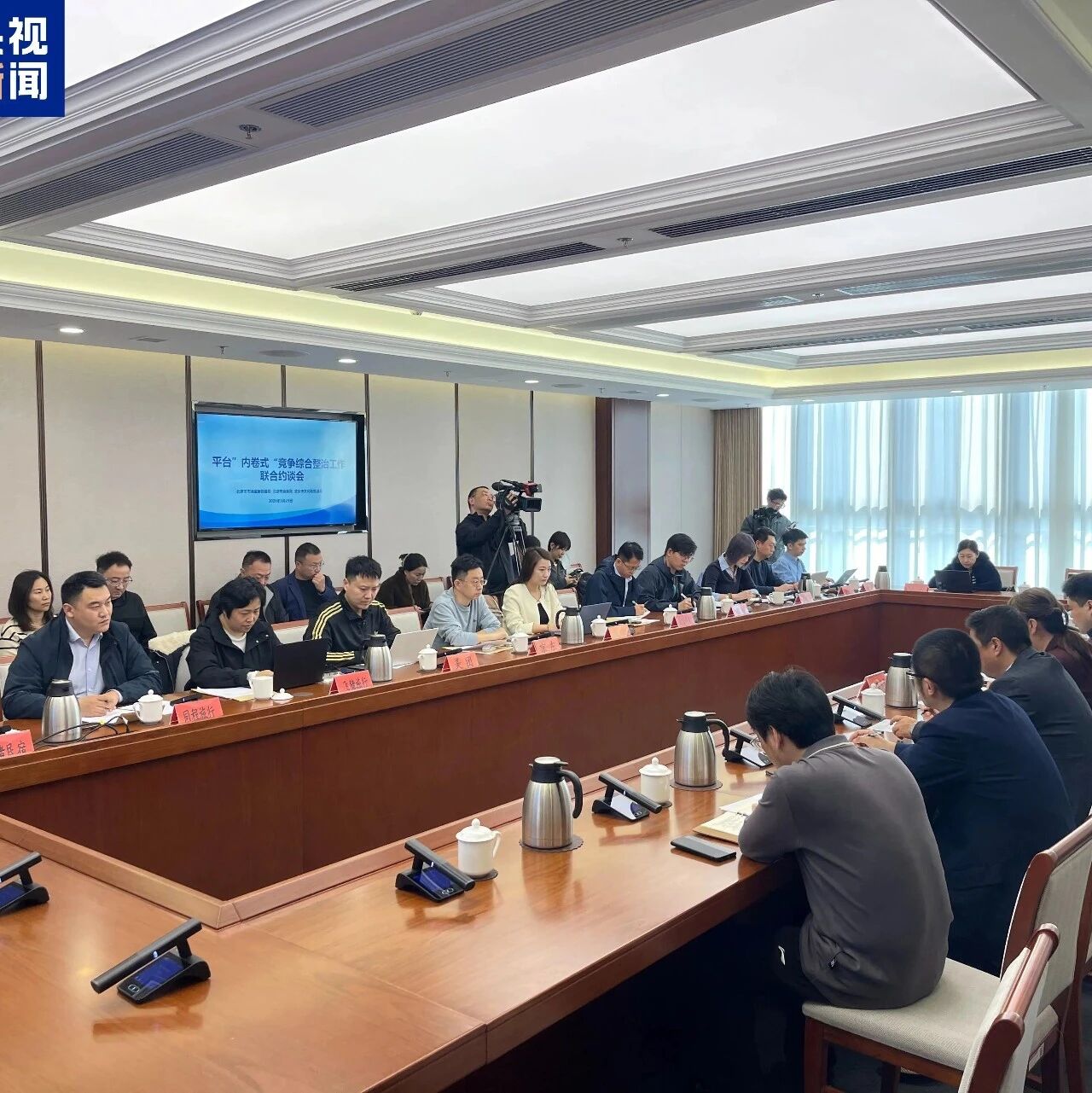
Core Viewpoint - The article discusses the regulatory actions taken by Beijing's market supervision authorities against various online platforms for engaging in "involutionary" competition practices that harm merchants and consumers, highlighting the need for compliance and fair competition in the market [1][14]. Group 1: Issues Identified - The main issues reported focus on four areas: infringement of merchants' autonomy, unreasonable rules set by platforms, false advertising practices, and shortcomings in compliance management systems [3][6][8][11]. Group 2: Infringement of Merchant Autonomy - Platforms have been found to modify merchant settings without consent, forcing them into promotional activities and dictating pricing, which leads to significant financial losses for merchants [3][4]. - A specific case involves Taobao Flash Sale, where merchants reported unauthorized price changes and promotional listings that resulted in them receiving only a fraction of their original prices, making it impossible to cover costs [4]. Group 3: Unreasonable Rules - Platforms like Ctrip have been criticized for imposing unreasonable rules that increase the operational burden on merchants, such as penalizing hotels for directing customers away from their platform [6][7]. - Ctrip's "cutting customer" rule was deemed unfair, as it penalized hotels for legitimate customer interactions outside the platform, prompting regulatory guidance for rule optimization [7]. Group 4: False Advertising - Instances of misleading advertising were noted, such as third-party train ticket platforms promoting paid services with exaggerated claims of success rates, misleading consumers about the benefits of their offerings [8][9]. - Ctrip's use of misleading "thumbs up" symbols to indicate hotel quality was also flagged, leading to regulatory intervention to eliminate such practices [10]. Group 5: Compliance Management Shortcomings - Several platforms, including Qunar and JD.com, were found to have ineffective compliance management systems, lacking clear responsibilities and failing to implement necessary compliance mechanisms [11][12]. - Regulatory authorities emphasized the need for these platforms to enhance their compliance frameworks to prevent future violations [12]. Group 6: Regulatory Actions and Future Steps - The market supervision authorities issued administrative warnings and mandated platforms to rectify identified issues, emphasizing the protection of merchants' and consumers' rights [14]. - Future actions will include ongoing monitoring of compliance, public reporting of violations, and the establishment of a collaborative mechanism for rule-making to ensure fair competition in the platform economy [14].
策略周报:外部烽烟再起,稳健为主-20260301
HWABAO SECURITIES· 2026-03-01 10:54
Group 1 - The report emphasizes a cautious investment strategy due to rising external geopolitical risks, suggesting a focus on stability in the market [3][12] - In the bond market, there is an expectation of limited adjustment risks, with a forecast for the ten-year government bond yield to fluctuate around 1.8% [3][12] - The stock market is advised to focus on large-cap blue-chip and cyclical sectors, with a recommendation to monitor indices such as CSI 300, CSI 500, and CSI 1000 for potential opportunities [3][12] Group 2 - The report highlights a significant increase in domestic tourism during the Spring Festival, with 596 million trips taken and total spending reaching 803.48 billion, marking a historical high [9] - Recent policy adjustments in Shanghai aim to optimize housing regulations, including reducing purchase restrictions and improving housing loan policies [9] - The report notes that external factors, such as military actions in the Middle East, are impacting market sentiment and leading to increased volatility in overseas markets [10]
重磅新规来了!整治“幽灵外卖”,外卖网店名称须与实体经营门面招牌名一致
Mei Ri Jing Ji Xin Wen· 2026-02-26 13:55
Core Points - The new regulations for online food delivery services will be implemented on June 1, focusing on food safety responsibilities and transparency in operations [1] Group 1: Regulations on Online Food Delivery - Online food delivery store names must match the names of their physical storefronts, and essential information such as business qualifications and actual operating addresses must be prominently displayed on the main page [2] - A "no dine-in" label must be clearly shown for businesses that do not offer dine-in services, allowing consumers to make informed choices based on their dining preferences [2] - The regulations promote a "transparent kitchen" system, encouraging food delivery businesses to publicly share their food preparation processes through digital means [2] Group 2: Responsibilities of Delivery Platforms - Delivery platforms are required to take full responsibility for the food safety of the merchants they host, ensuring that they do not only collect commissions but also actively manage quality [3] - The regulations mandate real-name registration for delivery merchants and require platforms to conduct substantive reviews of their food business licenses to ensure compliance with actual conditions [3] - Platforms must verify merchant qualifications against data held by provincial market supervision departments to prevent the entry of businesses with false or expired licenses [3] Group 3: Ongoing Compliance and Verification - Delivery platforms must verify and update the actual operating addresses and qualifications of merchants at least every six months, transitioning from static entry to continuous lifecycle management [4] - This ongoing verification process includes proactive checks during the verification window to ensure that merchant operations remain accurate and valid [4]
以统一市场监管执法保障全国统一大市场建设︱法经兵言
Di Yi Cai Jing· 2026-02-25 11:46
Core Viewpoint - The article emphasizes the importance of enhancing unified market regulatory enforcement to eliminate local protectionism and build a national unified market, addressing existing challenges such as inconsistent rules, weak grassroots capabilities, and insufficient data support [1]. Summary by Sections Current State of National Market Regulatory Enforcement - The enforcement system has been integrated, forming a unified management structure under the State Administration for Market Regulation, resolving issues of multiple enforcement and redundant inspections [2]. - Regular enforcement in key areas has been established, with actions in the pharmaceutical sector leading to a 62% price reduction for involved drugs, and actions in the digital economy ensuring compliance from major companies like Alibaba and Meituan [3]. Challenges and Issues in Unified Market Regulatory Enforcement - There are discrepancies in market rules and enforcement standards, leading to the phenomenon of "same case, different penalties," which increases institutional risks for businesses operating across regions [5]. - Cross-regional collaboration mechanisms are not functioning effectively, complicating the handling of cross-regional violations due to jurisdictional disputes and inconsistent evidence recognition [6]. - Grassroots enforcement capabilities do not match regulatory tasks, resulting in a significant imbalance between the number of regulatory subjects and available personnel [6]. - The level of standardization in enforcement actions needs improvement, with issues such as "profit-driven enforcement" still prevalent [7]. - The regulatory technology and data support systems are not fully integrated, creating "information islands" that hinder effective smart regulation [8]. Recommendations for Strengthening Unified Market Regulatory Enforcement - Strengthen top-level design and institutional supply to establish a unified market rule foundation, including the elimination of hidden market access barriers and the unification of enforcement standards in emerging sectors [9]. - Deepen cross-regional enforcement collaboration by establishing clear procedures for information sharing and joint investigations, and enhancing the functionality of "double random, one public" supervision [10]. - Implement a professional capacity-building plan for grassroots enforcement teams to ensure adequate resource allocation and specialized training [11]. - Establish a comprehensive supervision system for enforcement actions to address non-standard behaviors and improve accountability [12]. - Break down data barriers to build a smart unified market regulatory system, ensuring real-time data collection and sharing across departments [12].
港股市场情绪回暖,恒生科技指数涨超3%,汇添富恒生科技ETF联接发起式(QDII)C(013128)紧跟科技板块修复机遇
Xin Lang Cai Jing· 2026-02-23 10:24
Group 1 - The Hang Seng Technology Index (HSTECH) increased by 3.58% as of February 23, 2026, with Meituan-W rising by 5.63% and SMIC by 5.10% [1] - The Hang Seng Technology ETF from Huatai-PineBridge saw continuous net inflows over 11 days, with a maximum single-day net inflow of 41.84 million yuan, totaling 418 million yuan, averaging 37.96 million yuan per day [1] - As of February 13, 2026, the unit net value of the Huatai-PineBridge Hang Seng Technology ETF Connect Fund (QDII) C (013128) was 0.85 yuan [1] Group 2 - Huajin Securities indicated that the post-holiday spring market may continue, with technology growth and cyclical industries performing relatively well, particularly in media (AI applications, gaming), computing (AI applications), electronics (semiconductors, AI hardware), and communications (AI hardware) [2] - The Huatai-PineBridge Hang Seng Technology ETF Connect Fund (QDII) C (013128) achieved a maximum monthly return of 29.52% since inception, with the longest consecutive monthly gains of 5 months and an average monthly return of 7.37% [2] - The fund's Sharpe ratio over the past two years was 1.14, ranking 6th out of 26 comparable funds, indicating a high risk-return profile [2] Group 3 - The Huatai-PineBridge Hang Seng Technology ETF Connect Fund (QDII) C was established on October 31, 2022, and aims to closely track the performance of the Hang Seng Technology ETF, minimizing tracking deviation and error [3] - The current fund manager, Le Wuqiong, has 11.7 years of experience in the securities industry and has achieved a return of 66.33% since taking office on October 31, 2022 [3] Group 4 - The Huatai-PineBridge Hang Seng Technology ETF Connect Fund (QDII) C serves as a flagship broad-based fund for the Hong Kong technology sector, aiming for balanced allocation of core assets in the Hong Kong technology market [4] - The Huatai-PineBridge Hong Kong Stock Connect China Technology ETF Connect C focuses on core assets in the "Hong Kong M7," covering the entire AI industry chain [4] - The Huatai-PineBridge Hong Kong Stock Connect Technology Selected Mixed Fund C employs an active management strategy to dynamically select high-potential assets within the Hong Kong Stock Connect range [4]
前十大重仓股行业地位透视,汇添富恒生科技ETF联接发起式(QDII)C(013128)核心资产一览
Xin Lang Cai Jing· 2026-02-23 09:48
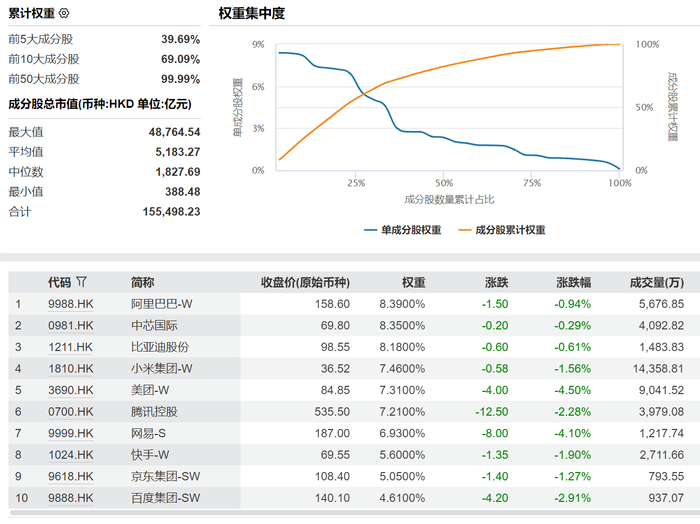
Core Insights - The Hang Seng Tech Index exhibits a highly concentrated weight structure, with the top ten constituent stocks accounting for nearly 70% of the total weight, highlighting a significant disparity in market capitalization distribution [1][4]. Group 1: Weight Distribution and Market Capitalization - The top five constituent stocks of the Hang Seng Tech Index have a combined weight of 39.69%, while the top ten account for 69.09%, and the top fifty make up 99.99%, indicating a highly concentrated characteristic [4]. - The largest individual stock, Alibaba, has a market capitalization of HKD 48,764.54 billion, while the smallest stock has a market capitalization of HKD 388.48 billion, with an average market capitalization of HKD 5,183.27 billion and a median of HKD 1,827.69 billion, reflecting significant market capitalization disparity [4]. Group 2: Industry Analysis of Top Constituents - Alibaba is categorized under consumer discretionary and internet platform sectors, with core businesses including retail, cross-border commerce, cloud computing, and digital media, demonstrating strong platform attributes and resilience against cyclical risks [4]. - SMIC (Semiconductor Manufacturing International Corporation) belongs to the information technology and semiconductor sector, positioned at the core of the semiconductor supply chain, benefiting from domestic substitution and AI computing demand [4]. - BYD is classified under consumer discretionary and the electric vehicle sector, with a comprehensive layout across vehicles, batteries, semiconductors, and rail transit, making it one of the most integrated companies in the new energy industry [4]. Group 3: Overall Index Characteristics - The Hang Seng Tech Index is characterized by a concentration of leading firms, distinct technological attributes, and high growth potential, with the top ten constituent stocks focusing on internet platforms, semiconductors, new energy, and consumer electronics, covering the core asset matrix of China's digital economy [5]. - The ETF aims to balance the allocation of core assets in Hong Kong's technology sector while capturing the medium to long-term growth momentum of China's new economy [5].