人类命运共同体理念

Search documents
弘扬伟大抗战精神 推动世界和平发展(权威论坛·铭记历史 开创未来)
Ren Min Ri Bao· 2025-08-26 22:22
Core Viewpoint - The commemoration of the 80th anniversary of the victory in the Chinese People's Anti-Japanese War and the World Anti-Fascist War highlights China's significant contributions and sacrifices in the fight against fascism, emphasizing the importance of peace and historical memory [5][12][15]. Historical Contribution - The Chinese People's Anti-Japanese War began in 1931 and lasted for 14 years, resulting in over 35 million casualties and economic losses exceeding 6,000 billion USD, playing a crucial role in the overall victory of the World Anti-Fascist War [5][6][8]. - China successfully tied down a significant portion of Japanese military forces, alleviating pressure on Allied forces in the Pacific and contributing to the strategic conditions necessary for victory [6][7]. Spirit of Resistance - The spirit of resistance developed during the Anti-Japanese War remains a vital source of motivation for the Chinese people, inspiring them to overcome challenges and pursue national rejuvenation [9][11]. - The Communist Party of China played a central role in fostering this spirit, which has been passed down and continues to drive progress in various sectors, including poverty alleviation and technological innovation [10][11]. Peaceful Development - China emphasizes the importance of peace and cooperation, advocating for dialogue over confrontation and promoting a shared future for humanity [12][14]. - The country has consistently maintained a peaceful development path, contributing to global stability and development through initiatives like the Belt and Road Initiative and active participation in international organizations [16].

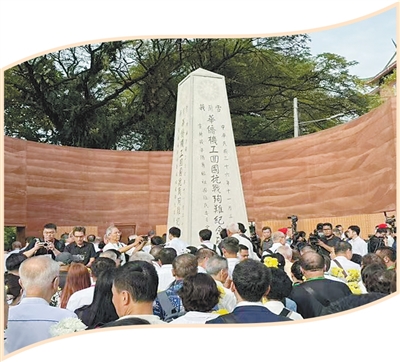
铭记胜利荣光,携手共创和平未来
Huan Qiu Wang· 2025-08-26 09:18
Group 1 - The year 2025 marks the 80th anniversary of the victory in the Chinese People's War of Resistance Against Japanese Aggression and the World Anti-Fascist War, emphasizing the importance of remembering history and promoting a correct historical perspective [1] - The Chinese People's War of Resistance lasted 14 years, resulting in over 35 million military and civilian casualties, significantly contributing to the victory in the World Anti-Fascist War [1] - The spirit of resistance displayed by the Chinese people during the war serves as a powerful motivation for future progress, highlighting the values of peace, development, fairness, justice, democracy, and freedom [3] Group 2 - The victory in the World Anti-Fascist War was a collective effort of various nations, demonstrating the necessity of international cooperation in the face of global threats [2] - The post-war international order, established through profound reflections on the war's lessons, is centered around the United Nations, providing a framework for global peace [3] - Current international challenges, including hegemonic politics and regional conflicts, necessitate a commitment to maintaining an international order based on international law and resolving disputes through dialogue [3]
国防部长董军会见新加坡国防部常务秘书
Zheng Quan Shi Bao Wang· 2025-08-19 09:06
Core Points - The meeting between Chinese Defense Minister Dong Jun and Singapore's Permanent Secretary for Defense Chan Heng Kee emphasizes the commitment to strengthen cooperation in regional and multilateral platforms [1] - China expresses willingness to support each other's core interests and major concerns, highlighting a collaborative approach to maintaining international and regional peace and stability [1] Group 1 - The concept of a community with a shared future for mankind is reiterated as a guiding principle for cooperation [1] - The discussion includes a focus on three global initiatives aimed at enhancing bilateral relations [1] - The meeting reflects a broader strategy of fostering diplomatic ties and mutual support in defense matters [1]
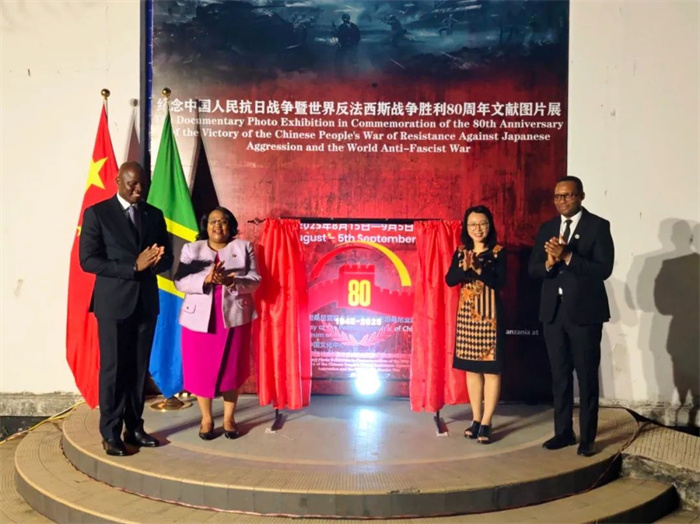
纪念中国人民抗日战争暨世界反法西斯战争胜利80周年文献图片展在坦桑尼亚举办
人民网-国际频道 原创稿· 2025-08-18 07:41
Core Points - The exhibition commemorating the 80th anniversary of the victory in the Chinese People's Anti-Japanese War and the World Anti-Fascist War opened at the National Museum of Tanzania [1][3] - The event was attended by over 200 people, including Chinese Ambassador to Tanzania Chen Mingjian and Tanzanian officials [1][3] - The exhibition will be open to the public until September 5 [5] Summary by Relevant Sections - **Exhibition Details** - The exhibition features documents and images related to the Anti-Japanese War and the World Anti-Fascist War, emphasizing the importance of remembering historical events to prevent the repetition of war tragedies [4][3] - It highlights the deep friendship between China and Africa in the pursuit of national independence and liberation [3] - **Statements from Officials** - Ambassador Chen Mingjian stated that the Chinese people fought for 14 years to achieve a great victory in the Anti-Japanese War, contributing significantly to the global anti-fascist efforts [3][6] - Tanzanian Minister of Natural Resources and Tourism, Chana, emphasized the need for China and Tanzania to work together to promote cooperation and maintain peace [4][6]
马来西亚媒体:美发起关税战扰乱贸易秩序 全球南方合作向未来
Xin Hua Wang· 2025-08-06 04:33
面对美国的强硬立场,部分国家愈发意识到美国政策的不可预测性,转而加速贸易多元化与区域合作的 步伐。马来西亚总理安瓦尔日前呼吁,面对外部压力,东盟国家需要巩固自身基础,加强彼此贸易并增 加相互投资。这不仅体现了马来西亚的应对策略,也反映了发展中国家在动荡中寻求南南合作的新路 径。 文章指出,美国发起的关税战让全球南方国家再次感受到当前国际秩序中的结构性不公,进一步凸显了 人类命运共同体理念的重要性与现实价值。这一理念试图打破传统的零和博弈思维,推动不同发展阶段 国家之间的合作对话,强调在多边框架下谋求共赢、共治的全球合作体系。 当前单边主义与保护主义抬头,以金砖国家为代表的多边合作平台,正尝试以多元包容的发展模式回应 全球不平等的格局。金砖国家新开发银行推动本币结算与基础设施投资,为发展中国家提供金融替代路 径,减少对西方体系的依赖。这种南南合作的新探索,展示了发展中国家共赢发展的可能性。 新华社吉隆坡8月5日电(记者王嘉伟 毛鹏飞)马来西亚《星洲日报》网站4日刊登《从关税战反思全球 共赢的出路》一文。文章指出,美国政府一意孤行地推动关税战,背离当前多边合作与共同发展的全球 共识。各国唯有携手加强协作、构建公平 ...
【环球财经】马来西亚媒体:美发起关税战扰乱贸易秩序 全球南方合作向未来
Xin Hua She· 2025-08-05 13:46
(文章来源:新华社) 新华财经吉隆坡8月5日电(记者王嘉伟毛鹏飞)马来西亚《星洲日报》网站4日刊登《从关税战反思全 球共赢的出路》一文。文章指出,美国政府一意孤行地推动关税战,背离当前多边合作与共同发展的全 球共识。各国唯有携手加强协作、构建公平开放的合作机制,方能实现共赢与和平发展的未来。文章摘 要如下: 世界贸易组织在1995年正式成立,标志着全球多边贸易体制迈入新阶段。以自由贸易为核心的经济全球 化为诸多发展中国家带来发展机遇。作为全球最大经济体的美国,如今却高举贸易保护主义大旗,频频 以关税作为外交和经济施压手段。这不仅扰乱了全球贸易秩序,也对众多依赖出口的国家,特别是发展 中国家的农产品与制造业领域造成沉重打击。 面对美国的强硬立场,部分国家愈发意识到美国政策的不可预测性,转而加速贸易多元化与区域合作的 步伐。马来西亚总理安瓦尔日前呼吁,面对外部压力,东盟国家需要巩固自身基础,加强彼此贸易并增 加相互投资。这不仅体现了马来西亚的应对策略,也反映了发展中国家在动荡中寻求南南合作的新路 径。 文章指出,美国发起的关税战让全球南方国家再次感受到当前国际秩序中的结构性不公,进一步凸显了 人类命运共同体理念的 ...
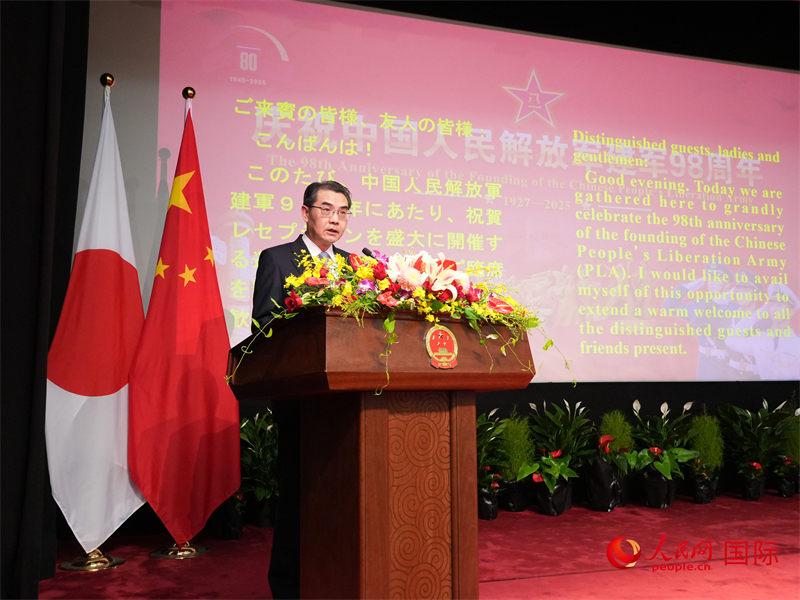
中国驻日本大使馆举行庆祝建军98周年招待会
人民网-国际频道 原创稿· 2025-08-01 02:51
人民网东京8月1日电 (许可)7月30日,中国驻日本大使馆举行招待会,热烈庆祝中国人民解放军建军98周 年。中国驻日本大使吴江浩、中国驻日本大使馆武官皇甫群星先后致辞,日本政要、防卫省和自卫队官员,各国 驻日武官,各界友好人士,华侨华人、中资机构及留学生代表等400余人参加。 中国驻日本大使吴江浩致辞。人民网 许可摄 吴江浩指出,今年是纪念中国人民抗日战争暨世界反法西斯战争胜利80周年,是正视历史、开辟未来的重要 契机。历史不容篡改,我们要牢记那段历史。中方重视石破茂首相关于日本应深刻汲取历史教训、不做侵略国家 的表态,始终认为只有坚持"以史为鉴",才能真正开辟未来。中日关系处于改善和发展的关键时期,双方应珍 惜、巩固这一来之不易的局面,维护好两国关系的政治基础,共同努力构建契合新时代要求的建设性、稳定的中 日关系。 来宾观看图片展。人民网 许可摄 到场嘉宾合影。中国驻日本大使馆供图 来宾观看了《守护和平命运与共》图片展和《守护》等宣传片,高度评价中国军队为维护世界和平所作贡 献。 皇甫群星表示,中国是维护世界和平、国际秩序的重要力量,我们从不搞侵略扩张,但决不放弃自己的正当 权益,中国军队有决心、有能力反对 ...
热烈庆祝中国人民解放军建军98周年
Ren Min Ri Bao· 2025-07-31 22:22
军委机关各部门、军队驻京有关单位领导等出席招待会。 本报北京7月31日电 (记者冯春梅)中华人民共和国国防部7月31日在人民大会堂举办招待会,热烈庆 祝中国人民解放军建军98周年。中央军委委员、军委联合参谋部参谋长刘振立,中央军委委员、军委纪 律检查委员会书记张升民出席招待会。国防部长董军出席并致辞。 17时30分许,招待会开始,奏《中国人民解放军军歌》。董军致辞,向全体人民解放军指战员、武警部 队官兵、军队文职人员、预备役人员和民兵致以节日祝贺,向为人民军队建设作出贡献的离退休老同 志、退役军人、革命伤残军人和烈军属表示亲切慰问,向全军英雄模范、全国双拥模范致以崇高敬意, 向国防科技工业战线的同志们致以诚挚问候,向关心支持国防和军队建设的各级党委和政府、人民团 体,向全国各族人民表示衷心感谢,向出席招待会的各国驻华武官、国际组织代表及各位来宾表示热烈 欢迎。 董军说,今年是中国人民抗日战争暨世界反法西斯战争胜利80周年,是台湾光复80周年,也是联合国成 立80周年。人民军队在党的旗帜下,为挽救民族危亡、实现民族解放建立不朽功勋,为世界反法西斯战 争胜利作出巨大贡献。再过一个多月,人民军队将以和平之师、正义之 ...
国防部举办盛大招待会 热烈庆祝中国人民解放军建军98周年
Xin Hua Wang· 2025-07-31 12:20
新华社北京7月31日电(记者梅常伟)中华人民共和国国防部7月31日在人民大会堂举办招待会,热 烈庆祝中国人民解放军建军98周年。中央军委委员、军委联合参谋部参谋长刘振立,中央军委委员、军 委纪律检查委员会书记张升民出席招待会。国防部长董军出席并致辞。 17时30分许,招待会开始,奏《中国人民解放军军歌》。董军致辞,向全体人民解放军指战员、武 警部队官兵、军队文职人员、预备役人员和民兵致以节日祝贺,向为人民军队建设作出贡献的离退休老 同志、退役军人、革命伤残军人和烈军属表示亲切慰问,向全军英雄模范、全国双拥模范致以崇高敬 意,向国防科技工业战线的同志们致以诚挚问候,向关心支持国防和军队建设的各级党委和政府、人民 团体,向全国各族人民表示衷心感谢,向出席招待会的各国驻华武官、国际组织代表及各位来宾表示热 烈欢迎。 董军说,今年是中国人民抗日战争暨世界反法西斯战争胜利80周年,是台湾光复80周年,也是联合 国成立80周年。人民军队在党的旗帜下,为挽救民族危亡、实现民族解放建立不朽功勋,为世界反法西 斯战争胜利作出巨大贡献。再过一个多月,人民军队将以和平之师、正义之师、威武之师的雄姿英貌, 接受党和人民检阅。我们将更 ...
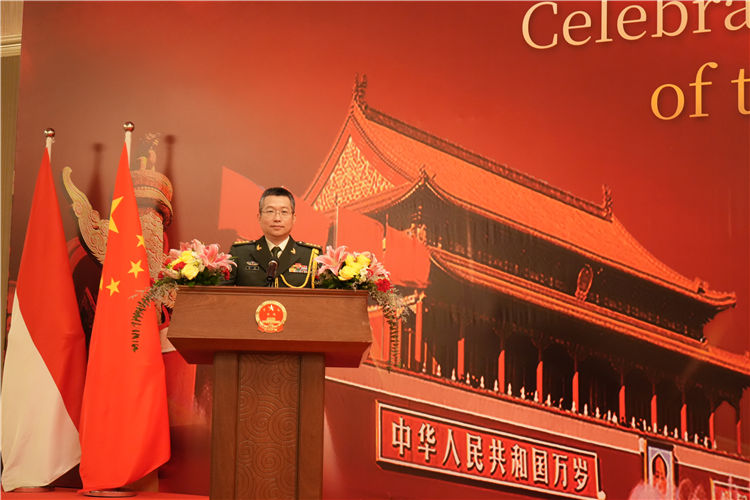
中国驻印度尼西亚使馆举行庆祝建军98周年招待会
人民网-国际频道 原创稿· 2025-07-24 07:27
Group 1 - The event celebrated the 98th anniversary of the founding of the Chinese People's Liberation Army (PLA), attended by over 850 representatives from various sectors including military, diplomatic, and business communities in Indonesia [1][6] - The Chinese Defense Attaché, Xu Sheng, emphasized the PLA's commitment to achieving its centenary goals under Xi Jinping's military thought and its role in promoting global peace and development [1][2] - The event included a thematic photo exhibition titled "Guarding Peace, Shared Destiny - The Chinese Army for World Peace" and showcased a promotional video highlighting the PLA's international image [6] Group 2 - The former Indonesian Defense Minister, Andun, acknowledged the PLA's significant role in regional and global peace and stability, expressing Indonesia's willingness to enhance defense cooperation with China [3][6] - Xu Sheng noted the importance of the 80th anniversary of the victory in the Chinese People's War of Resistance against Japanese Aggression and the global anti-fascist war, reiterating China's commitment to peace and non-expansion [2][3] - The event marked the 75th anniversary of diplomatic relations between China and Indonesia, highlighting the deepening defense ties under the strategic guidance of both countries' leaders [2][3]