
智慧水务

Search documents
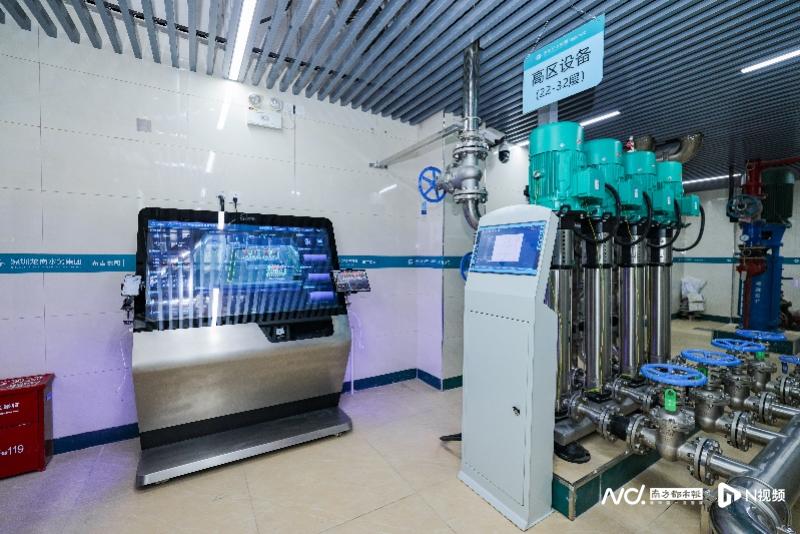
开源鸿蒙智慧泵房在深圳落地,如何再造城市供水系统?
Nan Fang Du Shi Bao· 2025-12-02 13:44
Core Insights - The first open-source HarmonyOS smart pump room in Shenzhen's Longgang District is revolutionizing urban water supply systems by enabling autonomous operation and real-time monitoring without the need for dedicated personnel [1][3]. Group 1: Technology and Innovation - The smart pump room utilizes the open-source HarmonyOS, integrating distributed soft bus technology with PLC control systems, monitoring platforms, and sensing devices to create a "cloud-edge-end" collaborative operation mechanism [3]. - The system features built-in AI algorithms that provide real-time water quality alerts, precise energy regulation, and equipment fault prediction, significantly enhancing operational efficiency and reducing maintenance costs [3][4]. Group 2: Operational Efficiency - Compared to traditional pump rooms, the upgraded system offers more stable water pressure and reliable water quality, achieving a 10% reduction in overall energy consumption and a 5% decrease in the procurement cost of core PLC controllers [4]. - The implementation of the smart pump room has led to a substantial decrease in manpower requirements, as staff can now use HarmonyOS mobile devices for immediate synchronization of pump pressure and water quality parameters [3][4]. Group 3: Expansion and Future Prospects - The Longgang open-source HarmonyOS smart pump room project has established a mature, replicable, and promotable model for smart water management, with plans to upgrade 47 additional pump rooms based on pilot experiences [4]. - The application of open-source HarmonyOS is expanding beyond pump rooms to municipal water supply stations and water treatment plants, accelerating the formation of a comprehensive "open-source Harmony smart water system" in the district [4][5].

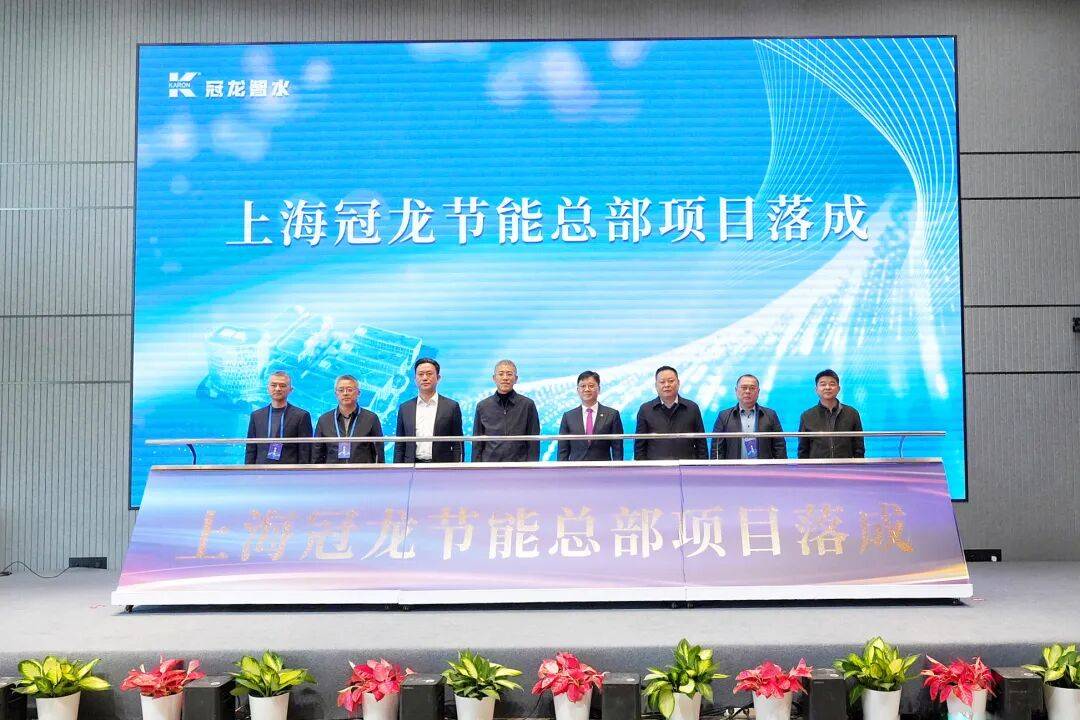
投资超5亿元,上海冠龙节能总部智水科技园落成!工程中心及“产学研用”创新链融合发展项目同步启动
Sou Hu Cai Jing· 2025-11-28 11:32
Core Points - The Shanghai Guanlong Energy-saving Headquarters project has been completed, marking the official opening of the Guanlong Smart Water Technology Park, which has a total investment of over 500 million yuan and a building area of approximately 84,000 square meters [1][6] - The park focuses on the research and development of smart water products and aims to promote the digital and intelligent transformation of the industry [1] - A new "Water Supply Pipeline Resilience Water-saving Engineering Technology Research Center" has been established, focusing on key technology research and resource integration to support high-quality development in the water-saving sector [2] - The "Industry-Academia-Research-Application" innovation chain project has been launched, with the first batch of outstanding enterprises signing agreements to settle in the park [4] - Guanlong Energy-saving has over 100 national patents and has participated in the formulation of more than 20 valve technology standards, indicating its strong position in the industry [6]
中国水务集团新获亚洲开发银行1亿美元长期融资
Cai Fu Zai Xian· 2025-11-27 09:50
Core Viewpoint - China Water Affairs Group Limited has signed a financing agreement with the Asian Development Bank to receive a loan of USD 100 million to support an integrated sewage treatment and pipeline rehabilitation project in Hunan Province [1][5]. Group 1: Financing and Partnership - The financing agreement was signed on November 24, 2025, marking a continuation of the partnership that began in 2011, with a total of USD 800 million in loans provided by ADB over four agreements [1][6]. - The funds will primarily be used to improve urban water supply conditions, increase coverage, and promote wastewater treatment and integrated water supply and drainage projects [6]. Group 2: Project Focus and Objectives - The project addresses existing issues in the sewage treatment system in Ningxiang City, focusing on the aging infrastructure in medium and low-tier cities [5]. - Key components include the construction of a smart sewage treatment plant, the promotion of rainwater and sewage diversion system renovations, and the introduction of smart technologies to enhance treatment efficiency and water quality [5]. - The project aims to improve pipeline leakage issues and promote workplace gender equality [5]. Group 3: Future Outlook and Strategic Focus - The company plans to continue its commitment to the principle of "water as the foundation, benefiting society," focusing on the main track of "quality-based water supply" [6]. - Through technological upgrades and continuous optimization of smart water systems, the company aims to elevate water quality from "safe water" to "healthy water," solidifying its industry-leading position and creating long-term value for society and returns for shareholders [6].

迈拓股份涨2.07%,成交额1195.28万元
Xin Lang Zheng Quan· 2025-11-27 03:24
Core Viewpoint - Maito Co., Ltd. has shown a significant stock performance with a year-to-date increase of 33.11%, despite a slight decline in the recent trading days. The company specializes in the development, production, and sales of smart ultrasonic water meters and heat meters, contributing to its revenue growth [1]. Financial Performance - For the period from January to September 2025, Maito Co., Ltd. achieved a revenue of 254 million yuan, representing a year-on-year growth of 10.45%. The net profit attributable to the parent company was 54.15 million yuan, reflecting a year-on-year increase of 19.99% [1]. - The company has distributed a total of 216 million yuan in dividends since its A-share listing, with 118 million yuan distributed over the past three years [2]. Stock Market Activity - As of November 27, Maito Co., Ltd.'s stock price increased by 2.07%, reaching 17.28 yuan per share, with a trading volume of 11.95 million yuan and a turnover rate of 0.83%. The total market capitalization stands at 2.407 billion yuan [1]. - The company has seen a decrease in the number of shareholders, with 8,652 shareholders as of September 30, 2025, down by 1.68% from the previous period [1]. Business Overview - Maito Co., Ltd. was established on December 14, 2006, and went public on June 7, 2021. The company primarily focuses on smart ultrasonic water meters, which account for 88.08% of its main business revenue, while smart ultrasonic heat meters contribute 7.38% [1]. - The company operates within the mechanical equipment sector, specifically in the general equipment and instrumentation category, and is associated with various concept sectors including micro-cap stocks and smart water management [1].

普天科技跌2.00%,成交额2.63亿元,主力资金净流出3465.75万元
Xin Lang Cai Jing· 2025-11-26 02:53
Core Viewpoint - Puhua Technology's stock has experienced a decline of 2.00% on November 26, with a current price of 25.92 CNY per share and a total market capitalization of 17.639 billion CNY [1] Financial Performance - For the period from January to September 2025, Puhua Technology reported a revenue of 3.152 billion CNY, representing a year-on-year decrease of 7.82%. The net profit attributable to shareholders was 17.557 million CNY, down 3.80% year-on-year [2] - Cumulative cash dividends since the A-share listing amount to 490 million CNY, with 130 million CNY distributed over the past three years [3] Shareholder Information - As of September 30, 2025, the number of shareholders decreased by 7.01% to 28,800, while the average circulating shares per person increased by 7.54% to 23,639 shares [2] - The top ten circulating shareholders include Hong Kong Central Clearing Limited, which holds 20.107 million shares, an increase of 4.9016 million shares from the previous period [3] Stock Performance - Year-to-date, Puhua Technology's stock price has increased by 21.00%, with a slight decline of 1.07% over the last five trading days and a decrease of 0.42% over the last 20 days [1]

从“水管工”升级到“贴心管家”
Nan Fang Du Shi Bao· 2025-11-25 23:09
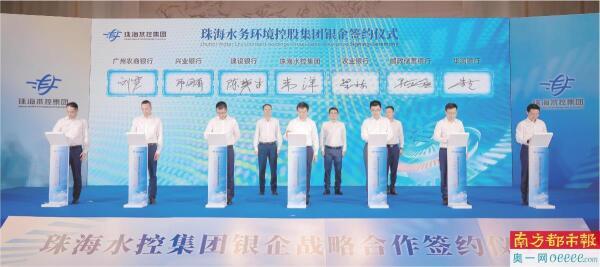
Core Viewpoint - Zhuhai Water Control Group is transforming from a traditional water supply company to a comprehensive public service provider, focusing on ecological collaboration and enhancing urban living experiences through strategic partnerships and innovative services [2][5][7]. Strategic Transformation - The collaboration involves major companies like China Petroleum, China Mobile, China Post, and Zhuhai Agricultural Control, along with six banks, resulting in a 31 billion yuan credit agreement [2]. - The partnership aims to upgrade public services from a single-function model to an ecological collaborative approach, enhancing convenience for citizens [2][3]. - Zhuhai Water Control is developing a smart water service platform, integrating AI monitoring and intelligent alert systems to improve operational efficiency and customer experience [3][5]. Financial Empowerment - The 31 billion yuan credit will support various projects, including the establishment of new energy charging stations and upgrades to smart water systems [5][6]. - The financial backing is based on the group's AAA credit rating and its transition to a technology-driven enterprise, which is expected to create sustainable value [5][6]. - The bank's strategy includes innovative financial products linked to ESG performance, ensuring funds are directed towards essential public service projects [6]. Reform and Strategic Leap - The company faces competition in water treatment and pipeline operations, necessitating continuous transformation to maintain its market position [7]. - The pressure to ensure public safety and environmental compliance drives the company to enhance management and leverage technology for efficiency [7][8]. - The goal is to elevate Zhuhai Water Control to the forefront of the water service sector in the Greater Bay Area through refined management and information technology applications [8].



攀枝花市水务集团喜获国家计算机软件著作权
Zhong Guo Neng Yuan Wang· 2025-11-25 09:51
Core Insights - The application software "Smart Water Management Platform" (V1.0) developed by Panzhihua Water Affairs Group and Chengdu Haide Control System has successfully passed the National Copyright Administration review, marking the first national-level software intellectual property for the group [1] - This project took three years to develop and includes six major production systems, facilitating a shift from "dispersed management" to "co-construction and sharing" of information resources [1] - The next steps for the group involve focusing on the iterative upgrade of the "Smart Water Management Platform" and expanding production data application scenarios to enhance operational efficiency and management levels [1] Summary by Sections Development and Features - The "Smart Water Management Platform" integrates key data from scheduling management, pipeline management, water quality management, and other critical systems [1] - It enables real-time monitoring of water production operations at various plants and supports precise scheduling, inspections, and emergency responses based on supply network data [1] Impact and Future Plans - The platform aims to establish a benchmark for smart construction applications in the southwestern region of Sichuan and northwestern Yunnan [1] - The group plans to inject new vitality into the high-quality development of Panzhihua City and contribute to the common prosperity experimental zone through enhanced information technology [1]

普天科技涨2.09%,成交额2.50亿元,主力资金净流出146.49万元
Xin Lang Zheng Quan· 2025-11-25 03:22
Core Viewpoint - Puhua Technology's stock price has shown a mixed performance, with a year-to-date increase of 27.44% but a recent decline in the last five trading days, indicating potential volatility in the market [1][2]. Financial Performance - For the period from January to September 2025, Puhua Technology reported a revenue of 3.152 billion yuan, representing a year-on-year decrease of 7.82%. The net profit attributable to shareholders was 17.5567 million yuan, down 3.80% compared to the previous year [2]. - Cumulative cash dividends since the company's A-share listing amount to 490 million yuan, with 130 million yuan distributed over the last three years [3]. Shareholder Information - As of September 30, 2025, the number of shareholders for Puhua Technology decreased by 7.01% to 28,800, while the average circulating shares per person increased by 7.54% to 23,639 shares [2]. - Among the top ten circulating shareholders, Hong Kong Central Clearing Limited is the fifth largest, holding 20.1067 million shares, an increase of 4.9016 million shares from the previous period. Changcheng Jiujia Innovation Growth Mixed A (004666) is a new entrant in the ninth position with 7.7 million shares [3]. Market Activity - On November 25, Puhua Technology's stock rose by 2.09%, reaching 27.30 yuan per share, with a trading volume of 250 million yuan and a turnover rate of 1.36%. The total market capitalization stands at 18.579 billion yuan [1]. - The net outflow of main funds was 1.4649 million yuan, with large orders showing a buy of 62.7453 million yuan and a sell of 62.2417 million yuan, indicating active trading [1].
华立股份(603038.SH):江苏诺莱拟与其联营公司新疆河润忆源签署设备采购安装合同
Ge Long Hui A P P· 2025-11-24 10:23
Core Viewpoint - Huali Co., Ltd. (603038.SH) aims to expand its smart water management business in Xinjiang by introducing ultrafiltration water treatment equipment and a smart water management software platform [1] Group 1: Business Expansion - The company’s membrane filtration division, Jiangsu Nuo Lai Smart Water Equipment Co., Ltd., plans to adopt a "joint venture + membrane filtration equipment sales" model to penetrate the Xinjiang market [1] - Jiangsu Nuo Lai has signed a contract with its joint venture partner, Xinjiang He Run Yi Yuan Water Treatment Technology Co., Ltd., for the procurement and installation of equipment [1] Group 2: Financial Details - The total contract amount for the equipment, technical services, and warranty services is tentatively set at 59.2847 million yuan [1]

普天科技涨2.02%,成交额2.21亿元,主力资金净流出1806.58万元
Xin Lang Cai Jing· 2025-11-20 03:42
Core Viewpoint - Puhua Technology's stock has shown a mixed performance with a year-to-date increase of 24.78%, but a recent decline of 2.41% over the last five trading days, indicating volatility in its market position [1]. Financial Performance - For the period from January to September 2025, Puhua Technology reported a revenue of 3.152 billion yuan, reflecting a year-on-year decrease of 7.82%. The net profit attributable to shareholders was 17.5567 million yuan, down 3.80% compared to the previous year [2]. - Cumulative cash dividends since the company's A-share listing amount to 490 million yuan, with 130 million yuan distributed over the last three years [3]. Shareholder Information - As of September 30, 2025, the number of shareholders for Puhua Technology decreased by 7.01% to 28,800, while the average circulating shares per person increased by 7.54% to 23,639 shares [2]. - Among the top ten circulating shareholders, Hong Kong Central Clearing Limited holds 20.1067 million shares, an increase of 4.9016 million shares from the previous period. Changcheng Jiujia Innovation Growth Mixed A (004666) is a new entrant among the top shareholders with 7.7 million shares [3]. Market Activity - On November 20, Puhua Technology's stock price rose by 2.02% to 26.73 yuan per share, with a trading volume of 221 million yuan and a turnover rate of 1.22%. The total market capitalization reached 18.191 billion yuan [1]. - The net outflow of main funds was 18.0658 million yuan, with large orders showing a buy of 51.1494 million yuan and a sell of 62.5638 million yuan, indicating significant trading activity [1].