
村改支

Search documents
半年吸并7家村镇银行资产质量受关注,常熟银行董事长称已有改善,打造了并购队伍、积累了经验
Jin Tou Wang· 2025-09-23 03:21
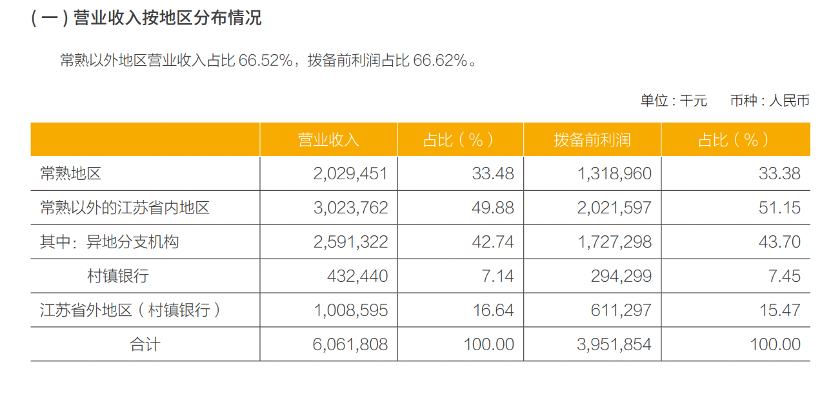
Core Viewpoint - Changshu Bank reported a strong performance in the first half of 2025, with significant increases in revenue and net profit, while also expanding its presence through village banks and strategic acquisitions [1][2]. Financial Performance - The bank achieved an operating income of 6.062 billion yuan, a year-on-year increase of 10.10% [1]. - Net profit attributable to shareholders reached 1.969 billion yuan, reflecting a year-on-year growth of 13.51% [1]. - Total assets as of June 30 reached 401.227 billion yuan, up 9.45% from the beginning of the year [1]. - The non-performing loan ratio stood at 0.76%, a slight decrease of 0.01 percentage points from the start of the year [1]. - The provision coverage ratio was 489.53%, down 10.98 percentage points compared to the beginning of the year [1]. Loan and Revenue Composition - Loans outside Changshu accounted for 68.15% of total loans, an increase of 0.15 percentage points from the beginning of the year [2]. - Revenue from areas outside Changshu made up 66.52% of total operating income [2]. - The pre-provision profit from these regions constituted 66.62% of the total [2]. Strategic Expansion - Changshu Bank is actively pursuing a "village reform and branch" strategy, having announced plans to absorb and merge with several village banks [4]. - The bank's chairman indicated that this strategy aims to deepen the institutional layout within the province and achieve concentrated development at the city level [5]. - As of June 30, total assets of the village banks controlled by Changshu Bank reached 63.91 billion yuan, with total deposits of 55.972 billion yuan and total loans of 43.406 billion yuan [5]. Asset Quality and Risk Management - The non-performing loan ratio for village banks was 1.05%, remaining stable since the beginning of the year [5]. - The provision coverage ratio for village banks increased by 18.94 percentage points to 336.28% [5]. - The bank is focused on maintaining asset quality while expanding its footprint through the village bank model [5].

村镇银行成了“香饽饽”?年内三家国有大行参与村改支
Hua Xia Shi Bao· 2025-09-06 08:47
Core Viewpoint - The approval of Agricultural Bank's acquisition of Xiamen Tong'an Nongyin Village Bank and its transformation into a branch reflects a broader trend among state-owned banks to reform village banks into branches, aligning with regulatory policies aimed at enhancing financial services in rural areas [1][2][3]. Group 1: Regulatory and Structural Changes - The National Financial Supervision Administration has approved Agricultural Bank's acquisition of Xiamen Tong'an Nongyin Village Bank, marking it as the third state-owned bank to initiate village bank reform this year [1][2]. - The reform aims to optimize the banking sector's grassroots financial service structure, encouraging financial resources to flow into rural areas, thereby enhancing service efficiency and achieving inclusive finance goals [3][4]. Group 2: Historical Context and Recent Developments - Agricultural Bank's acquisition follows similar actions by Industrial and Commercial Bank and Bank of Communications, which have also engaged in village bank reforms this year [2][4]. - As of August, over 100 village banks have exited the market in 2023, indicating a significant acceleration in the reform process compared to previous years [4]. Group 3: Implications for Future Banking Strategies - The transition from village banks to branches allows for better resource integration and risk management, providing support from the parent bank in terms of funding, risk control, and technology [3][5]. - The future expansion of the "village-to-branch" and "village-to-subsidiary" models will depend on the strength and strategic focus of the banks involved, with state-owned banks likely to lead due to their capital strength and nationwide networks [5].
村镇银行加速“村改支”背景下的发展之道 访中国村镇银行发展论坛秘书长蒋勇
Jin Rong Shi Bao· 2025-08-21 05:30
Core Viewpoint - The ongoing reform of village banks in China is leading to accelerated mergers, with some being integrated into rural credit cooperatives, raising questions about their future development and ability to serve rural economies effectively [1] Group 1: Current Status and Trends - As of mid-2024, there are over 1,600 village banks operating across 31 provinces, employing over 100,000 people, showing a trend of stable and improving operational conditions despite notable polarization [1] Group 2: Reform Objectives and Impacts - The primary goal of the village bank reform is to mitigate risks by restructuring and merging high-risk institutions, which will reduce the number of village banks while enhancing the overall risk management capabilities of the remaining entities [2] - Some provinces have adopted a "one-size-fits-all" approach, merging all village banks into larger commercial banks regardless of their performance, which may not be the best strategy [2] Group 3: Predictions and Challenges - The "village bank to branch" reform approach is suitable for high-risk banks, but indiscriminate merging based on the parent bank's characteristics is not advisable; this could lead to a significant reduction in the number of village banks, potentially leaving small enterprises underserved [3] - A notable challenge is the "one-size-fits-all" policy in some provinces; a more tailored approach involving stable and well-managed village banks leading mergers could be a viable option [3] Group 4: Differentiation and Management - Village banks that have performed well and provided effective services to small and micro enterprises are likely to retain their competitive advantages post-merger, given their deep understanding of local economies and customer needs [4] - The main parent banks should empower these well-performing village banks by respecting their independence and enhancing collaborative mechanisms to balance resource allocation and risk management [5]
村改支!又注销36家!全国村镇银行改革重组加速
Da Zhong Ri Bao· 2025-08-20 02:07
Core Viewpoint - The restructuring and reform of rural banks in China, including those in Qingdao, are accelerating, with significant actions such as mergers and dissolutions being undertaken to enhance financial stability and service quality [1][6][9]. Group 1: Mergers and Acquisitions - Qingnong Commercial Bank plans to absorb and merge Jinxiang Blue Ocean Rural Bank, Pingyin Blue Ocean Rural Bank, and Rizhao Blue Ocean Rural Bank, converting them into branch institutions [2][3]. - As of March 2025, the total asset scale of the three rural banks is approximately 5.432 billion yuan, with Jinxiang Blue Ocean Rural Bank holding assets of 3.798 billion yuan, Pingyin Blue Ocean Rural Bank 0.835 billion yuan, and Rizhao Blue Ocean Rural Bank 0.799 billion yuan [3][12]. - The merger will result in the cancellation of the legal status of the three rural banks, with all their business, assets, and liabilities being inherited by Qingnong Commercial Bank [3][12]. Group 2: Regulatory Environment - Since June 1, 2024, a total of 36 rural banks have canceled their financial licenses, a significant increase compared to only one cancellation during the same period last year [1][6]. - The regulatory authorities have emphasized the need for a steady advancement of rural bank reforms, encouraging mergers to optimize regional financial layouts [6][13]. Group 3: Impact on Financial Services - The restructuring is expected to enhance the risk resistance capabilities of rural financial institutions, as they will be integrated into larger financial entities [9][15]. - Analysts believe that merging rural banks into larger institutions will improve the quality and efficiency of rural financial services, allowing for better support of local economic development [9][15][16]. - The transformation of rural banks into branches will facilitate the establishment of more comprehensive information systems and risk control frameworks, thereby improving operational efficiency and risk management [16].


“标杆行”常熟银行的新变化:业绩稳夯实分红底气 “村改支”打开发展空间
Zhong Guo Jin Rong Xin Xi Wang· 2025-08-10 23:36
Group 1: Financial Performance - In the first half of 2025, the bank achieved operating income of 6.062 billion yuan, a year-on-year increase of 10.10% [1] - The net profit attributable to shareholders reached 1.969 billion yuan, growing by 13.51% year-on-year [1] - The bank has maintained double-digit growth in both revenue and net profit for 16 consecutive quarters, demonstrating strong resilience [1] Group 2: Asset Quality - As of June 30, 2025, the non-performing loan ratio was 0.76%, a decrease of 0.01 percentage points from the end of the previous year [2] - The provision coverage ratio stood at 489.53%, despite a decline of 10.98 percentage points, still leading among listed banks [2] Group 3: Business Strategy - The bank focuses on serving "three rural and two small" market segments, with innovative models like "Changyin Microfinance" and "Changyin Micro Venture Capital" [2] - Total loans reached 251.471 billion yuan, with personal loans accounting for 54.20% of total loans [2] Group 4: Expansion Strategy - The bank's revenue from regions outside of Changshu accounted for 66.52%, with profits before provisions from these areas at 66.62% [4] - The bank is actively pursuing the "village to branch" reform, merging village banks and establishing branches to penetrate county markets [4][5] Group 5: Dividend Policy - The bank announced its first interim dividend, proposing a cash dividend of 0.15 yuan per share, totaling 499 million yuan, which is 25.27% of the net profit attributable to shareholders [6] - This move reflects the bank's commitment to enhancing shareholder returns and aligns with policies encouraging increased cash dividends [6]
“标杆行”常熟银行的新变化 业绩稳夯实分红底气 “村改支”打开发展空间
Shang Hai Zheng Quan Bao· 2025-08-10 17:33
Core Viewpoint - Changshu Bank, recognized as a benchmark for microfinance, has demonstrated robust performance with double-digit growth in revenue and net profit, alongside a new mid-term dividend policy, indicating strong financial health and growth potential [2][3][7] Financial Performance - In the first half of 2025, Changshu Bank achieved operating income of 6.062 billion yuan, a year-on-year increase of 10.10%, and net profit attributable to shareholders of 1.969 billion yuan, up 13.51% [2][3] - The bank has maintained double-digit growth in revenue and net profit for 16 consecutive quarters, showcasing strong resilience [3] - Total assets surpassed 400 billion yuan, reaching 401.227 billion yuan, a growth of 9.45% from the beginning of the year [3] - The net interest margin stood at 2.58%, reflecting a competitive position within the industry [3] Asset Quality - As of June 30, 2025, the non-performing loan ratio was 0.76%, a slight decrease of 0.01 percentage points from the end of the previous year [3] - The provision coverage ratio was 489.53%, down 10.98 percentage points year-on-year, yet still among the leading levels in the listed banking sector [3] Business Strategy - Changshu Bank focuses on serving the "three rural issues and two small enterprises," with innovative models like "Changyin Microfinance" and "Changyin Micro Venture Capital" [3][4] - The bank's total loans reached 251.471 billion yuan, with personal loans accounting for 54.20% of the total [4] - The bank's corporate culture emphasizes a strategy of "doing small and scattered," aiming to create value for customers and contribute to society [4] Expansion Initiatives - The bank has accelerated its "village-to-branch" reform, merging village banks and establishing branches to enhance market penetration [5][6] - As of mid-2025, revenue from areas outside Changshu accounted for 66.52% of total revenue, with 42.74% coming from branches in other regions [5] Dividend Policy - Changshu Bank announced its first mid-term dividend plan, proposing a cash dividend of 0.15 yuan per share, totaling 499 million yuan, which represents 25.27% of the net profit for the first half of the year [7] - This move reflects the bank's commitment to enhancing shareholder returns and aligns with policies encouraging increased cash dividends among listed companies [7]
常熟银行2025年吸并7家村镇银行 推进版图扩张异地利润占比超80%
Chang Jiang Shang Bao· 2025-07-27 23:48
Core Viewpoint - Changshu Bank is expanding its presence in county markets through the absorption and merger of village banks, aiming to enhance its financial service capabilities and optimize its branch network [2][7]. Group 1: Strategic Expansion - Changshu Bank plans to absorb and merge three village banks, including Yancheng Binhai Xingfu Village Bank, Zhenjiang Runzhou Changjiang Village Bank, and Changzhou Zhonglou Changjiang Village Bank, and establish new branches [4][6]. - This marks the third plan for "village to branch" transformation in 2025, with a total of seven village banks set to be absorbed and merged [6][7]. Group 2: Financial Performance - In the first half of 2025, Changshu Bank achieved an operating income of 6.062 billion yuan, a year-on-year increase of 10.10%, and a net profit attributable to ordinary shareholders of 1.969 billion yuan, up 13.55% [3][9]. - As of June 2025, the total assets of Changshu Bank reached 401.251 billion yuan, reflecting a growth of 9.46% since the beginning of the year [9]. Group 3: Market Position and Growth - By 2024, 73.52% of Changshu Bank's operating income and 80.48% of its pre-provision profit came from areas outside Changshu, indicating a strong regional expansion [3][8]. - The bank's strategy includes enhancing the quality of village banks and optimizing resource allocation to support rural economic development and small and micro enterprises [7][8].
常熟银行大动作!今年三起“村改支”计划
券商中国· 2025-07-27 23:22
Core Viewpoint - Changshu Bank is actively pursuing a strategy of merging and restructuring village banks into branch institutions, with a focus on enhancing its market presence and operational efficiency in the Jiangsu region [1][2][10]. Group 1: Merging and Restructuring Plans - Changshu Bank plans to absorb and merge three village banks and establish branch institutions, pending approval at the upcoming shareholders' meeting on August 11 [1]. - This marks the third "village-to-branch" initiative by Changshu Bank this year, following the establishment of three branches from merged village banks in June [1][4]. - The bank's previous actions include the absorption of Jiangsu Ruzhou Rongxing Village Bank and the establishment of new branches [1][5]. Group 2: Background and Rationale - The bank's strategy began at the end of last year, focusing on merging "external" village banks, including those initiated by Wuhan Rural Commercial Bank [2][6]. - The rationale for direct absorption rather than acquisition is attributed to the challenges of managing non-affiliated village banks and the advantages of integrating existing customer bases and operational networks [7]. - The "village-to-branch" model is seen as more efficient than establishing new branches, as it leverages existing resources and reduces operational costs [7]. Group 3: Financial Performance and Impact - As of the end of 2024, loans outside Changshu accounted for 55.36% of the total loan and advance balance, with revenue from these areas contributing 73.52% [8][9]. - The bank's annual report indicates that profits before provisions from these regions reached 80.48%, highlighting the significance of its expansion strategy [8]. - The restructuring of village banks is part of a broader trend in the financial sector aimed at mitigating risks and enhancing operational stability [10][12].

中小银行掀起兼并重组潮
Jin Rong Shi Bao· 2025-07-22 01:00
Core Viewpoint - The trend of "mergers and restructuring, reduction and quality improvement" has become the main theme of reform for small and medium-sized banks in China, with a significant increase in the number of village banks exiting the market this year [1][4]. Group 1: Mergers and Restructuring - As of July 14, 2023, 90 village banks have appeared on the "exit list," surpassing the total number of village banks that exited last year [1][4]. - The restructuring of small and medium-sized banks is expected to accelerate, leading to a gradual reduction in the number of village banks [2][8]. - Recent cases of mergers include Guizhou Bank's absorption of Tongren Fengyuan Village Bank and Xinjiang Bank's planned merger with Xinjiang Huihe Bank [3][8]. Group 2: Merging Models - The "village reform branch" and "village reform division" models have become mainstream for the integration of small and medium-sized banks, where village banks are absorbed and transformed into branches of larger banks [5][6]. - Over 50 village banks have been merged or restructured in the first half of the year through these models, with participation from regional small banks, joint-stock banks, and even state-owned banks [6][7]. Group 3: Policy and Risk Management - The acceleration of village bank integration is driven by policy initiatives aimed at improving governance and risk management within financial institutions [8]. - The People's Bank of China has highlighted the rising non-performing loan rates among rural commercial banks, which stood at 2.86% in the first quarter, significantly higher than other bank types [8]. Group 4: Quality Improvement - The reduction in the number of small and medium-sized banks is expected to enhance service quality, shifting financial resources from extensive expansion to focused development [9]. - Experts emphasize that the reduction in institutions should not be equated with quality improvement, and village banks must enhance governance, risk control, and digital capabilities for self-reform [9].
村镇银行重组进行时 国有大行参与并推动
Zheng Quan Ri Bao Zhi Sheng· 2025-07-06 15:41
Group 1 - The core viewpoint of the article highlights the approval of Industrial and Commercial Bank of China (ICBC) to acquire Chongqing Bishan Rural Bank and establish a new branch, indicating a significant move in the reform of rural financial institutions [1] - The "village-to-branch" model is gaining traction as a method for restructuring rural banks, with ICBC's acquisition being a notable example of this trend [2] - ICBC has initiated the establishment of two rural banks, with Chongqing Bishan being the first fully-owned rural bank in the western region, showcasing its commitment to rural financial reform [1][2] Group 2 - The article discusses the broader context of rural bank reforms in China, emphasizing the need for consolidation and restructuring to enhance operational efficiency and risk management [2] - China’s rural banks are experiencing a trend of reduction in numbers, with many being absorbed by their parent banks and transformed into branches, a process referred to as "village-to-branch" [2] - The restructuring is expected to leverage the strengths of large state-owned banks, enhancing financial support for rural areas and small enterprises [2] Group 3 - China Bank is also mentioned for its strategy of holding and managing rural banks through its subsidiary, Zhongyin Fudeng Rural Bank, which has established a significant network across 22 provinces [3] - Zhongyin Fudeng has been actively increasing its capital to strengthen its rural banks, including recent acquisitions of shares to enhance its ownership stakes [3][5] - The capital injection is aimed at improving the financial health and operational capabilities of rural banks, thereby increasing their ability to serve local economies [5] Group 4 - The article notes potential risks in the restructuring process, including competition from larger banks and the challenge of maintaining customer trust during transitions [4] - It emphasizes the importance of capital supplementation for rural banks to improve their resilience against economic fluctuations and enhance their lending capabilities [5] - The article also mentions that other major banks like Agricultural Bank and Postal Savings Bank have minimal involvement in rural banks, indicating a concentrated market among a few players [5]

