
小微金融

Search documents
瑞丰银行:2025年报点评:净息差延续改善,静待小微回暖-20260327
Guoxin Securities· 2026-03-27 02:55
Investment Rating - The investment rating for the company is "Outperform the Market" [5] Core Views - The company's revenue for 2025 reached 4.408 billion yuan, a year-on-year increase of 0.5%, while the net profit attributable to shareholders was 1.966 billion yuan, up 2.3% year-on-year. However, revenue and net profit in the fourth quarter decreased by 1.1% and 8.4% year-on-year, respectively [1] - The net interest income continued to improve, growing by 8.3% year-on-year, while non-interest income saw a significant decline of 16.4%, primarily due to fluctuations in bond market interest rates affecting fair value changes [1] - Credit demand remains weak, but the net interest margin improved slightly to 1.50%, remaining stable year-on-year and increasing by 1 basis point from the previous quarter [1] Financial Performance Summary - Total assets at the end of the period were 241.5 billion yuan, with total loans of 141.2 billion yuan and total deposits of 178.1 billion yuan, reflecting growth of 9.5%, 7.8%, and 9.5% respectively since the beginning of the year [2] - The non-performing loan ratio was 0.99%, up 2 basis points from the beginning of the year, while the attention and overdue rates increased to 1.96% and 2.01%, respectively [2] - The company reduced its provision for asset impairment losses by 13.0% year-on-year, with a provision coverage ratio of 326.5%, indicating a solid safety cushion [2] Earnings Forecast and Financial Indicators - The forecast for net profit attributable to shareholders for 2026-2028 has been slightly adjusted to 2.091 billion yuan, 2.299 billion yuan, and 2.548 billion yuan, corresponding to year-on-year growth rates of 6.4%, 9.9%, and 10.9% [3] - The price-to-book (PB) ratios for 2025-2027 are projected to be 0.51x, 0.47x, and 0.43x, indicating a favorable valuation compared to historical levels [3] - The company maintains a solid customer base focused on small and micro enterprises, with expectations for economic recovery in 2026, suggesting good long-term growth potential [3]
瑞丰银行(601528):2025年报点评:净息差延续改善,静待小微回暖
Guoxin Securities· 2026-03-27 01:05
Investment Rating - The investment rating for the company is "Outperform the Market" [5] Core Views - The company's revenue for 2025 is reported at 4.408 billion yuan, reflecting a year-on-year growth of 0.5%, while the net profit attributable to shareholders is 1.966 billion yuan, up 2.3% year-on-year. However, there was a decline in both revenue and net profit in the fourth quarter, with decreases of 1.1% and 8.4% respectively [1] - The net interest income has shown a growth of 8.3% year-on-year, which is an improvement compared to the previous quarters, while non-interest income has decreased by 16.4%, primarily due to significant fluctuations in bond market interest rates [1] - The company continues to experience weak credit demand, but the net interest margin has improved slightly, standing at 1.50%, which is stable year-on-year and has increased by 1 basis point from the previous quarter [1] Financial Summary - Total assets at the end of the period reached 241.5 billion yuan, with total loans at 141.2 billion yuan and total deposits at 178.1 billion yuan, marking increases of 9.5%, 7.8%, and 9.5% respectively since the beginning of the year [2] - The non-performing loan ratio is at 0.99%, which is a slight increase of 2 basis points from the beginning of the year, while the attention and overdue rates have risen to 1.96% and 2.01%, respectively [2] - The company has reduced its provision for asset impairment losses by 13.0% year-on-year, with a provision coverage ratio of 326.5%, indicating a sufficient safety cushion [2] Earnings Forecast and Financial Indicators - The forecast for net profit attributable to shareholders for 2026, 2027, and 2028 is adjusted to 2.091 billion yuan, 2.299 billion yuan, and 2.548 billion yuan, respectively, with corresponding year-on-year growth rates of 6.4%, 9.9%, and 10.9% [3] - The price-to-book (PB) ratios for 2025, 2026, and 2027 are projected to be 0.51x, 0.47x, and 0.43x, respectively [3] - The company maintains a solid customer base focused on small and micro enterprises, which, despite current pressures, suggests good long-term growth potential as the economy continues to recover [3]
深耕普惠金融沃土 做小微金融领军者
Jin Rong Shi Bao· 2026-01-28 01:02
Core Viewpoint - The article emphasizes the importance of inclusive finance as a requirement for commercial banks to serve the real economy and contribute to high-quality social development, highlighting China Minsheng Bank's commitment to small and micro enterprises over the past 18 years [2][3]. Group 1: Development of Inclusive Finance - China Minsheng Bank has focused on small and micro finance since 2008, providing services to over 20 million small enterprises, establishing itself as a leader in this sector [2][3]. - The bank's innovative approach began post-2008 financial crisis, introducing the "Shangdai Tong" loan product in 2009, which addressed the financing needs of small enterprises [3]. - By 2011, the bank expanded its services from single credit offerings to comprehensive financial services, significantly increasing its business scale and service quality [3]. Group 2: Digital Transformation and Service Innovation - With the rapid development of information technology, the bank has shifted its small micro finance services from offline to a hybrid online-offline model, utilizing big data and mobile internet [4]. - In 2021, the bank initiated a transformation of its small micro finance model, enhancing service channels and integrating personal and corporate services [4]. - The bank has developed a digital platform, the Minsheng Small Micro App, which supports various online services for small enterprises, including financial management and loan applications [12]. Group 3: Case Studies of Support for Small Enterprises - The article shares a success story of a small retail enterprise that grew from a family business to a regional brand with the support of China Minsheng Bank, highlighting the bank's role as a reliable financial partner [6][7]. - The bank provided timely financing solutions, including a 3.19 million yuan loan to support the opening of new stores, demonstrating its responsiveness to client needs [7]. - Another example includes the bank's support for a new type of elderly care enterprise, providing a 10 million yuan credit facility to enhance service quality and meet the growing demand in the aging population sector [9][10]. Group 4: Comprehensive Financial Services and Risk Management - China Minsheng Bank has established a comprehensive service ecosystem for small enterprises, integrating financing, account management, and cash management into a single service model [13]. - The bank has implemented an intelligent risk management system to enhance credit assessment and approval efficiency for small enterprises [14]. - The bank's focus on serving key customer groups includes innovative financial products tailored for technology-driven and export-oriented small enterprises, enhancing their access to financing [15][16].



715万重罚考问民泰银行合规治理
Bei Jing Shang Bao· 2026-01-13 15:42
Core Viewpoint - Zhejiang Mintai Commercial Bank faces significant compliance issues highlighted by a recent fine of 7.15 million yuan due to ten violations across core business areas, raising concerns about its internal control systems and overall governance [1][2][3] Compliance Issues - The recent fine from the Shanghai Financial Regulatory Bureau points to serious compliance failures, including improper deposit collection through third parties and inadequate loan management practices [2] - Historical data shows repeated violations in loan classification, employee conduct, and credit management across various branches, indicating systemic issues within the bank's operations [2][3] Financial Performance - Despite maintaining revenue growth, with operating income increasing from 62.23 billion yuan in 2022 to 72.12 billion yuan in 2024, the bank's net profit has declined, with a year-on-year drop of over 14% expected in 2024 [1][7] - The bank's net profit figures were 12.3 billion yuan in 2022, 13.39 billion yuan in 2023, and 11.47 billion yuan in 2024, reflecting a concerning trend amidst increasing market pressures [7] Capital and Governance Changes - The introduction of state-owned capital is seen as a potential remedy for the bank's governance issues, with recent capital increases from local state-owned enterprises aimed at enhancing capital adequacy and governance structures [4][5] - Since 2025, the bank's registered capital has increased from 46.07 billion yuan to 56.97 billion yuan, with significant stakes held by local state-owned entities, which may strengthen oversight and compliance [4][5] Industry Context - The banking sector is experiencing a "Matthew Effect," where larger banks continue to thrive while smaller regional banks face significant operational challenges due to limited capital and technological capabilities [8] - Small and medium-sized banks are urged to leverage local economic characteristics and government support to enhance service capabilities and develop unique growth paths [8]
8次甩卖、屡屡被罚、利润七连跌,民生银行怎么把日子越过越惨
Tai Mei Ti A P P· 2026-01-07 10:02
Core Viewpoint - Minsheng Bank is facing significant challenges, including regulatory fines, declining net profits, and a substantial increase in credit impairment losses, which have led to a drastic drop in its stock price and asset quality issues [1][2][3]. Financial Performance - In the first three quarters of 2025, Minsheng Bank reported operating income of 108.51 billion yuan, a year-on-year increase of 6.74%, but net profit attributable to shareholders fell by 6.38% to 28.54 billion yuan, marking the seventh consecutive quarter of decline [1][2]. - Credit impairment losses surged to 40.17 billion yuan, a year-on-year increase of 28.16%, indicating that the bank's new operating income was completely offset by these losses, resulting in a shortfall of nearly 2 billion yuan [2]. Regulatory and Compliance Issues - Minsheng Bank has faced multiple regulatory fines, totaling approximately 79.76 million yuan in 2025 alone, with a cumulative penalty exceeding 600 million yuan from 2020 to 2024, highlighting ongoing compliance failures [3][4]. - The bank's internal control and compliance mechanisms have been criticized, with suggestions for reforming executive compensation to better align with compliance outcomes [3][11]. Asset Quality and Management - The bank has engaged in a significant disposal of non-performing credit card assets, with a total of 27.44 billion yuan in bad debt being offloaded, involving nearly 700,000 borrowers [4][5]. - The average discount on these asset packages has been reported to be below 10%, indicating a desperate need to clear historical burdens [5][6]. Strategic Challenges - The traditional interest income model is under pressure due to narrowing interest margins, with the overall net interest margin for Chinese commercial banks dropping to a historical low of 1.42% [8]. - Minsheng Bank's strategy of focusing on small and micro enterprises is being tested, as these borrowers exhibit higher default rates during economic downturns [8][9]. Future Outlook and Recommendations - To address its challenges, Minsheng Bank is focusing on improving governance and risk management, with a call for a comprehensive overhaul of its compliance culture and risk responsibility mechanisms [10][11]. - Investors are advised to monitor key indicators such as improvements in governance and sustained profitability metrics before considering the bank's stock as a viable investment opportunity [12].
城记 | 以“信”为锚:78家上市公司“台州军团”背后的活力密码
Xin Hua Cai Jing· 2025-12-21 13:42
Core Insights - The article emphasizes the importance of credit as a fundamental element of market economy, highlighting Taizhou's unique credit culture rooted in its historical trade practices and the development of a robust private economy [1][4] Group 1: Historical Development of Credit in Taizhou - Taizhou has a rich history of grassroots entrepreneurship, with the first individual business license issued in 1979 and the first cooperative enterprise established in 1982, showcasing the early establishment of a credit network based on personal relationships [2][3] - The establishment of the Yinzuo Financial Service Society in 1988 marked a significant evolution in credit services for small and micro enterprises, transitioning from informal borrowing to structured lending [3] - By 2002, the formation of Taizhou Commercial Bank represented a milestone as the first city commercial bank in China without government control, leading to the development of a sustainable financial ecosystem for small businesses [3] Group 2: Modern Financial Innovations - In 2015, the establishment of the Taizhou Small and Micro Enterprise Financial Service Reform and Innovation Pilot Zone received national recognition, positioning Taizhou as a leader in inclusive financial services [4] - The creation of a credit information sharing platform has significantly reduced the cost of pre-loan investigations for banks, contributing to a decrease in non-performing loan rates from 1.58% in 2015 to 0.60% by 2025 [7] - The introduction of a credit guarantee fund in 2014 has facilitated access to financing for small enterprises, with an average guarantee fee rate of only 0.6% by 2025, significantly lower than market averages [7][8] Group 3: Systematic Credit Development - The transition from personal to systematic credit is crucial for Taizhou's economic transformation, as over 99% of its enterprises are small and micro businesses that require reliable financial support [6] - The implementation of innovative financing mechanisms, such as trademark and patent pledges, has addressed the challenges of insufficient collateral for small businesses, leading to significant financing amounts [8] - By 2025, the total amount of loans secured by various intangible assets reached 2840.8 billion, demonstrating the effectiveness of these new credit mechanisms [8] Group 4: Impact on the Local Economy - The number of small micro loan accounts surged from 240,000 in 2015 to 609,100 by September 2025, with the total loan balance increasing from 231.32 billion to 1,057.08 billion, reflecting a 4.6-fold growth over ten years [11] - The proportion of small micro loans in total loans reached 54.08%, exceeding the national average by nearly 20 percentage points, indicating a significant improvement in financial accessibility [11] - The growth of the Taizhou stock market, with 78 listed companies, underscores the positive impact of enhanced credit systems on local economic development [11]
告别流量依赖 握紧风控自主权中小银行与助贷机构合作逻辑生变
Zhong Guo Zheng Quan Bao· 2025-11-18 20:05
Core Viewpoint - The implementation of the "New Regulations on Internet Lending by Commercial Banks" since October 1 has led to significant adjustments in the internet lending business of commercial banks, with a shift from broad cooperation to stringent selection of partners [1][2][3]. Summary by Sections Adjustments in Lending Partnerships - Several regional banks, including Urumqi Bank, Longjiang Bank, and Guiyang Bank, have announced the suspension of new internet lending partnerships, indicating a trend towards reducing the number of cooperative institutions [1][2]. - Urumqi Bank has stopped its cooperative personal internet consumer loan business, affecting nine platform operators and eight credit enhancement service providers [1]. - Longjiang Bank has ceased its only partnership with Shenzhen Shoufu Bao Financial Technology Co., Ltd., while Guiyang Bank has not renewed its internet platform business partnerships [2]. Regulatory Impact and Compliance - The new regulations require banks to implement a list management system for platform operators and credit enhancement service providers, which has led to a tightening of partnerships [3][4]. - The recent regulatory environment has resulted in penalties for banks like Ping An Bank and SPDB for improper management of internet lending activities [4]. - The regulations emphasize that banks must not outsource core functions such as loan issuance and risk control, pushing them to enhance their internal capabilities [5]. Risk Management and Strategic Shifts - The new regulations are seen as a catalyst for banks, especially smaller ones, to improve their risk management and operational capabilities, moving from passive reliance on lending partners to active collaboration [5][6]. - Analysts suggest that smaller banks should focus on building their own customer acquisition and brand development capabilities while diversifying their partnerships to mitigate risks [5]. - The future of internet finance is expected to focus on scenario-based finance, small and micro finance, and enhanced data asset management, with AI playing a crucial role in improving risk control [6].
39岁!从基层信贷员做起的他,将成为A股上市银行最年轻行长
Mei Ri Jing Ji Xin Wen· 2025-11-15 16:13
Core Viewpoint - Changshu Bank is undergoing significant management changes with the resignation of its president and vice president, and the appointment of a new president, Lu Dingchang, who has been cultivated internally within the bank [1][3][4]. Management Changes - President Bao Jian and Vice President Li Yong have submitted their resignations due to work changes [1][4]. - Lu Dingchang has been appointed as the new president and chief compliance officer, pending regulatory approval [1][3][4]. - Lu Dingchang has a long history with Changshu Bank, having worked in various roles including credit officer and vice president [4][7]. New Vice Presidents - Two new vice presidents, Zhang Kangde and Ni Jianfeng, have been appointed, with their qualifications also pending regulatory approval [5][8]. - Zhang Kangde has a background primarily in government roles before joining Changshu Bank [5]. - Ni Jianfeng has extensive banking experience, having held various positions in other banks prior to his current role [7]. Shareholder Activity - Changshu Investment Holding Group, the second-largest shareholder, has increased its stake in Changshu Bank by acquiring 5.6193 million shares between October 9 and November 13, raising its total shareholding to 132 million shares, or 3.98% of the total [2][8]. - This increase in shareholding follows previous acquisitions earlier in the year, resulting in a cumulative increase of 0.9 percentage points in ownership [8]. Financial Performance - For the first three quarters of the year, Changshu Bank reported a revenue of 9.052 billion yuan, a year-on-year increase of 8.15%, and a net profit attributable to shareholders of 3.357 billion yuan, up 12.82% [8]. - As of the end of September, the bank's total assets exceeded 400 billion yuan, reaching 402.23 billion yuan, a 9.72% increase from the previous year [9]. - The bank maintains a low non-performing loan ratio of 0.76% and a high provision coverage ratio of 462.95% [9].

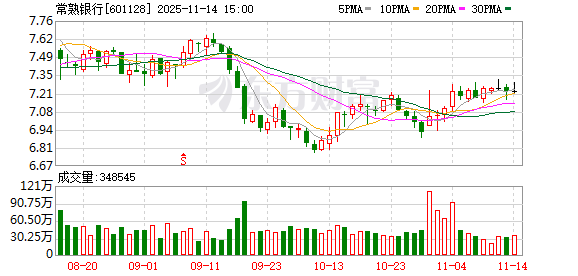
常熟银行高管更迭:“85后”陆鼎昌拟接棒,将成A股上市银行最年轻行长
Mei Ri Jing Ji Xin Wen· 2025-11-14 14:19
Core Viewpoint - Changshu Bank is undergoing significant management changes with the resignation of its president and vice president, and the appointment of a new president, Lu Dingchang, who is an internal candidate with extensive experience in the bank [2][4][5]. Management Changes - President Bao Jian and Vice President Li Yong have resigned due to work changes, with Bao stepping down from all positions within the bank [4]. - Lu Dingchang has been appointed as the new president and chief compliance officer, pending regulatory approval [2][4]. - Two new vice presidents, Zhang Kangde and Ni Jianfeng, have also been appointed, with their qualifications awaiting regulatory approval [5][6]. Shareholder Activity - Changshu Investment Holding Group, the second-largest shareholder, has increased its stake in Changshu Bank by acquiring 5.6193 million shares from October 9 to November 13, raising its total holdings to 132 million shares, which is 3.98% of the total share capital [3][7]. - The group has made multiple purchases throughout the year, increasing its shareholding by a total of 0.9 percentage points [7]. Financial Performance - For the first three quarters of the year, Changshu Bank reported a revenue of 9.052 billion yuan, a year-on-year increase of 8.15%, and a net profit attributable to shareholders of 3.357 billion yuan, up 12.82% [8]. - As of the end of September, the bank's total assets exceeded 400 billion yuan, reaching 402.23 billion yuan, a 9.72% increase from the previous year [8]. - The bank maintains a low non-performing loan ratio of 0.76%, with a high provision coverage ratio of 462.95% [8].
江南农商行:于变局中笃行 蓄韧性生长之力
Zhong Zheng Wang· 2025-11-07 14:04
Core Viewpoint - Jiangnan Rural Commercial Bank is facing cyclical challenges in the banking industry but is strategically optimizing its structure and operations to ensure sustainable growth despite external pressures [1][2]. Financial Performance - As of September 2025, Jiangnan Rural Commercial Bank reported total assets of 616.51 billion yuan, total liabilities of 565.82 billion yuan, and total equity of 50.69 billion yuan, with a profit of 4.92 billion yuan [1]. - The bank anticipates a revenue reduction of approximately 300 million yuan due to tightening VAT policies and a further 500 million yuan from the proactive reduction of non-standard asset scale [1]. Interest Rate Dynamics - The bank is experiencing a significant "scissors difference" where the loan interest rate has decreased by 0.61 percentage points year-on-year, while the deposit interest rate has only decreased by 0.35 percentage points, leading to a narrowing interest margin [1]. - Loan interest income has decreased by 11.38% year-on-year, while deposit interest expenses have decreased by 7.96%, resulting in a revenue reduction of approximately 700 million yuan from loans [1]. Strategic Initiatives - Jiangnan Rural Commercial Bank is focusing on small and micro finance and optimizing its deposit structure as part of a dual strategy for growth [2]. - The bank has established a dedicated small micro-loan division, with over 2.5 billion yuan in loans issued and interest income exceeding 60 million yuan [2]. Deposit Management - The bank is implementing a "limited + pricing" strategy to manage deposit costs, controlling the issuance of long-term deposits and reducing interest rates for various deposit products [3]. - As of the third quarter, the conversion rate of savings deposits has reached 42%, with a significant decrease in the proportion of long-term deposits [3]. Non-Interest Income Growth - Jiangnan Rural Commercial Bank is expanding its non-interest income through bond asset allocation and derivative products, achieving a 35% year-on-year increase in trading gains [3]. - The bank's derivative business has seen a remarkable growth of 78% year-on-year, particularly in interest rate and foreign exchange derivatives [3]. Financial Leasing Business - The bank's subsidiary, Jiangnan Financial Leasing Co., has a leasing asset scale of 35.9 billion yuan, with a year-to-date increase of 2.1 billion yuan, and has achieved over 18% growth in both revenue and net profit [4]. - This leasing business is becoming a stable anchor and growth engine for the group's overall performance [4]. Future Outlook - The bank is gradually building a diversified income system through small micro finance, liability management, innovative funding operations, and subsidiary collaboration, positioning itself for a robust future [4].