
Fiscal policy

Search documents
X @Bloomberg
Bloomberg· 2025-09-04 07:44
Economic Outlook - Chinese fiscal and monetary policymakers held a rare meeting, leading to speculation about potential easing measures [1] - The anticipated easing measures are expected to support both the bond market and overall economic growth in the current year [1]
日本经济展望:关税、货币政策、政治格局(1)
2025-08-25 02:03
Summary of Deutsche Bank Group Research on Japan Economic Perspectives Industry/Company Involved - **Industry**: Japanese Economy - **Company**: Deutsche Bank Group Key Points and Arguments Economic Growth Forecasts - The growth forecast for fiscal 2025 has been revised upward from 0.6% to 1.0% based on 2Q 2025 GDP figures, which showed a real GDP growth rate of 1.0% saar, exceeding market consensus of 0.3% [4][5] - The forecast for fiscal 2026 has been revised downward from 1.1% to 0.9% [4][5] - Growth forecasts continue to exceed consensus estimates [5] Tariff Negotiations and Economic Impact - Reciprocal tariffs with the US will be raised to 15%, while tariffs on automobiles will be lowered [4][9] - The impact of the US tariff increase on the real economy has been limited so far, with no significant change in export volumes to the US [10] - The expected impact on growth rates due to tariff changes is -0.1% for fiscal 2025 and 2026 [9] Inflation and Consumption Trends - Despite high inflation, real private consumption is on a moderate upward trend, primarily due to increases in real employee compensation [15] - Real employee compensation remains below pre-pandemic levels, with a significant negative real wage gap of about -4% in 2Q 2025 [15][23] - Inflation is expected to decelerate moderately but is unlikely to fall significantly below 2% [23] Monetary Policy Outlook - No significant changes in the Bank of Japan's (BoJ) stance on interest rate hikes are expected unless Takaichi becomes prime minister [4][46] - An interest rate hike is anticipated in October, influenced by the political calendar and economic measures [46][47] Political Landscape and Future Cooperation - The political situation will be influenced by the outcome of the Liberal Democratic Party (LDP) presidential election, with potential cooperation with opposition parties depending on the outcome [38][42] - If Prime Minister Ishiba remains in office, cooperation with the Japan Innovation Party (Ishin) or the Constitutional Democratic Party (CDP) is likely [38][42] Fiscal Policy Uncertainty - High uncertainty exists regarding future economic measures, with a placeholder assumption of a supplementary budget of about 15 trillion yen [34] - Further increases in defense spending sought by the US government are not reflected in the current economic outlook [34] Employment and Wage Dynamics - The number of employees has increased at an annual rate of about 0.7-0.8%, contributing to the rise in real employee compensation [15] - Nominal wage increases of at least 3% are deemed necessary to address the negative real wage gap [15] Long-term Economic Policy Trends - The long-term trend in economic policy is shifting from monetary policy to fiscal policy, focusing more on household-oriented policies rather than corporate-oriented ones [45][42] Other Important Content - The presence of a Liberal Democratic Party presidential election will significantly influence future political cooperation and economic policy direction [38][42] - The economic measures and their scale will be critical in shaping the economic outlook, with potential implications for fiscal policy and public sentiment regarding inflation and consumption [34][23]

X @The Economist
The Economist· 2025-08-24 07:40
Policy Stance - Labour pledges to end the use of hotels for asylum-seekers by 2029 [1] Fiscal Implications - There is a robust fiscal case for ending the use of hotels for asylum-seekers [1]
摩根士丹利:美国政策-财政政策冲刺终点线
摩根· 2025-07-16 15:25
Investment Rating - The report indicates a modest overall fiscal impulse from the One Big Beautiful Bill Act (OBBBA), suggesting a cautious investment outlook for the affected sectors [5][6][27]. Core Insights - The OBBBA is expected to provide significant cash flow benefits primarily through upfront R&D expensing and bonus depreciation, particularly benefiting sectors like technology, communication services, and healthcare [5][10][12]. - The fiscal impulse from the OBBBA is projected to add approximately 0.4 percentage points to real GDP in 2026, although this is not sufficient to offset drags from trade and immigration policies [27][45][57]. - The report identifies potential beneficiaries among companies with substantial R&D and capital expenditures, focusing on those with significant pre-tax earnings and meaningful cash taxes [5][24][25]. Summary by Sections Fiscal Implications - The OBBBA implies higher incremental deficits than previously anticipated, with a projected 2026 deficit of 7.1% of GDP, influenced by increased tariff revenues [6][12][59]. - The bill's provisions are expected to lead to front-loaded deficits and back-loaded surpluses, indicating a short-term fiscal impulse that may later turn into a fiscal drag [5][38][57]. Sectoral Impacts - Clean Tech: The final bill is viewed positively for most subsectors, alleviating investor concerns regarding the repeal of IRA tax credits [7]. - Consumer: Smaller cuts to SNAP in the final bill reduce headwinds for packaged foods, beverages, retail, and restaurants [7]. - Software: The reinstatement of upfront R&D expensing is likely to provide a cash flow tailwind for large-cap corporates [7][10]. Tax Provisions - Upfront R&D expensing allows companies to accelerate cash tax savings, particularly benefiting sectors like tech and healthcare [10][12]. - The reinstatement of 100% first-year bonus depreciation for qualified property and equipment is expected to positively impact capital-intensive sectors such as aerospace and defense, telecom, and energy [10][12]. Cash Flow and Earnings - The report emphasizes that the majority of OBBBA policies will impact cash flows rather than reported earnings, with significant cash tax savings anticipated in the near term [8][10][12]. - The cash tax rate is expected to potentially reach new lows due to the reinstated and expanded expensing provisions [9][12]. Deficit and Rates - The report notes that concerns regarding fiscal policy under the new administration have somewhat diminished, with the 10-year yield remaining below 4.50% [14][57]. - The OBBBA is projected to result in a lower fiscal deficit in 2025 compared to prior forecasts, while maintaining a broadly unchanged deficit forecast for 2026 [59][60].
X @Joe Consorti ⚡️
Joe Consorti ⚡️· 2025-07-16 03:07
Bitcoin Market Analysis - USG (美国政府) 积累比特币以缓解财政问题,对市场和比特币有利 [1] - USG (美国政府) 允许财政前景持续恶化,对个人不利,但对比特币有利 [1] - 行业建议购买比特币 [1]
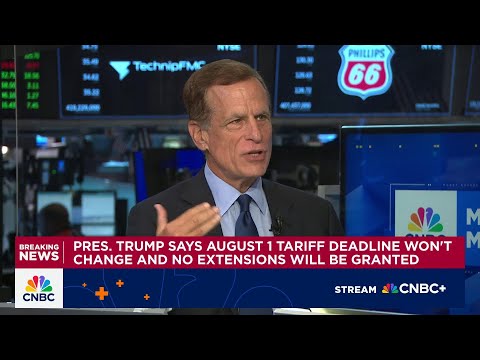
Corporate earnings are likely to be resilient, says Goldman Sachs' Robert Kaplan
CNBC Television· 2025-07-08 15:45
Monetary Policy & Tariffs - The market initially anticipated a rate cut in July, but it's now less likely due to tariff uncertainty [2] - The Fed is likely to wait until August 1st to assess tariff rates and economic impact before potentially acting in September [3] - The speaker suggests that the "price shock" from tariffs is largely in the past, as businesses have had time to adjust [5][6] Economic Outlook - US demand is solid but sluggish, with GDP around 1% [2] - Fiscal policy is now neutral or stimulative, reducing recession odds [7] - Deficits and the 10-year Treasury yield are expected to remain elevated [8] Business & Market Impact - Companies are expected to adapt to low to mid-teens tariffs if the rates are clear [3] - Corporate earnings are expected to be resilient, supported by stimulus measures [8] - Accelerated depreciation, tax on tips, and tax on overtime should provide a tailwind for businesses [9] - Businesses are cautious due to uncertainty but relatively optimistic about the future [9]


How America's Debt Spiral Could Spark The Next Crisis
CNBC· 2025-07-07 10:01
U.S. Fiscal Situation & Debt Concerns - The U.S federal budget is on an unsustainable path, potentially leading to rapid financial instability if spending issues are not addressed [1] - America's borrowing levels are currently the same size as the entire economy and are expected to skyrocket [2] - There is a greater than 50% chance of experiencing a financial trauma related to the deficit or debt levels within three years if the issues are not addressed [11] - The U.S is expected to spend nearly $1 trillion on interest payments this year due to soaring debt and higher rates [24] - The Congressional Budget Office (CBO) expects net interest costs in 2025 to surpass spending on Medicare, Medicaid, and national defense [24] - The cost to service the U.S debt is expected to be 18% of total tax revenue this year, compared to less than 10% in 2022 [25] Potential Consequences & Risks - Unsustainable fiscal policy could lead to a collapse in fixed income and bond markets within 20 years [8][9] - The U.S may resort to printing money to cover its debt, potentially leading to inflation [10] - Rising borrowing costs could negatively affect the health and growth of the U.S economy [23][24] - Unchecked debt levels risk leaving a weaker economy to future generations [30] International Implications - International holdings of U.S treasuries were near a record $9 trillion in April [40] - China, while one of the largest foreign holders of U.S treasuries, has been steadily reducing its holdings [39][40] - Japan holds more than $1 trillion worth of U.S debt, the most of any foreign country [42]
Starmer's Office Scrambles to Show Support for Reeves
Bloomberg Television· 2025-07-02 19:04
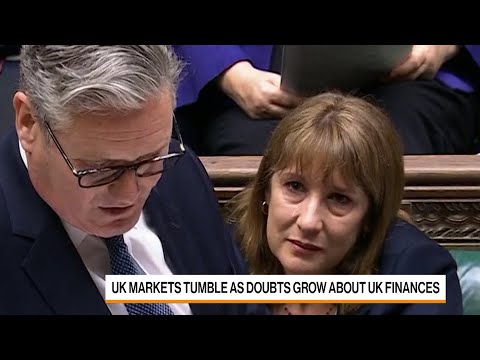
UK Economic & Political Uncertainty - Keir Starmer's initial reluctance to support Rachel Reeves raises questions about internal party dynamics and potential leadership challenges [1][2] - Speculation suggests a possible change in Chancellor of the Exchequer, potentially impacting market confidence and government stability [3] - The government's backtracking on proposed welfare changes reveals a £5 billion fiscal hole, hindering economic growth and tax cut promises [5] Market Reaction & Fiscal Policy - The UK market faces potential instability, reminiscent of the "Liz Truss" era, with concerns over unfunded tax cuts and bond market reactions [4][6] - Rachel Reeves' credibility with the bond market is crucial; her departure could trigger increased speculation and market volatility [7][8] - The ability to grow the UK economy and avoid tax increases is uncertain, given the government's recent policy setbacks [5][6] Budget & Economic Outlook - The upcoming budget, to be presented by either Rachel Reeves or a new Chancellor, faces significant challenges in achieving economic growth without raising taxes [6] - Failure to pass proposed changes raises concerns about the government's ability to manage the economy and fulfill its promises [5][6] - The UK is in a "waiting period," with close attention on key figures and their potential impact on economic policy [4][5]
The debt trap: How the GOP bill would make a big problem for Americans even worse
MSNBC· 2025-07-02 04:30
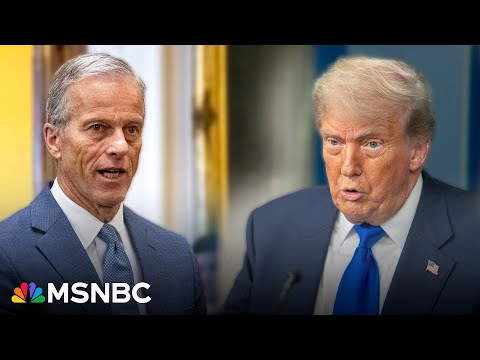
Fiscal Unsustainability & Debt - US national debt is a staggering $37 trillion, and a proposed bill could add at least $3 trillion more over the next decade [3] - The bill under discussion is projected to increase deficits by approximately $4 trillion [8][19][20] - The US is on a fiscally unsustainable trajectory, with Social Security and Medicare facing potential shortfalls in less than a decade [7] - Increased debt could lead to higher interest rates for consumers and the government, impacting borrowing costs for cars, homes, and credit cards [4] Impact of Proposed Legislation - The bottom 40% of the population is expected to be worse off as a result of the bill, potentially losing health insurance and access to food stamps [9][21] - Over 10 million people are likely to lose their healthcare due to the proposed legislation [5] - The bottom 10% could be $700 worse off annually, while the top 1% may receive a $30,000 tax cut, described as a reverse Robin Hood effect [21] Trade War & Inflation - Trade wars and tariffs are expected to worsen inflation [5] - The Federal Reserve (Fed) indicated it would have cut interest rates if not for the uncertainty caused by tariffs and the trade war [5][23] Global Confidence & US Economy - There's a growing concern about declining global confidence in the US's ability to repay its debts [11] - The Fed paused on lowering interest rates due to the uncertainty caused by the Trump administration's sweeping trade policy [25]
汇丰:全球经济-不均衡态势
汇丰· 2025-07-01 00:40
Investment Rating - The report does not explicitly provide an investment rating for the industry Core Insights - The global economic outlook remains uncertain due to ongoing US tariffs and geopolitical tensions, particularly regarding Iran and its nuclear ambitions [3][4][24] - US tariffs are expected to have a significant impact on both US and global growth, with a projected decline in global GDP from 2.8% in 2024 to 2.5% in 2025 [8][22] - The average effective tariff rate for US consumers has reached 15.8%, the highest since 1936, indicating a substantial increase in trade costs [9][46] Summary by Sections Key Forecasts - Global GDP growth is forecasted to slow from 2.8% in 2024 to 2.5% in 2025 and further to 2.3% in 2026 [22] - Developed economies are expected to grow at a slower pace compared to emerging markets, with the US GDP growth projected at 1.8% for 2025 [22] Economic Environment - The report highlights the volatility in global trade data due to frontloading ahead of US tariffs, which has led to a surge in imports followed by a sharp decline [12][52] - US tariffs are anticipated to slow trade growth, with global trade growth projected at just 1.8% in 2025 and 0.6% in 2026 [12][71] Tariff Implications - US tariffs are described as a multi-purpose tool that will likely lead to higher inflation and lower growth in the US, with ongoing uncertainty regarding future tariff negotiations [11][50] - The report notes that countries with lower exposure to US tariffs may benefit, particularly those positioned to supply components currently sourced from mainland China [13][74] Consumer Spending and Inflation - US consumer spending is expected to slow due to weaker employment and slower real wage growth, while inflation pressures may persist despite a general slowdown in growth [15][16] - The report anticipates sticky core inflation in the US, influenced by supply shocks from tariffs and lower immigration [16] Central Bank Actions - The Federal Reserve and European Central Bank are expected to pause rate changes during the summer, amidst ongoing global economic uncertainty [17][31] - Divergences in central bank policies are noted, with the Fed likely to cut rates modestly by the end of 2026 [17] Fiscal Policy and Trade Negotiations - Ongoing US fiscal negotiations are highlighted as critical, with potential implications for economic growth depending on the outcomes [18][19] - The report emphasizes the importance of monitoring trade negotiations and their impact on global economic dynamics [20][33]
