
长三角一体化

Search documents
世名科技涨2.05%,成交额3053.03万元,主力资金净流入73.85万元
Xin Lang Cai Jing· 2025-09-29 02:11
Company Overview - Suzhou Shiming Technology Co., Ltd. was established on December 11, 2001, and went public on July 5, 2016. The company is located at 219 Huangpujiang North Road, Zhou City Town, Kunshan, Jiangsu Province [2] - The main business involves the research, production, and sales of nano coloring materials, functional nano dispersions, special additives, electronic chemicals, and intelligent color adjustment systems [2] - The revenue composition is as follows: coloring agents 79.97%, special additives 15.63%, others 3.80%, and resins 0.60% [2] Stock Performance - As of September 29, the stock price increased by 2.05% to 12.92 CNY per share, with a total market capitalization of 4.166 billion CNY [1] - Year-to-date, the stock price has risen by 4.62%, but it has seen declines of 0.08% over the last 5 trading days, 4.93% over the last 20 days, and 4.01% over the last 60 days [2] Financial Performance - For the period from January to June 2025, the company achieved operating revenue of 359 million CNY, representing a year-on-year growth of 1.33%. However, the net profit attributable to shareholders decreased by 44.92% to 15.1996 million CNY [2] - The company has distributed a total of 222 million CNY in dividends since its A-share listing, with 56.0347 million CNY distributed over the past three years [3] Market Activity - As of September 10, the number of shareholders was 19,900, an increase of 0.29% from the previous period, with an average of 13,197 circulating shares per person, a decrease of 0.29% [2] - In terms of capital flow, there was a net inflow of 738,500 CNY from major funds, with significant buying activity from large orders [1]

奋勇争先,决战决胜“十四五”|努力在中国式现代化中走在前列——长三角一体化发展观察
Ren Min Ri Bao· 2025-09-27 11:14
Core Viewpoint - The Yangtze River Delta (YRD) region is undergoing significant economic growth and integration, with a projected GDP increase from 27.6 trillion yuan in 2021 to over 33 trillion yuan by 2024, highlighting its role as a key driver of China's modernization and high-quality development [2]. Economic Growth and Innovation - The YRD has nine cities that have reached a GDP of over 1 trillion yuan, and it hosts 26 national-level advanced manufacturing clusters, accounting for nearly one-third of the country [2]. - The region is home to 282 out of 589 companies listed on the Science and Technology Innovation Board, indicating a strong innovation capacity [2]. - Shanghai's leading industries, including integrated circuits, biomedicine, and artificial intelligence, have seen continuous growth, reaching a scale of 1.8 trillion yuan [4]. Technological Integration - The YRD is focusing on integrating scientific research and industrial innovation, with major scientific facilities like the Shanghai Synchrotron Radiation Facility and Hefei Light Source supporting product development [5][7]. - A new dedicated synchrotron radiation experimental platform has been established to enhance product performance through advanced testing [7]. Collaborative Framework - The establishment of the Yangtze River Delta National Technology Innovation Center aims to foster collaborative innovation among the three provinces and one city [7]. - Legislative measures have been passed to promote coordinated technological innovation across the region, addressing existing bottlenecks [8]. Infrastructure and Connectivity - The launch of the Shanghai Oriental Hub International Business Cooperation Zone will facilitate easier access for global business professionals, enhancing the region's international business environment [9][10]. - The G60 Science and Technology Corridor connects cities in the YRD, promoting resource sharing and collaborative innovation [11]. Environmental and Economic Synergy - The YRD is committed to ecological protection while pursuing economic development, with initiatives like the New Anjiang Ecological Compensation Mechanism demonstrating successful cross-province collaboration [21][22]. - The region has implemented a series of environmental standards and practices, resulting in improved air quality and water quality metrics [22][23]. Future Outlook - The YRD is focused on sustaining high-quality development and enhancing regional competitiveness through innovation and collaboration, with a vision for continued integration and growth [25].
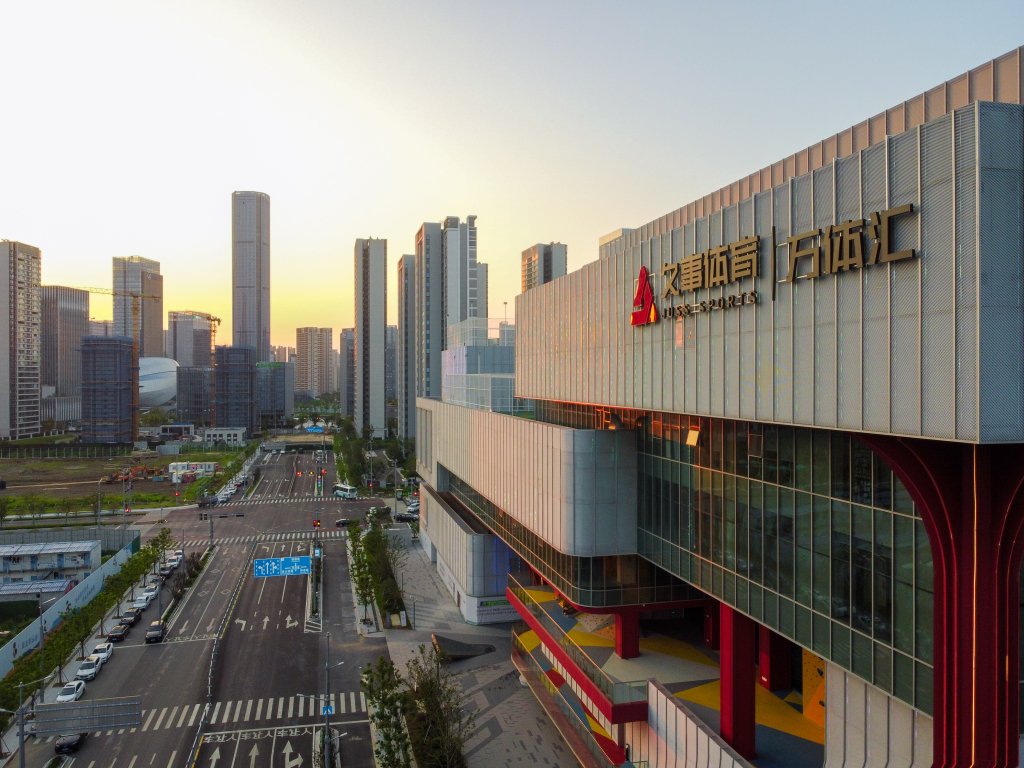
苏州“万体汇”启幕,久事体育首次跨区域运营体育综合体
Xin Lang Cai Jing· 2025-09-27 08:54
Core Viewpoint - The opening of Suzhou "Wanti Hui" marks the first cross-regional sports complex operated by Jiushi Sports, integrating sports and lifestyle in Suzhou High-speed Rail New City [3][5] Group 1: Project Overview - Suzhou "Wanti Hui" is located in the southern core area of Suzhou High-speed Rail New City, seamlessly connected to Metro Line 2 [3] - The complex features various sports facilities, including the first indoor standard red clay tennis court in Suzhou, a large gym, a standard swimming pool with 21×50 meters and eight lanes, as well as badminton, table tennis, basketball, outdoor soccer, climbing, and pickleball areas [3] Group 2: Services and Operations - The venue aims to provide a one-stop sports and integrated consumption experience, with additional services such as a convenience service center, a branch of Suzhou Library, and a fresh market [3] - Jiushi Sports plans to leverage its event operation experience to host more spectator and participatory events, enhancing the city's sports vitality [5] Group 3: Strategic Alignment - The establishment of Suzhou "Wanti Hui" aligns with the national strategy to promote high-quality development in the sports industry, responding quickly to the government's call for regional sports industry development [5] - The integration of Shanghai's operational experience with Suzhou's industrial foundation and market potential is expected to optimize local sports service supply and promote resource sharing in the Yangtze River Delta [5][7] Group 4: Future Prospects - The venue is positioned to facilitate business collaboration, hosting corporate team-building, industry events, and brand promotions, thereby enhancing regional sports consumption [5] - The 30-minute high-speed rail commuting advantage between Shanghai and Suzhou will support business synergy and service interconnectivity, creating a sustainable sports service ecosystem [7]

奋勇争先,决战决胜“十四五”丨努力在中国式现代化中走在前列
Ren Min Ri Bao· 2025-09-27 08:20
人民日报记者 吴焰 巨云鹏 王伟健 上海市徐汇区武康路,梧桐掩映下的一幢小楼——由上海、江苏、浙江、安徽三省一市联合组建的 长三角区域合作办公室,承担着深入推进长三角一体化发展的重要职能。 小楼里悬挂的一张世界级城市群概况图上,长三角地区引人注目。 "十四五"时期,长三角地区生产总值从2021年的27.6万亿元增长到2024年的超33万亿元,稳步提 升。 习近平总书记强调:"深入推进长三角一体化发展,进一步提升创新能力、产业竞争力、发展能 级,率先形成更高层次改革开放新格局,对于我国构建新发展格局、推动高质量发展,以中国式现代化 全面推进强国建设、民族复兴伟业,意义重大。" 长三角以实绩作答:9座城市跻身地区生产总值"万亿之城"行列;26个国家级先进制造业集群,占 全国近1/3;589家科创板上市公司中,有282家来自长三角。区域创新能力、产业实力持续提升。 紧扣一体化和高质量这两个关键词,发挥好经济增长极、发展动力源、改革试验田的作用,三省一 市合力勇挑大梁,努力在中国式现代化中走在前列。 统筹科技创新和产业创新 一束光,照见长三角科研链与产业链融合 推进中国式现代化,科学技术要打头阵,科技创新是必由之路。 ...
努力在中国式现代化中走在前列
Ren Min Ri Bao· 2025-09-27 03:02
Group 1: Economic Growth and Integration - The Yangtze River Delta (YRD) region's GDP is projected to grow from 27.6 trillion yuan in 2021 to over 33 trillion yuan by 2024, indicating steady economic growth [1] - Nine cities in the YRD have entered the "trillion-yuan city" category, and the region hosts 26 national-level advanced manufacturing clusters, accounting for nearly one-third of the country [1] - The YRD is home to 282 out of 589 companies listed on the Sci-Tech Innovation Board, showcasing its strong regional innovation capability [1] Group 2: Technological Innovation - The YRD is focusing on integrating scientific research and industrial innovation, with a significant emphasis on enhancing regional innovation capabilities [2][3] - Shanghai's leading industries, including integrated circuits, biomedicine, and artificial intelligence, have seen continuous growth, reaching a scale of 1.8 trillion yuan [3] - The establishment of dedicated synchrotron radiation experimental platforms is facilitating the application of advanced scientific research in product development [6] Group 3: Infrastructure and Connectivity - The launch of the Shanghai Oriental Hub International Business Cooperation Zone will allow global business personnel to enter without a visa, enhancing international business activities [7][8] - The G60 Sci-Tech Corridor connects nine cities, promoting collaboration and resource sharing, which has led to significant business growth for companies like Zhejiang Pangu Power Technology Co., Ltd. [9][10] Group 4: Environmental Protection and Sustainable Development - The YRD is committed to ecological protection while pursuing economic development, with initiatives like the New安江 ecological compensation mechanism demonstrating successful cross-province collaboration [18][19] - The region has implemented a series of environmental standards and plans, achieving an average of 84.5% for good air quality days in 2024, an increase of 8.8 percentage points since 2018 [20] - The establishment of green fiber industry clusters is contributing to both environmental protection and economic growth in the region [21][22]
上证观察家 | 拥抱“十五五”战略机遇 推动上海国际金融中心能级跃升
Sou Hu Cai Jing· 2025-09-27 02:50
Core Insights - The construction of Shanghai International Financial Center is entering a critical phase during the "14th Five-Year Plan" period, aiming for a transformation from a "flow center" to a "functional center" through institutional breakthroughs, functional upgrades, open cooperation, and technological revolutions [1][7]. Challenges Facing Shanghai International Financial Center - Geopolitical factors are creating shocks, leading to increased volatility and uncertainty in international financial markets, complicating the international trade and investment environment [8]. - Emerging technologies such as AI, blockchain, and digital currencies are reshaping the global financial landscape, presenting both opportunities and regulatory challenges [9]. - Competition from established financial centers like New York and London, as well as emerging financial hubs, is intensifying, necessitating a clear positioning for Shanghai [10]. - Financial risks and regulatory challenges are heightened due to market volatility, technological advancements, and the emergence of innovative financial products [11]. Strategic Opportunities for Shanghai International Financial Center - The financial power strategy is accelerating, with ongoing policy support for the development of Shanghai as an international financial center [14]. - Institutional openness is expanding, with initiatives like the internationalization of the Renminbi and the establishment of cross-border financial services [15][16]. - The development of green finance is progressing, with Shanghai aiming to enhance its global leadership in this area [17]. - The financial technology revolution is gaining momentum, with significant advancements expected in areas like digital currencies and smart investment [18][19]. - The asset management center has promising prospects, driven by increasing demand for digital inclusive finance and ESG investments [20]. Collaborative Development - The synergy among the "five centers" in Shanghai is expected to enhance financial capabilities and support high-quality economic development [21]. - The integration of the Yangtze River Delta region is deepening, with Shanghai positioned as a leading city to facilitate financial services across the region [22]. Policy Recommendations - Optimizing the financial system structure is crucial for enhancing competitiveness, focusing on multi-level capital market development and improving the quality of capital asset circulation [23]. - Improving the financial regulatory framework is essential for maintaining stability, requiring a coordinated regulatory mechanism across markets and regions [24]. - Strengthening financial risk prevention and control measures is necessary to ensure the safe and stable operation of the financial center [25]. - Enhancing the legal environment for finance will provide a solid foundation for the development of the Shanghai International Financial Center [26].
母基金研究中心2025长三角地区最佳投资机构榜单揭晓
母基金研究中心· 2025-09-27 01:05
Core Viewpoint - The article highlights the establishment of a collaborative mechanism for technological innovation in the Yangtze River Delta region, emphasizing the active role of investment funds in supporting technology-driven enterprises and the dual engagement of capital and innovation in the area [2]. Group 1: Regional Development and Collaboration - The Yangtze River Delta region has become a national strategic focus for integrated development, marking its seventh anniversary [2]. - A joint innovation community has been formed among the three provinces and one city, promoting cross-regional collaboration in research and funding [2]. Group 2: Investment Landscape - The region is characterized as a hotbed for investment, with numerous technology innovation enterprises emerging [2]. - Under supportive policies, industrial funds in the Yangtze River Delta are highly active, facilitating a two-way engagement between the technology sector and capital [2]. Group 3: Investment Institution Rankings - The "2025 Best Investment Institutions in the Yangtze River Delta" list was officially released during the "2025 China Mother Fund Conference" held in Suzhou [2]. - The rankings aim for fairness and serve as a reference for investors, although they do not constitute investment advice [4].
挑大梁、当尖兵、做先锋(记者手记)
Ren Min Ri Bao· 2025-09-26 22:17
这片热土上,更多创新创造的磅礴力量,正不断蓄积、迸发。 《 人民日报 》( 2025年09月27日 02 版) (责编:胡永秋、杨光宇) 关注公众号:人民网财经 作为我国经济最活跃、开放程度最高、创新能力最强的区域之一,作为我国最具影响力和带动力的增长 极和动力源之一,长三角始终挑大梁、当尖兵、做先锋。 以更加开放的思维和举措参与国际科技合作,营造更具全球竞争力的创新生态。愈发密集的高铁网络, 便利的出入境政策,生态环境联保共治,跨省"一网通办"……增强一体化意识,坚持一盘棋思想,三省 一市打破行政壁垒,把自身优势变为区域优势,共拉长板,提升区域发展整体效能。 放眼未来,长三角一体化发展深入推进。三省一市融在一起,攥指成拳,努力找准在国家发展大局中的 定位,在引领带动全国高质量发展中布局谋划,发挥好经济增长极、发展动力源、改革试验田的作用, 更好支撑和服务中国式现代化。 青春、热情、活力,这就是中国的长三角。 ...
努力在中国式现代化中走在前列(奋勇争先,决战决胜“十四五”)
Ren Min Ri Bao· 2025-09-26 22:17
Economic Growth and Development - The Yangtze River Delta (YRD) region's GDP is projected to grow from 27.6 trillion yuan in 2021 to over 33 trillion yuan by 2024, indicating steady economic growth [2] - The region has nine cities that have reached the "trillion-yuan city" status, and it hosts 26 national-level advanced manufacturing clusters, accounting for nearly one-third of the national total [2] - By 2024, the number of high-tech enterprises in the YRD is expected to exceed 136,000, with a significant impact on international markets [5] Innovation and Technology - The YRD is focusing on integrating scientific research and industrial innovation, with major leaders emphasizing the need to enhance regional innovation capabilities [3] - Shanghai's leading industries, including integrated circuits, biomedicine, and artificial intelligence, have seen continuous growth, reaching a scale of 1.8 trillion yuan [4] - The establishment of specialized synchrotron radiation experimental platforms aims to bridge the gap between scientific research and industrial application [7] Infrastructure and Connectivity - The G60 Shanghai-Kunming Expressway is being developed as a technology innovation corridor, facilitating collaboration among cities in the YRD [11] - A new international business cooperation zone in Shanghai will allow global business personnel to enter without a visa, enhancing the region's openness [9] - The introduction of the G8388 train, connecting major cities in the YRD, exemplifies the region's commitment to improving transportation and connectivity [16] Environmental Sustainability - The YRD is committed to ecological protection and sustainable development, with initiatives like the New Anjiang ecological compensation mechanism demonstrating successful cross-province collaboration [21] - The region has implemented a series of environmental standards and practices, resulting in improved air quality and water quality metrics [22] - The development of green industries, such as the advanced functional fiber innovation center, showcases the integration of ecological considerations into economic growth [23][24]
努力在中国式现代化中走在前列——长三角一体化发展观察(奋勇争先,决战决胜“十四五”)
Ren Min Ri Bao· 2025-09-26 21:57
Economic Growth and Integration - The GDP of the Yangtze River Delta region is projected to grow from 27.6 trillion yuan in 2021 to over 33 trillion yuan by 2024, indicating steady economic growth [2] - Nine cities in the region have entered the "trillion-yuan city" category, and 26 national-level advanced manufacturing clusters account for nearly one-third of the country [2] - The region is home to 282 out of 589 companies listed on the Science and Technology Innovation Board, showcasing its strong innovation capabilities [2] Innovation and Technology - The region is focusing on integrating scientific research and industrial innovation, with a significant emphasis on high-quality development [3][4] - Major industries in Shanghai, such as integrated circuits, biomedicine, and artificial intelligence, have seen continuous growth, reaching a scale of 1.8 trillion yuan [4] - The establishment of specialized synchrotron radiation experimental platforms aims to enhance product development and performance through advanced scientific tools [5][7] Infrastructure and Connectivity - The Shanghai Oriental Hub International Business Cooperation Zone will allow global business personnel to enter without a visa, enhancing international business activities [9][10] - The G60 Science and Technology Corridor connects multiple cities, facilitating collaboration and resource sharing among them [11][12] - A new "super ring" train service connects major cities in the region, improving transportation and integration [16][17] Environmental and Ecological Initiatives - The region is committed to ecological protection and sustainable development, with initiatives like the New安江 ecological compensation mechanism [21][22] - The average proportion of days with good air quality in the region is projected to reach 84.5% by 2024, an increase of 8.8 percentage points since 2018 [22] - The establishment of green manufacturing systems and practices is aimed at balancing economic growth with environmental sustainability [23][24] Future Outlook - The region is focused on continuous high-quality development and integration, with plans to enhance collaborative innovation and resource allocation [25][26]