锚定效应

Search documents
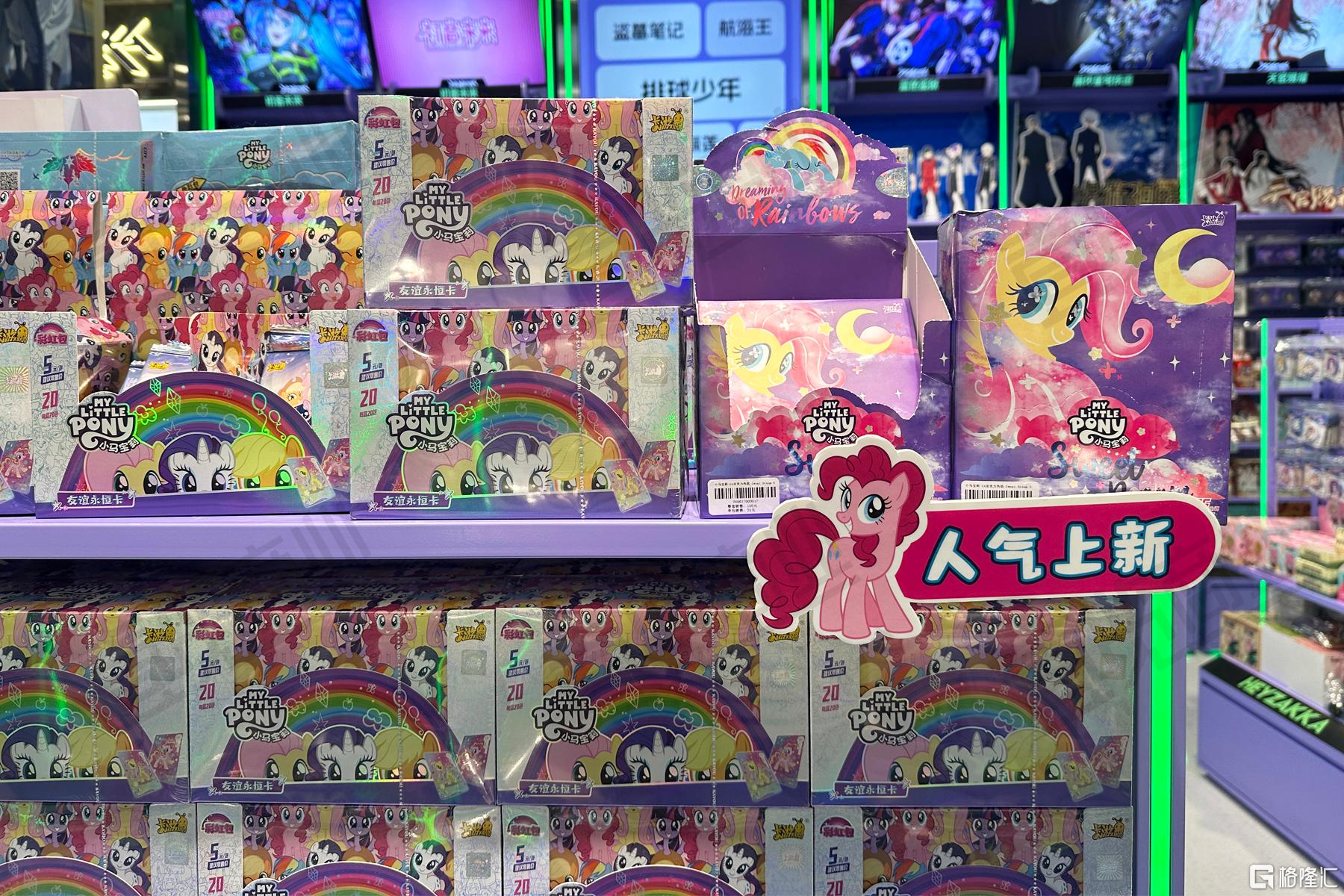
卡游,把卡牌做成了“印钞机”
Ge Long Hui· 2025-05-28 02:44
Core Insights - The company, 卡游, is set to achieve revenue exceeding 10 billion RMB in 2024, with 81.5% of this revenue coming from collectible card sales and a gross margin of 71.3% [2][3][9]. Revenue Breakdown - In 2024, 卡游's revenue from collectible cards is projected to be 8.2 billion RMB, while the total revenue from toys is expected to be 9.5 billion RMB [8][9]. - The revenue distribution shows that 92.5% comes from distribution channels, with only 7.5% from direct sales [6][7]. Sales Channels - The majority of sales occur in convenience stores, stationery shops, and small retailers located near schools, making the products easily accessible to minors [6][8]. - The sales strategy leverages impulse buying by placing cards in visible and accessible locations [6][8]. Product Strategy - 卡游 employs a rarity classification system for its cards, which creates a continuous repurchase mechanism and maintains consumer interest [3][10]. - The company’s marketing strategy effectively targets minors by utilizing psychological triggers such as the dopamine effect associated with uncertainty and instant feedback [2][10]. Financial Performance - The company reported a significant increase in operating cash flow, reaching 5.11 billion RMB in 2024, indicating strong financial health and capacity for expansion [23][24]. - The cash and cash equivalents at the end of 2024 are close to 4.88 billion RMB, showcasing robust liquidity [24]. Market Dynamics - The secondary market for cards has seen high prices, with some rare cards selling for tens of thousands of RMB, indicating a growing speculative interest [11][15]. - The presence of a rating system for cards enhances their perceived value, influencing consumer behavior and pricing expectations [14][15]. Ethical Considerations - The company has implemented age restrictions for card purchases, allowing sales only to individuals aged 8 and above, but enforcement of these rules is often lax [2][21]. - Concerns have been raised regarding the impact of card trading on minors, particularly in terms of their cognitive development and financial decision-making [21][25].

金价跳水背后的博弈,从“损失厌恶”到“赌徒心理”的集体暴露
Sou Hu Cai Jing· 2025-04-26 19:25
Core Insights - The recent drop in gold prices has sparked significant consumer anxiety, revealing a disconnect between consumer behavior and investment understanding [1][5][9] - The phenomenon of loss aversion is highlighted, where individuals experience the pain of loss more intensely than the pleasure of equivalent gains, influencing their investment decisions [5][9] - There is a stark contrast between institutional investors, who view gold as a stable asset, and retail investors, who often treat it as a speculative opportunity [8][9] Group 1: Consumer Behavior - Consumers are increasingly confusing jewelry purchases with investment opportunities, leading to irrational behaviors such as demanding refunds after price drops [5][7] - The jewelry market is seeing a decline in foot traffic, while investment gold bars are experiencing a surge in demand, indicating a shift in consumer focus [7] - The average consumer is unaware that the manufacturing cost of jewelry can account for 30% of its price, which diminishes its investment value [5][9] Group 2: Market Dynamics - In 2023, global central banks purchased 1,037 tons of gold, contrasting sharply with the speculative behavior of retail investors [8] - The market is witnessing a significant increase in the minimum deposit for gold bars, reflecting heightened consumer anxiety and a rush to secure investments [7] - Historical data shows that gold prices have fluctuated significantly, with current valuations at historical highs, prompting warnings from financial analysts about the risks of speculative investments [9][10] Group 3: Psychological Factors - The collective anxiety among younger investors is evident, with many seeking advice on whether to sell or hold their investments after price drops [9] - The concept of "anchoring" is affecting consumer decisions, as many are misled by past price highs without considering the long-term trends [9][10] - A call for cognitive restructuring is emphasized, urging consumers to recognize the true nature of gold as a hedge against poverty rather than a means to wealth accumulation [10]
“行为经济学之父”丹尼尔·卡尼曼,人生最后一个秘密决定……
聪明投资者· 2025-03-27 04:38
Core Insights - Daniel Kahneman, a Nobel laureate and father of behavioral economics, passed away on March 27, 2024, marking a significant loss in the field of economics and psychology [1][2][10] - His work challenged traditional economic theories by introducing concepts like "anchoring effect" and "loss aversion," emphasizing the imperfections of human decision-making [1][2][4] - Kahneman's book "Thinking, Fast and Slow" popularized the dual-system theory, explaining the interplay between intuitive (System 1) and rational (System 2) thinking [4][5][15] Summary by Sections Behavioral Economics Contributions - Kahneman's research highlighted the limitations of human rationality, showing that people often rely on quick, intuitive judgments rather than thorough analysis [15][17] - His findings suggest that while humans are not entirely irrational, they are prone to cognitive biases and emotional influences [17][18] Impact on AI and Technology - Kahneman's theories have influenced advancements in artificial intelligence, particularly in areas like reasoning chains and model training [7][8] - His dual-system theory serves as a foundational principle for understanding decision-making processes in AI [8] Legacy and Final Decision - Kahneman's decision to choose assisted dying was seen as consistent with his lifelong research on decision-making and the human experience [10][25][26] - His reflections on life and death reveal a deep understanding of the complexities of human emotions and the pursuit of happiness [26][28] Happiness Research - Kahneman's later work focused on the economics of happiness, proposing that income has a diminishing return on happiness after basic needs are met, with a threshold identified around $70,000 [19][20] - He emphasized the importance of memory in shaping perceptions of happiness, distinguishing between experiential self and remembering self [18][19] Final Reflections - Kahneman's last communications expressed a desire for a dignified end, reflecting his belief in the value of life while acknowledging the challenges of aging [26][28] - His insights into human behavior and decision-making continue to resonate, providing valuable lessons for both individuals and society [30]