军国主义

Search documents
王毅:当年日本以“存亡危机事态”为幌子发动侵略,历史教训决不能重演
Xin Lang Cai Jing· 2025-12-17 01:34
Group 1 - The core viewpoint of the article emphasizes the strong support from the UAE, Saudi Arabia, and Jordan for China's stance on the One China principle and territorial integrity, contrasting with the actions of a few other countries [1][4] - Wang Yi, the Chinese Foreign Minister, highlighted the historical context and legal aspects of the Taiwan issue during his visit, asserting China's opposition to Japanese interference in this matter [1][4] - The Arab nations reaffirmed their commitment to the One China principle, supporting China's efforts towards national unity, which reflects a shared historical experience of colonial oppression [1][4] Group 2 - The article also references the 80th anniversary of the victory in the Chinese People's War of Resistance Against Japanese Aggression, warning against the resurgence of militarism and fascism, and the need for vigilance among peace-loving nations [2][5]


王毅:当年日本以“存亡危机事态”为幌子发动侵略,历史教训决不能重演
21世纪经济报道· 2025-12-17 00:07
Group 1 - The visit of Wang Yi to the UAE, Saudi Arabia, and Jordan emphasized the adherence to the One China principle and support for China's sovereignty and territorial integrity, contrasting sharply with the actions of a few other countries [1] - Wang Yi presented historical facts and legal context regarding the Taiwan issue, highlighting China's firm opposition to interference from Japan in this matter [1] - The Arab nations reaffirmed their support for China's stance on Taiwan, reflecting a shared historical experience of colonial oppression and a mutual understanding of core interests [1] Group 2 - The 80th anniversary of the victory in the Chinese People's War of Resistance Against Japanese Aggression and the World Anti-Fascist War serves as a reminder of the dangers of militarism and fascism, urging vigilance against any resurgence of such ideologies [2]

王毅最新涉日表态
第一财经· 2025-12-16 23:53
Core Viewpoint - The article emphasizes the importance of the One China principle and the support from Arab nations for China's stance on Taiwan, highlighting the historical context of colonial oppression shared between Arab and Chinese peoples [3][4]. Group 1 - Wang Yi, the Chinese Foreign Minister, visited the UAE, Saudi Arabia, and Jordan, where all three countries reaffirmed their commitment to the One China principle and support for China's sovereignty and territorial integrity [3]. - The visit included discussions on Taiwan, with Wang Yi presenting historical facts and legal aspects to counter foreign interference, particularly from Japan [3]. - An Arab representative noted that opposing "Taiwan independence" and supporting China's territorial integrity is a natural stance, contrasting with the actions of certain countries that encourage separatism [3]. Group 2 - The article reflects on the 80th anniversary of the victory in the Chinese People's War of Resistance against Japanese Aggression, warning against the resurgence of militarism and fascism, which led to historical invasions [4]. - It calls for global vigilance against militaristic and colonial ambitions, emphasizing the need for peace-loving nations to unite against such threats [4].

王毅最新涉日表态
财联社· 2025-12-16 23:44
Group 1 - The core viewpoint of the article emphasizes the importance of the One China principle and the support from Arab nations for China's sovereignty and territorial integrity, contrasting it with the actions of certain countries [1] - Wang Yi, during his visit to the UAE, Saudi Arabia, and Jordan, highlighted the historical facts and legal aspects of the Taiwan issue, asserting China's firm opposition to foreign interference, particularly from Japan [1] - The Arab nations reaffirmed their commitment to the One China principle, supporting China's efforts to maintain national unity, which reflects a shared historical experience of colonial oppression [1] Group 2 - The article also reflects on the 80th anniversary of the victory in the Chinese People's War of Resistance Against Japanese Aggression, warning against the resurgence of militarism and fascism, and the need for global vigilance against such ideologies [2]

王毅:当年日本以“存亡危机事态”为幌子发动侵略 历史教训决不能重演
Yang Shi Xin Wen· 2025-12-16 22:11
Group 1 - The visit of Wang Yi, a member of the Political Bureau of the Central Committee and Foreign Minister, to the UAE, Saudi Arabia, and Jordan emphasized the support of these countries for China's stance on the One China principle and territorial integrity [1] - Wang Yi highlighted the historical context of the Taiwan issue during his discussions, asserting China's firm opposition to foreign interference, particularly from Japan, regarding Taiwan [1] - The Arab nations reaffirmed their commitment to the One China principle, viewing support for China's territorial integrity as a natural stance, reflecting a shared historical experience of colonial oppression [1] Group 2 - The 80th anniversary of the victory in the Chinese People's War of Resistance Against Japanese Aggression and the World Anti-Fascist War serves as a reminder of the dangers of militarism and fascism, urging global vigilance against such ideologies [2] - The historical lesson from Japan's militaristic actions during the war underscores the need for all peace-loving nations to remain alert and to prevent any resurgence of colonial aggression [2]
铁证昭彰,日本731部队罪行警示世人捍卫和平与正义(国际论坛)
Ren Min Ri Bao· 2025-12-16 22:11
历史的真相从不因岁月流转而褪色,罪证的层次叠加让侵略暴行更无所遁形。1949年12月在苏联伯力 (今称哈巴罗夫斯克)设立的军事法庭,在人类历史上首次针对细菌战罪行进行公开审判,以无可辩驳 的铁证揭露了侵华日军第七三一部队(以下简称"731部队")的反人类暴行,为建立战后国际秩序立下 正义标杆。近日,俄方向中方转交的731部队罪行档案,以伯力审判档案为主体,跨越审判前、中、后3 个历史阶段,与1950年出版的多语种《前日本陆军军人因准备和使用细菌武器被控案审判材料》相互补 充,全景式展现了伯力审判的情况。 《 人民日报 》( 2025年12月17日 03 版) 俄方转交伯力审判档案主要包括战犯审讯记录、证人取证记录、战犯亲笔自供书、医学鉴定报告等关键 证据,这与我国保存的731部队遗址、731部队罪行档案相互印证,形成环环相扣的证据链闭环,再次固 化了731部队进行人体实验、研制细菌武器、实施细菌战的战争罪行,再度证实日本细菌战犯罪是自上 而下、有组织、有预谋、成体系的国家犯罪。伯力法庭上首次公开的"特别移送"、人体实验和细菌战史 证,更系统揭示了战时日本的医学犯罪及战争责任。据731部队原军医梶冢隆二供述,部 ...
铁证如山,真相昭然——731部队反人类罪行不容“洗白”
Xin Hua She· 2025-12-15 05:42
Core Viewpoint - The recently declassified Soviet archives reveal the atrocities committed by the Japanese Unit 731, highlighting the systematic and organized nature of their war crimes against humanity [1][2]. Group 1: Historical Evidence - The newly released documents cover a period from May 1939 to December 1950 and include testimonies from over 200 individuals associated with Unit 731, confirming the unit's involvement in biological warfare aimed at mass destruction [1]. - The archives complement existing evidence from China regarding Unit 731's crimes, creating a comprehensive evidence chain that implicates various levels of Japanese military personnel in these organized crimes [1]. Group 2: Ongoing Historical Revisionism - Despite the overwhelming evidence, some political factions in Japan continue to engage in historical revisionism, attempting to distort the narrative through textbook modifications and portraying Japan as a victim on the international stage [2]. - The actions of Japanese right-wing groups, including visits to the Yasukuni Shrine and attempts to increase military spending, signal a troubling resurgence of militarism that challenges post-World War II international order [3]. Group 3: Importance of Historical Memory - The release of these documents serves not only as a reminder of past atrocities but also as a call to uphold historical truth and prevent the recurrence of such crimes [3]. - The commemoration of historical events, such as the Nanjing Massacre, emphasizes the need to preserve the memory of victims and ensure that the lessons of history are not forgotten [3].
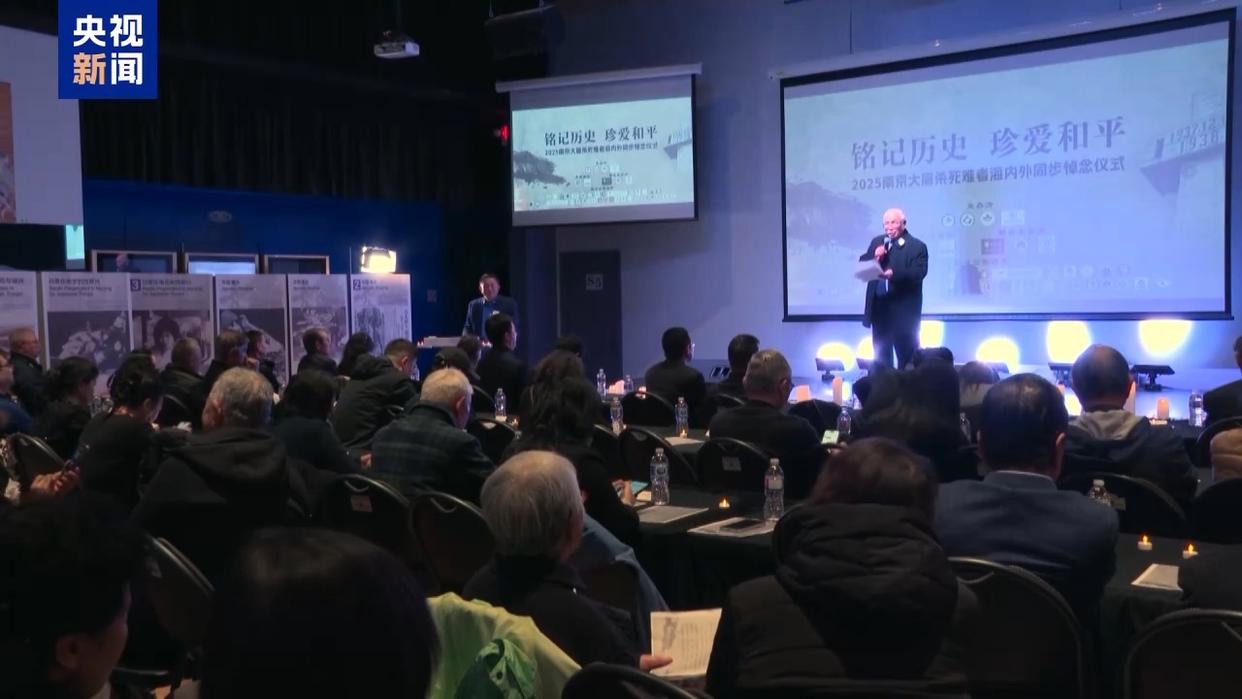
多个加拿大华人团体举行公祭活动 悼念南京大屠杀遇难同胞
Yang Shi Xin Wen Ke Hu Duan· 2025-12-15 01:27
Group 1 - The commemoration of the Nanjing Massacre victims took place in Vancouver, Canada, with multiple Chinese community organizations participating in the event to honor the 300,000 deceased compatriots [1][3] - Attendees expressed strong condemnation of Japanese politicians' erroneous remarks regarding Taiwan and emphasized the importance of learning from history to firmly oppose militarism [1][4] - A moment of silence was observed for the victims and all anti-Japanese war heroes, with representatives delivering speeches to remember the deceased [3][6] Group 2 - A representative from the Chinese community in Canada highlighted concerns over the revival of militarism, urging vigilance against aggressive rhetoric from certain individuals [4] - The event featured a thematic photo exhibition titled "Remembering History, Cherishing Peace," which aimed to raise awareness about the historical events and their implications [4]
洪秀柱发文痛批高市早苗:南京城下枉死英灵,如何得以安息?
Huan Qiu Wang· 2025-12-13 08:28
Core Viewpoint - The article highlights the commemoration of the Nanjing Massacre, emphasizing the ongoing pain and the need for historical reflection, particularly criticizing Japan's current political stance and lack of accountability for past atrocities [1][3]. Group 1: Historical Context - The Nanjing Massacre occurred 88 years ago, resulting in the brutal killing of over 300,000 unarmed Chinese civilians [3]. - The commemoration serves as a reminder of the tragic loss of life and the importance of acknowledging historical events to prevent their recurrence [3]. Group 2: Political Criticism - The former chairperson of the Kuomintang, Hung Hsiu-chu, criticizes Japanese Prime Minister Sanae Takaichi for her provocative remarks, which she believes exacerbate militaristic sentiments in Japan [3]. - Hung contrasts Japan's lack of accountability with Germany's approach to historical reflection, noting that Germany has integrated acknowledgment of its past into its national identity [3]. Group 3: Call for Peace - The article stresses that remembrance is essential to avoid repeating past tragedies, advocating for peace and cautioning against political provocations that could lead to conflict [3]. - Hung emphasizes that war is not a choice for the majority of people, urging politicians in Taiwan and Japan to recognize the dangers of inciting conflict [3].

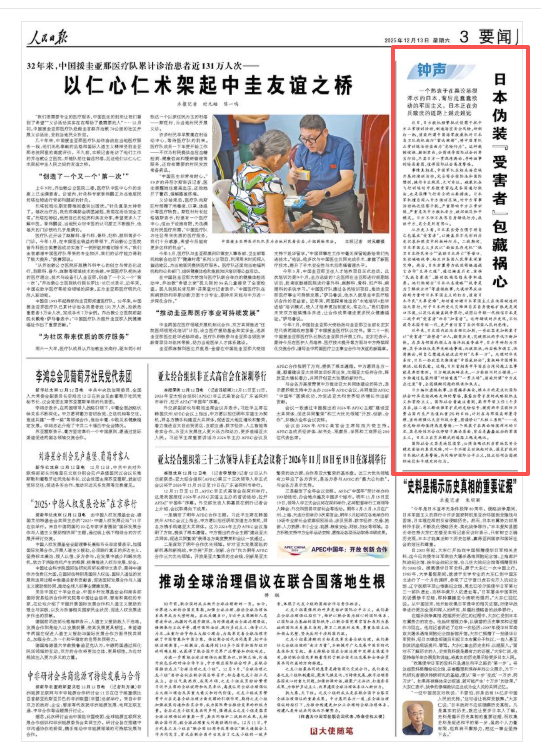
人民日报钟声:日本伪装“受害者”包藏祸心
Ren Min Ri Bao· 2025-12-12 23:27
日本伪装"受害者"包藏祸心(钟声) 《人民日报》(2025年12月13日 第 03 版) 一个热衷于在舆论场搅浑水的日本,背后是蠢蠢欲动的军国主义。日本正在穷兵黩武的道路上越走越远 近日,日方舰机频繁抵近侦察干扰中方正常演训活动,制造海空安全风险,却倒打一耙,渲染所谓中国 海军舰载机对日本自卫队战机进行"雷达照射",将中国军队正常训练活动歪曲为"危险行为"。这种栽赃 嫁祸、颠倒黑白,企图误导国际社会的卑劣行径,尽显日方一贯混淆舆论、寻衅滋事的险恶意图,值得 国际社会高度警惕。 事情真相是,中国军队在相关海空域开展的演训活动,完全符合国际法和国际惯例,操作专业规范、无 可非议。舰载机在飞行训练时开启搜索雷达是各国通行做法,也是保障飞行安全的必要措施。日本军机 擅自闯入中方演训区域,对中方军事活动抵近侦察干扰,严重影响中方正常训练,严重危及中方舰机安 全,破坏地区和平稳定。日方不但不反思自身错误行为,反诬中方,完全是别有用心。 从历史上看,日本某些势力惯于将自己包装成"受害者",以掩盖其不光彩的历史记录和现实中的挑衅行 为。二战期间,日本军国主义多次以"面临生存危机""保卫日本侨民安全""威胁日本存亡"等借口,发 ...