
开放型世界经济

Search documents
“出口中国”系列活动启动
Jing Ji Ri Bao· 2025-11-06 00:08
Core Insights - The "Shared Market · Export to China" initiative launched by the Ministry of Commerce aims to invite the world to share opportunities in China's vast market [1][3] - The initiative includes ten major activities such as annual theme country engagements, regional and industry-specific connections, and international promotion weeks [1] - The Ministry plans to select 5 to 6 theme countries annually to facilitate the entry of quality products into the Chinese market and to hold over 100 import promotion events each year [1] Group 1 - The initiative is seen as a significant step towards expanding high-level openness and addressing trade partners' concerns, enhancing mutual benefits [1][2] - The China International Import Expo (CIIE) is highlighted as a key platform for observing market trends and maintaining close ties with consumers [2] - The ongoing high-level opening up of China is viewed as a countermeasure to global economic uncertainties, enhancing China's competitiveness while fostering cooperation [2] Group 2 - The "Shared Market · Export to China" series is perceived as an invitation for global businesses to engage with the Chinese market, providing a direct channel for quality producers [3] - This initiative is also seen as a catalyst for growth across various industries, reflecting China's commitment to maintaining global trade order and building an open world economy [3]
“四叶草”里新事多
Ren Min Ri Bao· 2025-11-05 22:11
进博会的大舞台灯光已经亮起,这场超大规模"买全球、卖全球"的大聚会上,有人首秀智能装备、前沿 科技,让观众大开眼界、更好预见未来;有人八方搜来"洋特产",品味更美好的生活;有人致力人文交 流,为开放包容的大环境植入更多理解和温暖。"新朋友"不断加入,"全勤生"更加自豪;内行看门道、 外行看热闹——无论是谁,都能各得其宜。 在参展规模再创新高的进博会场馆里走一圈,最显而易见的,是中国坚定不移地推动建设开放型世界经 济、促进全球共同发展的决心和努力,是新技术、新产品、新服务改变市场走向,定义未来社会的重重 脚步。 来吧,跟随我们探访进博会,看"四叶草"里的亮点纷呈。 第八届进博会开展首日,巨大的"四叶草"场馆里,观展者看得专注、问得细致——他们或是巡馆的企业 高管,或是来自国家相关部委和各省政府机构的领导和工作人员。 今年的进博会,全球企业总裁集体亮相、高管扎堆到访,十分繁忙。"我们关注中国'十五五'规划,希 望了解未来5年中国经济社会发展的目标和路径,以便更好布局。"在拜耳公司展台,一位高管这样说。 立足长期发展、深耕中国市场,是全球商业巨擘们赶在开幕日"集体打卡"进博会的强大驱动力。 对来自政府机关的工作人员 ...
第八届进博会首日探访 “四叶草”里新事多
Ren Min Ri Bao· 2025-11-05 22:10
对来自政府机关的工作人员来说,进博会是他们更集中、全面、直观了解和比较全球先进技术设备的平 台。已经有明确或潜在的采购需求,他们边逛展交流,边对照盘算,不久之后,或许会进一步合作签 约、集中采购。 第八届进博会开展首日,巨大的"四叶草"场馆里,观展者看得专注、问得细致——他们或是巡馆的企业 高管,或是来自国家相关部委和各省政府机构的领导和工作人员。 今年的进博会,全球企业总裁集体亮相、高管扎堆到访,十分繁忙。"我们关注中国'十五五'规划,希 望了解未来5年中国经济社会发展的目标和路径,以便更好布局。"在拜耳公司展台,一位高管这样说。 立足长期发展、深耕中国市场,是全球商业巨擘们赶在开幕日"集体打卡"进博会的强大驱动力。 来吧,跟随我们探访进博会,看"四叶草"里的亮点纷呈。 (文章来源:人民日报) 进博会的大舞台灯光已经亮起,这场超大规模"买全球、卖全球"的大聚会上,有人首秀智能装备、前沿 科技,让观众大开眼界、更好预见未来;有人八方搜来"洋特产",品味更美好的生活;有人致力人文交 流,为开放包容的大环境植入更多理解和温暖。"新朋友"不断加入,"全勤生"更加自豪;内行看门道、 外行看热闹——无论是谁,都能各得其 ...
29.6%、全球前列!中国扩大对外开放成效显著 为世界经济贡献“中国智慧”
Yang Shi Wang· 2025-11-05 13:49
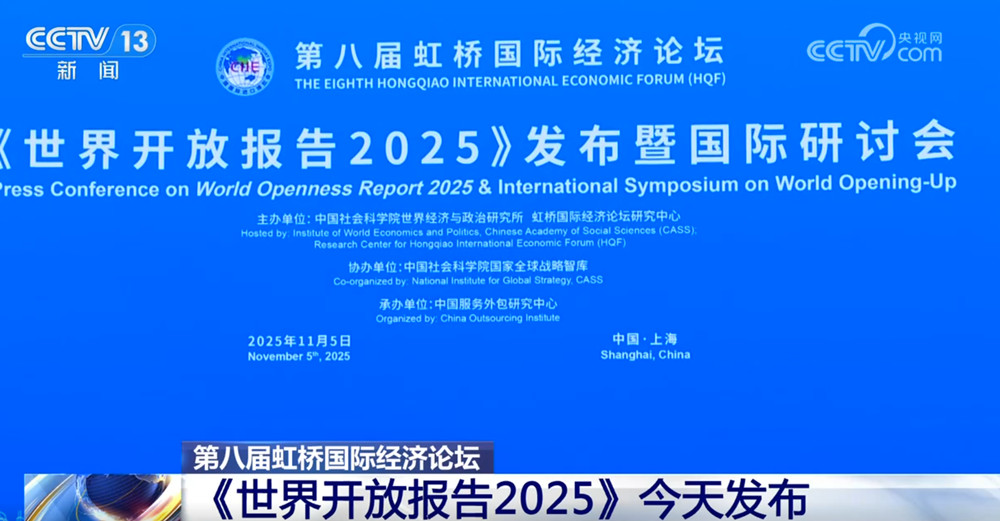
Core Insights - The "World Open Report 2025" was released during the 8th Hongqiao International Economic Forum, focusing on promoting an open world economy [1][8] - The report consists of three main parts: global openness status, key global openness issues, and successful practices in global openness [1][3] Summary by Sections Global Openness Status - The 2024 World Openness Index is 0.7545, showing a slight decrease of 0.05% year-on-year, a decline of 0.34% compared to 2019, and a 5.39% drop from 2008 [5][6] - China's openness index has significantly improved from 0.5891 in 1990 to 0.7634 in 2024, marking a 29.6% increase, placing it among the top globally [5][6] Key Global Openness Issues - The report addresses cutting-edge topics such as cross-border data flow, global supply chain value chains, and industrialization in the Global South [1][3] Successful Practices in Global Openness - The report has expanded its data coverage to 35 years, from 1990 to 2024, providing a solid foundation for predicting long-term economic trends [3] - Since its first release in 2021, the report has gained increasing influence and serves as a platform for international dialogue, emphasizing the need for collaborative global governance [8]

金观平:中国大市场成为世界大机遇
Jing Ji Ri Bao· 2025-11-05 00:20
11月5日至10日,第八届中国国际进口博览会在上海举办。在世界经济复苏乏力、全球贸易面临挑 战的当下,这场如期而至的东方之约,以不断扩大的规模效应和创新活力,向世界传递中国持续推进高 水平对外开放的坚定决心。党的二十届四中全会提出扩大高水平对外开放,开创合作共赢新局面,释放 出中国与各国共享机遇、共同发展的强烈信号,必将为世界经济发展注入开放红利。 八载进博,常办常新,中国与世界开放融通、合作共赢的信念始终如一。从缩减外资准入负面清单 到优化营商环境,从推动商品和要素流动型开放向规则、规制、管理、标准等制度型开放深化,一系列 重大改革举措渐次落地,中国开放的大门越开越大。中国已连续16年稳居全球第二大进口市场,"十四 五"期间货物和服务进口将超15万亿美元。事实证明,中国持续扩大开放的明确姿态和巨大市场潜力, 将为越来越多国家提供共赢的发展机遇。 中国发展的确定性,为建设开放型世界经济提供了坚实支撑。当今中国,"引进来"的广度与"走出 去"的深度同步拓展,市场规模"量"的优势与创新驱动"质"的飞跃相得益彰。双重优势的叠加效应,使 中国大市场成为全球企业优化供应链、布局创新链、提升价值链的重要枢纽。同时,中国以 ...
见证持续扩大高水平开放坚定决心
Jing Ji Ri Bao· 2025-11-04 22:52
东风浩荡,征程万里。"越办越好"的进博会以实际行动证明,中国与世界的经济脉动始终紧密联系,中 国开放的大门只会越开越大。期待更多企业搭乘"进博号"快车,共享中国发展机遇,书写更多"双向奔 赴"的美好故事。 (文章来源:经济日报) 进博会是中国与世界共享发展机遇的一道桥梁。背靠中国大市场,前七届进博会累计意向成交额超5000 亿美元,累计吸引境外参展商2.3万家次,助力各国企业共同应对国际市场波动困局。本届进博会创新 打造了"共享大市场·出口中国"品牌,举办"出口中国"系列活动,这些足以彰显中国共享市场机遇的决 心。近期公布的《中共中央关于制定国民经济和社会发展第十五个五年规划的建议》中,大力提振消费 被置于更加突出的战略位置。14亿多人口、超4亿中等收入群体,每年近50万亿元的消费、超过20万亿 元的进口……中国的超大规模市场,为国际投资者带来源源不断的商机,也是进博会"磁力"所在。今年 进博会企业展进一步扩容,展览面积和企业总数均创历史新高,"与中国同行就是与机遇同行"已成为国 际社会普遍共识。 携手共建开放型世界经济是人心所向。作为全球贸易发展史上的创举,举办进博会体现了中国支持多边 贸易体制、推动发展自 ...
学习新语丨“让开放的春风温暖世界”
Xin Hua She· 2025-11-04 13:05
东方风来,进博之约。第八届中国国际进口博览会11月5日至10日在上海举行。 习近平主席曾在进博会上,用三个"不会变",诠释了中国与世界共享机遇、互利共赢的胸怀与担当,展 示了坚定不移的开放决心。进博之约向世界许下中国之诺:中国愿同各国一道,共建开放型世界经济, 让开放的春风温暖世界! ...
学习新语|“让开放的春风温暖世界”
Xin Hua She· 2025-11-04 10:59
0:00 / 0:46 东方风来,进博之约。第八届中国国际进口博览会11月5日至10日在上海举行。 策划/制作:王欢 周蕊 孙青 统筹:郭洁宇 姜子炜 习近平主席曾在进博会上,用三个"不会变",诠释了中国与世界共享机遇、互利共赢的胸怀与担当,展 示了坚定不移的开放决心。进博之约向世界许下中国之诺:中国愿同各国一道,共建开放型世界经济, 让开放的春风温暖世界! ...

天天学习|让开放的春风温暖世界
Yang Shi Wang· 2025-11-04 02:49
天天学习 "中国将坚定不移奉行互利共赢的开放战略,实行高水平的贸易和投资自由化便利化政策,推 动形成陆海内外联动、东西双向互济的开放格局。"2018年11月5日,在背靠长江水、面向太平洋的上 海,习近平主席向世界郑重宣布首届中国国际进口博览会正式开幕,并呼吁各国"拿出更大勇气,积极 推动开放合作,实现共同发展"。 2025年10月,党的二十届四中全会通过《中共中央关于制定国民经济和社会发展第十五个五年规划的建 议》(以下简称《建议》)。《建议》对"十五五"时期扩大高水平对外开放作出具体部署:"以服务业 为重点扩大市场准入和开放领域""创新发展数字贸易""营造透明稳定可预期的制度环境"……一系列政 策举措清晰展现了中国扩大开放的坚定决心与实践路径。 借"四叶草"之窗,迎五洲宾客;以进博之约,谱共赢新篇。正如习主席所言:"世界经济发展面临的难 题,没有哪一个国家能独自解决。""中国愿同各国一道,共建开放型世界经济,让开放的春风温暖世 界!" 总监制丨骆红秉 魏驱虎 监 制丨王敬东 主 编丨李璇 编 辑丨李珊珊 视 频丨杨小淼 张紫曦 视 觉丨颜妮 校 对丨刘禛 李丹 孙晓媛 毛长志 李英卓 任佳 出 品丨中央广播 ...
进博会扩大开放新图景:让中国大市场成为世界大机遇
Di Yi Cai Jing· 2025-11-03 13:43
Core Insights - The eighth China International Import Expo (CIIE) will take place from November 5 to 10 in Shanghai, aiming to expand China's market opportunities for global businesses [2][3] - The exhibition area has reached a record high of over 367,000 square meters, with participation from over 4,000 companies from 138 countries and regions, including 290 Fortune 500 companies [3][12] - The event serves as a platform for innovation and collaboration, with companies like Honeywell and Medtronic showcasing numerous new products and technologies [4][11] Group 1: Event Overview - The CIIE is designed to enhance China's openness and create opportunities for global businesses, with a focus on innovative display areas and new consumer themes [2][3] - The event has seen a continuous increase in participation, with a notable presence from U.S. companies for seven consecutive years [3][12] - The expo is viewed as a significant signal of China's commitment to global trade and economic stability amid geopolitical uncertainties [5][9] Group 2: Company Participation and Innovations - Honeywell has showcased approximately 170 innovative technologies and solutions at the CIIE, emphasizing its commitment to local innovation in China [4][9] - AstraZeneca plans to unveil two innovative cancer treatment drugs at this year's expo, continuing its trend of rapid product development and market introduction [8][9] - Zeiss is focusing on local manufacturing and innovation, having launched high-end microscopes in China and establishing a comprehensive operational hub [10][11] Group 3: Market Dynamics and Trends - The CIIE is increasingly recognized as a launchpad for global products and technologies, with over 3,000 new products and services showcased in previous editions [7][8] - The event has attracted a growing number of companies from developing countries, with participation from 123 Belt and Road Initiative countries and an 80% increase in African enterprises [12] - The ongoing trend of foreign companies investing in local innovation and production in China highlights the country's role as a key market for global business growth [9][11]


