Autonomous Driving

Search documents
红色沃土新答卷丨晋察冀抗日根据地·山西阳泉:数字赋能 “煤城”转型“数智新城”
Yang Shi Wang· 2025-08-20 03:49
Group 1 - Yangquan City, located in Shanxi Province, has transformed from a coal-centric economy to a digital and intelligent mining hub, with 95.84% of its coal production now coming from advanced capacity [2][3] - The city has established 12 smart mines, utilizing 5G technology to enhance operational efficiency, resulting in a 50% reduction in underground personnel and a 50% increase in efficiency [3] - Yangquan has become the first city in China to fully open up for autonomous driving, implementing smart traffic management systems that have reduced average vehicle delay rates by 45% and parking frequency by 70% [5] Group 2 - The local government has prioritized the development of the digital economy, establishing platforms such as the China Electric Digital Economy Industrial Park and "Jinchuan Valley·Yangquan," which have accelerated the growth of industries like smart terminals, data security, and big data [7] - In 2024, the core revenue of Yangquan's digital economy is projected to grow by 13.3%, and the city has been recognized as one of the "Top 100 New Smart Cities in China" for 2023-2024 [7]


自动驾驶一周论文精选!端到端、VLA、感知、决策等~
自动驾驶之心· 2025-08-20 03:28
Core Viewpoint - The article emphasizes the recent advancements in autonomous driving research, highlighting various innovative approaches and frameworks that enhance the capabilities of autonomous systems in dynamic environments [2][4]. Group 1: End-to-End Autonomous Driving - The article discusses several notable papers focusing on end-to-end autonomous driving, including GMF-Drive, ME³-BEV, SpaRC-AD, IRL-VLA, and EvaDrive, which utilize advanced techniques such as gated fusion, deep reinforcement learning, and evolutionary adversarial strategies [8][10]. Group 2: Perception and VLM - The VISTA paper introduces a vision-language model for predicting driver attention in dynamic environments, showcasing the integration of visual and language processing for improved situational awareness [7]. - The article also mentions the development of safety-critical perception technologies, such as the progressive BEV perception survey and the CBDES MoE model for functional module decoupling [10]. Group 3: Simulation Testing - The article highlights the ReconDreamer-RL framework, which enhances reinforcement learning through diffusion-based scene reconstruction, indicating a trend towards more sophisticated simulation testing methodologies [11]. Group 4: Datasets - The STRIDE-QA dataset is introduced as a large-scale visual question answering resource aimed at spatiotemporal reasoning in urban driving scenarios, reflecting the growing need for comprehensive datasets in autonomous driving research [12].
Baidu: Sluggish Core Masks A Deep Value Opportunity
Seeking Alpha· 2025-08-18 17:29
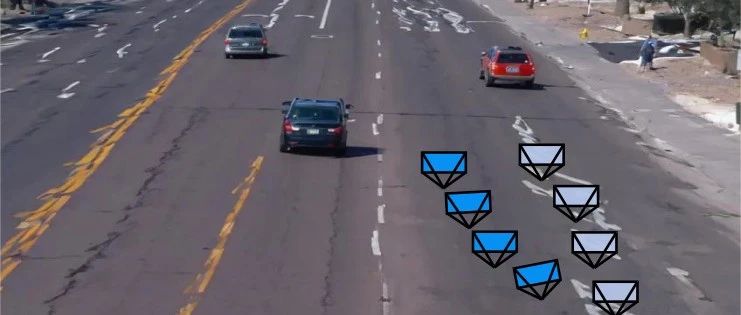
Group 1 - Baidu is identified as a value buy with significant exposure to China's AI and autonomous driving sectors, positioning it favorably compared to other high-valuation AI-related companies [1] - The company is seen as better poised for growth amidst a market where even pre-revenue AI ventures are being highly valued [1] - The analysis emphasizes a long-term perspective on value creation, focusing on macroeconomic trends, corporate earnings, and financial statement analysis [1]


Lucid Stock Plunges 22.7% in a Month: Should You Buy, Sell or Hold?
ZACKS· 2025-08-18 16:26
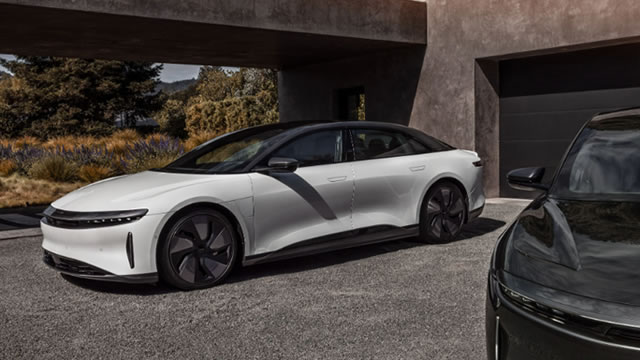
Core Insights - Lucid Group, Inc. (LCID) shares have decreased by 22.7% over the past month, underperforming the Zacks Automotive - Domestic industry's growth of 0.8% [1] - The company reported a quarterly loss of 28 cents per share in Q2 2025, which is an improvement from a loss of 29 cents per share in the same period last year [5] - Lucid's revenues for Q2 2025 reached $259.4 million, up from $201 million in the previous year [5] - The automaker delivered 3,309 vehicles in Q2 2025, marking a 38% year-over-year increase and achieving its sixth consecutive quarter of record deliveries [6] - Lucid's competitors, Rivian and Tesla, reported declines in deliveries during the same period [6] Performance and Market Position - Lucid's stock has significantly underperformed compared to industry peers, with Rivian's shares down 10.7% and Tesla's shares up 0.6% [1] - The company has entered a $300 million deal with Uber to deploy 20,000 Lucid Gravity robotaxis over six years, which is expected to enhance its market presence [9][8] - Lucid is focusing on U.S.-based manufacturing to mitigate tariff impacts and geopolitical issues, including a partnership with Graphite One for domestic graphite sourcing [10] Future Outlook - Lucid anticipates an increase in deliveries driven by the production of a new midsize platform set to begin in late 2026, aimed at expanding its market reach [7] - The company has established partnerships with various firms to enhance its supply chain and reduce reliance on certain metals, which is crucial for its EV production [11] - Despite positive developments, Lucid's stock is considered relatively overvalued with a forward price-to-sales ratio of 2.89 compared to the industry's 2.68 [12] Financial Estimates - The Zacks Consensus Estimate indicates a year-over-year growth of 67.8% in sales and 25.6% in earnings for 2025 [13] - Lucid's long-term debt has increased to $2.04 billion as of June 30, 2025, raising concerns about its financial health [17] - The company has lowered its annual production forecast for 2025 to a range of 18,000-20,000 units due to tariff-related challenges [18]

文远知行获Grab数千万美元投资,加速在东南亚大规模部署Robotaxi
Sou Hu Cai Jing· 2025-08-18 01:40
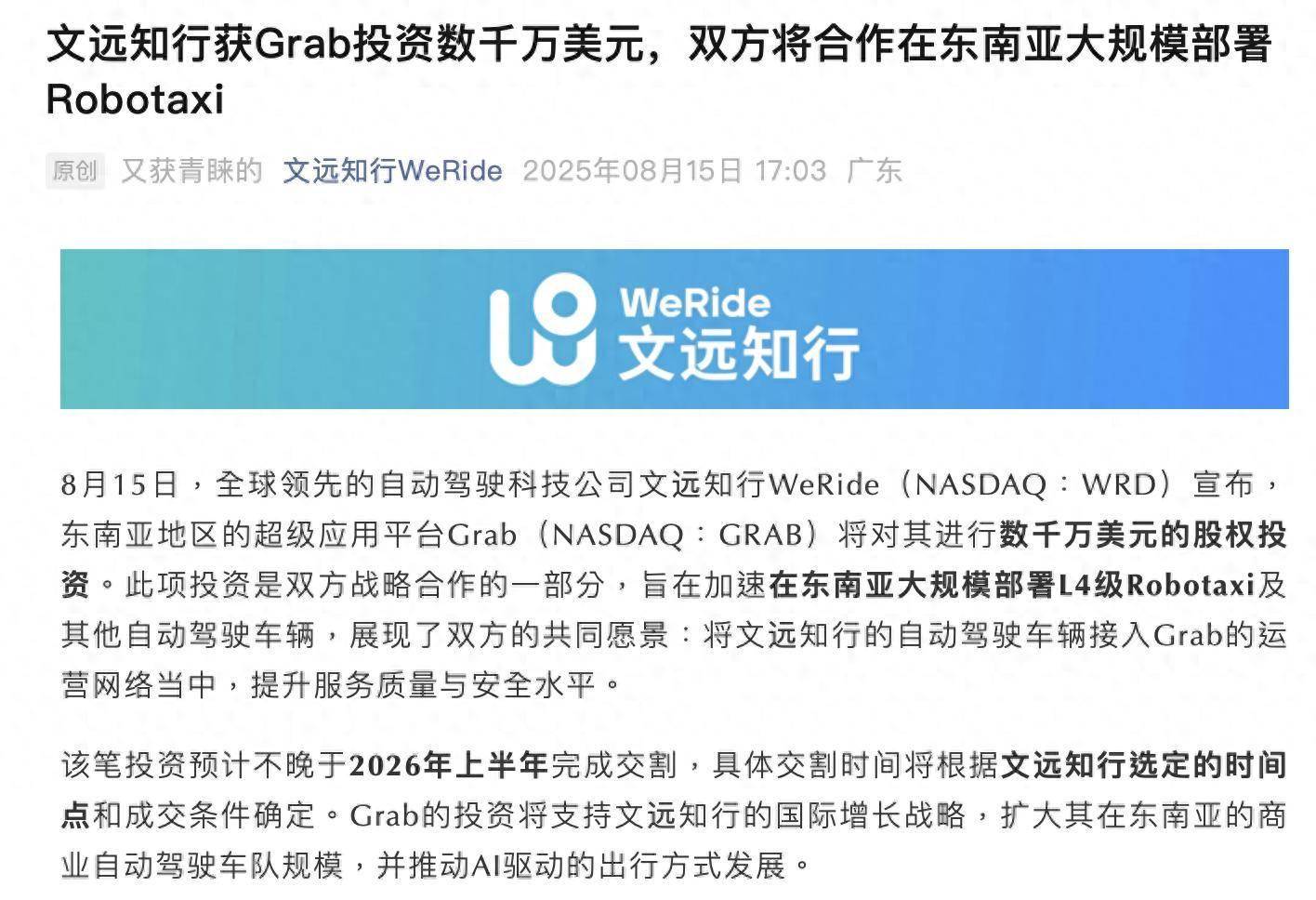
Group 1 - WeRide, an autonomous driving technology company, announced a multi-million dollar equity investment from Southeast Asian super app platform Grab [1][3] - The investment is part of a strategic partnership aimed at accelerating the large-scale deployment of Level 4 Robotaxis and other autonomous vehicles in Southeast Asia [3] - The investment is expected to be completed by the first half of 2026, with the exact timing dependent on WeRide's chosen conditions [3] Group 2 - Grab's investment will support WeRide's international growth strategy, expanding its commercial autonomous vehicle fleet in Southeast Asia and promoting AI-driven mobility solutions [3] - WeRide's CEO, Han Xu, expressed the vision of gradually deploying thousands of Robotaxis in Southeast Asia, considering local regulations and societal acceptance [3] - The partnership leverages WeRide's advanced autonomous driving technology and operational experience alongside Grab's platform advantages to provide safe and efficient Robotaxi services [3]


李家超晤李彦宏,听取百度对自动驾驶产业发展意见
Ge Long Hui A P P· 2025-08-17 08:21
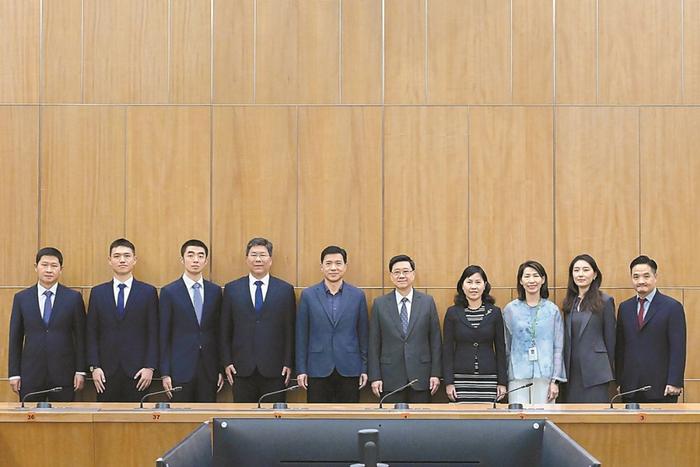
Group 1 - Baidu is actively promoting its autonomous driving business "Luobo Kuaipao" in Hong Kong [1] - Hong Kong Chief Executive John Lee met with Baidu founder Robin Li and other officials to discuss the application of AI and autonomous driving technology in Hong Kong [1] - The meeting included discussions on the development of AI technology and the implementation of autonomous driving in various scenarios within the city [1]
你的2026届秋招进展怎么样了?
自动驾驶之心· 2025-08-16 16:04
Core Viewpoint - The article emphasizes the convergence of autonomous driving technology, indicating a shift from numerous diverse approaches to a more unified model, which raises the technical barriers in the industry [1] Group 1 - The industry is witnessing a trend where previously many directions requiring algorithm engineers are now consolidating into unified models such as one model, VLM, and VLA [1] - The article encourages the establishment of a large community to support individuals in the industry, highlighting the limitations of individual efforts [1] - A new job and industry-related community is being launched to facilitate discussions on industry trends, company developments, product research, and job opportunities [1]
Nvidia's stock price paints easiest path to hitting $200
Finbold· 2025-08-16 15:53
Core Viewpoint - Nvidia's stock price is targeting a record high of $200, supported by strong fundamentals in the growing artificial intelligence market and a bullish technical outlook [1][5][6]. Group 1: Stock Performance - Nvidia's stock closed at $180.45, down 0.8% on the day, but remains up 30% year-to-date [1]. - The stock has been trading in a strong "channel up" formation since early April, indicating a bullish trend [3]. - Historical analysis shows that Nvidia's last three bullish legs each delivered gains of at least 20%, suggesting potential for similar future gains [4]. Group 2: Technical Analysis - The 50-day moving average has provided strong support since May, confirming buyer control and facilitating new rallies [3]. - The relative strength index (RSI) must hold its support for the stock to continue its upward momentum towards the $200 target [4]. Group 3: Fundamental Analysis - Nvidia faced a 30% decline in 2025 due to tariffs and competition from China but has rebounded due to strong demand for GPUs and data centers driven by tech giants' infrastructure spending [5]. - The company is expanding into robotics, autonomous driving, and quantum computing, indicating that the AI opportunity is broader than many investors expect [5]. Group 4: Upcoming Events - Nvidia's Q2 earnings report on August 27 will be critical, particularly regarding revenue performance and demand for products like Blackwell, which could influence the stock's ability to reach the $200 milestone [6].


自动驾驶论文速递 | 视觉重建、RV融合、推理、VLM等
自动驾驶之心· 2025-08-16 09:43
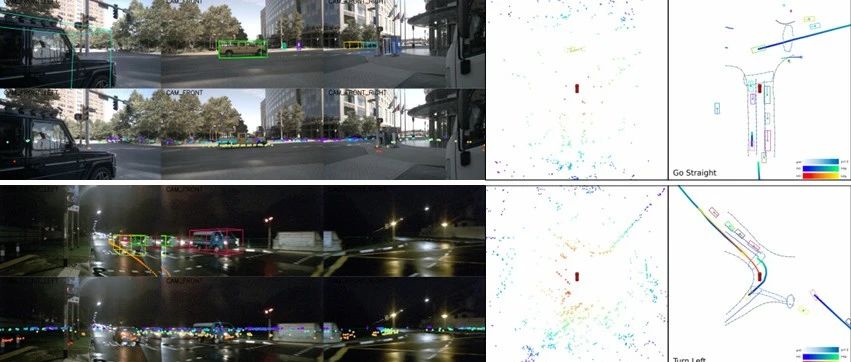
Core Insights - The article discusses two innovative approaches in autonomous driving technology: Dream-to-Recon for monocular 3D scene reconstruction and SpaRC-AD for radar-camera fusion in end-to-end autonomous driving [2][13]. Group 1: Dream-to-Recon - Dream-to-Recon is a method developed by the Technical University of Munich that enables monocular 3D scene reconstruction using only a single image for training [2][6]. - The method integrates a pre-trained diffusion model with a deep network through a three-stage framework: 1. View Completion Model (VCM) enhances occlusion filling and image distortion correction, achieving a PSNR of 23.9 [2][6]. 2. Synthetic Occupancy Field (SOF) constructs dense 3D scene geometry from multiple synthetic views, with occlusion reconstruction accuracy (IE_acc) reaching 72%-73%, surpassing multi-view supervised methods by 2%-10% [2][6]. 3. A lightweight distilled model converts generated geometry into a real-time inference network, achieving overall accuracy (O_acc) of 90%-97% on KITTI-360/Waymo, with a 70x speed improvement (75ms/frame) [2][6]. - The method provides a new paradigm for efficient 3D perception in autonomous driving and robotics without complex sensor calibration [2][6]. Group 2: SpaRC-AD - SpaRC-AD is the first radar-camera fusion baseline framework for end-to-end autonomous driving, also developed by the Technical University of Munich [13][16]. - The framework utilizes sparse 3D feature alignment and Doppler velocity measurement techniques, achieving a 4.8% improvement in 3D detection mAP, an 8.3% increase in tracking AMOTA, a 4.0% reduction in motion prediction mADE, and a 0.11m decrease in trajectory planning L2 error [13][16]. - The overall radar-based fusion strategy significantly enhances performance across multiple tasks, including 3D detection, multi-object tracking, online mapping, and motion prediction [13][16]. - Comprehensive evaluations on open-loop nuScenes and closed-loop Bench2Drive benchmarks demonstrate its advantages in enhancing perception range, improving motion modeling accuracy, and robustness in adverse conditions [13][16].