
Generative AI

Search documents
WPP rolls production capabilities into new WPP Production unit
Yahoo Finance· 2026-01-26 12:05
Core Insights - WPP reported a 5.9% drop in revenue less pass-through costs for Q3 2025, indicating a need for a turnaround strategy that includes simplification and new marketing services models, with a focus on AI [3] - The advertising industry is undergoing significant changes due to the recent IPG-Omnicom merger and advancements in AI, with scale in media and technology becoming crucial for agency holding groups [6] Group 1: WPP's Strategic Initiatives - WPP is consolidating its production capabilities into a single unit called WPP Production, which will officially launch on February 23 and be led by Richard Glasson [9] - The new WPP Production unit will employ over 10,000 people across more than 40 locations globally, aiming to enhance collaboration through a unified global platform [9] - The initiative includes the creation of a "high-velocity content studio" that leverages generative AI, data-driven performance metrics, and real-time optimization to meet clients' diverse content needs [5][9] Group 2: Market Context and Client Needs - In the current fragmented media environment, marketers require various types of content tailored for different purposes, highlighting the evolving demands of WPP's clients [4] - WPP's strategy involves leveraging its WPP Open platform to integrate and simplify services across creative, media, and production expertise, with plans to open multiple studio locations worldwide [7]
3 AI Stocks That Will Trounce Palantir in 2026, According to Wall Street
Yahoo Finance· 2026-01-26 10:04
Core Insights - Artificial intelligence (AI) stocks have seen significant gains, with Palantir Technologies' shares increasing over 23 times in the last three years [1] Company Summaries - **Palantir Technologies**: The stock has a consensus 12-month price target indicating a potential upside of around 14%, but analysts predict it may not be the top AI stock moving forward [2] - **Broadcom**: - Broadcom has been a strong performer in the AI sector, with a 28% year-over-year revenue increase in Q4 2025 due to robust demand for AI semiconductors [4] - The average price target for Broadcom suggests a potential increase of approximately 38%, with one analyst forecasting a nearly 62% rise in the next 12 months [5] - The company's AI-related order backlog reached over $73 billion at the end of 2025, with expectations for AI chip revenue to double in Q1 2026 [6] - **Microsoft**: - Microsoft has underperformed in the AI stock market, with only single-digit percentage growth over the last 12 months, but analysts are optimistic about future performance [7] - The consensus price target indicates a potential upside of around 38%, with strong analyst support—45 out of 58 rated it a "buy" or "strong buy" [8] - The company's Azure and cloud services revenue surged by 40% year-over-year in Q1 of fiscal 2026, driven by the growth of generative AI [9]


Retail’s risky AI commerce bet
Yahoo Finance· 2026-01-26 09:37
Core Insights - The retail industry is facing significant changes due to the rise of AI-driven commerce, which may lead to disintermediation and loss of data control for retailers [1][6][7] Group 1: AI Impact on Retail - AI-driven U.S. e-commerce traffic surged by 758% year over year from Nov. 1 to Dec. 1, with Cyber Monday traffic increasing by 670% [2] - Retail executives believe that AI will transform retail similarly to how the internet did, with a focus on direct consumer access [4][6] - Retailers are increasingly collaborating with AI platforms like ChatGPT and Gemini to enhance customer engagement and streamline shopping experiences [3][5][15] Group 2: Data Ownership and Customer Interaction - The shift to external AI platforms raises concerns about data ownership, as retailers may lose insights into customer interactions [7][10] - A Deloitte report indicates that 81% of retail executives think generative AI will weaken brand loyalty by 2027 [7] - Retailers may find themselves acting as fulfillment companies rather than maintaining direct relationships with customers due to the influence of AI agents [12][21] Group 3: Future of Shopping Experience - About half of retail executives predict the collapse of the traditional multistep shopping journey by 2027, favoring a single AI-driven interaction [17] - AI agents could automate the shopping process, learning user preferences and making purchases on their behalf [18][19] - The integration of AI technology in stores may enhance customer interactions, allowing associates to provide more personalized service [22][24]
全球软件:2026 年初步展望及我们关注的软件标的-Global Software_ Initial thoughts for 2026 and our software names
2026-01-26 02:49
Summary of Global Software Conference Call Industry Overview - The software industry is experiencing a significant shift in focus from macroeconomic concerns to the disruptive rise of AI, with investor discussions centered around whether an AI bubble exists and the potential impact of AI on enterprise software [1][11][15]. Key Themes for 2026 - **Valuation Reset**: Software valuations have halved over the past year, creating opportunities to acquire high-quality stocks at discounted prices [14][31]. - **IT Spending Outlook**: Recent CIO surveys indicate one of the strongest IT spending outlooks since 2018, with expectations for a stable macro environment and lower interest rates supporting demand, particularly among small and medium-sized businesses (SMBs) [3][13][23]. - **Generative AI Impact**: While Generative AI is a major topic, its revenue impact on most software companies is still limited. The expectation is that significant revenue generation from AI will not materialize until 2027 or later [6][19][22]. Company-Specific Insights - **Top Picks**: Recommended stocks include Oracle, Microsoft, SAP, and HubSpot, all rated as Outperform. MongoDB is also favored for its long-term potential and near-term momentum [4][7][25][26]. - **Cautionary Stocks**: Salesforce is expected to underperform due to concerns over AI disruption and market saturation. Snowflake is rated as Market-Perform, with long-term growth prospects viewed as uncertain [4][7][29][30]. Financial Metrics - **Valuation Comparisons**: - Adobe (ADBE): Current price $296.12, target $506.00, adjusted P/E 12.0 for 2026E. - Microsoft (MSFT): Current price $459.86, target $645.00, adjusted P/E 27.5 for 2026E. - Oracle (ORCL): Current price $191.09, target $339.00, adjusted P/E 25.9 for 2026E. - Salesforce (CRM): Current price $227.11, target $223.00, adjusted P/E 19.2 for 2026E [5][8]. Investment Implications - **SMB vs. Enterprise**: SMB-focused software companies may see earlier revenue recovery compared to enterprise-focused firms, as SMBs typically rebound faster in improving economic conditions [6][23]. - **AI Revenue Generation**: The expectation is that while AI will contribute to revenue growth, it will be limited in 2026, with only a few companies likely to see a significant positive impact [19][20]. Macro Considerations - **Economic Stability**: The macroeconomic environment is expected to remain stable, with potential benefits from deregulation and tax cuts in the U.S. [3][23]. - **Geopolitical Risks**: Ongoing global conflicts and geopolitical tensions may continue to impact market sentiment and investment strategies [21][23]. Conclusion - The software sector is at a pivotal moment, with significant opportunities arising from valuation resets and a favorable IT spending outlook. However, the impact of Generative AI remains uncertain, and investors are advised to focus on company-specific fundamentals while being cautious of potential disruptions in the market.


X @The Wall Street Journal
The Wall Street Journal· 2026-01-26 00:38
Generative AI is allowing devices to better hear and understand what we’re saying. As voice interfaces accelerate this year, we’ll soon wonder why we ever typed so much. https://t.co/ccOK3uk7Uv ...
Better Artificial Intelligence Tech ETF: Roundhill's CHAT vs. Vanguard's VGT
Yahoo Finance· 2026-01-25 17:06
Core Insights - The Roundhill Investments - Generative AI & Technology ETF (CHAT) has shown higher recent returns and yield compared to the Vanguard Information Technology ETF (VGT), which is characterized by lower costs and a larger asset base [2][3] Cost & Size Comparison - CHAT has an expense ratio of 0.75% while VGT has a significantly lower expense ratio of 0.09% - As of January 23, 2026, CHAT's one-year return is 39.4% compared to VGT's 16.8% - CHAT offers a dividend yield of 2.7%, whereas VGT's yield is only 0.4% - VGT has assets under management (AUM) of $130.7 billion, while CHAT has $1.0 billion [4][5] Performance & Risk Comparison - Over a two-year period, the maximum drawdown for VGT is (27.23%) compared to CHAT's (31.35%) [6] Holdings Composition - CHAT focuses on generative artificial intelligence with 52 holdings, primarily in technology (85%), followed by communication services (9%) and consumer cyclical (6%). Major holdings include Alphabet, NVIDIA, and Microsoft [7] - VGT provides broader exposure with 310 holdings, predominantly in technology (98%), featuring top companies like NVIDIA, Apple, and Microsoft [8] Summary of Investment Profiles - CHAT has outperformed VGT in terms of one-year return and yield but comes with higher volatility and a steeper drawdown - CHAT is actively managed with an ESG screen, while VGT follows a passive management approach tracking a broad technology index - VGT offers greater diversification and a lower expense ratio, making it more suitable for long-term investors [9]
Prediction: This Will Be the Next Artificial Intelligence (AI) Chip Stock to Join Nvidia, Taiwan Semiconductor, and Broadcom in the Trillion-Dollar Club (Hint: It's Not AMD)
The Motley Fool· 2026-01-25 10:00
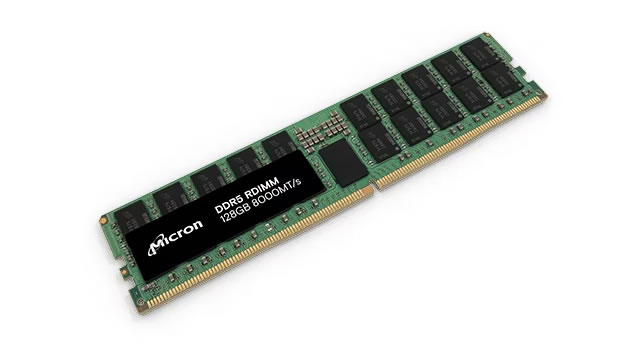
Core Insights - The article discusses the emergence of Micron Technology as a potential member of the trillion-dollar club in the AI chip industry, alongside established players like Nvidia, TSMC, and Broadcom [1][2][3]. Industry Overview - The AI revolution has significantly transformed the semiconductor industry, with companies like Nvidia, TSMC, and Broadcom evolving from cyclical chip businesses to trillion-dollar enterprises [1][2]. - The demand for AI infrastructure is expected to grow, driven by hyperscalers such as Microsoft, Alphabet, Amazon, and Meta Platforms, which are investing heavily in advanced AI applications [5][6]. Micron Technology's Position - Micron Technology is positioned to benefit from the increasing demand for high-bandwidth memory (HBM), dynamic random access memory (DRAM), and NAND chips, which are essential for efficient data processing in AI workloads [6][10]. - The company reported a revenue of $13.6 billion for its first fiscal quarter of 2026, marking a 57% year-over-year increase, with strong performance across all core segments [9]. Market Dynamics - Prices for DRAM and NAND chips are projected to rise significantly, with increases of up to 60% and 38% respectively in the first quarter, driven by surging demand from hyperscalers [8]. - The total addressable market for HBM is expected to reach $100 billion by 2028, indicating substantial growth potential for Micron [10]. Financial Projections - Analysts predict that Micron's revenue will more than double by fiscal 2027, with earnings per share (EPS) potentially surging nearly fourfold [12]. - Despite strong growth prospects, Micron currently trades at a forward price-to-earnings (P/E) multiple of 12.3, which is significantly lower than other chip leaders [14]. Valuation Potential - If Micron's P/E ratio aligns more closely with industry peers, an implied market cap of approximately $850 billion could be achieved, with a forward earnings multiple of 30 potentially leading to a $1 trillion valuation [16]. - The long-term outlook for Micron is positive, with the AI infrastructure market representing a multiyear, multitrillion-dollar opportunity [17].


My Top 3 Chip Stocks for 2025 Crushed the Market. Here's Why They Can Repeat Again in 2026.
Yahoo Finance· 2026-01-24 23:05
Group 1 - The three recommended chip stocks for 2025 were Nvidia, Taiwan Semiconductor Manufacturing, and ASML Holding, all of which delivered significant gains, with Nvidia rising 39%, Taiwan Semiconductor increasing by 54%, and ASML also up by 54% [1][2] - Each company plays a distinct role in the chip supply chain: Nvidia designs GPUs, Taiwan Semiconductor manufactures chips based on Nvidia's designs, and ASML produces specialized machines for chip manufacturing [4][5][6] - For the next fiscal year, expected growth rates are 51% for Nvidia, 31% for Taiwan Semiconductor, and 15% for ASML, indicating a disparity in growth expectations among the three companies [6] Group 2 - ASML is currently trading at 34 times forward earnings, while Nvidia and Taiwan Semiconductor are trading at 25 and 21 times forward earnings, respectively, suggesting that ASML may be overvalued relative to its growth rate [8] - Given the growth expectations and valuations, Taiwan Semiconductor and Nvidia are considered better investment options for 2026 compared to ASML [8]

New Era Energy & Digital inks key data center deal – ICYMI
Proactiveinvestors NA· 2026-01-24 17:59
Company Overview - Proactive is a financial news publisher that provides fast, accessible, informative, and actionable business and finance news content to a global investment audience [2] - The company has a team of experienced and qualified news journalists who produce independent content [2] Market Focus - Proactive specializes in medium and small-cap markets while also covering blue-chip companies, commodities, and broader investment stories [3] - The content delivered includes insights across various sectors such as biotech and pharma, mining and natural resources, battery metals, oil and gas, crypto, and emerging digital and EV technologies [3] Technology Adoption - Proactive is recognized for its forward-looking approach and enthusiastic adoption of technology to enhance workflows [4] - The company utilizes automation and software tools, including generative AI, while ensuring that all content is edited and authored by humans [5]

X @The Wall Street Journal
The Wall Street Journal· 2026-01-24 03:03
Generative AI is allowing devices to better hear and understand what we’re saying. As voice interfaces accelerate this year, we’ll soon wonder why we ever typed so much. https://t.co/iJlQJAJ3pY ...