
全固态电池技术

Search documents
全固态电池技术实现重要突破,新能车ETF(515700)锂电含量高,开盘涨超1%
Xin Lang Cai Jing· 2025-10-09 01:59
Core Insights - A research team led by Huang Xuejie from the Chinese Academy of Sciences has developed an anion regulation technology that addresses the interface contact issue between the electrolyte and lithium electrode in all-solid-state lithium batteries, providing crucial technical support for practical applications [1][2] - The new technology introduces iodine ions into the electrolyte, which migrate to the electrode interface under an electric field, forming an iodine-rich interface that actively attracts lithium ions and fills gaps, ensuring a tight fit between the electrode and electrolyte [1][2] Group 1: Technological Advancements - The prototype batteries created using this technology have shown stable performance after hundreds of charge-discharge cycles, significantly surpassing existing battery levels [2] - This new design simplifies manufacturing, reduces material usage, and enhances battery durability, potentially offering safer and more efficient energy solutions for humanoid robots, electric aviation, and electric vehicles [2] Group 2: Market Impact - The new energy vehicle ETF closely tracks the CSI New Energy Vehicle Industry Index, which includes companies heavily involved in battery production, leading to a more than 1.0% increase in opening prices due to related catalysts [2] - The CSI New Energy Vehicle Industry Index comprises 50 listed companies involved in new energy vehicles, electric motors, lithium battery equipment, battery cells, and battery materials, reflecting the overall performance of leading companies in the new energy vehicle sector [2][3] Group 3: Key Players - As of September 30, 2025, the top ten weighted stocks in the CSI New Energy Vehicle Industry Index include CATL, Huichuan Technology, BYD, Yiwei Lithium Energy, Sanhua Intelligent Control, Huayou Cobalt, Ganfeng Lithium, Xianlead Intelligent, Changan Automobile, and Tianci Materials, collectively accounting for 54.61% of the index [3]
创业板新能源ETF(159261)涨近2%,全固态电池上车测试逐步开启
Xin Lang Cai Jing· 2025-09-23 08:25
Core Viewpoint - The news highlights the significant advancements in solid-state battery technology, with various automotive companies beginning road tests for vehicles equipped with these batteries, indicating a potential shift in the electric vehicle market towards more efficient battery solutions [1][2]. Group 1: Market Performance - As of September 23, 2025, the ChiNext New Energy Index (399266) rose by 1.54%, with notable increases in component stocks such as Terui De (300001) up 15.93%, Xian Dao Intelligent (300450) up 7.49%, and Xin Wang Da (300207) up 6.48% [1]. - The ChiNext New Energy ETF (159261) also saw an increase of 1.91%, with the latest price reported at 1.5 yuan [1]. Group 2: Solid-State Battery Developments - The transition from small-scale testing to medium-scale testing of solid-state batteries is underway, with companies like BMW and Guoxuan High-Tech showcasing road test vehicles equipped with these batteries [1]. - Changan Automobile plans to initiate solid-state battery installation verification in 2026, indicating a growing interest in this technology among major automotive manufacturers [1]. Group 3: Industry Insights - CITIC Securities notes that the period from 2025 to 2026 is expected to see a surge in road tests for solid-state batteries, emphasizing the need to address issues such as battery volume expansion and cycle life degradation [2]. - The consensus among automotive companies like BMW, Mercedes-Benz, and BYD is that battery cells require pressure constraints for optimal performance, suggesting a focus on the materials and manufacturing processes involved in battery production [2]. Group 4: Index Composition - As of August 29, 2025, the top ten weighted stocks in the ChiNext New Energy Index (399266) include CATL (300750), Sunshine Power (300274), and others, collectively accounting for 64.15% of the index [2].





全固态电池上车测试逐步开启 关注产业链股
Zheng Quan Shi Bao Wang· 2025-09-23 01:12
Group 1 - The core viewpoint is that solid-state battery technology is maturing, transitioning from small-scale trials to pilot production, with increasing on-vehicle testing expected between 2025 and 2026 [1] - BMW plans to launch vehicles equipped with Solid Power solid-state batteries for road testing starting in 2025, while Guoxuan High-Tech has also showcased solid-state battery test vehicles [1] - Changan Automobile is set to begin solid-state battery installation verification in 2026, indicating a broader industry shift towards solid-state battery integration [1] Group 2 - CITIC Securities indicates that the on-vehicle testing of solid-state batteries is gradually commencing, with a dense schedule of road tests anticipated in 2025-2026 [1] - Key challenges include the expansion of battery volume and the degradation of cycle life, which battery companies are addressing through improvements in solid-solid interfaces to enhance performance [1] - Major automakers like BMW, Mercedes-Benz, and BYD have reached a consensus on the need for pressure constraints on battery cells, highlighting the importance of materials such as conductive agents, functional additives, solid electrolytes, and surface coatings in the battery cell manufacturing process [1]



眼见续航不足百公里就会心拎拎?全固态电池有望提升新能源车续航里程
Yang Zi Wan Bao Wang· 2025-09-22 09:11
Core Insights - Panasonic Energy, a subsidiary of Panasonic Holdings, is focusing on the production of solid-state batteries, which are considered a promising candidate for next-generation battery technology [1] - The solid-state battery technology could increase the range of Tesla's Model Y by nearly 145 kilometers, enhancing its current range of 435 kilometers [1] - Electric vehicle owners express high expectations for the solid-state battery, which could potentially extend the range to 580 kilometers [1] Company Developments - Panasonic Energy aims to achieve sample shipments of solid-state batteries by the fiscal year 2026 [1] - By the end of 2027, the technology is expected to offer "world-leading" capacity [1] Technical Aspects - The design of the solid-state battery eliminates the anode during the manufacturing phase, allowing the battery to form a lithium metal anode upon first charging [1] - This design change creates more space for active cathode materials (nickel, cobalt, and aluminum), thereby increasing battery power capacity without altering its size [1]

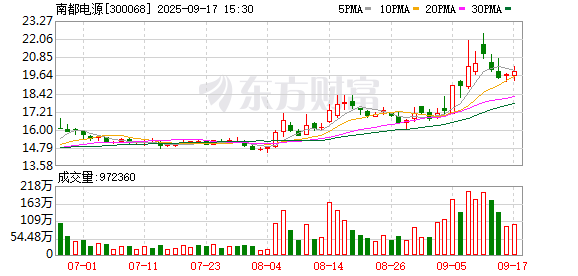
南都电源:公司全固态电池采用氧化物技术路线
Zheng Quan Ri Bao· 2025-09-17 08:12
Core Viewpoint - Nandu Power's all-solid-state battery utilizes oxide technology to address the "solid-solid interface" challenge, significantly improving the interface contact performance and effectively reducing internal resistance of the battery cells [2] Group 1: Company Developments - The company has developed an all-solid-state battery using oxide electrolyte in-situ film formation assembly technology and dense dry electrode process [2] - The all-solid-state battery business is not expected to have a significant impact on the company's performance in 2025 [2]


全固态电池专家电话会议要点-China EV batteries_ Takeaways from ASSB expert call
2025-09-15 01:49
Summary of Key Points from the ASSB Expert Call Industry Overview - The focus of the call was on the development of all-solid-state batteries (ASSBs) in China, particularly in the context of the electric vehicle (EV) battery market [1] Core Insights and Arguments 1. **Material Development**: - The mainstream roadmap for ASSB electrolyte material is shifting from oxide/polymer to sulfide-based materials due to better performance and higher ionic conductivity [2] - The supply of lithium sulfide (Li2S) is identified as a key bottleneck for sulfide-based electrolyte material [2] - Production methods for lithium sulfide include solid-phase synthesis and chemical vapor deposition (CVD) for better purity but at higher costs, while carbothermic and liquid-phase methods are cheaper but yield lower purity [2] - The estimated unit cell cost for ASSB is over CNY4 per Wh, with cost breakdowns: 18% for cathode (high-nickel NCM), 22-25% for anode (lithium metal), and 40% for electrolyte (sulfide-based) [2] 2. **Manufacturing Challenges**: - The electrode preparation process is transitioning from wet to dry processes to minimize hydrolysis of sulfide-based electrolytes [3] - The stacking procedure will replace the winding procedure due to the low flexibility of electrolyte materials [3] - Isostatic pressing is being introduced to improve solid-to-solid contact, which is currently challenging to achieve uniformly under ~300MPa pressure [3] - The pouch cell form factor is preferred for ASSBs due to higher energy density and reduced volume expansion [3] - Estimated unit equipment spending for ASSB production is at least CNY350-400 million per GWh [3] 3. **Competition Landscape**: - The material supply and manufacturing processes for ASSBs are still immature, with most players in pilot production stages [4] - Current sample products show low cell capacity (20-30Ah) and competitive energy density (~350Wh/kg) compared to traditional lithium-ion batteries [4] - ASSBs face challenges such as slower charging rates and lower cycle life, impacting their application in certain downstream markets [4] - Domestic equipment vendors have production capabilities for core equipment, but the performance of domestic isostatic laminators remains less favorable [4] Additional Important Insights - The expert emphasized that it will take time for ASSB technology to reach mass production, with most players at similar stages of development [4] - The transition to ASSBs is seen as a long-term evolution in the EV battery market, with significant challenges still to be addressed before widespread adoption can occur [4]
确认过眼神 全固态电池概念癫狂
2 1 Shi Ji Jing Ji Bao Dao· 2025-09-12 12:46
Core Viewpoint - The solid-state battery sector has seen significant capital market interest, with the solid-state battery index rising by 77.7% from April 9 to September 12, 2023, despite ongoing uncertainties regarding industrialization [1][2][3]. Industry Overview - Solid-state batteries are defined as batteries that completely replace liquid electrolytes with solid electrolytes, enabling lithium ion conduction [1]. - The industry consensus indicates that solid-state battery industrialization is still in its early exploratory phase, with semi-solid batteries being more feasible at this stage [5][10]. Technological Challenges - The path to mass production of solid-state batteries is fraught with challenges, including interface resistance, material stability, and cost control [3][11]. - Current energy densities achieved in laboratories (300-400 Wh/kg) have not yet translated into mass production due to various technical hurdles [3][10]. Market Dynamics - Despite the technological challenges, the stock prices of companies involved in solid-state battery production have surged, reflecting a disconnect between market enthusiasm and industrial realities [3][14]. - Companies like Ganfeng Lithium and others are pursuing multiple technological routes, including sulfide, oxide, and polymer systems, with a focus on sulfide electrolytes for solid-state batteries [6][9]. Production Milestones - Companies such as Guoxuan High-Tech and EVE Energy are making strides in solid-state battery production, with Guoxuan High-Tech achieving a cell energy density of 350 Wh/kg and EVE Energy targeting a 60 Ah battery by the end of the year [8][9]. - The automotive industry is also exploring solid-state battery applications, with major manufacturers like Honda and Toyota planning mass production between 2028 and 2030 [9][12]. Investment Sentiment - The capital market's enthusiasm for solid-state batteries has led to significant stock price increases for companies involved, with some experiencing over 100% price increases in a short period [14][15]. - However, there are concerns about market valuation bubbles, as many companies are not yet generating stable revenue from solid-state battery technologies [15][16].
300Wh/kg,亿纬锂能全固态电池正式下线
鑫椤锂电· 2025-09-04 07:44
Core Viewpoint - The article highlights the advancements and production capabilities of EVE Energy's solid-state batteries, emphasizing their potential applications and the company's commitment to increasing energy density targets by 2025 [1][2]. Group 1: Production and Capacity - EVE Energy's solid-state battery research institute in Chengdu has officially opened, with the "Longquan No. 2" 10Ah solid-state battery completing its production [1]. - The Chengdu facility covers approximately 11,000 square meters, with Phase 1 expected to be completed by December 2025, achieving a manufacturing capacity of 60Ah batteries, and Phase 2 projected to reach an annual capacity of 100MWh by December 2026 [1]. - The company has developed a prototype of the Ah-level sulfide-based solid-state battery, with a pilot line for 100MWh expected to be operational by 2025 [2]. Group 2: Technical Specifications - The "Longquan No. 2" solid-state battery features an energy density of 300Wh/kg and a volumetric energy density of 700Wh/L, suitable for humanoid robots, low-altitude aircraft, and high-end AI equipment [1]. - The battery operates effectively in a temperature range of -20℃ to 60℃ and maintains stability under 20MPa pressure, with a cycle performance exceeding 2000 cycles at 45℃ [1][2]. - The company employs a combination of ternary cathodes, silicon-carbon anodes, and sulfide solid electrolytes, utilizing dual-layer coating technology to enhance ion diffusion and stability [2]. Group 3: Financial Performance - In the first half of the year, EVE Energy reported revenue of approximately 28.2 billion yuan, a year-on-year increase of 30.06%, while net profit was 1.605 billion yuan, a decrease of 24.9% [2]. - The company shipped 21.48GWh of power batteries, marking a year-on-year growth of 58.58%, and 28.71GWh of energy storage batteries, up 37.02% [2]. Group 4: Client Base and Market Presence - EVE Energy's clients include over 80% of the top ten global power tool companies and more than 60% of the top twenty suppliers for new energy passenger vehicles, with notable customers such as Samsung, Bosch, and Xiaomi [3]. - The company has a global presence with eight production bases and two under construction, covering various regions in China and overseas locations in Malaysia and Hungary [2][3].

国轩高科:上半年客户结构持续改善 预计今年出货量将保持增长态势
Zheng Quan Shi Bao Wang· 2025-09-03 05:53
Core Viewpoint - Guoxuan High-Tech (002074) has shown strong performance in the first half of 2025, with multiple operational indicators reaching historical or phase highs, leading to significant stock price appreciation since the beginning of the year [1] Financial Performance - The company achieved revenue of 19.394 billion yuan, a year-on-year increase of 15.48% [1] - Net profit reached 367 million yuan, up 35.22% year-on-year [1] - Non-recurring net profit was 72.87 million yuan, reflecting a growth of 48.53% year-on-year [1] - Operating cash flow was 325 million yuan, an increase of 80.35% year-on-year [1] Business Segments - Revenue from the power battery segment was 14.034 billion yuan, a year-on-year increase of 19.94%, with a gross margin of 14.24%, up 2.16 percentage points [2] - The energy storage battery system segment generated revenue of 4.562 billion yuan, with a growth rate of 5.14% [2] - Overseas business revenue reached 6.4 billion yuan, a year-on-year increase of 15.79%, accounting for 33% of total revenue [2] - The company shipped approximately 40 GWh of lithium batteries, a year-on-year increase of over 48% [2] Market Position - Guoxuan High-Tech's market share in domestic power battery installations increased to 5.18%, ranking fourth in the industry [2] - The company ranked seventh globally in energy storage battery shipments [2] Research and Development - The company invested 1.382 billion yuan in R&D, a year-on-year increase of 13.34% [2] - New products launched include the LMFP system L600 battery, G series solid-state batteries, and the "Qianyuan Zhichu" energy storage system [3] Capacity Expansion - Guoxuan High-Tech announced plans to build a new 20 GWh lithium-ion battery manufacturing base in Nanjing and another 20 GWh base in Wuhu, with investments not exceeding 4 billion yuan each [3] - The company aims to enhance overall capacity layout and product structure to meet growing order demands [3] - Future capital expenditures are expected to increase both domestically and internationally to support production and market expansion [3]
孚能科技:完成第二代硫化物全固态电池技术开发
Xin Lang Cai Jing· 2025-09-01 09:39
Core Insights - The company has completed the sample delivery of the first-generation sulfide all-solid-state battery and has developed the technology for the second-generation sulfide all-solid-state battery [1] Group 1 - The second-generation battery utilizes lithium-rich manganese-based/high-nickel ternary cathodes and lithium metal anodes [1] - The energy density of the new battery has been increased to 500 Wh/kg [1]
