对赌协议

Search documents
王健林限高24小时后“反转”,但谁都没有资格嘲笑他!
Sou Hu Cai Jing· 2025-09-29 06:11
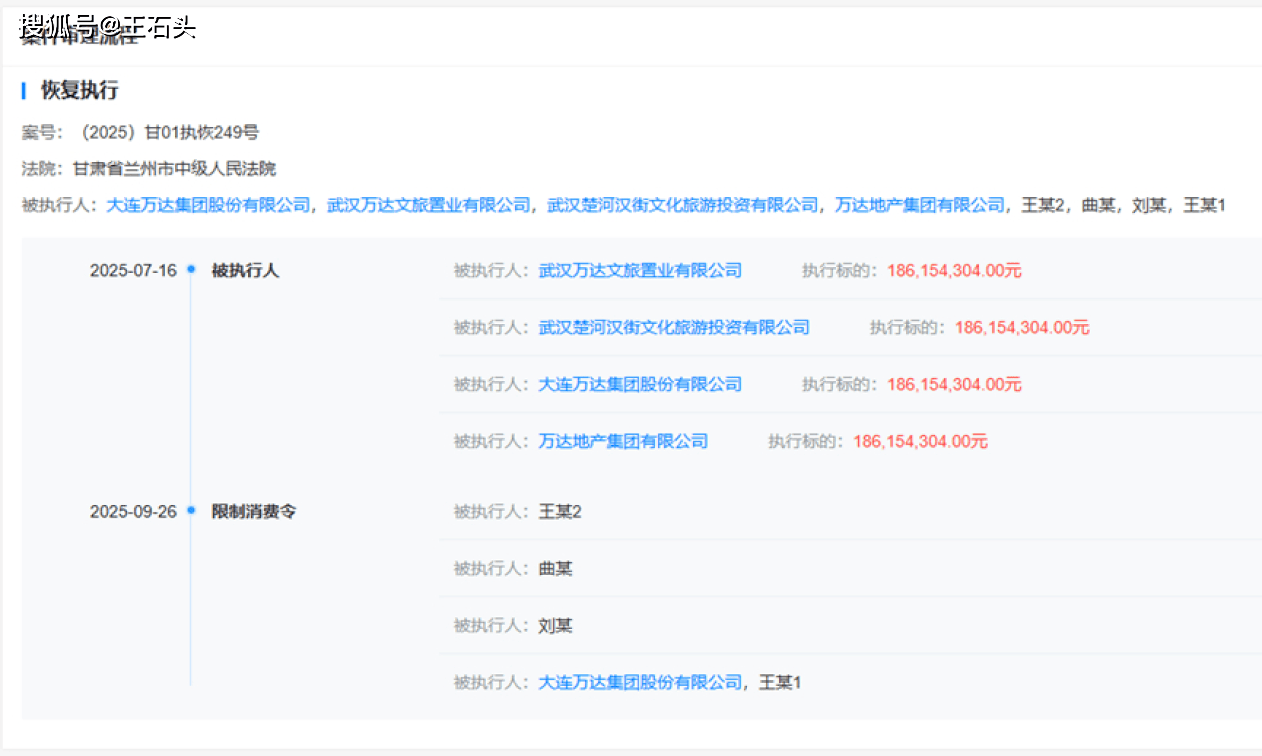
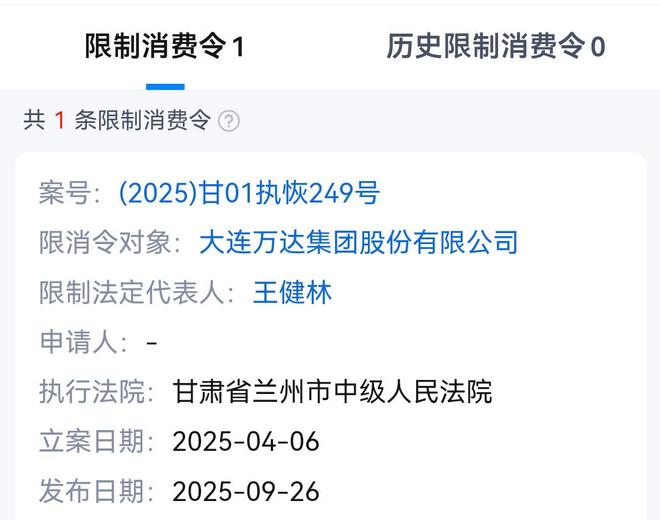
Core Viewpoint - Wang Jianlin, once a prominent billionaire, is now facing restrictions on high consumption due to a debt of 186 million yuan, highlighting the financial struggles of Wanda Group and its significant debt burden [1][2]. Group 1: Debt Situation - As of September 2025, Wanda Group's total executed debt exceeds 7.6 billion yuan, with 30.2 billion yuan due within the next year [4]. - The company has only 11.6 billion yuan in cash, resulting in a funding gap of nearly 20 billion yuan, indicating severe financial pressure [4]. - Wanda Commercial Management Group has total liabilities of approximately 300 billion yuan, with interest-bearing debt amounting to 137.5 billion yuan, leading to annual interest payments exceeding 13 billion yuan, while core profits are only around 2 billion yuan [4]. Group 2: Asset Liquidation Strategy - To manage its massive debts, Wang Jianlin has initiated a "fire sale" strategy, selling off valuable assets, including 85 Wanda Plazas and planning to sell 48 more, aiming to raise 50 billion yuan [6]. - Other significant asset sales include the control of Wanda Film and a 24.9 billion yuan sale of Wanda Hotel Management Company, as well as a 30% stake in Quick Money Financial [6]. Group 3: Historical Context and Challenges - The financial troubles stem from a "bet agreement" signed years ago, which required Wanda to buy back shares if it failed to go public within a specified timeframe, leading to a growing financial obligation [8]. - Despite the challenges, Wang Jianlin has chosen to confront the situation directly, opting not to evade responsibilities or transfer assets abroad, which has garnered respect from some observers [10][12].

王健林的窟窿有多大?甩卖85座万达广场还填不满,前首富成老赖
Sou Hu Cai Jing· 2025-09-29 02:20
Core Viewpoint - The financial troubles of Wanda Group, led by former billionaire Wang Jianlin, have escalated to the point where the company is unable to pay a construction fee of 186 million, resulting in high consumption restrictions imposed by the court [3][9]. Financial Situation - As of mid-2022, Wanda Group's total liabilities reached 307 billion, with only 10.4 billion in cash on hand, making its revenue of 26.8 billion and profit of 4.7 billion insufficient to cover its massive debt [4]. - By September 2023, Wanda had incurred an additional 14 billion in enforcement amounts, bringing the cumulative total to 76 billion, indicating a deteriorating financial condition [6]. Asset Management and Sales - Since 2023, Wang Jianlin has sold at least 85 Wanda Plazas and transferred hotel management and financial assets, raising approximately 50 billion in May alone, and a total of 150 billion over five years through asset sales [3]. - The company is transitioning to a light asset model, but rising vacancy rates in Wanda Plazas and difficulties in attracting tenants pose significant challenges [7][8]. Market Perception and Challenges - The court's restrictions have led to a collapse in market confidence regarding Wanda's debt repayment capabilities, further limiting financing options and potentially triggering cross-defaults [9]. - The reputation of Wanda as a reliable business partner is in jeopardy, with former collaborators like Suning and Ronshine seeking to recover debts [7]. Future Outlook - Wanda's next steps involve negotiating debt restructuring with creditors and continuing the sale of remaining assets, including Wanda Plazas and shares in Wanda Film [11]. - The company's reported total assets of 616.9 billion may not reflect true market value, as finding buyers for real estate assets has become increasingly difficult in the current economic climate [13].
王健林被“限高”冲上热搜,万达系被执行总金额超70亿
Di Yi Cai Jing Zi Xun· 2025-09-28 03:24
Core Viewpoint - Wang Jianlin and Dalian Wanda Group have been restricted from high consumption due to significant legal and financial issues, with total execution amounts exceeding 7 billion yuan [1][3][4] Group 1: Legal and Financial Issues - Dalian Wanda Group has faced multiple legal disputes, with 10 execution cases totaling 5.262 billion yuan and 38 instances of equity freezes [3] - The total amount executed across all Wanda-related companies has surpassed 7 billion yuan, indicating severe financial distress [4] - Recent equity freezes involve over 9.4 billion yuan in shares from two subsidiaries, with a freeze period of three years [4] Group 2: Debt and Cash Flow Concerns - The frequent equity freezes are attributed to debt issues, with each freeze corresponding to unpaid debts, including bank loans and trust plans [4] - Dalian Wanda Commercial Management has a short-term debt of over 43.9 billion yuan due within a year, while cash reserves are only 15.1 billion yuan [5] - The company has been selling assets like Wanda Plaza to generate cash, but the cash inflow has been below expectations, often involving debt repayment rather than new capital [5]
股改的时间怎么越来越早?
Hu Xiu· 2025-09-26 00:21
Core Viewpoint - The trend of companies initiating stock reforms earlier in the primary market raises concerns about the lack of clarity and planning in the process [1][6][12]. Group 1: Stock Reform Timing - Companies are increasingly starting stock reforms without having a clear plan or timeline for their IPO [2][10]. - Historically, stock reforms were closely tied to IPO preparations, but now there seems to be a disconnect, with some companies rushing into reforms prematurely [6][20]. Group 2: Due Diligence and Awareness - Investors should conduct thorough due diligence to assess whether a company is genuinely prepared for an IPO or merely using stock reform as a tactic to buy time [14][32]. - There is a warning against assuming that a stock reform automatically indicates a forthcoming IPO, as many companies may not be ready for such a step [13][35]. Group 3: Financial Implications - The treatment of buyback agreements during stock reforms can vary significantly, affecting the net assets reported by companies [25][29]. - Companies may not need to clear buyback agreements before stock reforms, which can lead to misleading financial representations [19][21]. Group 4: Market Conditions - The current market conditions suggest that completing a stock reform does not necessarily correlate with compliance or readiness for an IPO [36][41]. - Many pre-IPO investments have failed, indicating that stock reform alone is not a reliable indicator of future success [39][42].
世纪数码冲刺北交所上市 股权结构变动被问询
Mei Ri Jing Ji Xin Wen· 2025-09-23 15:50
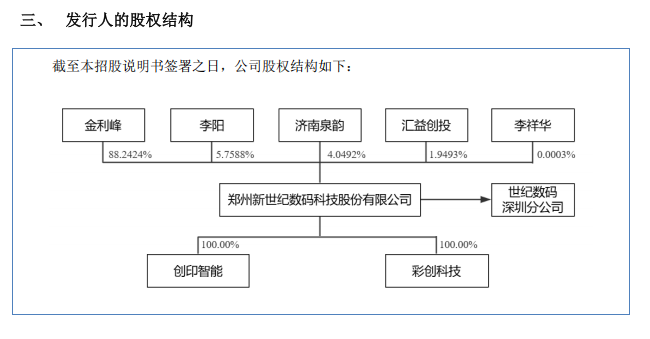
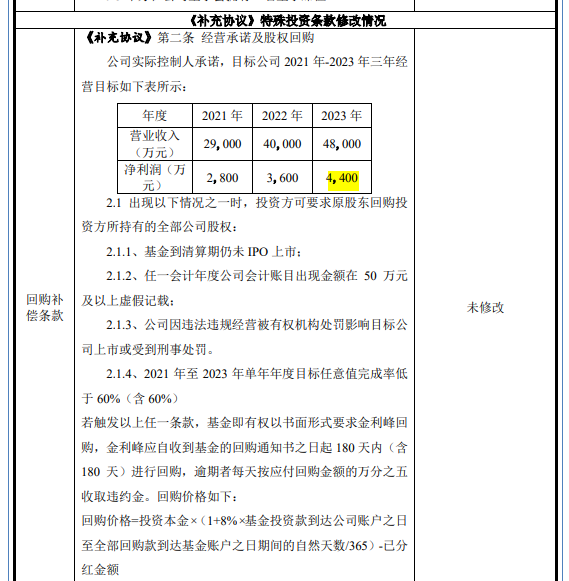
Core Viewpoint - Zhengzhou New Century Digital Technology Co., Ltd. (Century Digital) is facing significant changes in its investment structure as it approaches a critical period for its listing on the Beijing Stock Exchange, with recent performance showing a decline in revenue and net profit [1][5]. Company Overview - Century Digital specializes in digital printing technology, focusing on industrial applications such as textile digital printing, advertising signage, and corrugated box packaging [2]. - The company is controlled by Jin Lifeng, who holds 88.24% of the shares [2]. Investment Changes - After three years, the original institutional investor exited in April 2025, while new investors signed a performance agreement with Jin Lifeng, stipulating that the company must have its listing application accepted by the end of June 2025 and successfully listed by the end of June 2027, or face a buyback [1][3]. - The previous investor, Zhongchuangxin Fund, had set profit targets for 2021-2023, which Century Digital failed to meet in 2021 and 2022 [4]. Financial Performance - Century Digital's revenue and net profit declined in the first half of 2025, with revenue at 3.11 billion and a net profit of 241.08 million, representing a year-on-year decrease of 4.4% and 16.45%, respectively [5]. - The company reported a drop in its net profit margin, with a non-recurring net profit decrease of over 20% [1][5]. Research and Development - R&D spending in the first half of 2025 was 130.36 million, down 5.32% year-on-year, indicating a lower investment in innovation compared to industry peers [5][6]. - R&D expenses as a percentage of revenue have consistently been below 6%, contrasting with comparable companies in the industry [5][6]. Sales and Marketing - Sales expenses increased by 47.73% in the first half of 2025, totaling 127.65 million, attributed to higher salaries and increased marketing costs, despite a decline in revenue [6]. - The core products, digital inkjet printers and digital printing machines, saw a revenue decline of 10.7% and 16.36%, respectively, in the first half of 2025 [6].
7倍大牛股搭上AI芯片,跑出15连板
21世纪经济报道· 2025-09-23 11:11
Core Viewpoint - Tianpu Co., Ltd. has experienced a remarkable stock performance, with a cumulative increase of 790% this year and a 15-day consecutive trading limit rise, driven by a strategic acquisition by AI chip company Zhonghao Xinying [5][6]. Group 1: Stock Performance - Tianpu Co., Ltd. has seen its stock price rise to 111.28 yuan, marking a 790% increase this year and nearly 300% since August 22 [1][3]. - The company's market capitalization surged from under 4 billion yuan to 13.564 billion yuan [3]. Group 2: Acquisition Details - Zhonghao Xinying plans to acquire control of Tianpu Co., Ltd. through a two-step process involving share transfer and capital increase [5]. - The acquisition involves Zhonghao Xinying purchasing 10.75% of Tianpu's shares at 23.98 yuan per share, totaling 346 million yuan [6]. - After the capital increase, Zhonghao Xinying and its partners will collectively hold 68.29% of Tianpu's shares [6]. Group 3: Market Reactions and Expectations - The market has reacted positively to the merger, with investors optimistic about the potential technological advancements Zhonghao Xinying could bring to Tianpu [7]. - However, there are concerns regarding the stringent performance targets set by Zhonghao Xinying, which include achieving a net profit of 2 billion yuan by the end of 2025 [7][8]. Group 4: Financial Performance and Challenges - Tianpu Co., Ltd. reported a revenue of 151 million yuan in the first half of 2025, a 3.44% decline year-on-year, with a net profit of 11.298 million yuan, down 16.08% [5]. - Zhonghao Xinying has faced financial losses in recent years, with a net profit of -42.98 million yuan in 2022 and a projected loss of 143.7 million yuan in the first half of 2025 [8]. Group 5: Regulatory Concerns - The acquisition has drawn regulatory scrutiny, particularly regarding Zhonghao Xinying's funding sources and potential insider trading related to Tianpu's stock [9][10]. - There have been allegations of insider trading involving individuals connected to Tianpu's management and Zhonghao Xinying [10]. - Tianpu's current valuation is significantly higher than its fundamental value, with a price-to-earnings ratio of 483 and a price-to-book ratio of 18.46, far exceeding industry averages [10][11].


蘅东光IPO暗雷:股权代持“罗生门”,与“空壳”供应商交易
Sou Hu Cai Jing· 2025-09-21 01:11
Core Viewpoint - The article highlights the potential risks and challenges faced by Hengtong Optical, a company seeking to go public on the Beijing Stock Exchange, including issues related to overseas subsidiaries, high customer concentration, declining R&D investment, and pressure from performance agreements [1][3]. Group 1: Overseas Subsidiary Issues - Hengtong Optical has a complex situation with its overseas subsidiaries, including instances of shareholding proxies in Singapore and Thailand [4]. - Regulatory authorities are concerned about the shareholding proxy arrangements and have requested detailed explanations regarding the unbundling process and compliance with overseas investment regulations [5][7]. Group 2: Performance Agreement Pressures - The company's IPO is significantly influenced by a performance agreement that mandates share buyback obligations, which are suspended only upon the acceptance of the IPO application [8]. - If the IPO fails or is withdrawn, the buyback obligations will be reinstated, placing immense pressure on the actual controller, Chen Jianwei, to ensure a successful IPO [9]. Group 3: Customer Concentration Risks - Hengtong Optical exhibits a high dependency on major customers, with nearly 80% of sales in the first half of 2025 coming from the top five clients, and the largest client, AFL, accounting for 58.22% [10][11]. - This dependency has increased over the year, raising concerns about the company's operational independence, as AFL is also the primary supplier [12]. Group 4: Revenue Authenticity Concerns - The Beijing Stock Exchange has raised questions regarding the authenticity of Hengtong Optical's revenue growth, noting that sales to AFL have surged disproportionately compared to AFL's own revenue growth [14][15][16]. Group 5: Declining R&D Investment - Hengtong Optical's R&D expenditure has decreased from 7.26% in 2022 to 4% in 2024, significantly below industry averages [17][19]. - The company has a low percentage of employees with higher education, which may hinder its innovation capabilities [20]. Group 6: Financial Control Issues - The company has faced multiple financial control issues, including instances of related parties making payments on its behalf and using personal accounts for company transactions [21][22]. Group 7: Deteriorating Debt Servicing Ability - Hengtong Optical's liquidity ratios have worsened, with the current ratio dropping from 1.98 in 2022 to 1.17 in 2024, and the quick ratio falling to 0.85 [24]. - The company's debt-to-asset ratio has increased significantly, indicating a higher financial risk compared to industry averages [26]. Group 8: Supplier Concerns - One of Hengtong Optical's main suppliers, Shenzhen Huatianda Information Technology Co., Ltd., reported zero employees insured, raising questions about the legitimacy of transactions with this supplier [28][30]. Group 9: Fundraising Challenges - The company has reduced its fundraising target from 651 million yuan to 494 million yuan, a decrease of 24%, indicating a lack of market confidence [31]. - Despite the reduced fundraising, the company has distributed cash dividends totaling 37.13 million yuan during the reporting period, contrasting with its need for liquidity [33].

正冲刺上市,相伴3年的机构却“清仓跑路”,接盘者另有玄机!老板专科学历,身家上亿,公司研发投入长期低于行业均值
Mei Ri Jing Ji Xin Wen· 2025-09-19 06:27
Core Viewpoint - Zhengzhou New Century Digital Technology Co., Ltd. (Century Digital) is facing significant changes in its investment structure as it approaches its listing on the Beijing Stock Exchange, with original investors exiting and new investors entering under a performance-based agreement [1][2][9]. Company Overview - Century Digital specializes in digital printing technology, focusing on industrial applications such as textile digital printing, advertising signage, and corrugated box packaging [3]. - The company has a history of fluctuating market presence, having been listed on the New Third Board in 2016, delisted in 2019, and planning a second listing in January 2024 [5]. Financial Performance - The company reported a decline in both revenue and net profit for the first half of 2025, with revenue of 311 million yuan, down 4.4% year-on-year, and net profit of 24.11 million yuan, down 16.45% [2][11]. - For the years 2021 to 2024, Century Digital's revenue was 363 million yuan, 414 million yuan, 571 million yuan, and 569 million yuan, respectively, while net profit figures were 20.68 million yuan, 31.79 million yuan, 49.88 million yuan, and 57.30 million yuan [11]. Investment Changes - Original institutional investors exited their positions in April 2023, triggering a buyback clause due to the company's failure to complete an IPO within the agreed timeframe [6][9]. - New investors, including Jinan Quanyun Lake Light Equity Investment Partnership and Shandong Huiyi Venture Capital, have signed similar performance agreements with the company's actual controller, Jin Lifeng, regarding the IPO timeline [9][10]. Research and Development - Century Digital's R&D expenditure for the first half of 2025 was 13.04 million yuan, a decrease of 5.32% year-on-year, indicating a trend of reduced investment in innovation compared to industry peers [12][15]. - The company's R&D expenses as a percentage of revenue have consistently been below the industry average, with figures of 3.52%, 3.24%, and 4.25% for the years 2022 to 2024 [12]. Sales and Marketing - Sales expenses increased by 47.73% in the first half of 2025, totaling 12.77 million yuan, despite a decline in revenue, suggesting inefficiencies in sales strategies [12][15]. - The core products, digital inkjet printers and digital printing machines, saw a revenue decline of 10.7% and 16.36%, respectively, in the first half of 2025 [15].
正冲刺上市,相伴3年的机构却“清仓跑路”,接盘者另有玄机
Mei Ri Jing Ji Xin Wen· 2025-09-18 10:29
Core Viewpoint - Zhengzhou New Century Digital Technology Co., Ltd. (Century Digital) is facing significant changes in its investment structure as it approaches a critical period for its listing on the Beijing Stock Exchange, with original investors exiting and new investors entering into a performance-based agreement with the controlling shareholder, Jin Lifeng [1][2]. Group 1: Company Overview - Century Digital specializes in digital printing technology, focusing on industrial applications such as textile digital printing, advertising signage, and corrugated box packaging [3]. - The company was listed on the New Third Board in 2016, delisted in 2019, and is set to relist in January 2024 [4]. Group 2: Financial Performance - As of June 30, the total market value of Century Digital was 620 million yuan, with Jin Lifeng's share value exceeding 540 million yuan [5]. - The company reported a decline in revenue and net profit for the first half of 2025, with revenue of 311 million yuan, down 4.4% year-on-year, and net profit of 24.11 million yuan, down 16.45% year-on-year [10][11]. - The company's performance has not met the profit targets set in agreements with investors, with net profits for 2021 and 2022 falling short of the stipulated goals [11]. Group 3: Investment and Shareholder Changes - The original institutional investors exited their positions due to the company not completing its IPO within the agreed timeframe, triggering buyback clauses [8]. - New investors, including Jinan Quanyun Lake Light Equity Investment Partnership and Shandong Huiyi Venture Capital, have signed new performance agreements with Jin Lifeng, stipulating similar buyback conditions if the company fails to meet listing deadlines [8][9]. Group 4: Research and Development - Century Digital's R&D expenditure for the first half of 2025 was 13.04 million yuan, a decrease of 5.32% year-on-year, indicating a long-term trend of R&D investment below industry averages [12]. - The company’s R&D expenses as a percentage of revenue have been consistently lower than comparable companies in the industry [12][14]. Group 5: Sales and Market Dynamics - Sales expenses increased by 47.73% in the first half of 2025, totaling 12.77 million yuan, despite a decline in revenue, suggesting ineffective sales strategies [15]. - Revenue from core products, including digital inkjet printers, has also seen a decline, with a drop of 10.7% and 16.36% respectively for the first half of 2025 [15].
锡华科技携对赌冲刺IPO:3.5亿分红接近两年净利润
Sou Hu Cai Jing· 2025-09-18 09:13
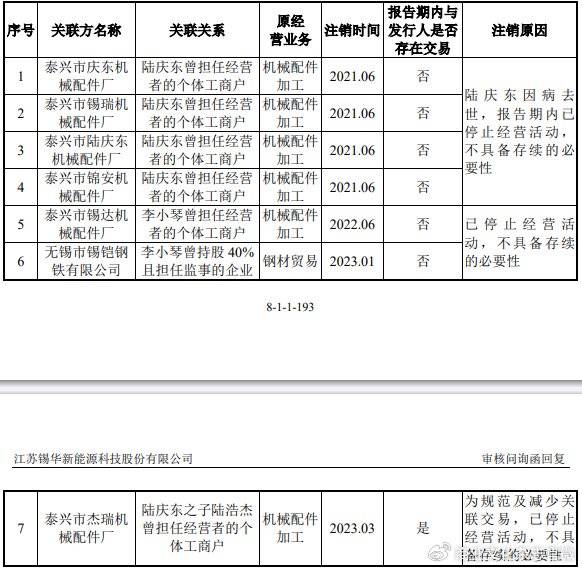
Core Viewpoint - Jiangsu Xihua New Energy Technology Co., Ltd. (Xihua Technology) is nearing its IPO with a registration status update, planning to raise 1.498 billion yuan for wind power equipment projects and R&D center construction, but faces scrutiny over sensitive operations and large dividends [1][2][11]. Financial Operations - In 2022, Xihua Technology distributed a controversial dividend of 350 million yuan, nearly 190% of its net profit for that year, and close to the total net profit of 401 million yuan for 2021 and 2022 combined [4][5]. - The actual controllers, Wang Mouzheng and Lu Mouyun, hold 91.66% of the voting rights, allowing them significant control over company decisions [4][11]. Fundraising and Compliance Issues - Xihua Technology claims that its cumulative dividends over the past three years did not exceed 80% of net profits, despite raising concerns about the legality of its dividend practices [2][5]. - Initial plans to use 550 million yuan of raised funds for working capital were removed in the second draft of the prospectus without explanation, raising further questions about transparency [6][11]. Related Company Actions - From 2021 to 2023, family members of the actual controller have canceled seven related companies, some of which had prior transactions with Xihua Technology, leading to concerns about compliance and potential irregularities [7][10]. - The cancellation of these companies has prompted inquiries from the Shanghai Stock Exchange regarding the reasons and legitimacy of these actions [10]. Personal Financial Transactions - There are reported private financial transactions between Xihua Technology's procurement employee and shareholders of suppliers, which could raise questions about procurement independence [3][10]. Shareholder Agreements and Risks - Xihua Technology is under pressure from a buyback agreement with external investors, stipulating that if the company does not go public by December 31, 2026, the actual controller must repurchase shares from these investors [11].