退市不免责

Search documents
退市不免责!退市龙宇及相关责任人被重罚
Zhong Guo Zheng Quan Bao - Zhong Zheng Wang· 2025-09-05 16:05
9月5日,退市龙宇(退市板块证券简称为"龙宇3")公告,公司收到上海证监局出具的《行政处罚事先 告知书》,对公司以及相关责任人拟合计罚款3810万元。 早在2024年4月,上海证监局就已对退市龙宇采取行政监管措施,并于同年12月对其相关问题进行立案 调查。即便公司在2025年7月因审计意见问题触及财务类退市标准黯然离场,调查也并未停止。 公司退市后,上海证监局一方面持续推进案件调查,对公司退市前的违法违规行为坚持一查到底,查实 公司财务造假;另一方面积极督促控股股东偿还占用资金。最终,上海证监局通过层层穿透公司架构、 细致追溯历史账目,锁定其自2019年至2022年通过虚假贸易业务虚增收入、隐瞒关联方资金占用等一系 列违法违规事实。 "退市只是资本市场身份的终结,绝不是法律与监管责任的终点。"某律师事务所资深律师告诉中国证券 报记者,监管部门对财务造假、资金占用等恶性行为的事后追责,正在变得更快、更严、更彻底。 财报存在虚假记载 根据上海证监局的调查,退市龙宇出于做大收入规模或赚取资金收益等目的,通过虚构贸易链条、人为 增加业务环节等方式,开展金属、油品、乙二醇等虚假贸易,导致2019年、2020年、2021 ...
时评:退市不是“免责金牌”
Zheng Quan Ri Bao· 2025-08-24 23:45
Group 1 - Recent administrative penalties have been imposed on three delisted companies, highlighting that regulatory authorities will continue to pursue accountability regardless of a company's delisting status [1] - The delisting system is crucial for optimizing resource allocation in the capital market, aiming to remove companies that lack sustainable operational capabilities or engage in serious violations [1][2] - The number of delisted companies has significantly increased due to regulatory reforms, with more efficient delisting indicators being implemented [1] Group 2 - The legal framework for holding delisted companies accountable has become more comprehensive, with the China Securities Regulatory Commission (CSRC) having investigated 64 delisted companies for violations in 2024 alone [2] - Various channels for investor protection and compensation have been established, including representative litigation and administrative enforcement commitments [2] - The CSRC has intensified criminal referrals for serious violations, with 33 delisted companies referred to law enforcement for suspected information disclosure crimes in 2024 [2] Group 3 - A robust delisting mechanism and a strict accountability system are essential for the long-term healthy development of the capital market, ensuring market vitality and fairness [3]


多家退市公司连遭重罚!“退市≠安全上岸”
2 1 Shi Ji Jing Ji Bao Dao· 2025-08-23 07:05
Group 1 - The core viewpoint is that regulatory bodies are intensifying their crackdown on companies that violate laws, regardless of their delisting status, emphasizing that accountability will be pursued relentlessly [2][3] - China Railway Group received a fine of 24.15 million yuan, bringing its total penalties to 55.65 million yuan, with its actual controller facing a fine of 9.5 million yuan and a lifetime market ban [2] - Taihe Group, which was delisted in 2023, was fined 6 million yuan for concealing 13 major lawsuits [2] Group 2 - Since the beginning of 2024, the China Securities Regulatory Commission (CSRC) has issued fines totaling 1.2 billion yuan against 44 delisted companies, with 63 executives facing lifetime market bans [2] - The regulatory "three-punishment linkage" mechanism includes administrative penalties, criminal accountability, and civil compensation, targeting companies involved in financial fraud and fund misappropriation [2] - In a notable case, the Taiantang incident saw the Investor Protection Center successfully recover 572 million yuan through a zero-cost subrogation lawsuit, marking a significant achievement in investor rights protection [2]
退市也跑不掉,两公司连收巨额罚单,一实控人被罚950万元
2 1 Shi Ji Jing Ji Bao Dao· 2025-08-23 03:51
Core Viewpoint - The recent administrative penalties imposed on two delisted companies, Huatie Co. and Taihe Group, emphasize that delisting does not equate to immunity from legal responsibilities, as regulatory bodies continue to enforce strict accountability measures [2][4]. Summary by Relevant Sections Administrative Penalties - Huatie Co. has faced cumulative penalties amounting to 55.65 million yuan, with its actual controller, Xuan Ruiguo, receiving a fine of 9.5 million yuan and a lifetime market ban [4][5]. - Taihe Group was fined 6 million yuan for failing to disclose significant litigation issues, which involved 13 lawsuits [6][8]. Regulatory Mechanisms - The regulatory framework is characterized by a "three-punishment linkage" mechanism, combining administrative, civil, and criminal penalties to ensure comprehensive accountability for delisted companies [8][9]. - As of August 22, 2024, the China Securities Regulatory Commission (CSRC) has investigated 64 cases of illegal activities by delisted companies, with 44 cases resulting in penalties totaling 1.2 billion yuan [8][9]. Investor Protection - The ongoing enforcement actions reflect a commitment to protecting investor rights, with civil compensation mechanisms being actively pursued, including successful recovery of funds in certain cases [9][10]. - The CSRC has also referred cases to law enforcement when criminal activities are suspected, indicating a robust approach to tackling financial misconduct [9].


退市也跑不掉,两公司连收巨额罚单,一实控人被罚950万元
21世纪经济报道· 2025-08-23 03:47
Core Viewpoint - The article emphasizes that delisting does not equate to escaping legal responsibilities, as regulatory actions continue to target companies that have been delisted, reinforcing the principle of "no exemption from penalties" for such firms [1][8]. Summary by Sections Regulatory Actions - Two delisted companies, Huatie Co. and Taihe Group, received significant administrative penalties, highlighting the ongoing regulatory scrutiny even after delisting [1][2]. - Huatie Co. faced cumulative fines of 55.65 million yuan, with its actual controller, Xuan Ruiguo, receiving a fine of 9.5 million yuan and a lifetime market ban [3][5]. - Taihe Group was fined 6 million yuan for failing to disclose major litigation issues, which affected its annual reports from 2020 to 2022 [6]. Violations and Penalties - Huatie Co. was penalized for multiple violations, including failing to disclose related party transactions, which involved 1.134 billion yuan in non-operating fund transfers [5][6]. - The company also inflated inventory and cash figures in its financial reports, leading to further penalties [6]. - The regulatory framework includes a "three-punishment linkage" mechanism, combining administrative, civil, and criminal penalties for serious violations [8][9]. Enforcement Statistics - As of August 22, 2024, the China Securities Regulatory Commission (CSRC) has investigated 64 cases of delisted companies, with 44 cases resulting in penalties totaling 1.2 billion yuan [8][9]. - Among the penalized companies, 28 faced consequences for financial fraud, while others were penalized for fund misappropriation and failure to disclose important matters [9]. Investor Protection - The article highlights the ongoing efforts to protect investor rights, including civil compensation mechanisms and the involvement of the China Securities Investor Services Center in supporting litigation [9]. - Successful cases of civil compensation have emerged, such as the recovery of 572 million yuan in a case involving a delisted company [9].

重罚!退市不免责又一例
Sou Hu Cai Jing· 2025-08-22 14:27
Core Viewpoint - The China Securities Regulatory Commission (CSRC) has reinforced its stance that companies are not exempt from penalties after delisting, as evidenced by the recent heavy fines imposed on Taihe Group and Huatie Co., Ltd. for their violations [1][7]. Regulatory Actions - Taihe Group received a total fine of 17.4 million yuan for failing to disclose significant lawsuits and for major omissions in its annual reports from 2020 to 2022 [5][6]. - The company was involved in 13 lawsuits from July 2020 to May 2021, with a total amount of 9.674 billion yuan, representing 48.21% of its audited net assets for 2020 [5][6]. - Huatie Co., Ltd. was also penalized with a proposed fine of 24.15 million yuan for new violations, including failure to disclose related party transactions and inflating inventory figures [7][8]. Enforcement Statistics - Since 2024, the CSRC has investigated 64 delisted companies for violations, with 44 companies receiving final administrative penalties totaling 1.2 billion yuan, averaging 27.31 million yuan per case [8]. - Among the penalized companies, 28 faced consequences for financial fraud, while 7 were penalized for fund misappropriation [8]. Criminal and Civil Accountability - The CSRC has referred 33 delisted companies to law enforcement for suspected information disclosure crimes, leading to criminal charges against key personnel in several cases [8][9]. - Civil actions have been initiated for cases of false statements, with efforts to assist investors in recovering losses through various legal means [9]. Market Implications - The recent penalties against Taihe Group and Huatie Co., Ltd. illustrate the CSRC's commitment to maintaining market integrity and protecting investors' rights, emphasizing that illegal activities will be met with serious consequences regardless of a company's listing status [8][9].
重罚!退市不免责又一例
中国基金报· 2025-08-22 14:20
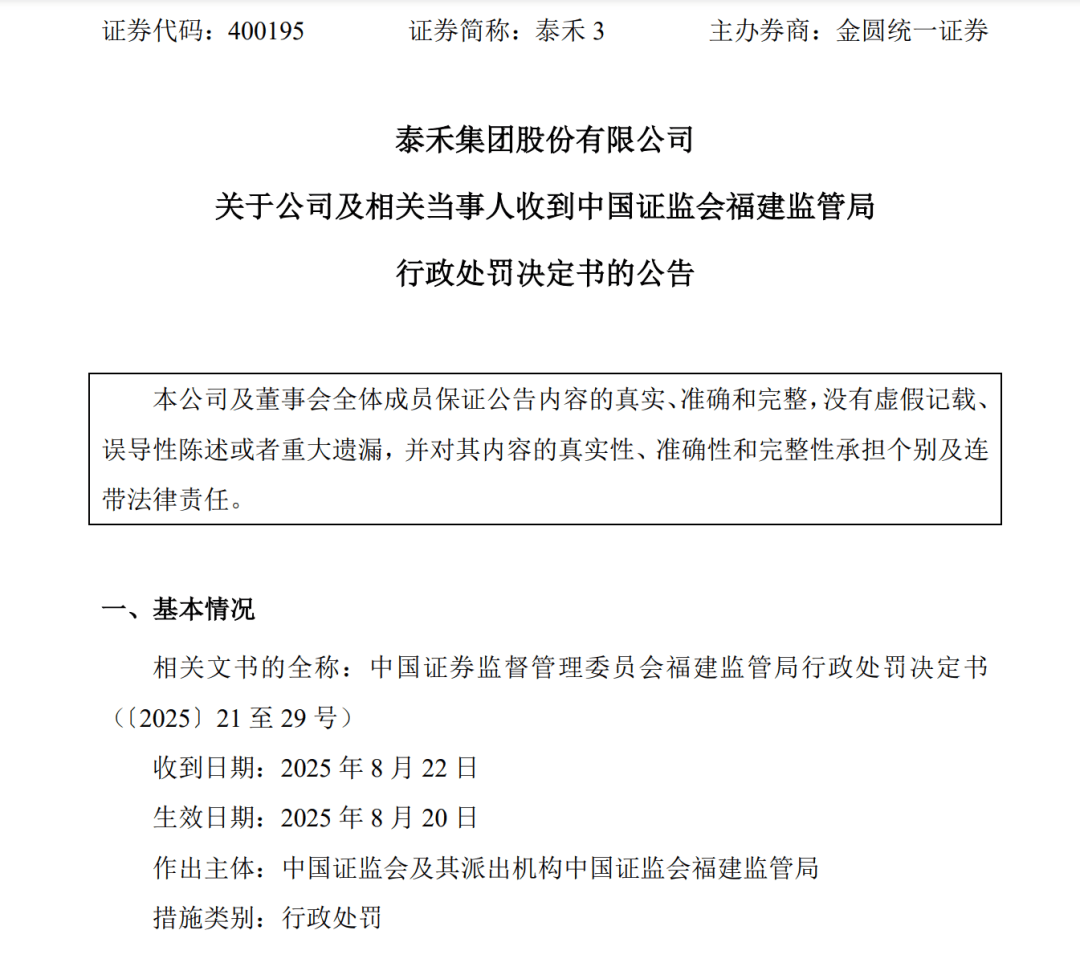
Core Viewpoint - The recent penalties imposed on Taihe Group and Huatie Co. highlight the China Securities Regulatory Commission's (CSRC) firm stance that "delisting does not exempt from liability," reinforcing that companies are accountable for illegal activities regardless of their listing status [2][9][10]. Regulatory Actions - Taihe Group received an administrative penalty from the Fujian Securities Regulatory Bureau, amounting to a total fine of 17.4 million yuan due to failure to disclose significant lawsuits and major omissions in annual reports from 2020 to 2022 [5][6]. - The company faced 13 lawsuits from July 2020 to May 2021, with a total claim amount of 9.674 billion yuan, representing 48.21% of its audited net assets for 2020 [6]. - Huatie Co. also announced receiving a notice of administrative penalty, with a proposed fine of 24.15 million yuan for new violations, including failure to disclose related party transactions and inflating inventory [8][10]. Enforcement Statistics - In 2024, the CSRC has investigated 64 delisted companies for illegal activities, with 44 companies receiving final administrative penalties totaling 1.2 billion yuan, averaging 27.31 million yuan per case [10]. - Among the penalized companies, 28 faced consequences for financial fraud, while 7 were penalized for fund occupation, and 9 for failing to disclose key matters on time [10]. Criminal and Civil Accountability - The CSRC has referred 33 delisted companies to public security for suspected information disclosure crimes, leading to criminal charges against responsible personnel in several cases [10]. - Civil compensation cases related to false statements have been accepted, with efforts to assist investors in recovering funds through various legal means [11]. Market Implications - The penalties against Taihe Group and Huatie Co. serve as a clear indication of the CSRC's rigorous regulatory approach, emphasizing that the capital market is not a lawless zone and that all illegal actions will face serious consequences [11].
退市公司连收大额罚单,“退市不免责”信号持续强化
2 1 Shi Ji Jing Ji Bao Dao· 2025-08-22 13:52
Core Viewpoint - The recent administrative penalties imposed on the delisted companies Huatie Co. and Taihe Group highlight that delisting does not equate to immunity from legal responsibilities, as regulatory actions continue to enforce accountability for past violations [1][2][3]. Summary by Sections Administrative Penalties - Huatie Co. has faced cumulative penalties amounting to 55.65 million yuan, with its actual controller, Xuan Ruiguo, receiving a fine of 9.5 million yuan and a lifetime market ban [1][5][6]. - Taihe Group was fined 6 million yuan for failing to disclose significant litigation issues, which involved 13 lawsuits [9][10]. Regulatory Mechanisms - The regulatory body is implementing a "three-punishment linkage" mechanism, combining administrative, civil, and criminal penalties to ensure comprehensive accountability for delisted companies [1][11]. - As of August 22, 2024, the China Securities Regulatory Commission (CSRC) has investigated 64 cases of delisted companies, with 44 cases resulting in penalties totaling 1.2 billion yuan [11][12]. Violations and Issues - Huatie Co. was found to have significant issues in its 2023 annual report, including false records and major omissions related to related-party transactions, which involved 1.134 billion yuan in non-operating fund transfers [7][8]. - The company also inflated its inventory and cash holdings through improper accounting practices, leading to discrepancies in its financial reports [7][8]. Investor Protection - The regulatory framework aims to protect investors' rights, ensuring that delisted companies and their responsible individuals remain liable for past misconduct [1][11]. - Civil compensation mechanisms are being enhanced, with courts accepting cases related to false statements and successful recoveries of funds in certain instances [12].
资本市场多元化退市渠道进一步畅通 今年已有5家公司宣布主动退市
Zheng Quan Ri Bao· 2025-08-11 23:23
Core Viewpoint - The number of companies voluntarily delisting from the Chinese capital market has increased significantly this year, reflecting a deeper implementation of the "delist when necessary" principle under stricter regulations [1][4][5]. Group 1: Voluntary Delisting Cases - Five companies have announced voluntary delisting as of August 10 this year, which is a notable increase compared to previous years [2][3]. - The methods of voluntary delisting include shareholder resolutions to withdraw from trading and mergers, with three companies opting for the former and two for the latter [2][3]. Group 2: Regulatory Environment - The increase in voluntary delistings is attributed to a combination of market factors, such as poor stock performance and the desire to alleviate short-term pressures [3][4]. - The regulatory framework has been strengthened, with the China Securities Regulatory Commission (CSRC) emphasizing the need for a robust delisting mechanism and investor protection [5][6]. Group 3: Delisting Indicators - A total of 30 companies have announced delisting this year, with 10 companies touching on major violations and 9 on trading-related delisting indicators [6][8]. - The delisting indicators have been refined to better identify companies that do not meet listing requirements, enhancing the overall market quality [6][7]. Group 4: Accountability Post-Delisting - The principle of "delisting does not exempt from liability" has been reinforced, ensuring that companies face consequences for past violations even after delisting [8][9]. - Regulatory bodies are committed to pursuing accountability for companies involved in financial fraud, with significant penalties and legal actions being taken against them [9].
资本市场多元化退市渠道进一步畅通
Zheng Quan Ri Bao· 2025-08-11 16:40
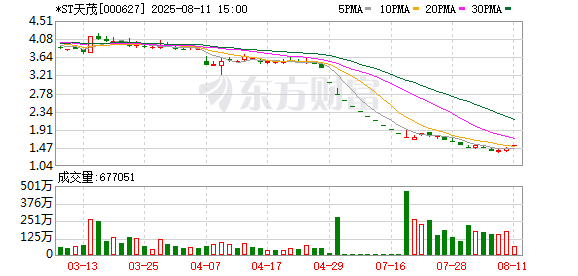
Core Viewpoint - The number of companies voluntarily delisting from the Chinese capital market has increased significantly this year, reflecting a deeper implementation of the "should delist, must delist" principle under stricter regulations [2][3][4]. Group 1: Voluntary Delisting Cases - Five companies have announced voluntary delisting as of August 10 this year, which is a notable increase compared to previous years [3]. - The methods of voluntary delisting include shareholder resolutions to withdraw from trading and mergers, with three companies opting for the former and two for the latter [3][4]. - The increase in voluntary delisting is attributed to market factors such as poor stock performance and the desire to alleviate short-term pressures [4]. Group 2: Regulatory Environment - The China Securities Regulatory Commission (CSRC) has emphasized the need to solidify and deepen the regular delisting mechanism, enhancing investor protection during the delisting process [5]. - A total of 30 companies have announced their delisting this year, with various reasons including major violations, trading-related issues, and financial irregularities [5][6]. - The regulatory framework for delisting has become more refined, with stricter standards for companies involved in financial fraud and other violations [6]. Group 3: Consequences of Delisting - Companies that delist, whether voluntarily or involuntarily, are still subject to regulatory scrutiny and potential penalties for past violations [7][9]. - For instance, *ST Tianmao is under investigation for failing to disclose financial reports on time, which could lead to further penalties even after voluntary delisting [8][9]. - The CSRC has taken a firm stance on holding companies accountable for their actions, ensuring that delisting does not exempt them from legal responsibilities [9].