人类命运共同体

Search documents
庆祝中华人民共和国成立76周年招待会在京举行 习近平发表重要讲话 李强主持 赵乐际王沪宁蔡奇丁薛祥李希韩正出席
Xin Hua She· 2025-09-30 11:34
新华社北京9月30日电 庆祝中华人民共和国成立76周年招待会30日晚在人民大会堂举行。中共中 央总书记、国家主席、中央军委主席习近平出席招待会并发表重要讲话。他强调,实现中华民族 伟大复兴是前无古人的伟大事业。憧憬和挑战,都激发我们只争朝夕、永不懈怠的奋斗精神。我 们要更加紧密地团结在党中央周围,锐意进取、埋头苦干,奋力谱写中国式现代化更加绚丽的篇 章。 李强主持招待会,赵乐际、王沪宁、蔡奇、丁薛祥、李希、韩正出席招待会。约800名中外人士欢 聚一堂,共庆中华人民共和国华诞。 人民大会堂宴会厅华灯璀璨,洋溢着喜庆热烈的节日氛围。主席台上方高悬着庄严的国徽,"1949 -2025"大字年号在鲜艳红旗映衬下格外醒目。 17时30分许,在欢快的《迎宾曲》中,习近平等党和国家领导人步入宴会厅,向大家挥手致意, 全场响起热烈掌声。 招待会开始。全场起立,高唱中华人民共和国国歌,雄壮的《义勇军进行曲》在大厅回荡。 习近平发表重要讲话。他首先代表党中央和国务院,向全国各族人民、向中国人民解放军指战员 和武警部队官兵、向各民主党派和无党派人士致以节日祝贺,向香港特别行政区同胞、澳门特别 行政区同胞、台湾同胞和海外侨胞致以诚挚 ...
联合国成立80周年:共同捍卫真正的多边主义
人民网-国际频道 原创稿· 2025-09-30 09:35
Core Points - The article emphasizes the importance of the United Nations in global governance and the need to reaffirm commitment to multilateralism and the principles of the UN Charter [1][2][3] - It highlights the challenges faced by global governance, including rising unilateralism and protectionism, and the need for reform in the global governance system [2][3] - The four global initiatives proposed by China aim to address deficits in peace, security, development, and governance, providing a systematic Chinese solution for global governance reform [4][5] Group 1 - The United Nations is recognized as a key institution for maintaining global integrity and is seen as irreplaceable in the current international order [1][2] - The UN's role as a coordinator rather than a substitute for nations is emphasized, particularly in the context of rising global challenges [2][3] - The global South is identified as an important force in the transformation of global governance, contributing to a more balanced international power structure [3][4] Group 2 - The four global initiatives proposed by China are interconnected and aim to promote modernization and reform in the global governance system for developing countries [4][5] - China's successful experience in modernization, particularly in poverty alleviation, serves as a model for other developing nations [4][5] - The initiatives also create platforms for cooperation and communication among global South countries, enhancing their influence in international affairs [5]
“2025年中孟智库论坛”在云南昆明举办
人民网-国际频道 原创稿· 2025-09-30 09:10
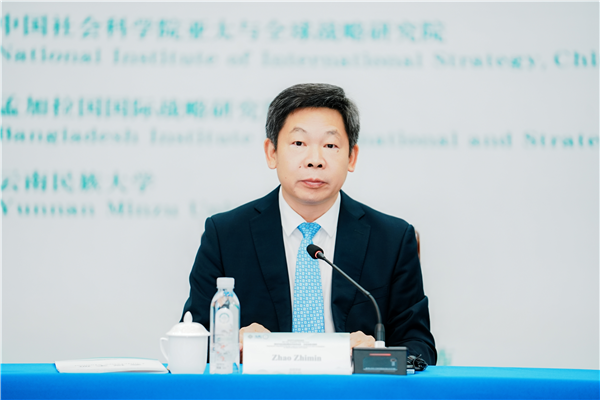
阮朝奇表示,云南与孟加拉国地缘相近、人缘相亲。云南民族大学充分发挥民族学、南亚语言学科 优势,与孟加拉国高等院校和机构建立机制化合作,助力中孟人文交流合作。未来,学校将继续发挥地 方高校优势,与孟加拉国加强教育合作,共同建设高水平学术交流平台和人才培养基地,为深化中孟全 面战略合作伙伴关系提供更坚实的学术支撑和人才保障。 来自中国、孟加拉国的专家学者参加论坛,围绕政治互信与战略合作、经济与贸易合作的扩展与创 新、人文交流与相互理解的深化等议题深入交流。 未来,中孟要坚持平等相待,筑牢政治互信基石,深化战略沟通与政策对接,携手构建开放包容的 区域架构,实践真正的多边主义,共同维护发展中国家共同利益和国际公平正义。要坚持发展导向,深 化务实合作,以共建"一带一路"为契机,继续推进产业链和供应链深度融合,共同提升在全球经济格局 中的竞争力。要以人为本,铸就民心相通,持续强化智库交流,开展多样化民间外交和学术交流活动, 增进了解与战略互信,助力全面战略合作伙伴关系迈上新台阶。 中国社会科学院秘书长赵志敏致辞。主办方供图 人民网讯 9月28日,"2025年中孟智库论坛"在云南省昆明市举办。论坛主题为"深化中孟全面战略 ...

新华全媒头条|钟华论:历史的脚步永远向前
Xin Hua She· 2025-09-30 06:56
Core Viewpoint - The articles collectively emphasize the historical significance of China's victory in the Anti-Japanese War and the World Anti-Fascist War, highlighting the nation's journey towards rejuvenation under the leadership of the Communist Party of China, and the importance of unity and resilience among the Chinese people in achieving national goals [1][2][5][20]. Group 1: Historical Context - The victory in the Anti-Japanese War marked a turning point for the Chinese nation, transitioning from a period of humiliation to one of revival and strength [2]. - The articles recount the historical struggles faced by the Chinese people, including foreign invasions and internal strife, underscoring the lessons learned about the necessity of development and unity [2][13]. Group 2: National Strength and Modernization - The recent military parades showcased advanced military equipment, symbolizing China's growing strength and capability to defend peace [3][4]. - China's modernization is portrayed as a unique path that diverges from Western models, emphasizing the importance of socialism with Chinese characteristics [10][11]. Group 3: People's Role and Unity - The articles stress that the Chinese people are the creators of history, with their collective efforts being crucial in overcoming challenges and achieving national milestones [13][14]. - The emphasis on unity and collective action is highlighted as essential for the realization of the Chinese Dream and the nation's future development [16][22]. Group 4: International Relations and Peace - China's commitment to peace and development is reiterated, with a focus on its role in global governance and multilateral cooperation [19][21]. - The articles reflect on China's historical stance of non-aggression and its contributions to international peacekeeping efforts [18][19].
古巴隆重集会庆祝古中建交65周年暨中华人民共和国成立76周年
Xin Hua She· 2025-09-30 04:58
新华社哈瓦那9月29日电(记者蒋彪)古巴共产党与古巴政府29日在首都哈瓦那革命宫举办隆重集会, 庆祝古巴和中国建交65周年暨中华人民共和国成立76周年。 古巴共产党中央第一书记、国家主席迪亚斯-卡内尔,古巴总理马雷罗等古巴党政领导人,中国驻古巴 大使华昕,多国驻古使节及各界友好人士等300余人出席活动。 迪亚斯-卡内尔在致辞中回顾了古中关系发展历程。他说,经过65年发展,古中关系已成为社会主义国 家团结合作、发展中国家真诚互助的典范。古巴感谢中国坚定支持其维护国家主权和反对封锁的斗争, 古巴坚定不移坚持一个中国原则。古中深厚友谊充分证明,大国与小国携手合作,能够开辟通向和平与 发展的有效道路。 华昕说,站在新的历史起点上,中方将与古方一道,不断深化政治互信、拓展务实合作、密切战略协 作,将继续为古巴推进能源转型、保障粮食安全、加快数字化进程、改善民生福祉贡献中国力量,推动 中古命运共同体建设不断取得新成就。 迪亚斯-卡内尔致辞说,在中国共产党的坚强领导下,中国特色社会主义建设取得伟大成就,中国发展 深刻改变国际格局。中方提出的共建"一带一路"倡议、构建人类命运共同体理念以及一系列全球倡议, 为广大发展中国家, ...
李强会见朝鲜外相
Yang Guang Wang· 2025-09-30 04:15
Core Viewpoint - The meeting between Chinese Premier Li Qiang and North Korean Foreign Minister Choe Son-hui emphasizes the commitment to deepen the friendly cooperation between China and North Korea, following the recent meeting between Xi Jinping and Kim Jong-un [1] Group 1: Bilateral Relations - Li Qiang highlighted the historical friendship and geographical proximity between China and North Korea, expressing a desire to implement the consensus reached by the top leaders of both countries [1] - The Chinese side appreciates North Korea's steadfast support on issues concerning China's core interests and major concerns, indicating a willingness to enhance collaboration to safeguard mutual interests [1] Group 2: Cooperation Initiatives - Both sides aim to strengthen strategic communication and increase interactions at all levels, focusing on practical cooperation across various fields to advance their socialist endeavors [1] - Choe Son-hui expressed North Korea's support for the concept of a community with a shared future for mankind and the four global initiatives, indicating a mutual interest in deepening cooperation [1]
中国企业跨国经营向新而行
Ren Min Ri Bao Hai Wai Ban· 2025-09-30 03:40
Core Insights - Multinational operations are essential for large enterprises to engage in international competition and become world-class companies, especially under the challenges posed by the complex external environment and economic globalization since the "14th Five-Year Plan" [1] Group 1: Scale and Growth - The threshold for entering the top 100 Chinese multinational companies has increased from 10.939 billion to 22.173 billion, more than doubling since the "14th Five-Year Plan" [1] - Overseas operating revenue has grown from 6.15 trillion to 9.07 trillion, indicating a significant enhancement in market expansion capabilities [1] Group 2: Structural Optimization - The rise of new enterprises, represented by the "new three types," has expanded the breadth and depth of multinational development, with 15 companies in advanced manufacturing sectors like automotive and renewable energy joining the top 100 by 2025, an increase of 3 from the end of the "13th Five-Year Plan" [2] - The number of companies in modern service industries, such as internet services and logistics, has increased to 6, up by 5 from the end of the "13th Five-Year Plan" [2] Group 3: Business Models - Large enterprises are leveraging their hub and platform advantages to drive cluster development across the entire industry and supply chain, establishing both physical "Chinese industrial parks" and digital "industrial parks" [2] - The integration of "artificial intelligence+" is enhancing the supply chain service system, supporting the robust growth of cross-border e-commerce and facilitating the upgrade from "Made in China" to "Chinese brands" [2] Group 4: Technological and Standardization Advancements - The number of invention patents held by the top 100 Chinese multinational companies has increased from 473,000 to 763,000, a growth of approximately 61%, while participation in standard-setting has risen from 53,000 to 62,000, a growth of about 17% [3] - Leading companies in information technology services are transitioning from participants to enablers and shapers in international digital ecological governance by exporting mature business models and technical standards [3] Group 5: Contributions and Responsibilities - Large enterprises are committed to the principle of "consultation, construction, and sharing," actively taking on social responsibilities and pursuing global win-win outcomes, thereby creating jobs and improving livelihoods in host countries [3] - The process of international cooperation is being strengthened through "hard connectivity," "soft connectivity," and "heart connectivity," contributing to the construction of a community with a shared future for mankind [3] Group 6: Future Directions - Large enterprises face multiple tasks, including expanding the breadth of "going out," deepening "going in," and enhancing "going up" in international competition [4] - Key strategies include strengthening core technology development, resource integration, participation in global rule-making, and deepening localization efforts to respect local cultures and laws [4]
《世界记忆 和平愿景——城市记忆下的和平发展之路》展览在雅典开幕
人民网-国际频道 原创稿· 2025-09-30 03:01
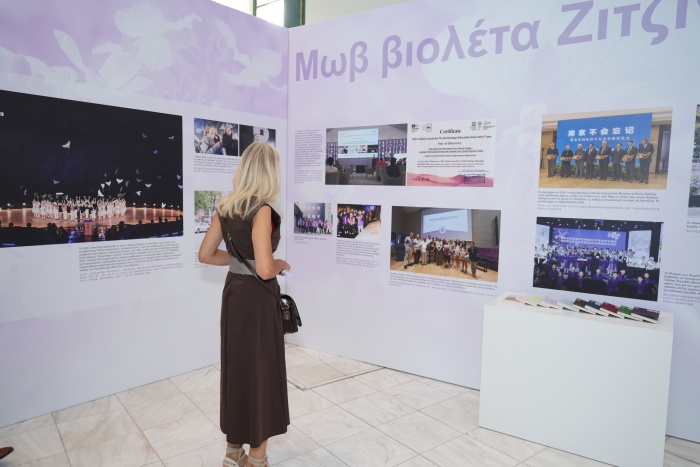
Core Viewpoint - The exhibition "World Memory and Peace Vision - The Path of Peaceful Development Under Urban Memory" opened in Athens, Greece, showcasing the historical journey of Nanjing as China's first international peace city and its transformation from trauma to rebirth [1][2]. Group 1: Exhibition Overview - The exhibition is co-hosted by the Chinese State Council Information Office, the National Cultural Heritage Administration of China, and the Chinese Embassy in Greece, with support from various cultural associations [1][2]. - It features over 170 historical images, 40 physical exhibits, and interactive installations, emphasizing the themes of history, civilization, and peace [2]. Group 2: Significance and Impact - The exhibition marks the first time the Nanjing Massacre Memorial Hall has held an exhibition in Greece, fostering cultural exchange between Nanjing and Athens [2]. - Chinese Ambassador Fang Qiu highlighted the exhibition as a dialogue between two ancient civilizations, aiming to promote a correct view of World War II history and enhance global governance [2]. Group 3: Historical Context - The Nanjing Massacre was recognized by UNESCO as part of the "Memory of the World Register" in October 2015, establishing its significance in global memory [3]. - The Nanjing Massacre Memorial Hall has previously held exhibitions in various international cities, including Los Angeles, Moscow, and Florence, indicating a broader effort to raise awareness of this historical event [3].
中国驻福冈总领馆举行庆祝中华人民共和国成立76周年招待会
人民网-国际频道 原创稿· 2025-09-29 02:32
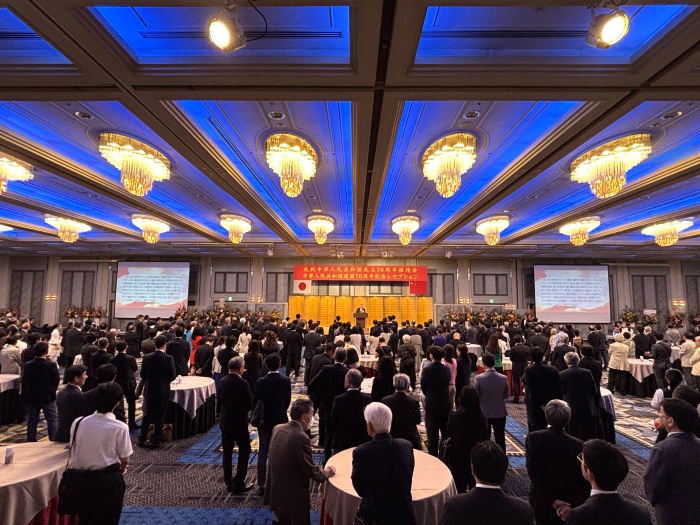
人民网东京9月29日电(许可)9月26日,中国驻福冈总领馆隆重举行庆祝中华人民共和国成立76周年招待会。中国驻福冈总领事杨庆东,日本熊本县知 事木村敬、福冈县副知事大曲昭惠、佐贺县议会议长宫原真一、佐贺县副知事引马诚也、山口县议会日中友好促进议员联盟会长守田宗治、冲绳华侨华人总 会会长东江芝军出席并致辞。 与会嘉宾积极评价双方各领域交流合作成果,表示将传承地方友好关系,持续深化务实合作,让友谊之花结出更多硕果。来宾们热烈祝贺新中国76周年 华诞,盛赞中国发展成就,纷纷表示将继续以实际行动推动中日友好和交流合作。 中国传统民乐合奏。人民网 许可摄 与会嘉宾亲切交流。中国驻福冈总领馆供图 日本自民党原副总裁山崎拓、国会参议员古贺之士、福冈县日中友好议员联盟会长长裕海、熊本市市长大西一史、福冈市副市长中村英一、福冈县日中 友协会长森山沾一、经产省九州经济产业局局长星野光明、福冈商工会议所会长谷川浩道、福冈大连未来委员会委员长土屋直知等领区政界、商界、学界、 媒体、友好团体、各国驻福冈领事机构以及华侨华人、中资机构、留学生代表等约500人出席。中国驻福冈总领馆领区地方政府、议会负责人、金融机构代 表以及国会议员发来贺 ...
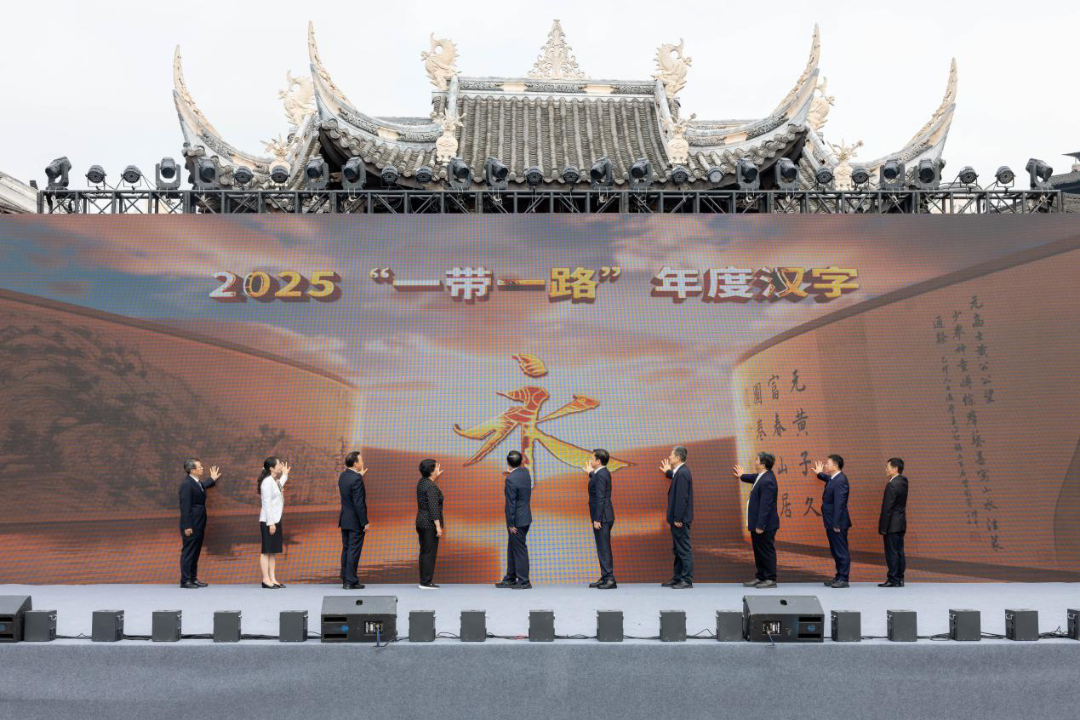
中国公共关系协会:“永”字当选2025“一带一路”年度汉字
Zhong Guo Jing Ji Wang· 2025-09-29 00:56
记者从中国公共关系协会获悉,9月28日,2025"一带一路"年度汉字发布活动在重庆市永川区松溉古镇举行。本次活动由中国公共关系协会和重庆市永川区 人民政府共同主办,以"海纳百川共襄文明"为主题,旨在通过汉字这一文化纽带,让世界感受到中国汉字所蕴含的强大精神力量,推动各国在文明交流中互 学互鉴、互促互进。经过专家推荐和网络投票,"永"字在前期发布的9个候选汉字中脱颖而出,当选2025"一带一路"年度汉字。 中国公共关系协会会长郭卫民在致辞中表示,汉字是跨文化交流的重要桥梁,也是做好国际传播的一个切入点。本次活动以汉字这一独特的文化符号为载 体,进一步探讨弘扬中华文化,增强中华文明传播力,促进共建"一带一路"国家的人文交流和文明互鉴。 来自中国、俄罗斯、乌兹别克斯坦、印度尼西亚等国家的青年代表齐聚一堂,以汉字为媒,展开文化交流。发布活动在永川特色的歌舞表演中拉开帷幕,现 场通过视频展映、书画创作、茶文化分享和数字文房展示等多元形式,生动呈现了"一带一路"倡议的文化内涵与永川本地的文旅资源。活动现场播放了《青 年眼中的2025"一带一路"年度汉字》视频,凸显出"一带一路"共建国家的青年对汉字文化与丝路精神的理解与共 ...