农业机械化

Search documents
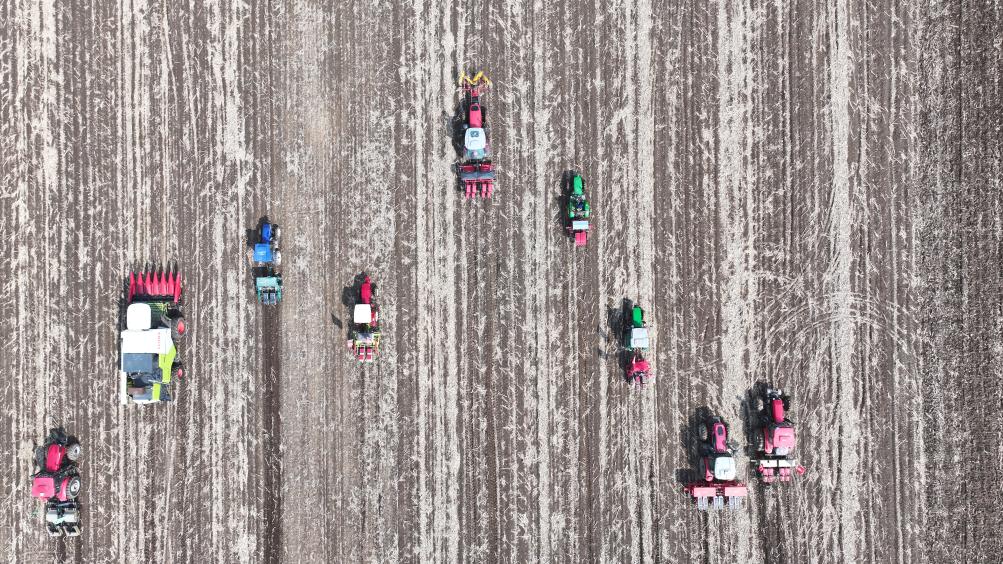
全国夏粮抢收进行时 1700万台套农机具战“三夏”
Yang Shi Xin Wen Ke Hu Duan· 2025-05-26 23:59
眼下,我国冬小麦由南向北日渐成熟,大规模机收全面展开。 农业农村部小麦机收进度显示,截至昨天17点,各地已收夏粮小麦7005万亩,日机收面积连续3天超过 400万亩。 今年"三夏",全国将投入各类农机具超1700万台套,压茬推进夏收、夏种和夏管机械化作业。其中联合 收割机80多万台、参与跨区作业的超20万台,能够满足夏收正常作业需求。9—10公斤/秒大喂入量联合 收割机已成为跨区作业主流机型,配备北斗定位、作业监测等功能的智能化联合收割机更多投入生产一 线。 目前,麦收重点省份已设立跨区作业接待服务站3400多个,在高速公路收费站开通农机绿色通道4800多 个,组织设立农机优先优惠加油通道5800多个。 农业农村部小麦机收进度显示,目前,全国麦收进度已过两成, 其中西南地区及湖北麦收进入尾声,河南进度过三成,安徽、江苏等地已开收。 在安徽六安霍邱县,随着联合收割机驶入黄云覆陇的田野,安徽全省4300多万亩小麦迎来收获高峰期。 安徽省霍邱县城西湖乡种粮大户 李培根:我们今年种了2000多亩小麦,今年收成要比去年好,每亩地 多100多斤,我们一亩地能达到1100多斤。 今年的丰收来之不易,从4月份开始麦区连续高温 ...

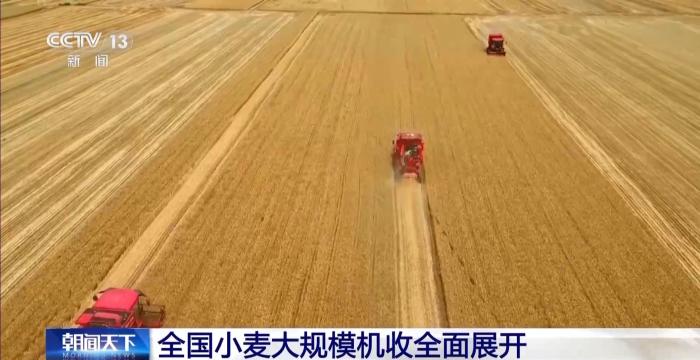
西南麦区、长江中下游麦区陆续开镰收获
Yang Guang Wang· 2025-05-17 00:17
Group 1 - The summer grain harvest, particularly winter wheat, is entering a critical yield formation period, with regions like Southwest and the middle and lower reaches of the Yangtze River starting to harvest [1] - In Sichuan, the use of improved agricultural machinery has increased wheat harvesting efficiency by 40%, allowing for the completion of harvesting 1,200 acres in about 6 days with 4 machines [1] - The integration of high-standard farmland construction and a dual insurance mechanism of "market guarantee + contract farming" in Dazhou, Sichuan, is contributing to a steady increase in wheat yield [1] Group 2 - In Chongqing, full mechanization of wheat harvesting has increased efficiency from 2 acres per day by hand to 30-40 acres with machines, with a 20% increase in wheat yield due to new cultivation techniques [2] - In Hubei, 5.36 million acres of wheat are being harvested, with nearly 40,000 sets of machinery organized for integrated harvesting and processing [2] - The introduction of new harvesting machines in Hubei has resulted in a low loss rate of 1-2% during the harvesting process [3] Group 3 - Over 7,000 cross-regional harvesting machines from provinces like Shaanxi, Anhui, and Hebei have been deployed in Xiangyang, with the establishment of 22 reception stations for machine operators [3] - The reception stations provide essential services such as fueling and sanitation, creating a supportive environment for the harvesting teams [3]
在北京西瓜大棚拍短视频,巴西农村发展部长记录中国经验
Xin Jing Bao· 2025-05-15 05:42
Group 1 - Brazilian Minister of Rural Development and Family Agriculture, Paulo Teixeira, is visiting China to study agricultural modernization practices that can benefit Brazil's 5 million small farmers [1][2] - Teixeira emphasizes the importance of China's experience in combating hunger and poverty, which can serve as a model for Brazil [1][2] - The collaboration between China and Brazil in agricultural machinery and technology is expected to enhance the productivity and income of Brazilian farmers [2][3] Group 2 - The establishment of "Technology Small Courtyards" in Brazil, in partnership with Chinese agricultural universities and companies, aims to create innovative platforms for family agriculture development [2][3] - Teixeira highlights the low level of agricultural mechanization among Brazilian small farmers and the need for diverse agricultural machinery to meet regional demands [3][4] - The cooperation between China and Brazil is seen as beneficial not only for their own agricultural sectors but also as a model for other Latin American countries [3][4] Group 3 - Teixeira expresses a strong interest in learning from China's cooperative farming models to modernize Brazilian smallholder agriculture [4][6] - The use of advanced technologies such as automated irrigation systems and monitoring robots in Chinese cooperatives is noted as a significant advancement that could be adopted in Brazil [6] - The potential for future collaboration in agricultural cooperatives is emphasized, with the aim of creating new opportunities and ideas for Brazilian farmers [6]
新疆农业向“新”发展
Ke Ji Ri Bao· 2025-05-12 01:18
原标题:新疆农业向"新"发展 "滴滴——"伴随清脆的响声,位于新疆昌吉国家农高区的慧尔智慧农场,电动球阀瞬间启动。操作 员只需通过手机,就能远程进行灌溉作业;百公里之外的加工番茄种植基地,一株株番茄苗在传动链上 循环转动,在接近地面时,被强劲有力的机械臂抓取移栽进田地。 这样的智慧春耕图景,如今在新疆的广袤农田已成常态。近年来,新疆持续提升农业机械化水平, 棉花的耕种收综合机械化率达97%,加工番茄的耕种收综合机械化率则超过98%。在数字化技术带动 下,智慧农田在新疆遍地开花,这里的智能水肥一体化技术达到显著的节水增产效果。 眼下,新疆天山南北的棉花春播已基本结束,棉苗破土而出,正在拔节生长。 尉犁县是全国重要的高品质细绒棉和优质长绒棉产区之一。今年以来,该县大力推进高标准农田建 设,将原本零散、凹凸不平的"小田"变成连片、规整的"大田",为机械化播种提供有利条件。 该创新基地占地约1.2万亩,通过建设以农业大数据、集成数控监测技术为基础的智慧化农场,实 现高速精量播种、变量施药、精准施肥及高效灌溉,使棉花单产提升10%以上。 在智慧脑、机械臂的加持下,春耕时节的天山南北沃野千里,一幅幅丰收画卷正在缓缓铺开。 ...
新疆:机械化助力辣椒高效、精准种植
Zhong Guo Xin Wen Wang· 2025-05-08 05:31
新疆焉耆县辣椒实现机械化种植。罗志伟 摄 农业机械的广泛应用,极大提升农业生产效率,减轻劳动强度,减少人工投入,进而降低劳动力成本, 提高农业生产经济效益,也让苏小军看到农业机械化发展的广阔前景。 中新网乌鲁木齐5月7日电 (舍小军 赛买提·艾则孜 马悦)截至目前,新疆焉耆县14.5万亩色素辣椒苗移栽 工作已全部结束。借助全自动移栽机等现代农业机械,辣椒产业迈入高效、精准种植新阶段,为今年丰 产丰收打下坚实基础。 近日,在焉耆县五号渠乡上五号渠村的辣椒种植地,数台全自动辣椒移栽机列队行进。这些机械通过精 准定位,实现取苗、投苗、栽植、覆土等工序一体化作业,秧苗间距误差不超过2厘米。每台机械日均 移栽面积可达15亩,较传统人工效率提升10倍以上。 苏小明种植辣椒等农作物多年,积累了丰富的种植经验。"我今年种了600亩地辣子,十台移苗机一个礼 拜就栽种完。" 农业机械的广泛应用,极大提升农业生产效率。蒋玲 摄 2023年,苏小军和亲戚朋友共同成立合作社,并购买拖拉机、移栽机、采收机等机械设备,承接各类农 田作业,仅两年多时间,就发展成为拥有110多台机械设备的农机专业合作社。"2025年,我们移栽机增 加到80多 ...

无人机追肥、机器人巡检……慧”耕“慧”种勾画希望田野丰收图景
Yang Shi Wang· 2025-05-06 09:45
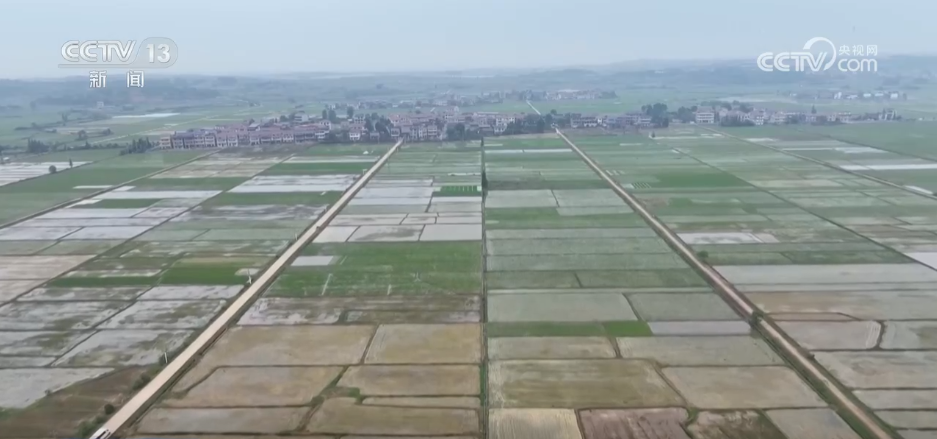
央视网消息:5月5日迎来立夏时节。立夏之后,气温升高,雨水明显增多,春天里播下的作物种子在此时节也相继出苗。农业农村部农情 调度显示,眼下全国春播进入高峰,目前东北地区已春播粮食近1亿亩,完成超两成。而夏季粮油的主要作物冬小麦目前进入灌浆期,夏粮进 入产量形成关键期。长江上中游冬油菜现在已经大面积收获。今年,全国冬油菜面积稳中有增,达1.1亿亩,丰收在望。 江西新余:早稻田管忙 无人机追肥保稳产 近日,江西新余市的53万多亩早稻栽插任务已结束,种植户和各基地正展开首轮田管作业,包括追肥、虫情监测等,确保5月上旬完成首 轮田间管理。 在新余市渝水区南安乡,种粮大户龚凌保通过农机服务平台调度了3台无人机,为自家的1300多亩水稻追肥。 接单的无人机操作员龚鑫是"00后"的新农人,今年7月他即将大学毕业。在校期间,龚鑫学的是计算机应用技术专业,课余时间他自学了 农业知识,参加了无人机操作员培训。大学最后一个学期,他来到南安乡的农机合作社实习,并决定扎根农村。南安乡是新余市的粮食主产区 之一,土地肥沃、灌溉便利。当地整合无人机等农机资源,形成联动机制,为水稻田间管理提供高效的机械化作业条件。 今年,新余市的早稻种植面 ...

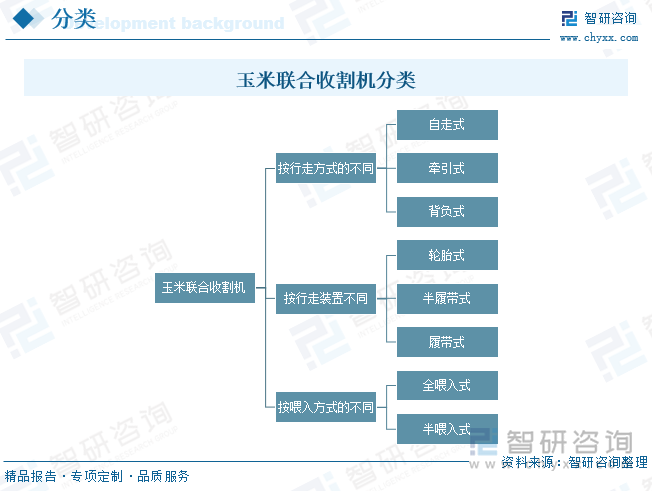
研判2025!中国玉米联合收割机行业政策汇总、产业链图谱、市场销量及发展趋势分析:报废更新补贴政策出台,进一步推动玉米联合收割机销量增长[图]
Chan Ye Xin Xi Wang· 2025-05-06 01:26
Core Viewpoint - The agricultural mechanization in China is being actively promoted to address labor shortages and rising costs in agriculture, with a significant focus on corn combine harvesters, supported by government subsidies and increasing demand from farmers for efficient machinery [1][14]. Group 1: Industry Overview - Corn combine harvesters are essential agricultural machinery that significantly enhance production efficiency and reduce labor intensity by performing multiple harvesting tasks in one go [3]. - The industry is experiencing a rise in sales, with 2024 projected sales of corn combine harvesters reaching 50,900 units, a year-on-year increase of 9.94% [1][14]. - The government has introduced various subsidy policies to encourage the purchase of new, efficient agricultural machinery, including specific subsidies for corn combine harvesters [5][6]. Group 2: Policy Support - In September 2024, the Ministry of Agriculture and Rural Affairs announced subsidy amounts for scrapping old corn combine harvesters, with maximum amounts of 10,800 yuan for 2-row models, 18,750 yuan for 3-row models, and 30,000 yuan for 4-row and above models [1][14]. - Policies are being implemented to enhance the agricultural machinery subsidy standards, with a focus on promoting the replacement of old machinery with new, efficient models [5][6]. Group 3: Market Dynamics - The corn planting area in China is expanding, with 2024 projected to reach 44,740.7 thousand hectares, a year-on-year increase of 1.18%, driven by government incentives and innovative planting methods [12][14]. - The competition in the corn combine harvester market is intensifying, with leading companies like Weichai Lovol and others increasing their market share while new entrants emerge [16][18]. Group 4: Industry Trends - The corn combine harvester industry is moving towards increased automation and intelligence, utilizing advanced technologies for autonomous navigation and operation adjustments based on various factors [22]. - There is a growing emphasis on green and sustainable development, with policies encouraging the elimination of high-energy-consuming machinery and promoting low-carbon, energy-efficient agricultural equipment [23][24]. - International cooperation and market expansion are becoming more prevalent, with domestic companies seeking to enhance competitiveness through technology and management experience from abroad [25].

科技深耕黑土地——辽宁春忙一线见闻
Xin Hua Wang· 2025-05-04 21:52
Core Viewpoint - The article highlights the advancements in agricultural technology in Liaoning, China, particularly in the spring farming season, showcasing how modern machinery and digital management are significantly improving efficiency and productivity in crop cultivation [1][2]. Group 1: Agricultural Technology Advancements - The corn planting speed in Liaoning has doubled compared to previous years, with new techniques being implemented in collaboration with Heilongjiang Northern Great Land Agricultural Co., Ltd. [2] - The demonstration area in the region has achieved a corn yield of 2,350 jin per mu in 2024, representing a 25% increase in production [2]. - The overall mechanization rate of agricultural operations in Liaoning has surpassed 80%, with a continuous increase in agricultural machinery [2]. Group 2: Smart Farming Practices - A high-throughput plant phenotyping analysis platform has been introduced, allowing for automated and high-precision data collection throughout the entire growth cycle of rice [2][5]. - In Panjin City, a smart monitoring system has been implemented in high-standard farmland projects, enabling real-time monitoring of temperature, moisture, light, and pest conditions [4]. - The labor requirement for managing 1,000 mu of rice fields has decreased from 8 to 2 people due to the adoption of advanced machinery and smart systems [4].