
壳资源

Search documents
A股投资者十年变迁:股民“炒消息”热情不再
第一财经· 2025-08-25 10:20
Core Viewpoint - The article discusses the evolution of the A-share market over the past decade, highlighting the significant changes in investor behavior, market structure, and the rise of institutional investors, which have led to a more mature and rational investment environment [3][4][5]. Investor Behavior Changes - The number of A-share investors has increased from 100 million to 240 million over the past ten years, indicating a shift in investor demographics and preferences [3][7]. - Investors are moving from speculative trading to long-term value investing, with a preference for blue-chip and dividend stocks, reflecting a more mature investment mindset [4][6]. - The investment logic has evolved due to regulatory changes and market dynamics, with a focus on emerging growth industries rather than traditional sectors [3][5]. Market Structure and Institutional Influence - The A-share market has seen a rise in institutional investors, with their share of the market increasing significantly. As of early 2025, general institutions hold 46.54% of the market, while professional institutions hold 18.46% [7][8]. - The emergence of public funds, insurance, and private equity has diversified the investment landscape, leading to a more structured and competitive market environment [6][8]. - The transparency of the market has improved, reducing the prevalence of insider trading and fostering a more rational investment approach among retail investors [6][8]. Sectoral Shifts - The article notes a shift in sectoral focus, with emerging industries such as semiconductors and artificial intelligence gaining prominence, while traditional sectors have seen a decline in investor interest [5][6]. - The top ten industry indices by trading volume in 2025 include semiconductors, software development, and IT services, contrasting with the focus on real estate and traditional manufacturing a decade ago [5][6]. Foreign Investment Trends - Foreign investment in A-shares has increased, with foreign holdings rising from 0.65 trillion yuan (1.66%) in 2016 to 2.97 trillion yuan (3.76%) by early 2025, driven by market opening initiatives [8]. - The growth of foreign investment reflects the increasing integration of the A-share market into the global financial system, influenced by policies such as the launch of the Stock Connect programs [8].


A股投资者十年变迁:股民“炒消息”热情不再 机构继续壮大
Di Yi Cai Jing· 2025-08-25 09:52
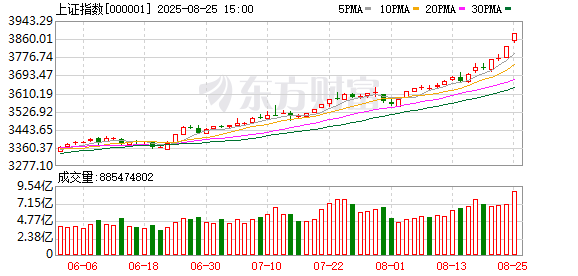
Market Overview - The trading volume of the two markets exceeded 3 trillion yuan, setting a new high for the year as of August 25 [2] - The Shanghai Composite Index has reached 3,800 points for the first time in ten years, and the total market capitalization of A-shares has surpassed 10 trillion yuan, indicating a sustained increase in market sentiment [2] Investor Behavior Changes - The number of A-share investors has increased from 100 million to 240 million over the past decade, with a shift in investor structure towards institutional investors [2][6] - Investors are moving from speculative trading to long-term value investing, with a preference for high-quality and dividend-paying stocks [3][5] - The investment logic of retail investors has evolved due to regulatory changes and increased transparency, leading to more rational investment decisions [2][5] Industry Trends - Ten years ago, popular investment concepts included mergers and acquisitions, shell resources, and small-cap stocks, while today, emerging growth sectors like semiconductors and artificial intelligence are gaining traction [4] - The top ten industry indices by trading volume in 2025 include semiconductors, software development, and IT services, reflecting a shift towards technology-driven sectors [4] Institutional Investor Growth - The proportion of professional institutional investors has increased significantly, with general institutions holding 46.54% and professional institutions holding 18.46% of the market as of early 2025 [6] - Foreign investment in A-shares has also risen, with foreign holdings increasing from 0.65 trillion yuan (1.66%) in 2016 to 2.97 trillion yuan (3.76%) by early 2025 [7] - The rise of public funds, private equity, and foreign institutions has influenced trading styles and market dynamics, leading to a more complex investment landscape [7]
一个00后,接管400亿
Xin Lang Cai Jing· 2025-08-13 03:50
Group 1 - The core point of the article is the nomination of Chen Hanlun as a non-independent director candidate for ST Songfa, a company with a market value exceeding 40 billion yuan, indicating a significant shift in governance and strategy under the control of Hengli Group [2][3] - ST Songfa's board of directors plans to conduct an early election due to major changes in the company's business, controlling shareholder, and ownership structure following significant asset swaps [3][10] - The nomination of Chen Hanlun, son of Hengli Group's chairman Chen Jianhua, suggests a generational transition in leadership and a strategic move to solidify Hengli's influence over ST Songfa [2][12] Group 2 - Hengli Group acquired a 29.91% stake in ST Songfa for 820 million yuan in 2018, becoming the controlling shareholder, and has since transformed the company from a ceramics manufacturer to a shipbuilding and high-end equipment manufacturer [2][8] - The company plans to divest its ceramic and education assets for 5.13 billion yuan and acquire Hengli Heavy Industry for 8.006 billion yuan, marking a significant shift in its business focus [10][12] - ST Songfa's market value has surged from a low of approximately 1.5 billion yuan to over 40 billion yuan, reflecting the successful execution of Hengli's strategic vision [12][14] Group 3 - Chen Jianhua's journey from a struggling entrepreneur to the chairman of a global manufacturing giant illustrates the potential for significant growth through strategic investments and market positioning [4][6] - Hengli Group has established a comprehensive industrial chain, integrating various sectors from petrochemicals to textiles and now shipbuilding, showcasing its diversified business model [6][8] - The article highlights the advantages of reverse mergers as a strategy for companies to enter the capital market quickly and efficiently, particularly in cyclical industries [13][14]

菲林格尔停牌核查背后:五连板狂欢与治理迷局
Xin Lang Zheng Quan· 2025-06-12 05:28
Core Viewpoint - The stock of Filinger (603226.SH) has experienced significant volatility, with a sharp increase since May 30, 2025, leading to a suspension for investigation due to a severe deviation from its fundamentals [1][2]. Stock Price Fluctuation and Suspension Investigation - From May 30 to June 9, 2025, Filinger's stock price surged by over 60% in just five trading days, reaching a new high since November 2019 [2]. - The company's fundamentals have deteriorated, with a 14.86% decline in revenue for 2024 and a net loss of 37.31 million yuan; Q1 2025 saw a further 33.9% revenue drop and an increase in losses [2]. - Filinger has repeatedly stated that its stock price is severely misaligned with its fundamentals and confirmed the absence of undisclosed major positive news [2]. Controversy and Uncertainty in Control Change - The stock price movement is primarily driven by the planned share transfer by the actual controller, Ding Furu, to Anji Yike Technology and its controller, Jin Yawei, who aims to acquire 25% voting rights [3]. - The transaction faces multiple risks, including incomplete approval processes and the involvement of pledged shares, with Ding and his associates having a pledge ratio of 21.09% [3]. - Concerns have been raised regarding Jin Yawei's disclosed background, which contains time discrepancies, further fueling doubts about the transaction's authenticity [3]. Internal Governance Crisis and Performance Challenges - Filinger has long-standing governance issues, with Chairman Jürgen Vöhringer refusing to endorse the authenticity of annual reports for two consecutive years, alleging that Ding Furu misappropriated over 320 million yuan through related-party transactions without proper disclosure [4]. - These internal control deficiencies have led to criticism from the exchange and eroded investor confidence, compounded by the downturn in the real estate sector affecting demand for the company's flooring and custom home products [4]. Market Speculation and Regulatory Dynamics - The phenomenon of "premature stock price movement" is concerning, as the stock began to rise suspiciously before the control change announcement on May 30, raising questions about insider information leaks [5]. - Following the resumption of trading, the stock continued to rise irrationally, indicating speculative trading based on "shell resources" and "restructuring expectations" [5]. - Regulatory bodies have intervened through a "suspension warning" mechanism to curb irrational market behavior, although this approach presents challenges in balancing market stability and investor trading rights [5]. Future Outlook and Risk Awareness - The timing of Filinger's resumption of trading and subsequent performance will depend on the investigation results and the progress of the control change [6]. - If the transaction fails to receive approval, the stock may face significant corrections; even if completed, the new controller will need to address governance restoration and business transformation challenges [6]. - Investors should be aware of three key risks: high uncertainty surrounding the control change, valuation bubbles amid ongoing losses, and tightening regulatory policies potentially leading to a decline in speculative trading [6].

A股并购重组呈现三大新趋势
Zhong Guo Zheng Quan Bao· 2025-06-03 23:09
Group 1 - A total of 121 listed companies have disclosed significant restructuring events as of May 26 this year, significantly higher than the 45 companies during the same period last year [1] - The recent trend in A-share mergers and acquisitions (M&A) shows three main characteristics: industrial integration becoming mainstream, the value of "shell" resources further diminishing, and technology-driven central state-owned enterprises taking the lead in M&A [1] - The restructuring activities are primarily focused on core businesses and industrial cooperation, with horizontal integration, vertical integration, and strategic cooperation accounting for over 50% of the significant restructuring events [1] Group 2 - The proportion of A-share companies engaging in industrial mergers has been increasing year by year since 2021, indicating a shift towards industry-led M&A activities [2] - Analysts suggest that the current environment is favorable for industrial capital mergers, driven by changes in IPO policies, tightening financing conditions in the primary market, and the accumulation of cash reserves by quality listed companies [2] - The experience gained from the M&A boom between 2013 and 2015 and the subsequent goodwill impairment has led to more cautious and strategic approaches to external mergers by industrial capital [2] Group 3 - The logic of value reshaping, market integration, and industrial chain collaboration is expected to strengthen in the future, with traditional companies likely to acquire "hard tech" firms that do not yet meet listing conditions for business transformation [3] - Mature companies are anticipated to engage more in horizontal mergers to expand market share and gain industry influence, while technology firms will seek to acquire startups in cutting-edge fields for explosive growth opportunities [3] - License-based companies are expected to implement more mergers and integrations to enhance competitiveness in the industry, such as in the brokerage sector [3]