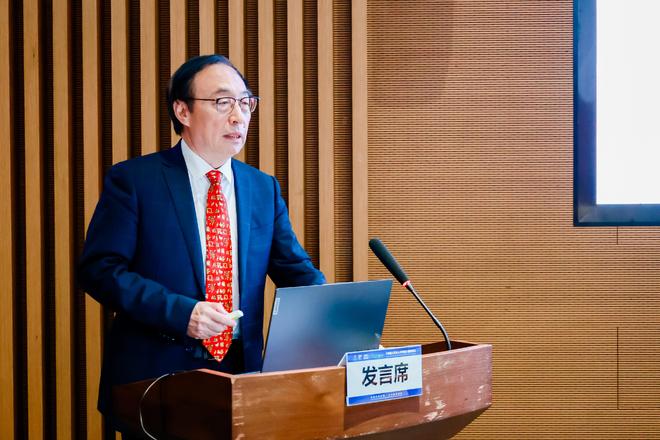
扩大高水平对外开放

Search documents
汇丰协助财政部发行40亿美元主权债
Xin Hua Cai Jing· 2025-11-06 06:53
Core Points - The Ministry of Finance successfully issued $4 billion in sovereign bonds in Hong Kong, consisting of $2 billion with a 3.646% interest rate for 3 years and $2 billion with a 3.787% interest rate for 5 years [1] - The issuance reflects strong international investor confidence in China's economic growth potential, as highlighted by recent policy signals promoting high-level openness and trade innovation [1] - This marks the first issuance of U.S. dollar bonds in Hong Kong since 2021, demonstrating the central government's support for Hong Kong as an international financial center and enhancing the depth and breadth of its bond market [1] Company and Industry Insights - HSBC acted as a joint lead underwriter and bookrunner for the bond issuance, indicating its active role in facilitating sovereign bond offerings since 2009 [2] - The issuance aligns with the goals outlined in Hong Kong's "Fixed Income and Currency Market Development Roadmap," which aims to promote the city's advantages to target markets [1] - HSBC's ongoing commitment to supporting the interconnectedness of domestic and international financial markets is emphasized, showcasing its strategic position in global finance [2]

上海:持续优化营商环境,助力外资企业扎根中国
Xin Hua She· 2025-11-06 00:24
Core Viewpoint - Foreign enterprises are increasingly investing in China, reflecting their confidence in the Chinese market as it evolves into a global innovation hub and a deepened supply chain [1] Group 1: Foreign Investment in China - The 20th Central Committee of the Communist Party of China emphasizes expanding high-level opening-up and creating a win-win cooperation scenario [1] - Foreign companies operating in China are benefiting from the country's economic transformation and improved business environment [1] Group 2: Business Environment - The continuous optimization of the business environment in China is instilling confidence in foreign enterprises [1] - The actions of foreign companies in China demonstrate their trust in the market and commitment to long-term investment [1]
四中全会精神在基层|上海:持续优化营商环境,助力外资企业扎根中国
Xin Hua Wang· 2025-11-05 14:01
Core Insights - The article emphasizes the growing trust of foreign enterprises in the Chinese market, as evidenced by their deepening supply chains and innovation centers in China [1] - It highlights the Chinese government's commitment to expanding high-level opening-up and creating a win-win cooperation scenario, as stated in the 20th Central Committee's Fourth Plenary Session [1] Group 1 - Foreign enterprises are benefiting from China's economic transformation and the continuously optimized business environment [1] - The article explores how foreign investment in China reflects confidence in the market and contributes to mutual growth [1]

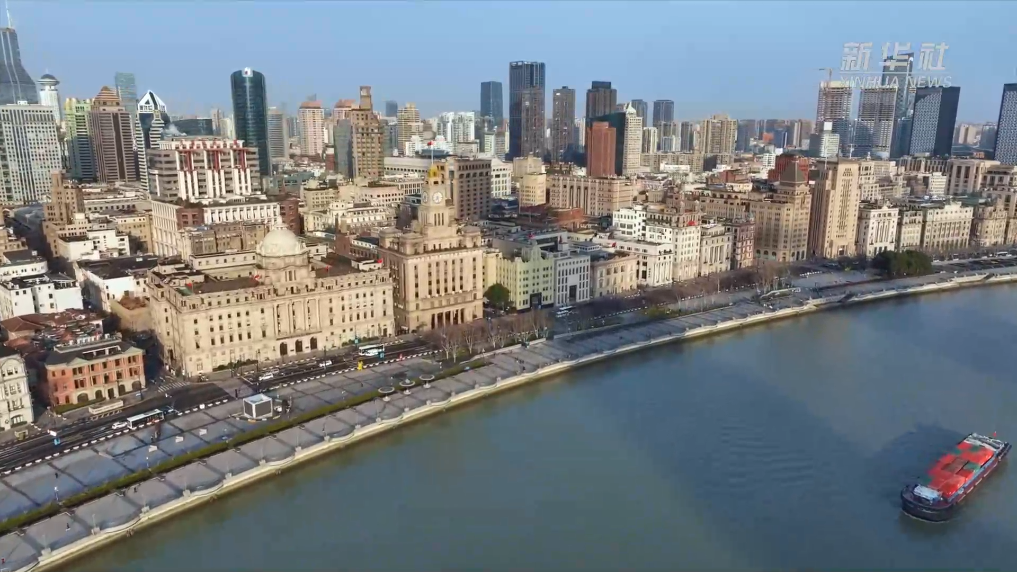
一财社论:“与天下同利”成为进博会基因
Di Yi Cai Jing· 2025-11-05 13:16
Core Insights - The 8th China International Import Expo (CIIE) opened on November 5 in Shanghai, marking China's first major economic diplomatic event after the 20th National Congress, emphasizing China's commitment to open cooperation and mutual benefit [1][2][7] - Premier Li Qiang highlighted the importance of the CIIE's success due to the principle of "shared benefits with the world" [1][2] Exhibition Scale and Participation - This year's CIIE features an exhibition area exceeding 367,000 square meters, with over 600 new exhibitors added to last year's 3,496, including 290 Fortune Global 500 and industry-leading companies, setting historical records for both exhibition area and total number of exhibitors [2][4] - The CIIE reflects China's vibrant market and its strong appeal as the only national-level international import expo [2] Characteristics of the CIIE - The CIIE showcases four main characteristics: commitment to openness, promotion of shared innovation, facilitation of practical cooperation, and consideration of both China's needs and global expectations, all embodying the "shared benefits" philosophy [2][4] - The CIIE serves as a crucial link between the global economy and China's market, acting as a gateway for international products into China [2][4] China's Market Potential - China has maintained its position as the world's second-largest import market for 16 consecutive years, with a cumulative intended transaction amount exceeding $500 billion from the first seven CIIEs, demonstrating the immense potential of its large market [4][5] - The Chinese middle-income group is expected to exceed 800 million in the next decade, further expanding the market's appeal [4] Commitment to Open Economy - The 20th National Congress emphasized the need for high-level opening up and creating a win-win cooperation landscape, with the CIIE serving as a platform to demonstrate China's commitment to expanding openness [5][6] - The CIIE has evolved from a simple marketplace to a hub for innovation and collaboration, attracting multinational companies and high-tech enterprises to launch new products and technologies [6] Global Economic Governance - The CIIE will host the Hongqiao International Economic Forum, focusing on global trade order reconstruction, open trade, and supply chain resilience, addressing pressing governance issues in the international community [6] - This initiative reflects the "shared benefits" concept by promoting trade growth and providing insights into global governance challenges [6][7]
中方决定延长对法国等国免签政策并对瑞典免签
Xin Hua She· 2025-11-03 13:43
Core Points - China has decided to extend its visa exemption policy for several countries, including France, until December 31, 2026, to promote high-level foreign openness and facilitate international exchanges [1] - The visa exemption applies to ordinary passport holders from the listed countries for business, tourism, family visits, and transit for up to 30 days [1] Group 1: Visa Exemption Policy - The countries included in the extended visa exemption policy are France, Germany, Italy, Netherlands, Spain, Switzerland, Ireland, Hungary, Austria, Belgium, Luxembourg, Australia, New Zealand, Poland, Portugal, Greece, Cyprus, Slovenia, Slovakia, Norway, Finland, Denmark, Iceland, Monaco, Liechtenstein, Andorra, South Korea, Bulgaria, Romania, Croatia, Montenegro, North Macedonia, Malta, Estonia, Latvia, Japan, Brazil, Argentina, Chile, Peru, Uruguay, Saudi Arabia, Oman, Kuwait, and Bahrain [1] - The exemption is valid for ordinary passport holders traveling to China for business, tourism, family visits, exchanges, and transit, with a maximum stay of 30 days [1]
中方决定延长对法国等国免签政策
Xin Hua She· 2025-11-03 07:56
Group 1 - The Chinese government has decided to extend the visa-free policy for France and other countries until December 31, 2026, to promote high-level opening-up and facilitate international personnel exchanges [1] - Additionally, China will implement a visa-free policy for Sweden from November 10, 2025, to December 31, 2026 [1]
中方决定将对法国等国免签政策延长至明年12月31日
Zhong Guo Xin Wen Wang· 2025-11-03 07:47
Core Point - China has decided to extend the visa-free policy for France and other countries until December 31, 2026, to promote high-level openness and facilitate international exchanges [1] Group 1 - The extension of the visa-free policy is part of the implementation of the spirit of the 20th Central Committee's Fourth Plenary Session [1] - The visa-free policy for Sweden will be effective from November 10, 2025, to December 31, 2026 [1] - The Ministry of Foreign Affairs and Chinese embassies will provide specific information regarding the visa policies [1]
外交部:中方决定将对法国等国免签政策延长至2026年12月31日
Huan Qiu Wang· 2025-11-03 07:37
Core Points - China has decided to extend the visa-free policy for certain countries, including France, until December 31, 2026 [1] - Additionally, China will implement a visa-free policy for Sweden from November 10, 2025, to December 31, 2026 [1] Summary by Category - **Visa Policy Extension** - The visa-free policy for France and other countries will be extended to December 31, 2026 [1] - **New Visa-Free Policy** - A new visa-free policy for Sweden will be effective from November 10, 2025, to December 31, 2026 [1]
外资持续重仓广东
2 1 Shi Ji Jing Ji Bao Dao· 2025-11-01 23:51
Core Insights - Amway's long-term investment in Guangdong highlights the province's attractiveness for foreign investment, with a total investment exceeding 2.2 billion yuan over 30 years [2] - Guangdong has established over 360,000 foreign-invested enterprises, with a 33.7% year-on-year increase in new foreign enterprises in the first nine months of this year [2][3] - The upcoming 2025 Guangdong-Hong Kong-Macao Greater Bay Area Global Investment Conference aims to enhance investment opportunities and attract global investors [3] Investment Trends - BASF's integrated project in Zhanjiang represents the largest single investment by the company, with a total investment of approximately 10 billion euros, expected to become its third-largest integrated production base globally [5] - Major foreign companies like SEW, ExxonMobil, and Unilever are investing in Guangdong, viewing it as a strategic hub linking the Chinese market with global resources [5] - Foreign investment in Guangdong is increasingly focused on advanced manufacturing and R&D, with 29.1% of actual foreign investment in the manufacturing sector in the first seven months of this year [9] Policy and Environment - Guangdong has implemented a series of policies to attract foreign investment, including tax incentives and financial rewards for R&D centers, with the highest reward reaching 150 million yuan [7] - The province's favorable business environment, including strong infrastructure and supportive governance, has instilled confidence in foreign investors [6][9] - Guangdong's "Five External Linkages" strategy aims to create a more open and diversified economic system, transitioning from factor openness to institutional openness [11] Future Outlook - The Greater Bay Area is expected to continue evolving as an innovation center, with plans to expand free trade zones and enhance cooperation with other regions [12] - The integration of foreign enterprises into local supply chains is expected to drive innovation and elevate the local industry to higher levels of competitiveness [10][11]

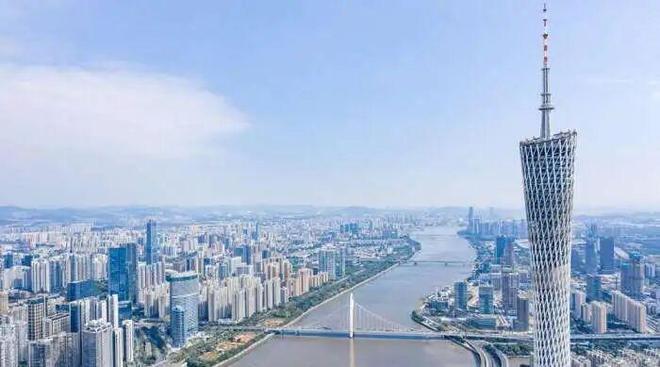
王志民:以高水平对外开放绘就合作共赢新图景
Zhong Guo Jing Ying Bao· 2025-11-01 09:19
Core Insights - The core idea of the article emphasizes the importance of expanding high-level opening-up as a powerful driver for high-quality development and modernization in China [2][3][9] Group 1: Four Core Aspects of High-Level Opening-Up - The first aspect is to promote high-level opening-up to achieve high-quality economic development, focusing on the high-end, intelligent, and green transformation of Chinese manufacturing through initiatives like the Belt and Road and RCEP [3][4] - The second aspect involves using opening-up to drive reform, development, and innovation, particularly in enhancing technological self-reliance and original innovation [3][4] - The third aspect is to leverage both domestic and international resources and markets to build a "China-centric" industrial supply chain, facilitating structural upgrades [4] - The fourth aspect focuses on deepening reforms to improve the socialist market economy and enhance the institutional framework for high-level opening-up, promoting the integration of various chains such as education, innovation, and industry [4] Group 2: Significance of High-Level Opening-Up - The elevation of "expanding high-level opening-up" to a prominent position in the recent guidelines indicates its growing importance in China's economic and social development [5] - The article suggests that the next five years will see a more proactive approach to opening-up, with an emphasis on top-level design and moving from passive to active engagement in international markets [5][6] Group 3: Institutional Opening-Up - Institutional opening-up is highlighted as a key component, shifting the focus from development alone to include rules and regulations, aiming for the integration of domestic and international standards [6] - The article outlines a transition from being a follower of international rules to becoming a rule-maker, emphasizing the need for high-standard economic and trade rules [6] Group 4: High-Quality Belt and Road Initiative - The article discusses the importance of policy communication and infrastructure connectivity as essential elements for the high-quality development of the Belt and Road Initiative [7][8] - It emphasizes the need for stable supply chains and financial support through long-term financing agreements with partner countries [7][8] Group 5: High-Level Opening-Up and Modernization - High-level opening-up is identified as a crucial condition for China's modernization, facilitating the utilization of two markets and resources [10] - The article argues that high-level opening-up will enhance China's role in global economic systems and promote mutual benefits with trade partners [10]