社会信用体系建设

Search documents
南财数据周报(47期):“一份信用报告代替一摞证明”全面推行,青岛构建数据资产增值循环体系
2 1 Shi Ji Jing Ji Bao Dao· 2025-05-09 10:07
Group 1 - The core viewpoint of the news highlights the rapid advancement of data infrastructure construction in China, aiming to establish a new high-quality development pattern through the implementation of a "credit report instead of proof of no violations" policy by 2025 [1][2] - The National Development and Reform Commission, along with the Ministry of Public Security and the National Data Bureau, has issued a notice to fully implement the "credit report instead of proof of no violations" initiative by September 2025, which will consolidate the data foundation for special credit reports [1][2] - The eighth Digital China Construction Summit showcased significant achievements in data infrastructure, including the release of 10 key data standardization results to guide pilot projects and data space construction [1][2] Group 2 - The establishment of the Trusted Data Space Development Alliance at the eighth Digital China Construction Summit aims to promote data sharing and collaboration across industries, with the alliance consisting of 19 state-owned enterprises and 20 research institutions [4] - The alliance has released draft guidelines for the Trusted Data Space Standard System and Capability Requirements, providing reference for practical implementation [4] - Qingdao has introduced a management method for data assets in administrative institutions, establishing a comprehensive lifecycle management system for data assets, including approval processes for paid usage and a dynamic revenue distribution mechanism [5]
财政部发布新规 要求在全国会计人员统一服务管理平台准确记录会计从业者奖惩信息
Mei Ri Jing Ji Xin Wen· 2025-05-06 22:38
《管理办法》共14条,包括制定目的、适用范围、会计奖惩信息的归集范围、时间与载体、异议提出与 错误更正等有关要求。 财政部会计司有关负责人介绍,《管理办法》明确会计奖惩信息归集管理应当遵循依法记录、统一管 理、分级负责、动态更新的原则。归集的奖惩信息中,表彰奖励信息是指单位、个人受到财政部门关于 会计工作的表彰奖励情况;行政处罚信息是指单位、个人因违反会计法受到的行政处罚情况。 持续加强会计领域信用管理制度建设 《管理办法》明确,办法所称的会计奖惩信息包括财政部门对单位、个人给予的表彰奖励、行政处罚信 息。 《管理办法》明确,财政部门应当自作出相关行政决定之日起10个工作日内,在全国会计人员统一服务 管理平台(以下简称全国统一平台)对相关事项进行记录。单位或个人对全国统一平台上记录的本单位 或本人的会计奖惩信息有异议的,可通过全国统一平台向作出记录的财政部门提出书面申请并提交证明 材料。财政部门应当在规定时间内进行核实并更正,无需更正的,应告知申请的单位或个人并说明理 由。 中国政法大学财税法研究中心主任施正文接受《每日经济新闻》记者电话采访时表示,《管理办法》的 出台是落实党中央关于社会信用体系建设决策部署 ...
图木舒克市:构建社会信用体系 优化营商环境“强引擎”
Zhong Guo Jin Rong Xin Xi Wang· 2025-04-30 08:56
Group 1 - The core viewpoint emphasizes the significant progress made by the Third Division of the Xinjiang Production and Construction Corps in establishing a social credit system, achieving the top rank among 26 county-level cities in the region according to the national credit monitoring report [1][7][8] - The "Xin Yi Dai" platform is actively promoted to alleviate financing difficulties for market entities, with local financial institutions developing credit products, resulting in successful credit loan disbursements [3][5] - The Agricultural Bank of China in Tumushuke has implemented a dual-channel approach for credit loans, providing up to 3 million yuan with rapid disbursement times, significantly aiding local farmers [3][5] Group 2 - A diverse promotional campaign, "Integrity Construction Ten Thousand Miles," has been launched to strengthen the foundation of trust, reaching over 15,000 individuals and distributing more than 1,200 promotional materials [5][6] - The construction industry recognizes the importance of integrity in business operations, with companies like Xinjiang Junai Construction Group emphasizing adherence to contracts and timely payments to maintain strong partnerships [5][6] - The city plans to align with national credit demonstration city standards, enhancing mechanisms and responsibilities while continuing integrity promotion to empower high-quality economic and social development [7][8]


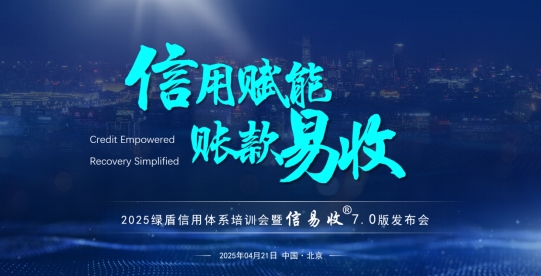
绿盾征信举行信用服务培训会暨“信易收”平台上线发布会
Jing Ji Wang· 2025-04-28 07:02
「信易收」创始人王端军指出:"账款拖欠问题会严重影响企业交易信心。合同履约风险的防范与 治理,将是社会信用体系建设绕不开的落脚点。我们作为国内老牌信用服务机构,应当敢于承担社会责 任,敢于先行先试,敢于走在时代的前沿!" 4月21日,绿盾征信在京召开信用服务培训会暨「信易收」平台上线发布会,来自全国各地200余名 信用服务机构代表参与会议。 会上,「信易收」7.0 赋能体系正式亮相。该体系涵盖了自助催收工具、财产线索尽调以及人工调 解服务等诸多内容,旨在为中小微企业提供普惠、合规的清欠解决方案。 在现场签约环节,新老伙伴均对「信易收」赋能模式给予了高度评价,一致认可其在协助企业纾困 解难、助力政府清欠化债等诸多方面能够发挥出积极且重要的作用。 2022年以来,伴随着国家对"合同履约"问题的日益关切,绿盾征信又率先将信用调解工作法融入到 合同履约风险防范与治理过程中,通过线上工具和线下服务,创新"合同履约+信用调解"闭环解决方 案,先后支持焦作市发改委、威海市发改委、池州市发改委、长沙市发改委等单位斩获各类行业大奖。 十二年间,「信易收」先后经历了3轮能力升级以及7次版本迭代。此次发布的7.0版赋能体系,是 对 ...
打通小微企业融资堵点
Jing Ji Ri Bao· 2025-04-22 22:11
Core Insights - Financial regulatory authorities across multiple regions have implemented a series of policies to alleviate financing difficulties for small and micro enterprises, enhancing the effectiveness of financing coordination mechanisms [1][2] Group 1: Policy Implementation and Impact - Various financial regulatory departments have issued notifications to support small and micro enterprises, addressing financing bottlenecks and difficulties faced by banks in lending [1] - As of March 2023, the Zhejiang Financial Regulatory Bureau has organized visits to 3.18 million enterprises, with 630,000 receiving credit support, resulting in a total loan issuance of 1.7 trillion yuan [1] - By February 2025, the balance of inclusive loans for small and micro enterprises nationwide is projected to reach 33.9 trillion yuan, with a year-on-year growth rate of 12.6%, surpassing the growth rate of other loan categories by 5.7 percentage points [1] Group 2: Challenges in Financing - Small and micro enterprises face significant financing challenges primarily due to a lack of credit and information, leading to reluctance from financial institutions to lend [2] - Efforts are being made to bridge the gap between banks and enterprises, reducing information asymmetry through initiatives like the "New Quality Loan" in Chengdu [2] Group 3: Credit System and Financial Services - Financial regulatory bodies are promoting the integration of social credit system construction with financial supervision, encouraging financial institutions to leverage credit data resources effectively [3] - In Zhejiang, small and medium-sized banks are optimizing credit approval services, creating a financial ecosystem that extends core enterprise credit to upstream and downstream businesses, facilitating credit support for multiple enterprises [3] - The characteristics of small and micro enterprise financing, such as being short-term, small-scale, and frequent, highlight the potential of technology to enhance lending efficiency [3]
失信惩戒重在精准
Jing Ji Ri Bao· 2025-04-20 22:37
Group 1 - The core viewpoint of the articles emphasizes the need for a more precise and humane approach to credit punishment, avoiding a one-size-fits-all method [1][2] - The current issues in the credit punishment system stem from overly simplistic institutional designs that do not account for various real-life situations, leading to generalized and mechanical punishment [1] - The goal of credit punishment should be to guide trustworthiness and penalize malicious dishonesty, rather than creating a punitive environment that harms social fairness [1] Group 2 - Recommendations include establishing a graded and categorized punishment mechanism that differentiates between malicious and non-malicious dishonesty [2] - The introduction of a buffer period and rectification channels for minor offenders is suggested to prevent a vicious cycle of dishonesty and punishment [2] - Enhancing the transparency and flexibility of algorithmic governance, along with the establishment of manual review channels and third-party evaluations, is crucial for improving the system [2]
发挥好“经济身份证”作用
Jing Ji Ri Bao· 2025-04-12 03:02
Core Viewpoint - The construction of a social credit system is crucial for enhancing the socialist market economy, improving social governance efficiency, and increasing national competitiveness [1][2] Group 1: Progress in Social Credit System - Recent initiatives from various regions, including Shanghai, Tianjin, and Hunan, outline the 2025 work points for social credit system construction, emphasizing the importance of innovation in credit regulation [1] - China has established a leading global public credit system in terms of data scale and service coverage, with the People's Bank of China's financial credit information database serving as a comprehensive reflection of credit status [1] Group 2: Importance of Credit in Digital Economy - The "economic ID card" represented by credit records is increasingly significant in the digital economy, influencing loan rates, consumer services, and employment opportunities [1] Group 3: Challenges in Credit System Construction - The social credit system faces challenges such as incomplete coverage, regional imbalances, the need for improved credit repair mechanisms, and data silos [1] - There is an urgent need to enhance credit data security and protect the legal rights and information security of credit subjects [1] Group 4: Future Directions for Credit System Development - The recent guidelines from the Central and State Offices emphasize the need for a unified, shared social credit system across various sectors, with a focus on government guidance and top-level design [2] - Key areas for development include fostering the credit service market, implementing reasonable credit rewards and penalties, and promoting innovative credit practices to optimize the business environment [2] - The construction of the social credit system is a complex, long-term task that requires collaboration and active participation from various stakeholders [2]
浙江优化民企发展环境:信用好则少检查或不检查
Zhong Guo Xin Wen Wang· 2025-04-01 21:13
Group 1 - Zhejiang Province is implementing a comprehensive credit "531X" project to enhance the credit regulatory service system, allowing for differentiated regulation based on enterprise credit status, which may lead to fewer inspections for enterprises with good credit ratings [1] - The province is focused on ensuring fair competition for private enterprises, which is essential for stimulating their internal motivation and innovation capabilities [1] - Various measures are being taken to optimize the development environment for the private economy, including policy assessments and reforms in the bidding process [1] Group 2 - The social credit system in Zhejiang is being strengthened through the establishment of a credit network that connects various platforms and business systems, facilitating easier access to credit reports and improving service quality [2] - In the bidding sector, reforms are being implemented to enhance transparency and fairness, including the introduction of artificial intelligence for smart supervision of the bidding process [2] - The province has completed over 80 policy evaluations since July 2024, providing over 400 suggestions for modifications and risk alerts, and has initiated the repeal and modification of policies with negative impacts [3] Group 3 - The Zhejiang Development and Reform Commission is enhancing communication with private enterprises to ensure they are aware of and can effectively utilize policies, fostering a better understanding of various initiatives [3]
中办、国办,重磅印发!社会信用体系建设,关注一个核心机制
21世纪经济报道· 2025-03-31 11:37
Core Viewpoint - The article discusses the issuance of the "Opinions on Improving the Social Credit System" by the Central Committee of the Communist Party of China and the State Council, emphasizing the establishment of a comprehensive social credit system covering various entities, including government, businesses, social organizations, individuals, and the judicial enforcement system [2][3]. Group 1: Social Credit System Framework - The "Opinions" propose to strengthen credit management for business entities, encouraging them to improve compliance systems and manage credit risks, while guiding them towards honest operations and commitments [2]. - It emphasizes the need for a sound government credit commitment mechanism, including government credit evaluations and the establishment of standards for identifying and punishing dishonest behavior [2][3]. - The document outlines that any dishonest behavior by government departments in areas such as public resource transactions and investment financing will be recorded and may restrict their access to various financial resources and projects [2]. Group 2: Individual Credit Evaluation - The "Opinions" allow for the evaluation of individual credit in certain regions, but strictly state that such evaluations should only be used to provide incentives for honest individuals and must not include private information [2][3]. Group 3: Credit Information Management - The article highlights the importance of clearly defining the scope of public credit information, with industry authorities responsible for determining and recording public credit information based on laws and regulations [3]. - It mentions that the National Development and Reform Commission will compile and maintain comprehensive credit records for relevant entities [3]. Group 4: Incentives and Penalties - A key mechanism outlined is the establishment of incentives for honest behavior and penalties for dishonest actions, with a focus on creating a supportive credit incentive policy environment [4]. - The "Opinions" stress the need for legal and regulatory backing for any measures that reduce rights or increase obligations for credit entities [4]. - It also calls for enhanced credit management within the platform economy, promoting the sharing of public credit information and encouraging platform companies to establish internal credit management systems [4].