
3D打印技术

Search documents
视频丨首台、最大、突破!本周,大国重器交出亮眼成绩单
Yang Shi Xin Wen Ke Hu Duan· 2025-11-14 06:25
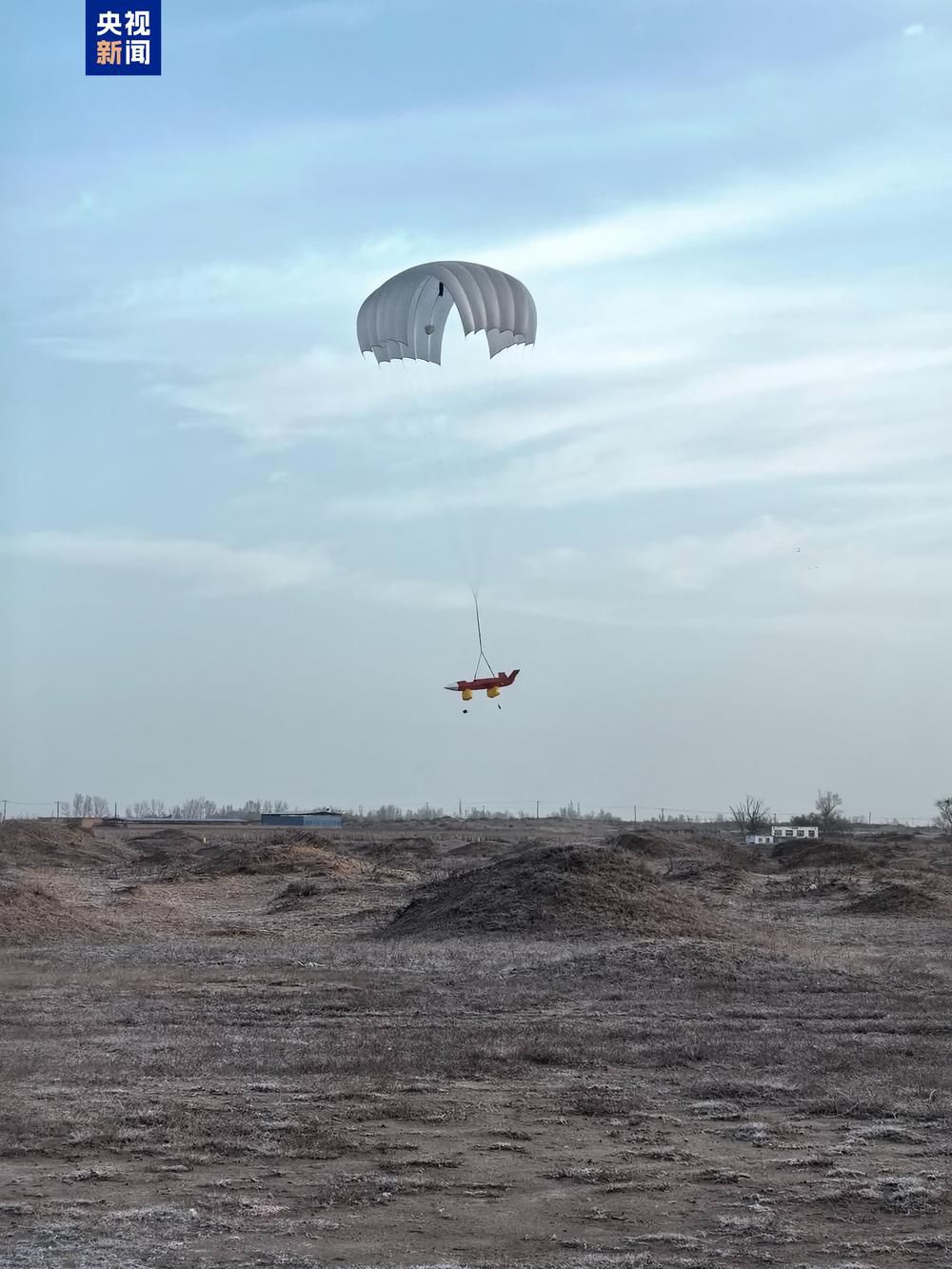
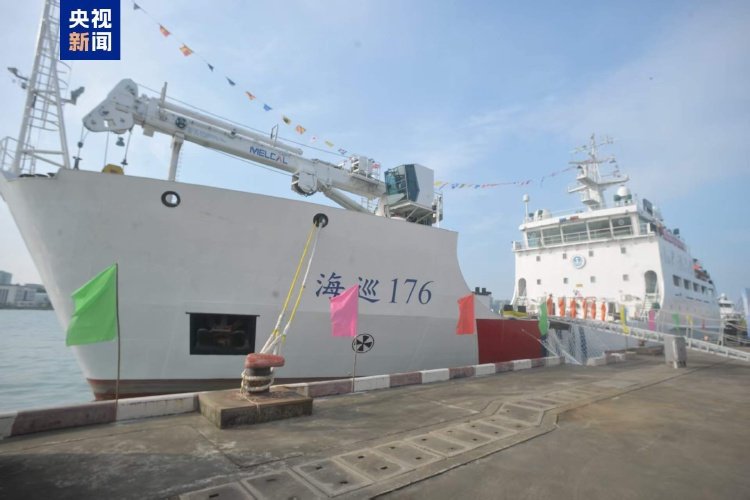
Core Insights - China has achieved significant breakthroughs in various fields, including the successful flight test of a self-developed 3D printed engine and advancements in high-altitude wind energy technology [2][6][16] Group 1: 3D Printed Engine - The 3D printed turbojet engine developed by China Aviation Engine Corporation successfully completed its first flight test, lasting 30 minutes at an altitude of 6000 meters and a maximum speed of 0.75 Mach, with all operational parameters functioning normally [2] - Over 75% of the engine's components are manufactured using 3D printing technology, which significantly reduces the number of parts and achieves lightweight, high-performance design goals [4] Group 2: High-Altitude Wind Energy - The world's largest high-altitude wind energy capturing kite, covering an area of 5000 square meters, successfully completed its test in Inner Mongolia, marking a solid step forward in the engineering application of high-altitude wind energy technology [6] - This kite can capture wind energy at altitudes above 300 meters and convert it into electricity through a ground-based generator, showcasing the potential of high-altitude wind energy as a new energy source [8] Group 3: Maritime Technology - The large buoy tender "Haixun 176," designed and built in China, has been officially commissioned, representing the most advanced buoy operation vessel in the country's transportation system [10] - The vessel measures 75.2 meters in length, has a full-load displacement of 2360 tons, and a range of 5000 nautical miles, capable of operating safely in sea conditions up to level 6 [12] Group 4: Coal Power Technology - The world's first 650°C ultra-supercritical coal-fired boiler has entered the construction phase at Huaneng Yuhuan Power Plant, marking a significant advancement in high-temperature material technology [14] - This boiler will set new records for the highest operating parameters and lowest coal consumption in global coal-fired power generation [16]

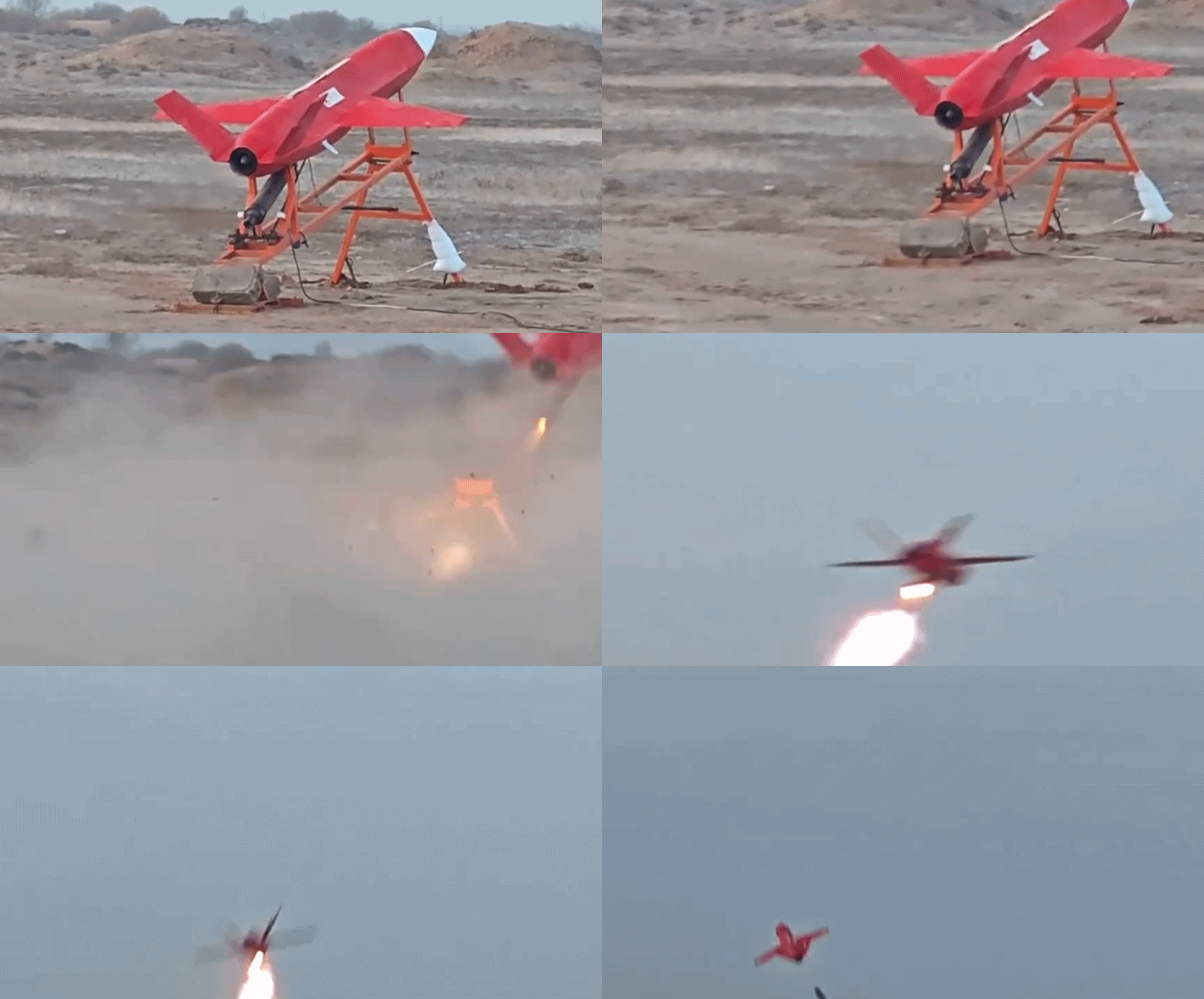
视频丨我国自主研制3D打印涡喷发动机完成首次单发飞行试验
Yang Shi Xin Wen Ke Hu Duan· 2025-11-14 00:39
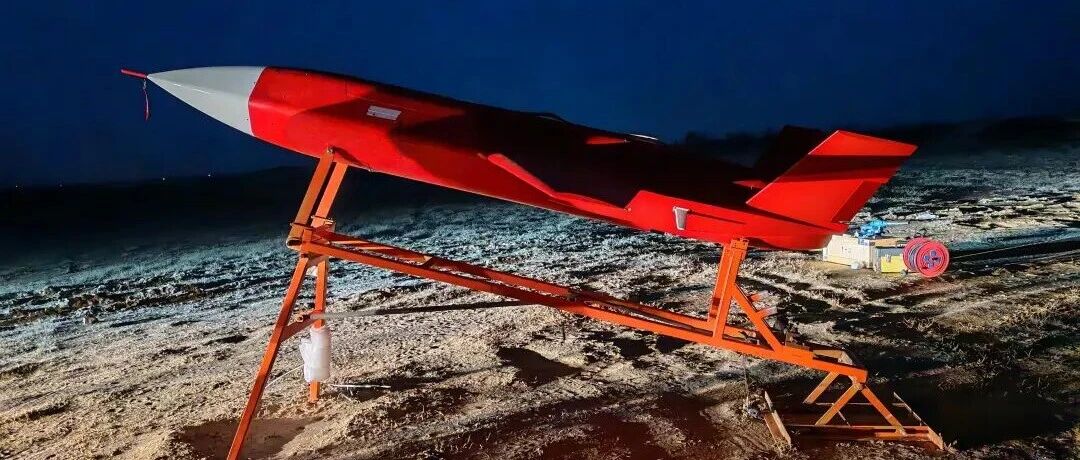
Core Viewpoint - The successful flight test of China's self-developed 3D-printed simplified turbojet engine marks a significant breakthrough in the engineering application of 3D-printed engines [1][3]. Group 1: Flight Test Details - The flight test lasted 30 minutes, reached an altitude of 6000 meters, and achieved a maximum speed of 0.75 Mach, with all operational parameters functioning normally [3]. - This test was the first single-engine flight test using the 3D-printed turbojet engine, demonstrating its reliability at higher altitudes and in more complex environments [3]. Group 2: Engine Design and Manufacturing - The engine utilizes 3D printing technology, with over 75% of its components manufactured through this method, significantly reducing the number of parts and achieving lightweight, high-performance design goals [5]. - This innovative design lays a solid foundation for future flights at higher altitudes and speeds [5]. Group 3: Application Prospects - The successful test indicates the engine's compatibility with various platforms such as cruise missiles, drones, and target aircraft, showcasing promising application prospects [3].

首台、最大、突破!本周,大国重器交出亮眼成绩单
Yang Shi Xin Wen Ke Hu Duan· 2025-11-14 00:21
Group 1 - China's self-developed 3D printed engine successfully completed its first flight test, marking a significant breakthrough in engineering applications [1][3] - The flight lasted 30 minutes, reached an altitude of 6000 meters, and achieved a maximum speed of 0.75 Mach, with all operational parameters functioning normally [1][3] - The engine's design incorporates over 75% of its components manufactured through 3D printing, significantly reducing the number of parts and achieving lightweight, high-performance goals [3] Group 2 - The world's largest high-altitude wind energy capturing kite, measuring 5000 square meters, successfully completed its test in Inner Mongolia, indicating progress in high-altitude wind power technology [4][5] - This kite can capture wind energy at altitudes above 300 meters and is designed to pull ground-based generators for electricity production [5] - High-altitude wind energy is seen as a new energy frontier with significant potential due to its high wind speeds and stable wind directions [5] Group 3 - The "Haixun 176," China's largest and most advanced buoy tender, has officially joined the South China Sea Navigation Guarantee Center [6][8] - The vessel measures 75.2 meters in length, has a displacement of 2360 tons, and can operate safely in sea conditions up to level 6 [6][8] - It will enhance navigation support services in the South China Sea, focusing on buoy deployment and maintenance [8] Group 4 - The world's first 650°C high-efficiency ultra-supercritical coal-fired boiler has entered the construction phase at Huaneng Yuhuan Power Plant [9][11] - This boiler represents a breakthrough in high-temperature alloy materials, achieving the highest steam temperature globally for coal-fired power generation [11] - Upon completion, it is expected to set new records for the highest operational parameters and lowest coal consumption in coal-fired power generation [11]
3D打印制造!这款微型涡喷发动机完成首次单发飞行试验
Bei Jing Ri Bao Ke Hu Duan· 2025-11-13 14:02
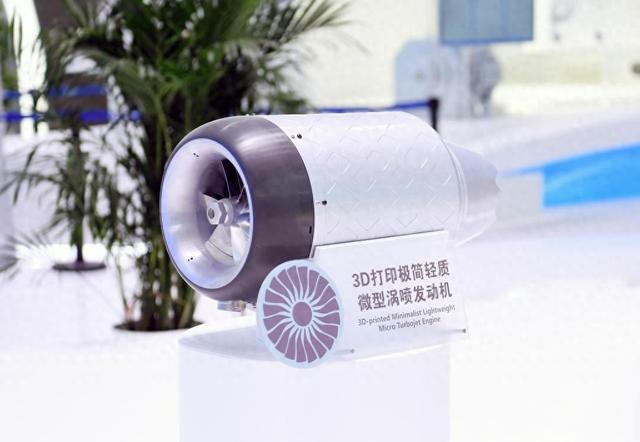
Core Insights - The China Aviation Engine Group has successfully completed the first single-engine flight test of its 3D-printed lightweight micro turbojet engine, achieving a flight duration of 30 minutes at an altitude of 6000 meters and a speed of 0.75 Mach [2] Group 1 - The successful flight test demonstrates the engine's reliability at higher altitudes and in more complex environments, validating its compatibility with aircraft and showcasing promising application prospects [2] - This engine is the first domestically developed 3D-printed lightweight micro turbojet engine with a thrust of 160 kilograms, utilizing multidisciplinary topology optimization and 3D printing technology to achieve lightweight and high-performance design goals [2] - Over three-quarters of the engine's components, including all rotor parts, are manufactured using 3D printing, resulting in reduced part count, lighter weight, and simplified maintenance [2] Group 2 - With ongoing design optimization and deeper application of 3D printing technology in the aviation engine sector, the development cycle for engines is expected to shorten, accelerating China's independent research and manufacturing of aviation power [3]
我国自主研制,完成首次试验
中国能源报· 2025-11-13 12:08
Core Viewpoint - The successful flight test of China's self-developed 3D-printed turbojet engine marks a significant breakthrough in the engineering application of 3D-printed engines [1]. Group 1: Flight Test Details - The flight test lasted 30 minutes, reached an altitude of 6000 meters, and achieved a maximum speed of 0.75 Mach, with all operational parameters functioning normally [3]. - This test represents the first single-engine flight test of the self-developed 3D-printed turbojet engine, confirming its operational reliability [3]. Group 2: Engine Development and Applications - The engine's reliability has been further validated for higher altitudes and more complex environments, demonstrating its compatibility with various platforms such as cruise missiles, drones, and target aircraft [4]. - Over 75% of the engine's components are manufactured using 3D printing technology, significantly reducing the number of parts and achieving lightweight, high-performance design goals [6].
宁都名企招聘|江西省极光创新科技有限公司好企业好工作不等人!
Sou Hu Cai Jing· 2025-11-13 04:10
Company Overview - Jiangxi Aurora Innovation Technology Co., Ltd. is a subsidiary of Shenzhen Aurora Innovation Technology Co., Ltd., established in 2009 and listed on the New Third Board in 2017 [1] - The company is recognized as one of the first 3D printer R&D and manufacturing enterprises in China, focusing on creating a digital ecosystem for 3D printing [1] - The business scope includes FDM desktop 3D printers, SLA industrial 3D printers, LCD light-curing 3D printers, SLM metal 3D printers, 3D printing materials, and integrated 3D printing services [1] Job Opportunities - The company is hiring for various positions including e-commerce operation hosts, financial personnel, sales specialists, and 3D modeling engineers [4][27][29][36] - Positions require different levels of experience, with some roles needing specific educational backgrounds such as a diploma or degree in relevant fields [16][44] E-commerce Operation Host Role - The role involves live streaming on e-commerce platforms to showcase 3D printing services, requiring strong communication skills and technical understanding of 3D printing [4][5] - Responsibilities include planning and executing live streams, engaging with the audience, and converting viewers into customers [6][8][12] Financial Personnel Role - The financial position requires managing expenses, reviewing accounting work, and preparing financial reports, with a focus on manufacturing industry experience [28] - Candidates should have experience with full accounting processes and familiarity with ERP systems [28] 3D Modeling Engineer Role - The role focuses on creating high-precision 3D models based on client needs, ensuring models meet printing requirements [37][39] - Candidates should be proficient in 3D modeling software and have a strong understanding of the 3D printing process [45][48] Technical Support Role - The SLA technician position involves providing technical support to customers, including installation and troubleshooting of printing equipment [52] - Responsibilities also include training customers and participating in project management [53][54]

研判2025!中国泡沫镁合金行业产业链、市场规模及重点企业分析:以低密度、高强度、优异吸能与电磁屏蔽特性,成为航空航天、汽车等领域轻量化核心材料[图]
Chan Ye Xin Xi Wang· 2025-11-07 01:26
Core Insights - The foam magnesium alloy industry in China is projected to reach a market size of approximately 5.826 billion yuan in 2024, reflecting a year-on-year growth of 11.27% [1][8] - The demand for foam magnesium alloys is increasing, particularly in the automotive and electronics sectors, driven by the rapid development of new energy vehicles and the trend towards miniaturization and lightweight electronic products [1][8] Industry Overview - Foam magnesium alloy is a new type of lightweight structural functional material characterized by a high strength-to-weight ratio, excellent energy absorption, and electromagnetic shielding properties [2][4] - The material is widely used in various fields, including aerospace, automotive, electronics, and construction [1][2] Industry Supply Chain - The upstream supply chain includes metals such as magnesium, aluminum, zinc, and manganese, as well as auxiliary materials like foaming agents and refractory materials [4] - The midstream involves the production and manufacturing of foam magnesium alloys, while the downstream applications span automotive, aerospace, electronic communications, biomedical, construction, and military equipment sectors [4] Market Size - The foam magnesium alloy market is expected to grow significantly, with a projected market size of 5.826 billion yuan in 2024, marking an 11.27% increase from the previous year [1][8] Key Companies and Performance - Baowu Magnesium Industry holds a significant market share due to its comprehensive industry chain and technological advantages, focusing on high-end applications in new energy vehicles and aerospace [9][10] - In the first half of 2025, Baowu Magnesium Industry reported a revenue of 6.970 billion yuan, a year-on-year increase of 9.82%, while its net profit attributable to shareholders decreased by 43.13% [9][10] Industry Development Trends 1. Continuous technological innovation will drive industry upgrades, with advancements in 3D printing and nanomaterials enhancing the performance and customization of foam magnesium alloys [11][12] 2. The application scenarios for foam magnesium alloys are diversifying, particularly in new energy vehicles, aerospace, and biomedical fields, with expected increases in usage [12] 3. The industry is moving towards green manufacturing, supported by policies aimed at reducing carbon emissions, and companies are adapting to global competition through technology and sustainable practices [13]


兴化戴南一公司引进砂型3D打印装备 告别铸造业“翻砂”时代
Yang Zi Wan Bao Wang· 2025-11-06 11:35
Core Viewpoint - The introduction of a new 3D printing technology for sand molds in metal casting significantly enhances production efficiency, reduces development time, and aligns with green manufacturing trends [1][2]. Group 1: Technology Overview - The new equipment, known as sand mold 3D printing technology, allows for the direct and precise manufacturing of sand molds used in metal casting [1]. - The process involves a sand supply and layering system that creates a smooth sand layer, followed by a mechanical arm that sprays a binding agent according to pre-designed parameters, solidifying the sand particles [1]. Group 2: Advantages Over Traditional Methods - This technology eliminates the need for traditional mold-making, reducing the product development cycle from weeks or months to just a few days, thereby greatly improving production efficiency [2]. - The materials used, such as quartz sand and high-silica sand, are environmentally friendly, allowing for the recycling of used sand molds and minimizing waste and energy consumption [2]. - The technology enhances design freedom and innovation capabilities within the industry, facilitating a shift from manual and mold-dependent production to a more digital and intelligent manufacturing approach [2].
步入“千元级时代” 消费级3D打印机销售火爆
Yang Shi Xin Wen Ke Hu Duan· 2025-11-05 23:10
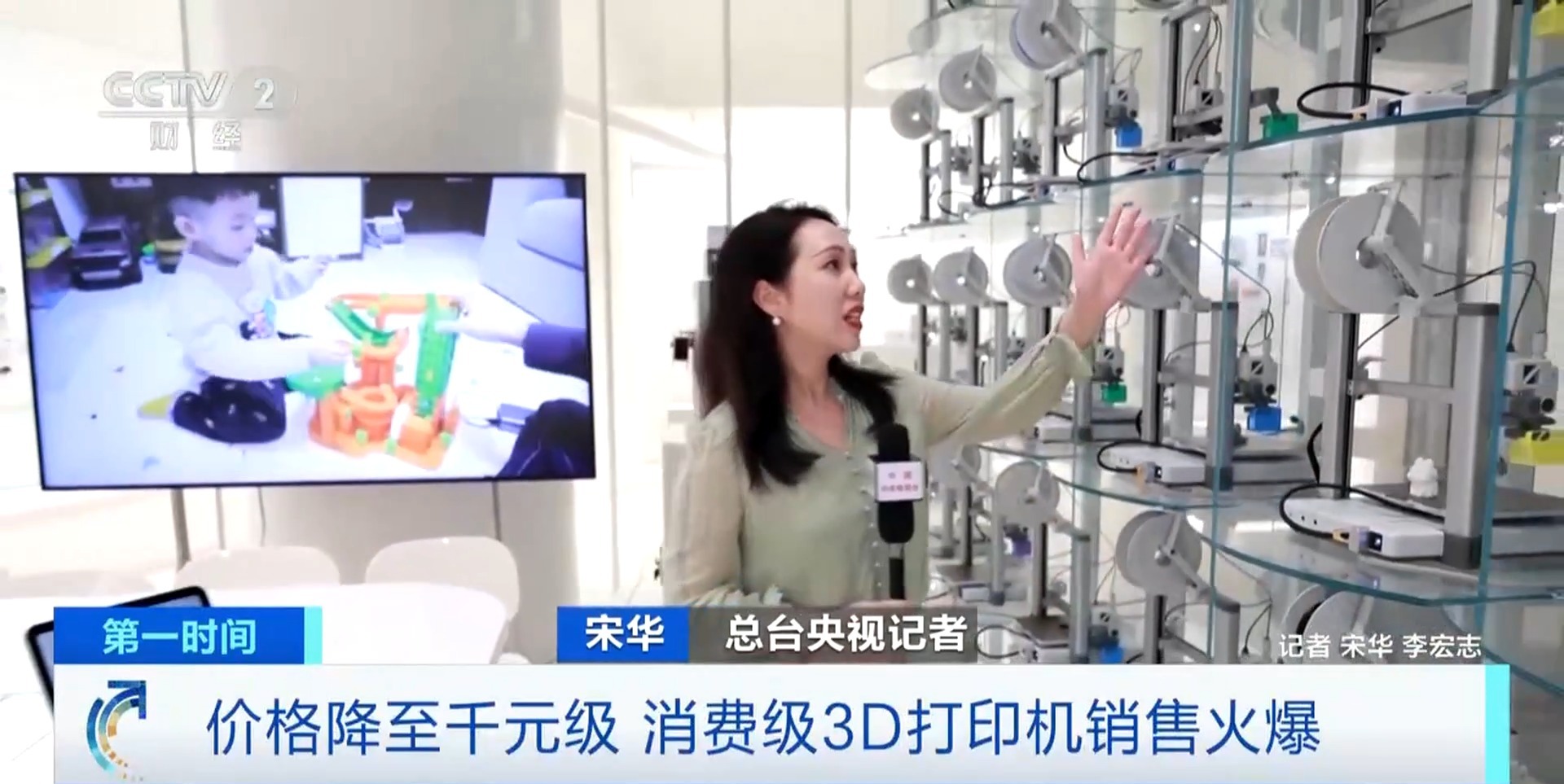
Core Viewpoint - The sales of consumer-grade 3D printers have significantly increased during this year's "Double Eleven" shopping festival, making it one of the fastest-growing digital product categories. Group 1: Market Dynamics - The flagship 3D printer store in Shenzhen features a wall of 28 printers, allowing consumers to select models and print them quickly [3] - The price of consumer-grade 3D printers has decreased by 60% compared to three years ago, making them more accessible [9] - Entry-level printers are now available for as low as 1,000 to 2,000 yuan, while mid-range models can be purchased for 4,000 to 5,000 yuan [11] Group 2: Consumer Behavior - The store in Shenzhen has seen a steady stream of consumers, including families and hobbyists who have turned their interests into professional pursuits [5] - 3D model designer Yang Yang reported that his income from 3D printing surpassed his primary job, leading him to pursue it full-time [7] Group 3: Government Support - In September, the Ministry of Commerce and seven other departments included desktop 3D printing devices in the category of digital products eligible for national subsidies, further boosting sales [9]
消费级3D打印机步入“千元级时代”!销售火爆的秘密→
Sou Hu Cai Jing· 2025-11-05 08:44
Core Insights - The sales of consumer-grade 3D printers have significantly increased during this year's "Double Eleven" shopping festival, making it one of the fastest-growing digital product categories [1] Group 1: Market Trends - A flagship 3D printer store in Shenzhen features a wall of 28 printers, allowing consumers to select models for quick printing [3] - The price of consumer-grade 3D printers has decreased by 60% compared to three years ago, with entry-level models now available for as low as 1,000 to 2,000 yuan [8][12] - The Ministry of Commerce and other departments have included desktop 3D printing devices in the category of digital products eligible for national subsidies, further boosting sales [8] Group 2: Consumer Demographics - The consumer base includes families, hobbyists, and individuals who have turned their creative pursuits into professions, indicating a shift towards deeper engagement with 3D printing technology [5] - The growth in sales is driven by various applications such as education, creative design, DIY manufacturing, and film props, highlighting the versatility of 3D printing [11] Group 3: Sales Performance - Sales of 3D printers on JD.com have increased by 120% year-on-year, while sales of 3D printing materials have surged by 190% [11]
