新能源汽车轻量化

Search documents
隆源股份:汽车精密铸件小巨人,紧扣新能源轻量化浪潮-20260321
KAIYUAN SECURITIES· 2026-03-21 10:45
Investment Rating - The report does not explicitly state an investment rating for the company. Core Insights - The company specializes in the research, production, and sales of aluminum alloy precision die-casting parts, recognized as a "little giant" in the automotive precision casting sector, particularly in the context of the new energy lightweight trend [1][12] - The global aluminum die-casting market is projected to grow from USD 80.2 billion in 2024 to USD 111.9 billion by 2030, with a compound annual growth rate (CAGR) of 5.71%, indicating significant market development potential [2][54] - The company has achieved substantial revenue growth, with total operating income increasing from CNY 519 million in 2022 to CNY 869 million in 2024, and net profit rising from CNY 101.06 million to CNY 128.49 million during the same period [1][48] Summary by Relevant Sections Company Overview - The company has received numerous honors, including being recognized as a national high-tech enterprise and a national-level green factory, and holds 52 patents as of June 30, 2025 [1][12][13] - The product matrix includes key components for automotive engine systems, new energy vehicle power systems, steering systems, and thermal management systems [1][19] Industry Growth Potential - The automotive industry is shifting towards lightweight and new energy solutions, with the Chinese automotive parts manufacturing industry's revenue expected to grow from CNY 3.63 trillion in 2020 to CNY 4.62 trillion by 2024, reflecting a CAGR of 6.21% [2][54] - The company aims to enhance its core competitiveness by increasing R&D efforts in new energy vehicle components and optimizing its product structure [2][54] Financial Performance - The company’s revenue growth rate is higher than that of comparable companies, with a two-year revenue CAGR of 29% compared to the industry average of 20% [3][12] - The company’s gross profit margin has shown slight fluctuations, with rates of 32%, 31%, 26%, and 27% from 2022 to 2025, while net profit margins decreased from 19% to 14% during the same period [1][48] Market Position - The company has established a stable customer base, primarily consisting of well-known automotive parts suppliers and vehicle manufacturers, with significant sales to clients like BorgWarner and Delta [30][35] - The company’s products are increasingly used in the domestic market, with domestic sales rising from 49.46% in 2022 to 65.49% in the first half of 2025 [35][36]
盛德鑫泰股价回调,主力资金净流出超1500万元
Jing Ji Guan Cha Wang· 2026-02-13 10:13
Core Viewpoint - The stock price of Shengde Xintai (300881) has experienced a pullback after reaching a new high, with significant net outflow of funds and a decline in net profit for the first three quarters [1][2][3]. Stock Performance - On February 13, 2026, Shengde Xintai's stock closed at 45.90 yuan, down 4.45%, after hitting a peak of 50.72 yuan on February 12, with a five-day cumulative increase of 9.36% [2]. Company Fundamentals - The company's net profit for the first three quarters was 152 million yuan, a year-on-year decrease of 21.38%, with a gross margin of 15.51%, down 3.81 percentage points [3]. Fund Flow Situation - On February 13, there was a net outflow of 15.64 million yuan from major funds, accounting for 10.45% of the trading volume, while retail investors showed a net inflow [4]. Industry Sector Situation - The special steel II industry index fell by 3.05%, and the overall steel sector declined by 2.46%, with Shengde Xintai's decline slightly exceeding the industry average [5]. Stock Price Situation - After breaking through the upper Bollinger Band at 47.04 yuan on February 12, the stock retreated to the middle band around 41.80 yuan on February 13, indicating a relief from short-term overbought pressure [6]. Financial Condition - The company has a high proportion of accounts receivable relative to net profit at 376.59%, along with cash flow pressures and potential uncertainties from raw material price fluctuations and new business development [7].

豪美新材定增方案调整,增收不增利引监管问询
Jing Ji Guan Cha Wang· 2026-02-12 03:42
Core Viewpoint - Haomei New Materials (002988) is under scrutiny from the stock exchange regarding its revenue growth without profit increase before Q3 2025 and the rationale behind multiple changes to previous fundraising projects [1] Financial Performance - For the first three quarters of 2025, Haomei New Materials reported a revenue increase of 15.40% to 5.582 billion yuan, while net profit attributable to shareholders decreased by 16.68% to 143 million yuan, with a comprehensive gross margin dropping to 10.65% [2] - The decline in profit is attributed to rising aluminum ingot raw material prices and a more than 20% increase in R&D expenses, reaching 180 million yuan [2] - Revenue from the automotive lightweight business has increased its share to 27.58%, with the company aiming to improve profitability through product structure optimization [2] Stock Performance - Over the past seven trading days (February 6 to 12, 2026), Haomei New Materials' stock price has decreased by 3.65%, closing at 35.66 yuan, underperforming compared to the non-ferrous metal sector, which rose by 1.63% during the same period [3] - Technical analysis indicates the stock is in a bearish trend, with a 20-day moving average resistance level at 40.97 yuan [3] - On February 6, there was a net inflow of 2.609 million yuan in main funds, but overall trading activity remains low [3] Institutional Insights - According to a report from Sina Finance, the revenue growth of Haomei New Materials is primarily driven by the expansion of its automotive lightweight aluminum profile business, which generated 1.537 billion yuan in revenue during the first three quarters [4] - However, fluctuations in gross margin and a high customer concentration (with the top five customers accounting for 70.54% of revenue) may continue to impact profitability stability [4] - The company emphasizes that new production capacity has secured support from designated projects worth 5.661 billion yuan, maintaining a long-term positive outlook on the lightweight sector for new energy vehicles [4]
百汇达突破复材防火及增韧技术 提升产品安全性能
Zhong Guo Neng Yuan Wang· 2026-02-09 10:41
Core Viewpoint - Guangdong Baihuida New Materials Co., Ltd. is leveraging advanced composite materials to enhance battery safety in the automotive sector, positioning itself as a key player in the global market for electric vehicle components [1][2]. Group 1: Company Overview - Baihuida was established in 2013 and focuses on the innovation and industrialization of lightweight composite materials, creating a comprehensive supply chain from resin research to product manufacturing [2]. - The company is a designated supplier of battery covers for major automotive manufacturers, including GAC, Xpeng Motors, BYD, SAIC-GM-Wuling, Dongfeng Motor, and China Aviation Lithium Battery [2]. Group 2: Technological Innovations - Baihuida has developed a multi-layer composite material process that addresses the critical need for thermal runaway protection in battery covers, featuring a three-layer structure that significantly improves fire resistance [3]. - The new product can withstand flame impacts of 1200°C for 30 minutes, reducing back temperature from 670°C to below 300°C, thus enhancing safety during thermal runaway events [3]. - The introduction of a new MCC composite material combines glass fiber and short-cut yarn, achieving high strength and low production costs, filling a domestic market gap and increasing competitiveness [3]. Group 3: Financial Performance and Growth - Baihuida is projected to achieve over 200 million yuan in revenue by 2025, with an average annual growth rate of 20.66% in its main business revenue over the past two years [3]. - The company invests 7.12% of its total revenue in R&D, holding 11 patents in Class I intellectual property and capturing a 27.49% market share in its niche [3][4]. Group 4: Research and Development - The company has invested 60 million yuan to establish a comprehensive R&D center, enhancing its capabilities in resin synthesis, precision testing, and pilot production [5]. - Baihuida's production capacity is the largest in the country, with over 30 machines and an annual output of 1.6 million pieces, while automation improvements have increased production efficiency by over 35% [5]. Group 5: Collaborations and Partnerships - Baihuida collaborates with major companies like EVE Energy and Xpeng Motors to develop full composite battery box materials, as well as with universities for advanced research in carbon fiber and thermosetting resin technologies [5][6]. - The company is also focused on sustainable practices, contributing to carbon reduction goals through innovative recycling technologies and green production processes [8].

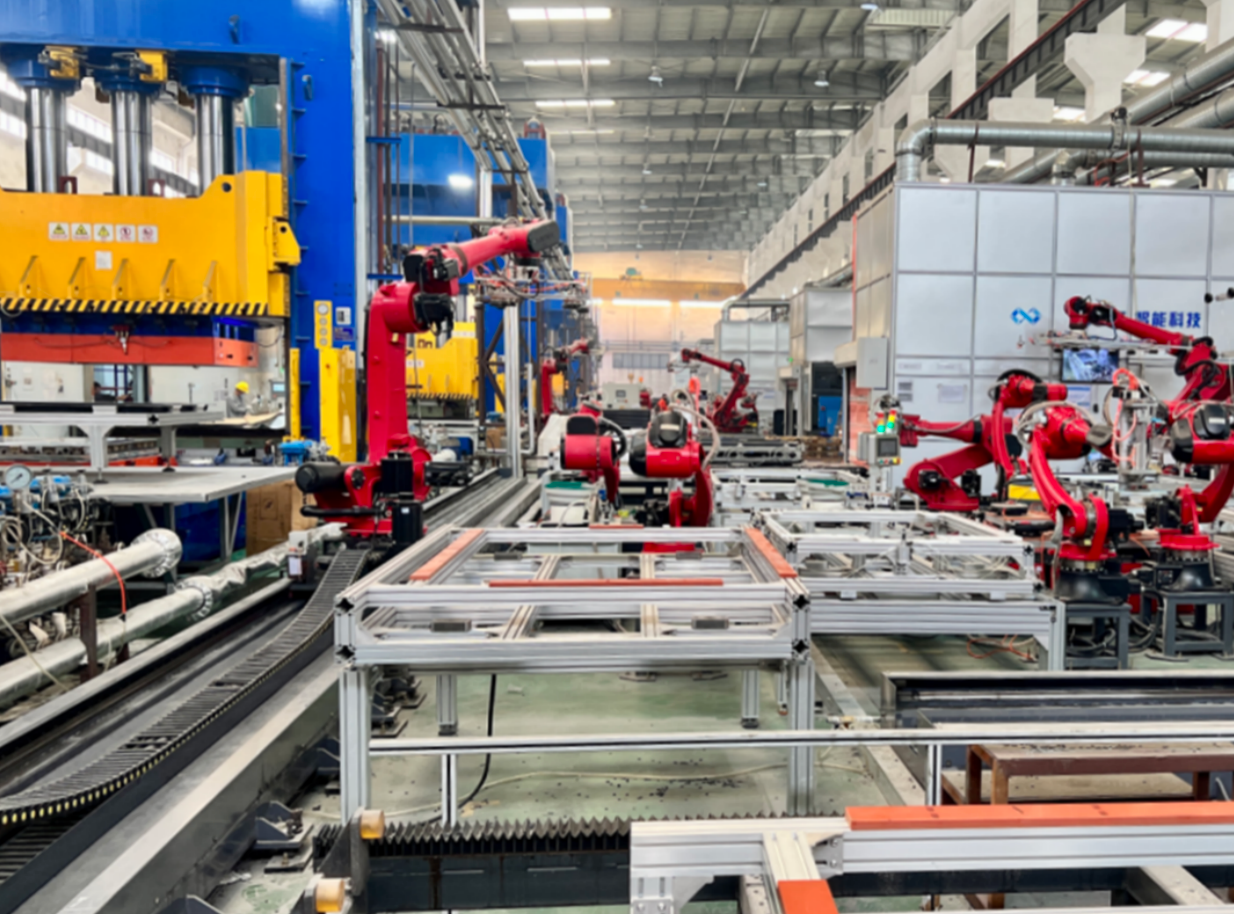
瑞鹄模具:目前正在建设的“新能源汽车轻量化车身部件项目”待产线全部安装调试后,将进一步提升公司汽零业务产能和业务规模
Zheng Quan Ri Bao Zhi Sheng· 2026-02-06 14:12
Core Viewpoint - The company is actively involved in the production of automotive parts, with ongoing development and iteration of new vehicle models by the main manufacturers [1] Group 1: Business Operations - The company is undertaking a variety of automotive parts production, which includes multiple vehicle models and categories [1] - The company is coordinating capacity, production preparation, and resource assurance based on overall planning and market development progress [1] Group 2: Future Prospects - The ongoing construction of the "lightweight body components project for new energy vehicles" is expected to enhance the company's production capacity and business scale once all production lines are installed and debugged [1]
镁合金材料专家交流
2026-01-22 02:43
Summary of Magnesium Alloy Application in Automotive Industry Industry Overview - The automotive industry is actively researching the application of magnesium alloys, driven by lower prices compared to aluminum alloys and abundant domestic magnesium resources in China. Key research areas include the three electric systems, electric drive systems, and body structural components, with significant increases in magnesium alloy usage expected in future vehicles [1][2][15]. Key Points and Arguments - **Price Comparison**: Magnesium alloy prices are currently around 35-36 RMB per kilogram, comparable to aluminum alloys. However, magnesium alloys offer a significant weight reduction of approximately 25% [1][8][25]. - **Usage in Electric Drive Systems**: Research on magnesium alloys in the three electric systems has progressed to the point of vehicle testing and is entering mass production phases. By 2026, it is expected that models equipped with magnesium alloy components will achieve monthly sales of over 10,000 units [1][4]. - **Supplier Landscape**: Key suppliers of magnesium alloy materials include Xinyuan Zhuomei, Jiarui Metal, and BYD Fudi Power. Major automotive manufacturers like SAIC, Xpeng, BYD, and Huawei are collaborating with Xinyuan on electric drive shell projects [1][10][5]. - **Future Projections**: The goal is to increase magnesium alloy usage per vehicle to 40 kg, with a long-term target of 100 kg. Some models may achieve 30-40 kg of magnesium alloy usage by 2026 [1][17]. - **Regulatory Environment**: National energy consumption requirements are pushing for lightweight materials in new energy vehicles, which is driving the strategic push for magnesium alloy applications to replace traditional steel and aluminum [1][15][16]. Additional Important Insights - **Market Demand**: China holds approximately 70-80% of the world's magnesium resources, which is expected to stabilize magnesium prices in the future. The demand for magnesium alloys, particularly in electric drive shells, is significant, and new entrants may find opportunities in this market [3][26][22]. - **Challenges in Adoption**: While magnesium alloys have been used in high-end vehicles, their adoption has been cautious due to historical price volatility. However, the current trend indicates a shift towards broader application as prices stabilize [2][30]. - **Potential Applications**: Beyond electric drive systems, magnesium alloys are being explored for use in body structural components such as door inner panels and tailgates, which could further increase overall magnesium usage in vehicles [12][31]. - **Export Considerations**: Currently, there are no plans to export vehicles using magnesium alloy components until they have been thoroughly tested in the domestic market [29]. This summary encapsulates the key discussions and insights from the conference regarding the application of magnesium alloys in the automotive industry, highlighting the strategic importance of these materials in future vehicle design and production.

新能源汽车该“减肥”了
Jing Ji Ri Bao· 2026-01-19 06:10
Core Viewpoint - The implementation of the national standard "Energy Consumption Limits for Electric Vehicles Part 1: Passenger Cars" marks the world's first mandatory standard for electric vehicle energy consumption, aiming to enforce substantial technological upgrades in the automotive industry and curb the increasing weight of electric vehicles [1][3]. Group 1: Industry Trends - By 2025, China's production and sales of new energy vehicles (NEVs) are projected to reach 16.626 million and 16.49 million units, respectively, representing year-on-year growth of 29% and 28.2%, maintaining the global lead for 11 consecutive years [1]. - The increasing performance of products, such as longer driving ranges for pure electric passenger cars, is a key factor driving the growth of NEVs, alleviating consumer range anxiety [1]. Group 2: Challenges in Vehicle Weight - The primary reason for the increased weight of NEVs is the blind pursuit of higher battery capacity, with some models claiming ranges exceeding 800 kilometers, leading to heavier vehicles due to the added battery weight [2]. - The trend of adding more comfort and smart technology features to create a "mobile ecological space" has also contributed to the weight increase of NEVs [2]. - Heavier vehicles result in higher energy consumption, often leading to actual ranges that fall short of theoretical values, and can negatively impact vehicle handling, braking safety, and increase wear on suspension systems and tires [2]. Group 3: New Standards and Regulations - The new standard introduces stricter energy consumption limits, approximately 11% more stringent than the previous recommended standards, while accommodating diverse vehicle types and promoting a shift from a "large battery for long range" model to a "high efficiency, low energy consumption" approach [3]. - A transitional mechanism is established for the industry, allowing existing models a two-year grace period to comply with the new standards, providing manufacturers time to upgrade technology and manage inventory [3]. Group 4: Future Directions - The new standard is expected to drive companies to increase R&D investments in key areas such as lightweight vehicle design, electric drive system efficiency, and thermal management technology, while also encouraging the development of solid-state battery technologies [4]. - The goal is to enhance energy efficiency, leading to NEVs that not only travel further but also consume less energy, ultimately providing consumers with a more economical and reliable green travel experience [4].
盲目“堆电池” 新能源汽车该减肥了
Jing Ji Ri Bao· 2026-01-19 01:58
Core Viewpoint - The implementation of the national standard for electric vehicle energy consumption marks the world's first mandatory standard for electric vehicle energy consumption limits, compelling automakers to upgrade technology and curb energy consumption levels [1] Group 1: Industry Trends - In 2025, China's production and sales of new energy vehicles are expected to reach 16.626 million and 16.49 million units, respectively, representing year-on-year growth of 29% and 28.2%, maintaining the global leading position for 11 consecutive years [1] - The increasing weight of electric vehicles, with some models weighing up to 3 tons, contradicts the green development goals and affects consumer experience [1] Group 2: Challenges in Vehicle Design - The primary reason for the increased weight of new energy vehicles is the blind pursuit of battery capacity, with some models claiming ranges over 800 kilometers, leading to heavier vehicles due to larger battery packs [2] - The trend of adding comfort and smart technology features to create a "mobile ecological space" has also contributed to the weight increase of electric vehicles [2] Group 3: New Standards and Regulations - The new standard introduces stricter energy consumption limits, approximately 11% more stringent than the previous recommended standard, while accommodating diverse vehicle types and promoting a shift towards high efficiency and low energy consumption [3] - A transitional mechanism is established for existing models, allowing a two-year buffer period for compliance with the new standards, ensuring that manufacturers have time to adapt [3] Group 4: Future Implications - The new standard is expected to drive companies to increase R&D investment in key areas such as lightweight design, electric drive system efficiency, and thermal management technology, as well as to explore solid-state battery technologies [4] - The goal is to enhance energy efficiency and provide consumers with a more economical and reliable green travel experience, emphasizing the need for electric vehicles to become lighter [4]
部分电车重达3吨、堪比轻卡,经济日报:新能源汽车该减肥了
Xin Lang Cai Jing· 2026-01-17 00:12
Core Viewpoint - The implementation of the new national standard for electric vehicle energy consumption marks a significant regulatory shift aimed at reducing the weight of electric vehicles and promoting technological upgrades among manufacturers [2][4]. Group 1: New Standards and Regulations - The new standard is the world's first mandatory energy consumption limit for electric vehicles, designed to curb the increasing weight of electric cars and enforce stricter technical upgrades [2]. - The standard has tightened energy consumption limits by approximately 11% compared to the previous recommended standard, accommodating diverse vehicle types while pushing for a shift from a "large battery for long range" model to a "high efficiency, low energy consumption" approach [4]. Group 2: Industry Trends and Challenges - Data from the China Association of Automobile Manufacturers indicates that by 2025, the production and sales of new energy vehicles in China are expected to reach 16.626 million and 16.49 million units, respectively, representing year-on-year growth of 29% and 28.2% [2]. - The trend of increasing vehicle weight is primarily driven by the practice of "blindly stacking batteries" to achieve longer ranges, which can lead to significant increases in vehicle weight and production costs [3]. - The push for electric vehicles to serve as "mobile ecological spaces" has led to the addition of comfort and technology features, further contributing to weight increases [3]. Group 3: Implications of Increased Vehicle Weight - Heavier vehicles require more energy to operate, often resulting in actual range falling short of theoretical values, and can negatively impact handling, braking safety, and overall driving experience [3]. - The new standard includes a transitional mechanism that allows existing models a two-year buffer period to comply with the new energy consumption limits, ensuring manufacturers have time to adapt [5]. Group 4: Future Directions - The new regulations are expected to drive companies to increase R&D investments in key areas such as lightweight design, electric drive system efficiency, and thermal management technology, as well as to explore cutting-edge technologies like solid-state batteries [5]. - The goal is to enhance energy efficiency and provide consumers with a more economical and reliable green travel experience, emphasizing the need for electric vehicles to "lose weight" [5].
【忠阳车评】新能源汽车该减肥了
Xin Lang Cai Jing· 2026-01-16 23:10
Core Viewpoint - The implementation of the national standard "Energy Consumption Limits for Electric Vehicles Part 1: Passenger Cars" marks the world's first mandatory standard for electric vehicle energy consumption, aiming to enforce substantial technological upgrades among automakers and curb the increasing weight of electric vehicles [2] Group 1: Industry Growth and Performance - In 2025, China's production and sales of new energy vehicles (NEVs) are expected to reach 16.626 million and 16.49 million units, respectively, representing year-on-year growth of 29% and 28.2%, maintaining the global leading position for 11 consecutive years [2] - The growth of NEVs in China is supported by strong policies and improvements in product performance, such as longer driving ranges for pure electric passenger vehicles, which alleviate consumer range anxiety [2] Group 2: Challenges of Increased Vehicle Weight - The primary reason for the increased weight of new energy vehicles is the blind pursuit of battery capacity, with some models claiming ranges exceeding 800 kilometers, leading to heavier vehicles due to the addition of large battery packs [3] - A high-end electric SUV with a battery capacity exceeding 100 kWh has a battery system weight of over 600 kg, accounting for about 20% of the vehicle's total weight [3] - The trend of adding comfort and smart technology features to create a "mobile ecological space" has also contributed to the increased weight of electric vehicles [3] Group 3: New Standards and Their Implications - The new standard introduces stricter energy consumption limits, approximately 11% more stringent than the previous recommended standards, considering various vehicle weights and usage characteristics [4] - A transition mechanism is established, allowing existing models a two-year buffer period before being forced to exit the market if they do not meet the new standards, providing automakers ample time to upgrade their technologies [5] - The new standard is expected to drive companies to increase R&D investments in core technologies, focusing on lightweight design, electric drive system efficiency, and thermal management technology [5]