
Economic uncertainty

Search documents
Shake Shack jumps into loyalty game with $1 sodas amid economic uncertainty
Fox Business· 2025-05-28 20:42
Group 1 - Shake Shack is entering the loyalty program space to boost business amid economic uncertainty, offering $1 soft drinks for app or website orders [1] - Starting in June, customers who order a burger or BBQ sandwich at least twice within a specific period will be eligible for discounts [2] - The company plans to launch a more extensive loyalty platform later this year, following the trend set by competitors [3] Group 2 - Loyalty programs are increasingly popular in the fast-food industry as a strategy to encourage repeat business, especially during inflationary periods [5] - The U.S. economy is under pressure, with consumer confidence declining and major chains warning of a slowdown in dining out due to inflation [6] - Nearly 80% of Americans now view fast food as a luxury due to high prices [8] Group 3 - Shake Shack aims to expand its footprint, raising its target for company-operated restaurants in the U.S. to at least 1,500, representing a nearly 356% increase from current operations [9] - The company plans to open about 45 company-operated locations and 35-40 licensed locations by 2025 [10]



Watch 4 Stocks That Recently Declared Dividends Amid Market Volatility
ZACKS· 2025-05-28 13:11
Economic Overview - U.S. stocks have rebounded over the past month after a turbulent start to 2025, driven by concerns over tariffs and high inflation [1] - The recent market rebound has been volatile, influenced by ongoing uncertainties regarding tariffs and the Federal Reserve's rate cut plans [2] Tariff Impact - President Trump imposed significant tariffs in April, including a 145% duty on Chinese imports, which prompted China to retaliate with 125% tariffs on U.S. goods [3] - A recent trade truce between the U.S. and China has temporarily suspended tariffs for 90 days, but uncertainty remains regarding future trade agreements and their economic implications [4] Inflation and Federal Reserve - Inflation has shown signs of easing, with the Consumer Price Index (CPI) rising by only 0.2% in April, following a 0.1% decline in March [5] - The CPI increased by 2.3% year-over-year in April, marking the smallest annual gain since February 2021, indicating a gradual approach towards the Federal Reserve's 2% inflation target [6] Dividend-Paying Stocks - In light of economic uncertainty, investing in dividend-paying stocks is recommended as they tend to be more stable and reliable during market fluctuations [7] Company Highlights The Toronto-Dominion Bank (TD) - TD announced a dividend of $0.75 per share, with a dividend yield of 4.31% and a payout ratio of 53% of earnings [9] - The bank has increased its dividend 12 times over the past five years [9] Marriott International, Inc. (MAR) - Marriott declared a dividend of $0.67 per share, with a dividend yield of 1.04% and a payout ratio of 26% of earnings [12] - The company has increased its dividend five times in the last five years [12] Lennox International Inc. (LII) - Lennox announced a dividend of $1.30 per share, with a dividend yield of 0.81% and a payout ratio of 20% of earnings [14] - The company has increased its dividend five times over the past five years [14] Ralph Lauren Corporation (RL) - Ralph Lauren declared a dividend of $0.91 per share, with a dividend yield of 1.20% and a payout ratio of 27% of earnings [16] - The company has increased its dividend three times in the last five years [16]


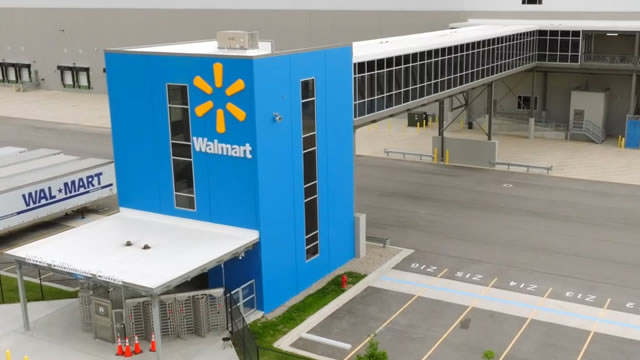
Here's Why Walmart Continues to Crush the S&P 500 (and if the Dividend Stock Is a Buy Now)
The Motley Fool· 2025-05-24 15:27
Core Viewpoint - Walmart has demonstrated strong performance in the retail sector, with significant growth in e-commerce and a focus on value, making it an attractive option for investors despite a slowdown in overall growth [1][10][15]. Group 1: Performance Metrics - Walmart's stock increased by 71.9% last year, outperforming the S&P 500 and the Dow Jones Industrial Average [1]. - Year-to-date, Walmart has achieved a 6.7% gain, contrasting with a 2.1% decline in the S&P 500 [1]. - In the first quarter of fiscal 2026, Walmart's global e-commerce sales grew by 22%, while total constant currency revenue grew by 4% [4]. Group 2: E-commerce and Business Strategy - Walmart's comparable sales in the U.S. grew by 4.5%, with 350 basis points attributed to e-commerce [5]. - The company has successfully improved e-commerce profitability for the first time in Q1, indicating a positive shift in its business model [9]. - Walmart's delivery options have expanded significantly, with U.S. deliveries in less than three hours growing by 91% year-over-year [9]. Group 3: Competitive Positioning - Walmart's value-focused strategy allows it to leverage its extensive store network and supply chain to compete effectively with Amazon on pricing [8]. - The company is positioned well to attract cost-conscious consumers amid inflation and economic uncertainty [4][6]. - Walmart's emphasis on efficiency and cost management is crucial for maintaining competitiveness against digitally native retailers like Amazon [7]. Group 4: Growth Outlook and Valuation - Walmart's forecast for fiscal 2026 indicates a 4% increase in net sales and a less than 2% increase in adjusted earnings per share, reflecting a slowdown in growth [12]. - The company's price-to-earnings (P/E) ratio stands at 41.2, suggesting that the stock is priced for high growth despite slower overall business growth [13][16]. - The low dividend yield of 1% may deter new investors, as the stock price has risen faster than the dividend [15].

Here's Why You Should Offload Lear Stock From Your Portfolio Now
ZACKS· 2025-05-12 15:45
Group 1: Core Issues Facing Lear Corporation - Lear Corporation is experiencing challenges due to economic uncertainty and labor scarcity in wire harness production in the United States [1][2] - Global production forecasts for 2025 have worsened, now expecting a 4% decline on a Lear-weighted basis compared to a previous guidance of 2% [2] - The company faces difficulties relocating wire harness production to the U.S. due to labor scarcity and the labor-intensive nature of the work, compounded by a 25% tariff on wire harnesses [3] Group 2: Customer Concentration and Financial Outlook - Lear has a concentrated customer base, with six major customers accounting for over 50% of total sales in 2024, making the company vulnerable to losing any of these clients [4] - The Zacks Consensus Estimate for Lear's 2025 sales indicates a year-over-year decline of 5.04%, while earnings per share are expected to decline by 7.21% [5] Group 3: Comparison with Other Stocks - Other better-ranked stocks in the automotive sector include Hesai Group, Ferrari N.V., and Standard Motor Products, with significant expected growth in earnings for 2025 [6][7]


Assured Guaranty(AGO) - 2025 Q1 - Earnings Call Transcript
2025-05-09 13:00
Financial Data and Key Metrics Changes - Adjusted operating income per share for Q1 2025 was $3.18, a 62% increase from $1.96 in Q1 2024 [6][20] - Adjusted operating shareholders' equity per share reached over $117, and adjusted book value per share exceeded $172 [25] - Total first quarter investment income from alternative investments was $59 million, the highest quarterly level to date [10] Business Line Data and Key Metrics Changes - New business production in Q1 2025 was $39 million of PVP, with U.S. Public Finance contributing approximately 65% [6][7] - Assured Guaranty captured 64% of the primary market insured par sold and 58% of the insured transaction count in U.S. Municipal bond insurance [14] - Insured par sold increased by 23% to $4.7 billion compared to Q1 2024 [15] Market Data and Key Metrics Changes - The average underlying credit quality of municipal transactions was rated single A, indicating higher credit quality and lower risk [15] - Secondary market bond insurance activity increased significantly, producing $376 million of insured par, surpassing all of 2024 [16] Company Strategy and Development Direction - The company aims to increase fee-based earnings through its 30% ownership in SoundPoint, which contributed $13 million to income in Q1 2025 [9][10] - The strategic focus includes expanding product applications and entering new territories, as evidenced by a recent transaction in France [19] Management's Comments on Operating Environment and Future Outlook - The current volatile market environment is expected to drive increased demand for the company's guarantees as investors seek reliable cash flow [11] - Management expressed confidence in the resilience of the business model and the potential for growth in both primary and secondary markets [11][45] Other Important Information - A pretax gain of $103 million was recognized from litigation with Lehman Brothers International, significantly impacting adjusted operating income [8][20] - The company repurchased 1.3 million shares for $120 million, reflecting strong capital management [25] Q&A Session Summary Question: Likelihood of a haircut to Thames Water debt - Management indicated that reserves are assessed based on various scenarios and probabilities, with a focus on strong creditor positions [28][34] Question: Impact of tariffs on credits - Management noted the fluid situation regarding tariffs and emphasized a wait-and-see approach, highlighting increased municipal issuance as a positive sign [35][36] Question: Outlook on normalized PVP to par - Management stated that the first quarter's higher-rated credit issuance does not change the outlook for the year, with expectations for continued strong demand [41][45] Question: Competition in the secondary market - There is one other competitor in the secondary market, but the company focuses on a larger segment of the market [47] Question: Performance of the asset management segment - The asset management segment's earnings are typically back-end loaded, with strong performance expected in the first quarter due to prior quarter activities [50]

Federal Realty Investment Trust(FRT) - 2025 Q1 - Earnings Call Transcript
2025-05-08 22:00
Financial Data and Key Metrics Changes - The reported NAREIT FFO per share for Q1 2025 was $1.70, representing almost 4% growth on a per share basis [22] - Revenues increased by 6% year over year, while POI rose nearly 5% [22] - Comparable POI growth, excluding prior period rents and term fees, was 2.8%, better than the mid-two percent range forecasted [22][29] - Comparable base rents increased by 3%, and total revenues were up 4% year over year [22] Business Line Data and Key Metrics Changes - The comparable portfolio ended the quarter at 95.9% leased, 160 basis points higher than the previous year [16] - Executed 91 retail leases representing 430,000 square feet for the quarter, with a rent rollover rate of 6% [16][17] - Contractual bumps for the quarter were 2.4%, indicating strong demand for retail space [18] Market Data and Key Metrics Changes - Year-over-year foot traffic increased by 6% in the Washington DC MSA, 3% at Santana Row, and 11% in Boston [8] - The company has minimal exposure to retail bankruptcies, indicating resilience in its tenant base [16] Company Strategy and Development Direction - The company aims to grow through acquisitions and development of retail real estate while also considering stock buybacks when the spread between investment opportunities widens [14][28] - The focus remains on maintaining a diverse tenant base to insulate against economic fluctuations [10][12] Management's Comments on Operating Environment and Future Outlook - Management noted that there has been no negative impact on property leasing or consumer behavior due to recent economic uncertainties [8] - The company is optimistic about continued growth, expecting occupancy levels to increase in the second half of 2025 [29] Other Important Information - The company refinanced a $600 million term loan, extending its maturity and improving liquidity to approximately $1.5 billion [25] - The board authorized a $300 million common share repurchase program in response to market volatility [28] Q&A Session Summary Question: Clarification on the mix of deals executed in the quarter - Management indicated that the 2% rate on new lease rates was primarily due to timing, with some deals executed after the quarter [32][34] Question: Factors driving acceleration of same-store NOI growth - The primary driver for achieving the 3% to 4% guidance range will be continued gains in occupancy throughout the year [37] Question: Insights on concessions and tenant improvements - Elevated tenant improvements were driven by a specific deal with Lifetime Fitness, not indicative of a broader trend [39][40] Question: Performance in the DC area - Management expressed confidence in the DC market, noting strong foot traffic and expected sales growth as spring arrived [50][54] Question: Acquisition pipeline and transaction market changes - The transaction market remains strong, with ongoing deal flow, although some sellers are cautious due to recent economic uncertainties [66] Question: Capital allocation strategy between acquisitions and share buybacks - Management emphasized the importance of long-term growth and IRR when considering capital allocation, rather than just immediate yields [78]

eBay and Etsy are relatively confident despite tariff pressures
TechCrunch· 2025-05-03 15:00
Core Insights - The secondhand industry is facing challenges due to President Trump's tariffs, but companies like eBay and Etsy show resilience [1][2] Company Performance - eBay and Etsy reported Q1 2025 earnings, addressing tariff impacts; eBay's CEO noted that only about 5% of their gross merchandise value (GMV) comes from China, while Etsy's CFO stated that just over 1% of gross merchandise sales (GMS) are from U.S. imports from China [2][3] - Etsy experienced a 3.4% year-over-year decline in active buyers, totaling 88.5 million, and an 8.9% decline in GMS to $2.3 billion [7][8] - eBay reported a GMV growth to $18.8 billion and a revenue increase of over 1% to $2.58 billion, benefiting from price-conscious shoppers opting for used and refurbished goods [10][11] Market Dynamics - Sellers on eBay and Etsy primarily source products locally, which provides a competitive advantage over import-reliant rivals like Temu and Shein [2][6] - Etsy's focus on handcrafted and vintage goods may make it more vulnerable to economic uncertainty, as consumer spending is hesitant [7] - eBay has seen increased spending from customers looking to avoid tariffs, indicating a positive trend in consumer behavior [10][11] Strategic Positioning - Etsy's ownership of Depop, a secondhand fashion platform, continues to perform well despite economic challenges, achieving record-high GMS since its acquisition in 2021 [8] - eBay's strategy of focusing on used and refurbished goods has positioned it favorably in the current market environment [10]



Hilton CEO says travelers are in 'wait-and-see mode'
Business Insider· 2025-04-30 22:40
Core Insights - Travelers are currently in a "wait-and-see mode" due to softened American travel demand, leading to a cautious approach in booking [1][2] - Hilton's revenue per available room (RevPAR) grew by 2.5% year-over-year, but the company expects flat RevPAR for the second quarter compared to the same period last year [1][3] - Broader macroeconomic uncertainty has negatively impacted leisure travel demand, with short-term bookings remaining roughly flat year-over-year [2][4] Company Performance - Hilton downgraded its annual guidance for RevPAR growth to a range of 0% to 2%, down from a previous forecast of 2% to 3% [3] - The company reported solid performance in January and February, but this was overshadowed by weaker trends observed in March and continuing into the second quarter [1][2] Industry Trends - The travel industry is experiencing a slowdown after a post-pandemic boom, with Americans pulling back on travel amid economic uncertainty [4] - Airlines have also reported weaker demand, leading to cuts in summer flight schedules and adjustments in annual forecasts [4] - Experts indicate that consumers are now more focused on value and are booking trips last-minute, reflecting a shift in behavior due to financial pressures [6][7]


AMERISAFE(AMSF) - 2025 Q1 - Earnings Call Transcript
2025-04-30 15:32
Financial Data and Key Metrics Changes - For Q1 2025, the company reported net income of $8.9 million or $0.47 per diluted share, down from $16.9 million or $0.88 per diluted share in Q1 2024 [12] - Operating net income decreased to $11.4 million or $0.60 per diluted share from $13.3 million or $0.69 per diluted share year-over-year [12] - Gross written premiums increased by 4.6% to $83.8 million compared to $80.1 million in Q1 2024 [12] - Net premiums earned rose by 60 basis points to $68.9 million from $68.4 million in the prior year [13] - The expense ratio increased to 29.9% from 27.3% due to higher expenses related to business investments [13][14] Business Line Data and Key Metrics Changes - Premiums on policies written in the quarter grew by 7.1% compared to the prior year quarter [9] - Policy retention rate was strong at 93.1% in Q1 2025, contributing to policy count growth [9] - The company experienced $5 million from payroll audits and other premium adjustments, down from $6.4 million in the previous year [10] Market Data and Key Metrics Changes - The competitive environment remains strong, driven by declining workers' compensation rates and challenges in other property and casualty lines [6] - The company noted that economic conditions affecting payrolls could influence premium levels, with factors such as unemployment and wage inflation being monitored closely [7] Company Strategy and Development Direction - The company is focused on incremental growth within its existing geographic footprint and risk appetite, leveraging relationships with agents and policyholders [6] - The management emphasized the importance of proactive claims handling, which contributed to favorable case development [11] Management's Comments on Operating Environment and Future Outlook - Management expressed caution regarding economic uncertainties, including tariffs and inflation, but noted that niche industries have historically performed well during mild recessions [7] - The company expects favorable frequency trends to continue, with modest severity trends anticipated [11] Other Important Information - The investment portfolio is of high quality, with an average credit rating of double A minus and a duration of 4.48 years [15] - Book value per share was reported at $13.69, with a statutory surplus of $243.6 million, up 3.6% from the previous year [16] Q&A Session Summary Question: Audit premium impact on previous quarters - Management provided audit premium figures for the previous year: Q1 was $6.4 million, Q2 was $7.3 million, Q3 was $4 million, and Q4 was $2.5 million [22][24] Question: Impact of recent hurricanes on work activity - Management noted a slight increase in audit premiums for rebuilding classifications in North Carolina and Georgia, but not as much in Florida [26] Question: Potential tariff impacts on business - Management speculated that tariffs could impact medical costs, particularly in pharmacy and durable medical equipment, but the overall effect on premiums would depend on whether costs are passed through to customers [30][31] Question: Changes in competitive dynamics - Management indicated that there has been no significant change in competitive dynamics in the first quarter [35] Question: Expense ratio and future expectations - Management quantified the increase in expenses at $1.9 million and expected costs to moderate in the coming quarters [36] Question: Trends in state loss costs - Management confirmed that the trend in state loss costs is still declining, with average decreases between 6% to 8% [38] Question: Medical inflation and physician care costs - Management observed increases in physician care costs, attributing it to labor costs rather than tariffs [39][40] Question: Large losses in the quarter - Management reported two large losses in the quarter, which is below trend [56]

AMERISAFE(AMSF) - 2025 Q1 - Earnings Call Transcript
2025-04-30 14:30
Financial Data and Key Metrics Changes - For Q1 2025, Amerisafe reported net income of $8.9 million or $0.47 per diluted share, down from $16.9 million or $0.88 per diluted share in Q1 2024 [11] - Operating net income decreased to $11.4 million or $0.60 per diluted share from $13.3 million or $0.69 per diluted share year-over-year [11] - Gross written premiums increased by 4.6% to $83.8 million compared to $80.1 million in Q1 2024 [11] - Net premiums earned rose by 60 basis points to $68.9 million from $68.4 million in the prior year [12] - The expense ratio increased to 29.9% from 27.3% due to higher expenses related to business investments [12][13] Business Line Data and Key Metrics Changes - Premiums on policies written in the quarter grew by 7.1% over the prior year quarter, with a retention rate of 93.1% [7][8] - The company experienced $5 million from payroll audits and other premium adjustments, down from $6.4 million in the previous year [8] Market Data and Key Metrics Changes - The competitive environment remains strong, driven by declining workers' compensation rates and challenges in other property and casualty lines [5][6] - The company noted a favorable frequency trend in claims, with a current accident year loss ratio of 71, consistent with the prior year [8] Company Strategy and Development Direction - Amerisafe continues to focus on incremental growth within its existing geographic footprint and risk appetite, leveraging relationships with agents and policyholders [5] - The company is investing in business growth despite a competitive market, aiming to maintain profitability [12] Management Comments on Operating Environment and Future Outlook - Management expressed caution regarding economic uncertainties such as tariffs, inflation, and interest rates, which could impact payrolls and premiums [6] - The company anticipates favorable frequency trends to continue, with modest severity trends expected [9] Other Important Information - The investment portfolio is of high quality, with a tax-equivalent book yield of 3.85% and a strong capital position [14][15] - Book value per share was reported at $13.69, with a statutory surplus of $243.6 million, up 3.6% from the previous year [15] Q&A Session Summary Question: Audit premium impact on previous quarters - Management provided audit premium figures for the previous year: Q1 was $6.4 million, Q2 was $7.3 million, Q3 was $4 million, and Q4 was $2.5 million [22][24] Question: Impact of recent hurricanes on work activity - There was a slight increase in audit premiums for rebuilding classifications in North Carolina and Georgia, but not as much in Florida [26] Question: Potential tariff impacts on business - Tariffs could impact medical costs, particularly in pharmacy and durable medical equipment, which account for about 15% of medical costs in workers' compensation [29] Question: Changes in competitive dynamics - There has been no significant change in the competitive landscape during the first quarter [35] Question: Expense ratio and future expectations - The increase in the expense ratio was approximately $1.9 million, and costs are expected to moderate as the year progresses [37] Question: State loss cost updates - The trend remains a decline in rates, with average decreases between 6% to 8% across states [39] Question: Medical inflation trends - There are increases in physician care costs, likely due to labor costs rather than tariffs [41] Question: Large losses in the quarter - The company reported two large losses in the quarter, which is below trend [56]