一二手倒挂

Search documents
不降反升、一二手倒挂:潮州小县城房价何以保值增值?|新春走基层
Di Yi Cai Jing· 2026-02-20 04:07
Core Viewpoint - In certain regions of China, particularly in smaller towns and counties, real estate has become a stable asset, contrasting with the declining property values in major cities like Beijing, Shanghai, Guangzhou, and Shenzhen [1] Group 1: Market Dynamics - The new property project, Tengrui Wanshangfu, in Chao'an District has generated significant local interest, despite lacking model units, indicating strong demand for new housing [1][2] - The average price of new homes in Chao'an District is around 7,000 CNY per square meter, which is higher than many existing properties in the area, showcasing a phenomenon where new homes are priced above second-hand homes [2][6] - The local real estate market is characterized by a supply-demand imbalance, with limited new housing developments leading to sustained demand and rising prices [3][6] Group 2: Consumer Behavior - Local residents, particularly younger generations, prefer purchasing new homes for better living conditions and independence, moving away from traditional multi-generational living arrangements [3][4] - Economic growth in the region, driven by industries like stainless steel manufacturing, has resulted in increased purchasing power among local families, making them capable of investing in real estate [4][5] Group 3: Investment Perspective - The phenomenon of "first-hand and second-hand price inversion" is evident, where second-hand homes are priced higher than new ones, primarily due to limited supply and high demand [6][7] - New properties are viewed as valuable collateral for loans, providing financial flexibility for local business owners who often face challenges in securing traditional financing [5][6] - The stable pricing of new homes in Chao'an District, which has not seen significant fluctuations over the years, enhances their attractiveness as a long-term investment [5][6]
上海走出了房价逆趋势
Sou Hu Cai Jing· 2026-01-24 16:29
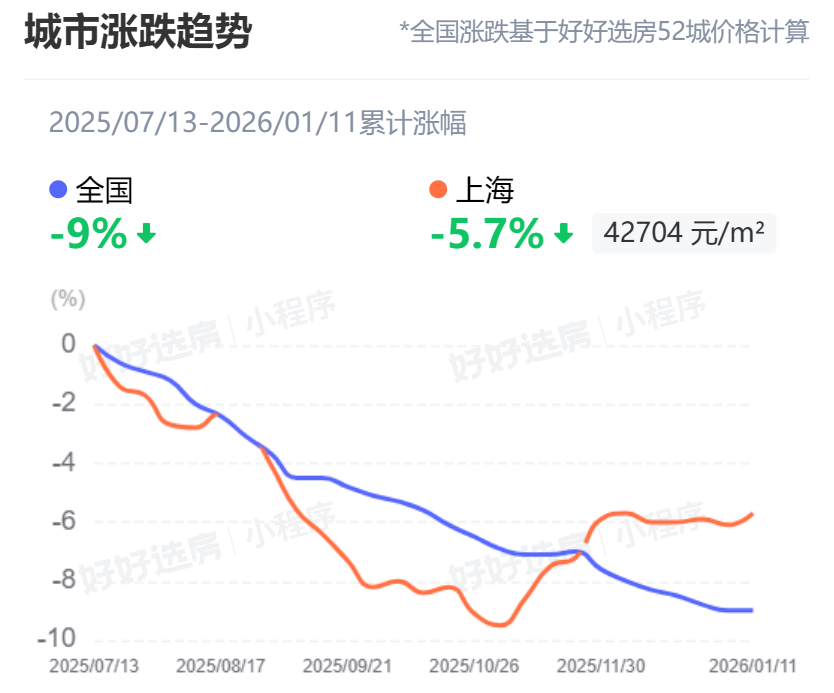
Core Viewpoint - Shanghai's real estate market is showing signs of resilience and potential recovery, driven by strong demand and a large population of 24.8 million residents, despite a generally declining market trend in other regions [2][4]. Market Trends - Since October 2025, Shanghai's transaction volume has surged, maintaining over 20,000 transactions per month, indicating a potential stabilization in prices, which have shown signs of bottoming out and even slight recovery in recent months [4][5]. - The expectation is that while the overall market may not fully recover until around 2027, certain areas and properties in Shanghai are already stabilizing and attracting buyers willing to pay a premium [4][5]. Pricing Dynamics - Current new home prices in Shanghai range from 100,000 to 130,000 per unit, while older properties from after 2000 are priced around 70,000, suggesting a significant price gap that may be reaching its limit [8]. - The price difference between new and second-hand homes in central Shanghai can reach up to 40%, indicating a potential ceiling for price increases in the market [8]. Policy and Economic Context - Recent government policies have been aimed at stabilizing the market, with expectations of a nationwide positive trend in the first half of the coming year, although no major policy changes are anticipated before the New Year [7][11]. - The lack of strong economic indicators, such as M1 and M2 growth, suggests that the housing market remains vulnerable without substantial economic improvement [7]. Investment Opportunities - There is a growing interest in properties that are expected to appreciate due to anticipated urban redevelopment, particularly in older neighborhoods, which may present investment opportunities [11]. - The market is currently characterized by a cautious optimism, with real estate agents actively engaging with potential buyers to match them with suitable properties before prices potentially rise further [5][11].

叫嚣蚀本的购房者,到底是“真亏了”还是“少赚了”?
Sou Hu Cai Jing· 2025-11-25 19:12
Group 1 - The core viewpoint suggests that by Q4 2025, housing prices will have returned to 2016 levels, particularly in the more market-oriented second-hand housing market, with variations across different regions [1] - Homeowners who purchased properties before 2016 still have a safety cushion, as their perceived losses are more about "less profit" compared to peak market conditions, while those who bought after 2016 may be facing "real losses" [1] - The introduction of new housing price limits in Shanghai in 2016 led to an eight-year phenomenon of price discrepancies between new and second-hand homes, which has created financial burdens for some homeowners [1] Group 2 - In 2016, the average sales price of new residential properties in Shanghai was 25,910 yuan per square meter, with the average price for marketable residential properties reaching 38,369 yuan per square meter, an 18.85% increase from 2015 [3] - Significant price gradients were observed: properties within the inner ring averaged 87,426 yuan per square meter, while those in the outer ring averaged only 18,127 yuan per square meter, indicating a clear distinction in pricing across different areas [3] - The Huangpu District had the highest average transaction price at 104,589 yuan per square meter, while suburban areas like Jinshan had much lower prices, highlighting the stark contrast in property values across the city [3] Group 3 - Current property prices in Shanghai's core areas, such as Huangpu and central districts like Changning and Jing'an, can still be found at prices reflective of 2016 levels, indicating potential opportunities for buyers [4] - The experience of buyers is influenced by their entry timing into the market, including purchase prices, mortgage payments, and holding costs, leading to distinctions between "real losses" and "less profit" [4]

上海2019-2020年最热项目现在房价是涨是跌?
3 6 Ke· 2025-06-16 02:22
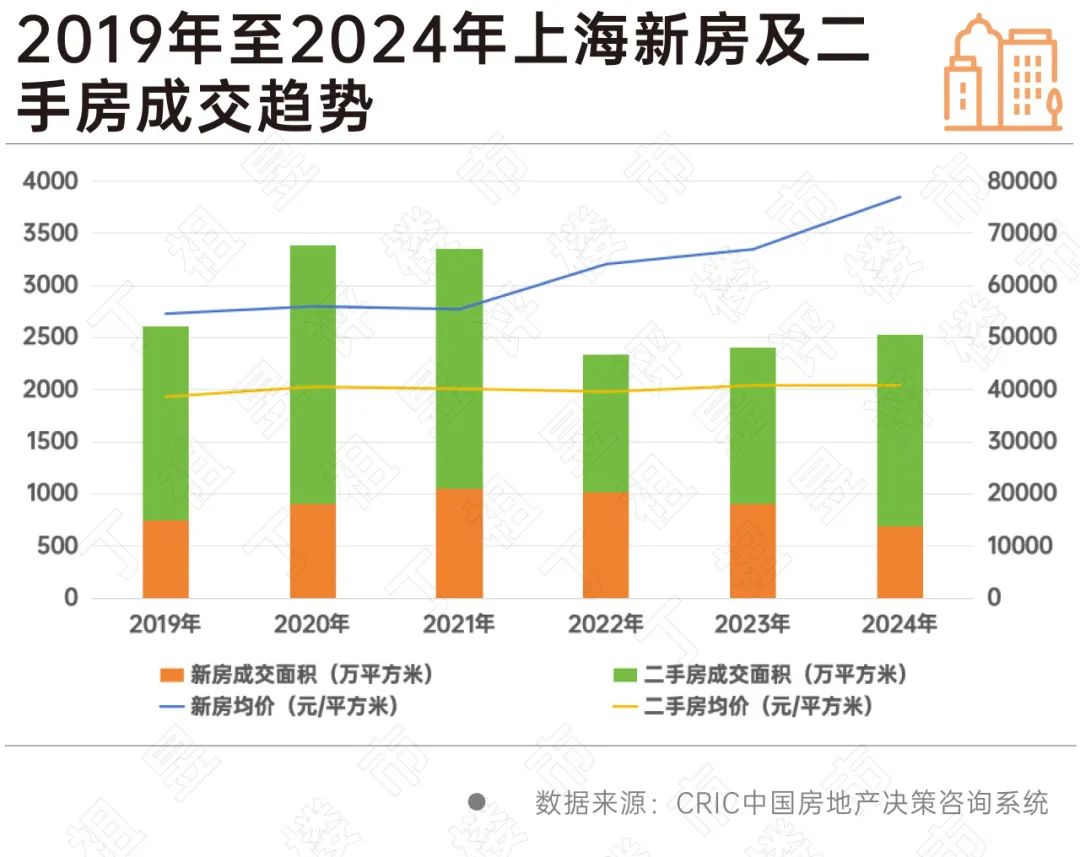
Core Viewpoint - The Shanghai real estate market has shown a significant divergence in property price trends, with high-end properties maintaining value while lower-end properties have experienced declines, reflecting the impact of market regulations and location on property values [1][13][16]. Group 1: Market Trends - The period from 2019 to 2020 is identified as a peak for the Shanghai real estate market, with a notable increase in sales volume and prices [1]. - In 2021, despite a record high in industry scale, the market began to decline due to tightening regulatory policies, particularly in the second half of the year [1][15]. - The average price increase for the sample projects from 2019-2020 was only 0.41%, with significant variations among different projects [5][6]. Group 2: Price Analysis - Properties priced above 100,000 yuan per square meter have generally not seen declines, while those below 50,000 yuan per square meter are the most affected by price drops [9][12]. - The highest price increases were concentrated in the Xuhui and Pudong areas, while the largest declines were observed in suburban districts such as Jinshan, Minhang, and Baoshan [2][12]. - The average price increase for properties priced above 100,000 yuan per square meter was 18%, while those below 50,000 yuan per square meter experienced an average decline of 9.47% [12][16]. Group 3: Regulatory Impact - The "price limit" and "price inversion" policies have significantly influenced the market dynamics, leading to a surge in demand for new properties, especially in core areas [14][15]. - The introduction of public lottery systems for property purchases has further complicated the market, creating a competitive environment for buyers [15]. - As the five-year holding period for certain properties approaches its end in 2026, these properties will likely enter the secondary market, potentially increasing competition and affecting prices [15][17].